Cao Ha Village - The village with over 20 lineage ancestral houses in Quang Binh
Central
Quang Binh
Sovaba.travel
Updated at: 24/09/2026
1. Remembering Cao Ha Village
Remembering Cao Ha village, we seem to get lost in a distant realm of memories, where time slowly passes over every moss-covered tile roof and grey stone wall faded by the years. Cao Ha, or more precisely Cao Lao Ha, is like an enduring genealogy book, recording the imprint of generations of Vietnamese children in the sun-drenched, windy land of Quang Binh.
Ancestors recounted that more than five centuries ago, ancestors of the Luu, Nguyen, and Le families stopped here, reclaimed the wasteland, established a hamlet, and gave birth to the prosperous Cao Lao Ha village. The founding fathers such as Luu Van Tien - Duc bao trung hung linh phu chi than, Nguyen Van Khai - Great General Nguyen Quy Cong, Le Quang Lu - Trieu phong Le Quy Cong... not only laid the first foundation for this land but also passed down the tradition of remembering one's roots and fulfilling filial piety. They painstakingly built it up, so that from then on, the Luu, Nguyen, and Le lineages became deep, enduring roots, continuing to preserve and develop the land of their ancestors.
2. Why Cao Ha Village has so many clan ancestral halls
From the 15th century, when King Le Thanh Tong expanded the territory and recruited people to settle in Chau Bo Chinh, families from all regions flocked here, bringing along the unique customs and identity of each family lineage. Major families such as Nguyen, Luu, and Le bonded, reclaimed land, and built villages, thereby forming the diverse and rich cultural identity of Cao Lao Ha. Each lineage, regardless of its origin, preserved the wish to revere ancestors and safeguard their roots. Therefore, building ancestral houses was not only for worship but also a matter of pride, a symbol of unity and filial piety.
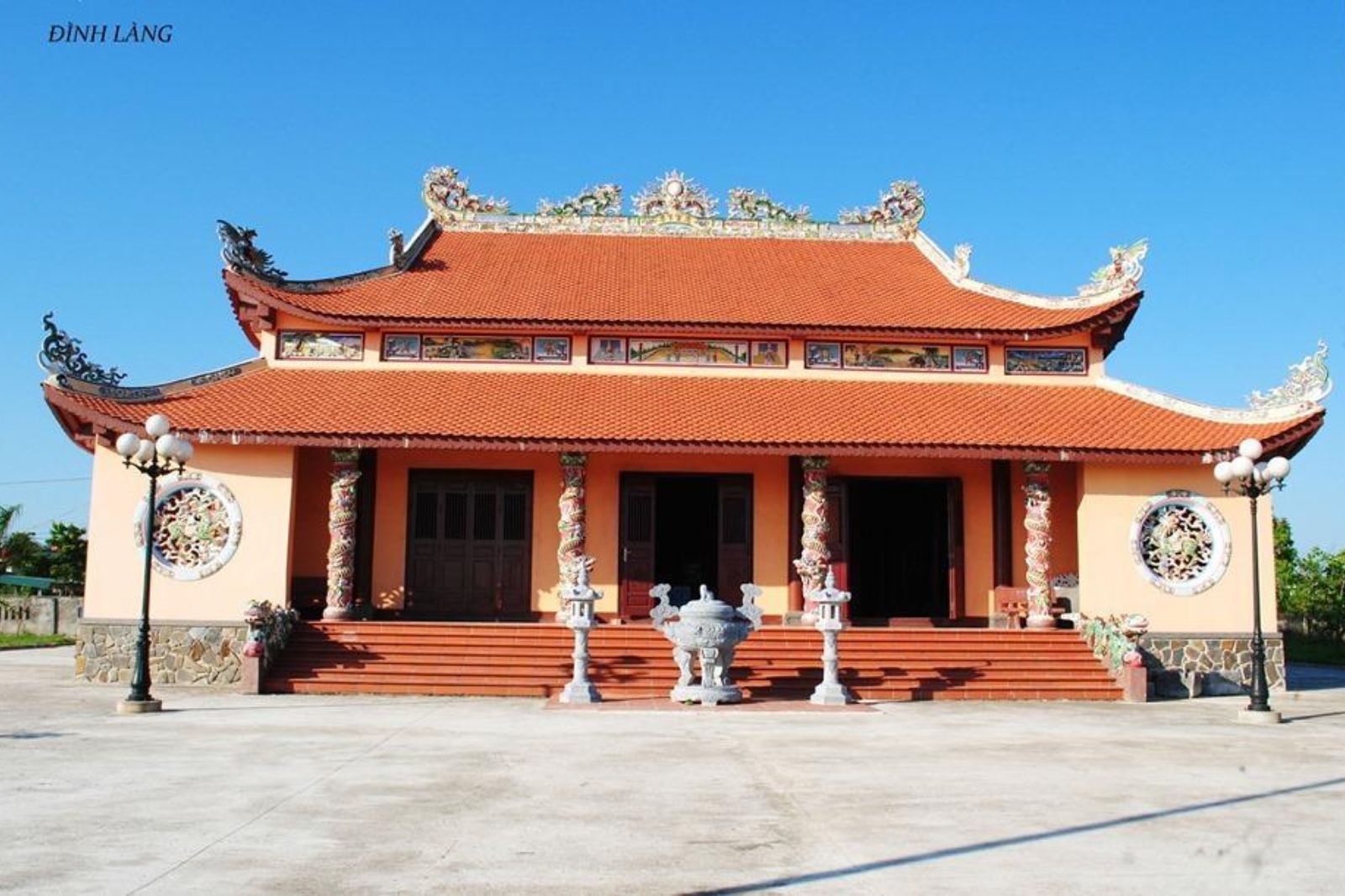
Photo: Cao Lao Ha Communal House
In particular, the Nguyen lineage with 14 ancestral houses spread across this land created richness and diversity in worship culture. Although living by farming, many descendants of Cao Lao Ha village have worked far away and established careers everywhere, yet they never forget to send their hearts back to their homeland. Ancestral houses worth billions of VND were erected from the contributions of far-away children, serving as a deep expression of gratitude to ancestral roots.
Amidst the pace of modern life, those ancestral houses quietly preserve the stories of generations that have passed, serving as places where descendants return on every death anniversary, holiday, and festival. It is not only a place to honor ancestors but also a harmony between the present and the past, between human hearts and the soul of the countryside, between roots and the future.
Photo: Descendants working far from home still send money back to build lineage ancestral houses
3. The unique architectural features of clan ancestral halls in Cao Ha Village
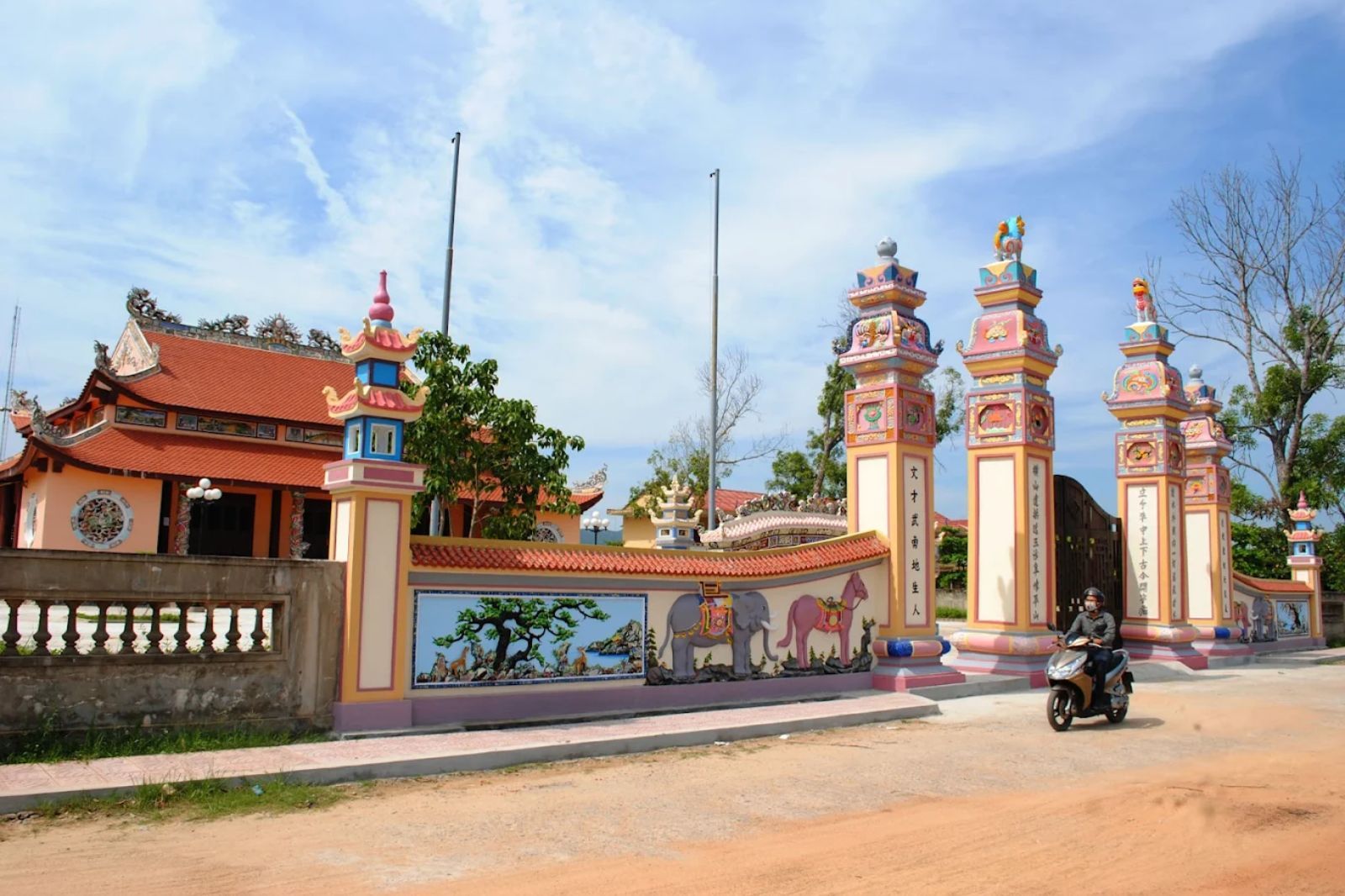
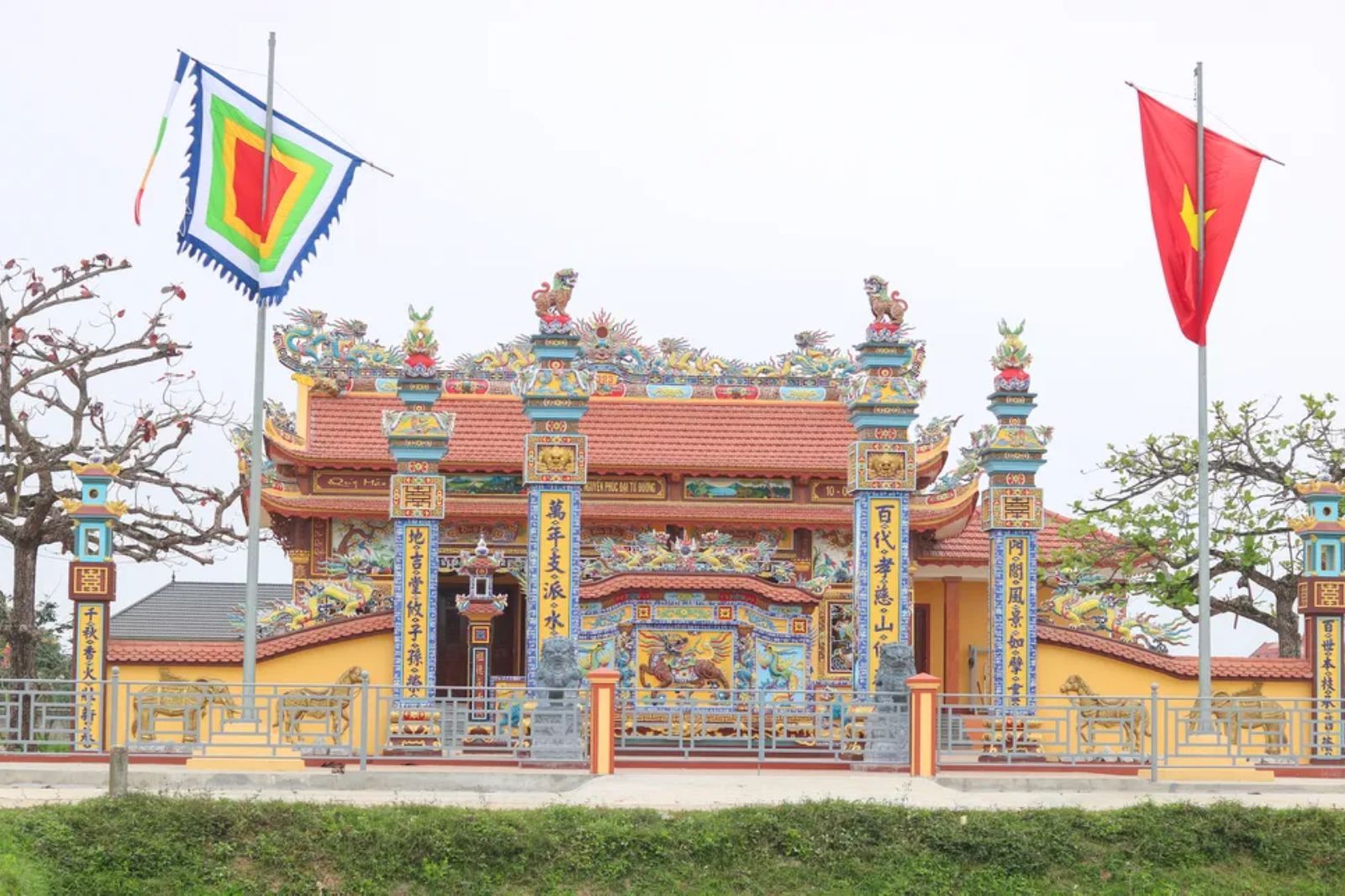
Nestled on the southern bank of the Gianh River, reflecting peaceful waters through all four seasons, it is like an ancient book marking many historical ups and downs. On the road in front of the village, majestic lineage ancestral houses stand tall, steadily facing due South, symbolizing the stability, dignity of ancestors, and aspirations for the future. Each ancestral house bears strong traditional Vietnamese architecture, with mossy roof tiles, intricately carved patterns, accented by five-color flags and national flags flying in the early morning sun. The grounds of each ancestral house are always shiny and clean, demonstrating the reverence of descendants for their ancestors.
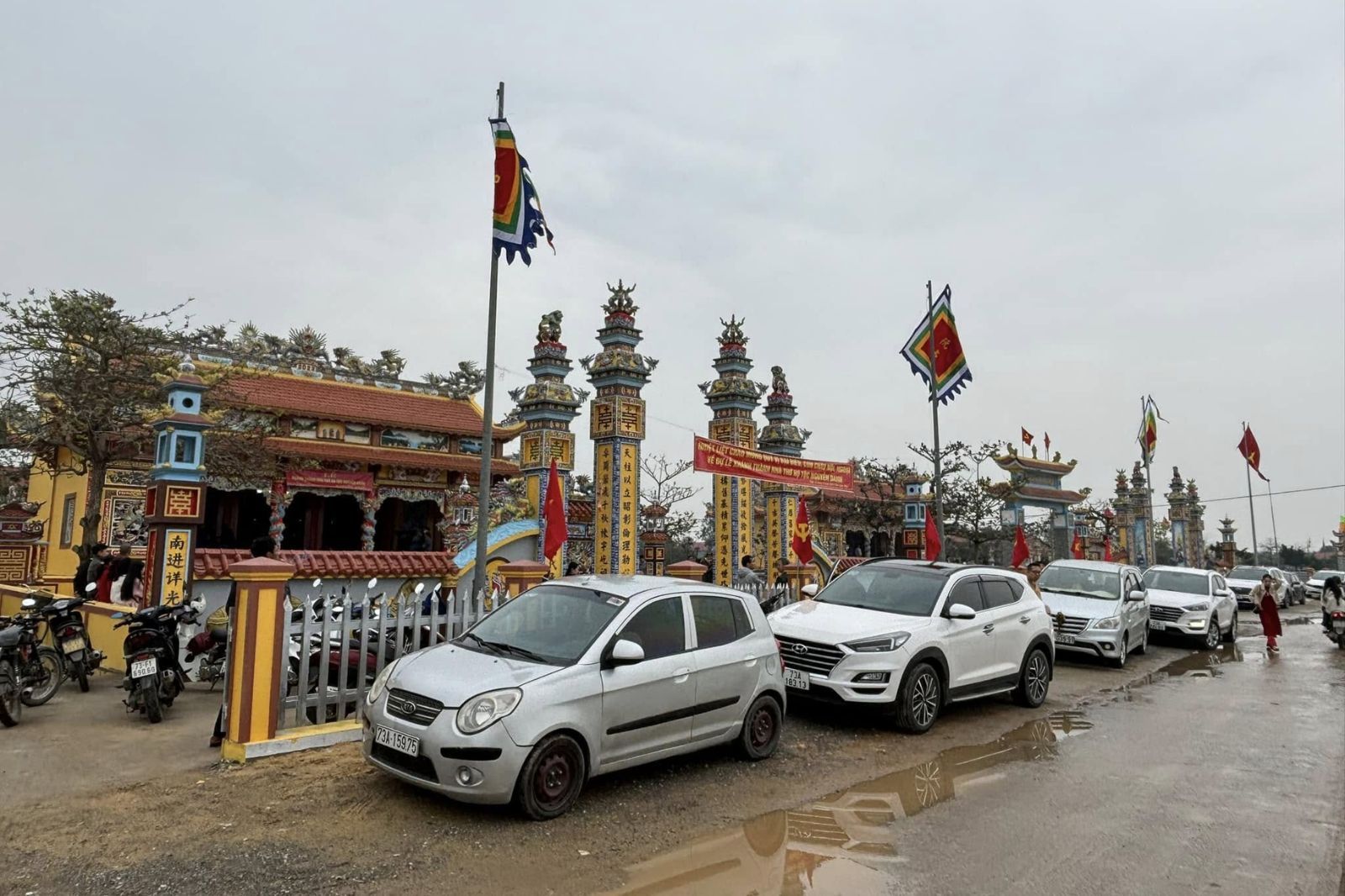
Photo: Five-color flags and national flags are hung in front of each lineage ancestral house
The village has three longitudinal roads reflecting ancient hierarchy: the guest road for visitors from afar, the village road for locals, and the mandarin road – the pathway for dignitaries. The village communal house is located on the mandarin road, facing North, like a sacred symbol in the heart of the village, preserving its core soul and traditional customs. In addition, the village also has an ancient citadel, also known as Thanh Loi (Loi Citadel), ranked as a provincial cultural relic, standing as living proof of its rich history.
Through generations, from feudal times to the present, Cao Lao Ha village has been renowned not only for its tradition of learning and scholarship, such as the late poet Luu Trong Lu, but also proud of many successful children who held mandarin positions during various dynasties like Mr. Le Mo Khoi, leaders of provincial, district, and ministerial levels. The lineage ancestral houses in the heart of the village are not only places to worship ancestors, but also gathering spots to connect family ties and preserve roots. Under the shade of red tile roofs, the rustic countryside always preserves its identity, simple yet profound, enduring with time.
Cao Lao Ha village is a prime example of the combination of history, culture, and community. With over 20 lineage ancestral houses, the village not only reflects family lineage diversity but also demonstrates a strong commitment to preserving moral values such as ancestral reverence, patriotism, and community solidarity. These values not only help the village maintain its identity but also serve as valuable lessons for younger generations about their roots and responsibility to their homeland.
Photo: Local people here still gather on holidays or important occasions
Over the past 500 years, the lineage ancestral houses here have become historical witnesses, preserving countless stories of ancestors and previous generations who laboriously reclaimed, protected, and built the homeland. When Tet comes and spring arrives, descendants, even if far away, still return to reunite under the ancestral house roof, offer incense in remembrance, and together review precious root values. That is the strength of tradition, the pride of the children of Cao Lao Ha village.
Follow Sovaba Travel to discover more unique cultural beauty and heritage of Quang Binh, a land of untold stories, of rustic yet profound souls.