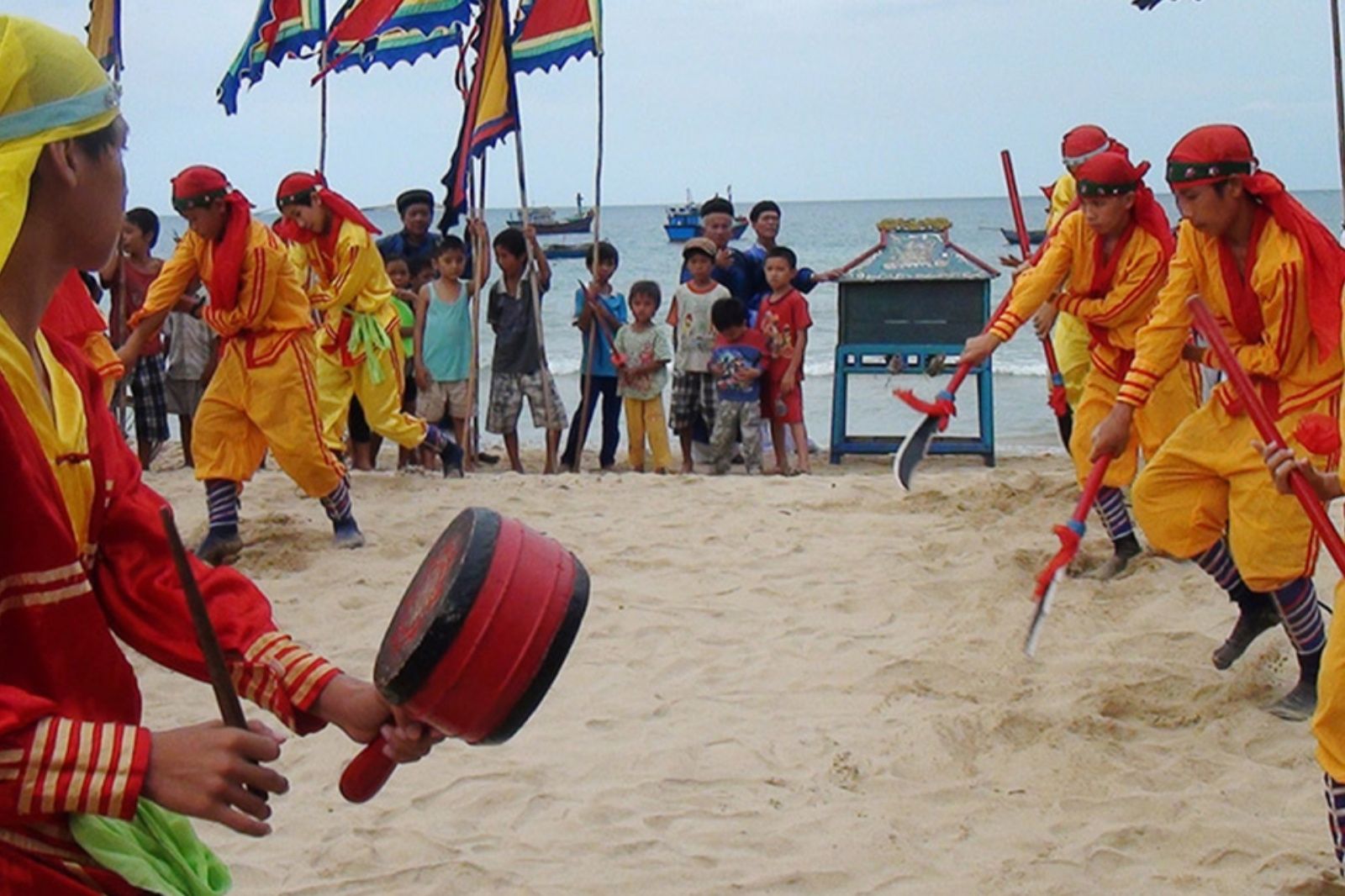
“Cau Ngu” Festival in Cua Viet: The Cultural Beauty of the Coastal Region

Central

Quang Tri

Sovaba.travel

Updated at: 24/09/2026

1. The origins and deep significance of the Cau Ngu Festival

The Cau Ngu Festival is one of the typical traditional festivals of coastal residents in Central Vietnam, associated with the belief of worshipping Ca Ong (Whale) – the deity revered by fishermen as their guardian on the open sea. According to popular belief, Ca Ong often appears to save ships in distress amidst rough waves. Therefore, when a whale drifts ashore and passes away, local people hold a solemn funeral, build a shrine, and offer incense year-round to express their gratitude.

In the coastal area of Cua Viet and many coastal fishing villages of Quang Tri such as Hai Khe, Gio Viet, Vinh Thach, or Tham Khe, the Cau Ngu Festival has been maintained over generations, becoming an indispensable part of community cultural life. Some localities even preserve a festival history spanning hundreds of years, reflecting the cultural depth of coastal inhabitants.

Beyond its spiritual significance, the Cau Ngu Festival also expresses the yearning for safe seafaring trips, bountiful fish and shrimp catches, and a prosperous life. At the same time, this is also an occasion for the fishing community to meet, bond, and express gratitude to the ocean – the source of life that has nurtured generations of coastal dwellers. These very values have created the enduring vitality of the festival in the coastal cultural life of Quang Tri in particular and Vietnam in general.
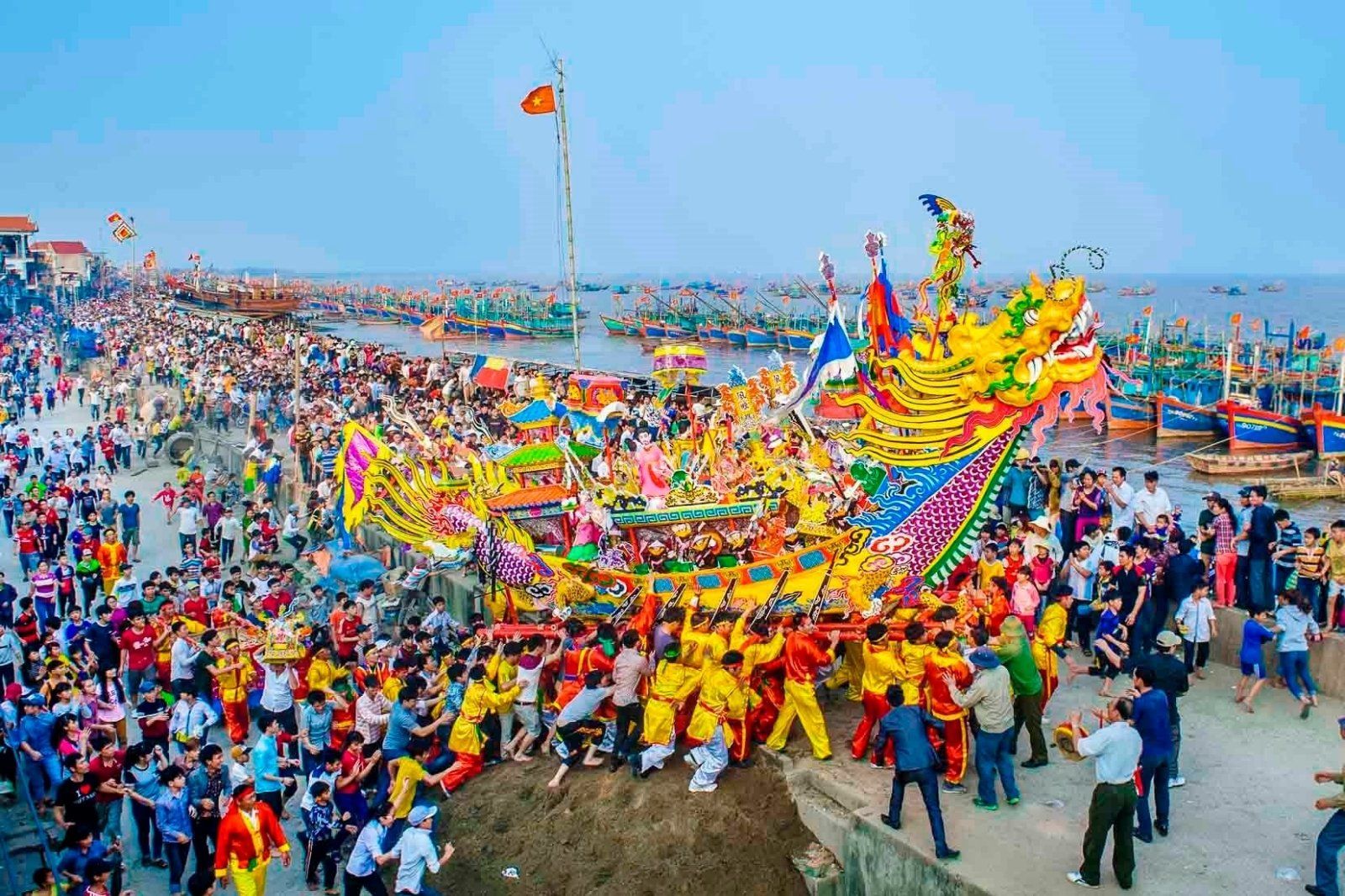
The festival expresses fishermen's reverence for Ca Ong - Ca Ba
Photo: The festival expresses fishermen's reverence for Ca Ong - Ca Ba

2. Schedule and rituals of the Cau Ngu Festival in Cua Viet

The festival usually takes place in the first or second lunar month (prior to the main fishing season), depending on each village's customs. In some areas near Cua Viet like Tham Khe village (Hai Khe), the main ceremony falls on the Full Moon of the first lunar month. In Vinh Thach (Vinh Linh), it may be organized on the Full Moon of the fifth lunar month.

The festival is divided into two main parts:

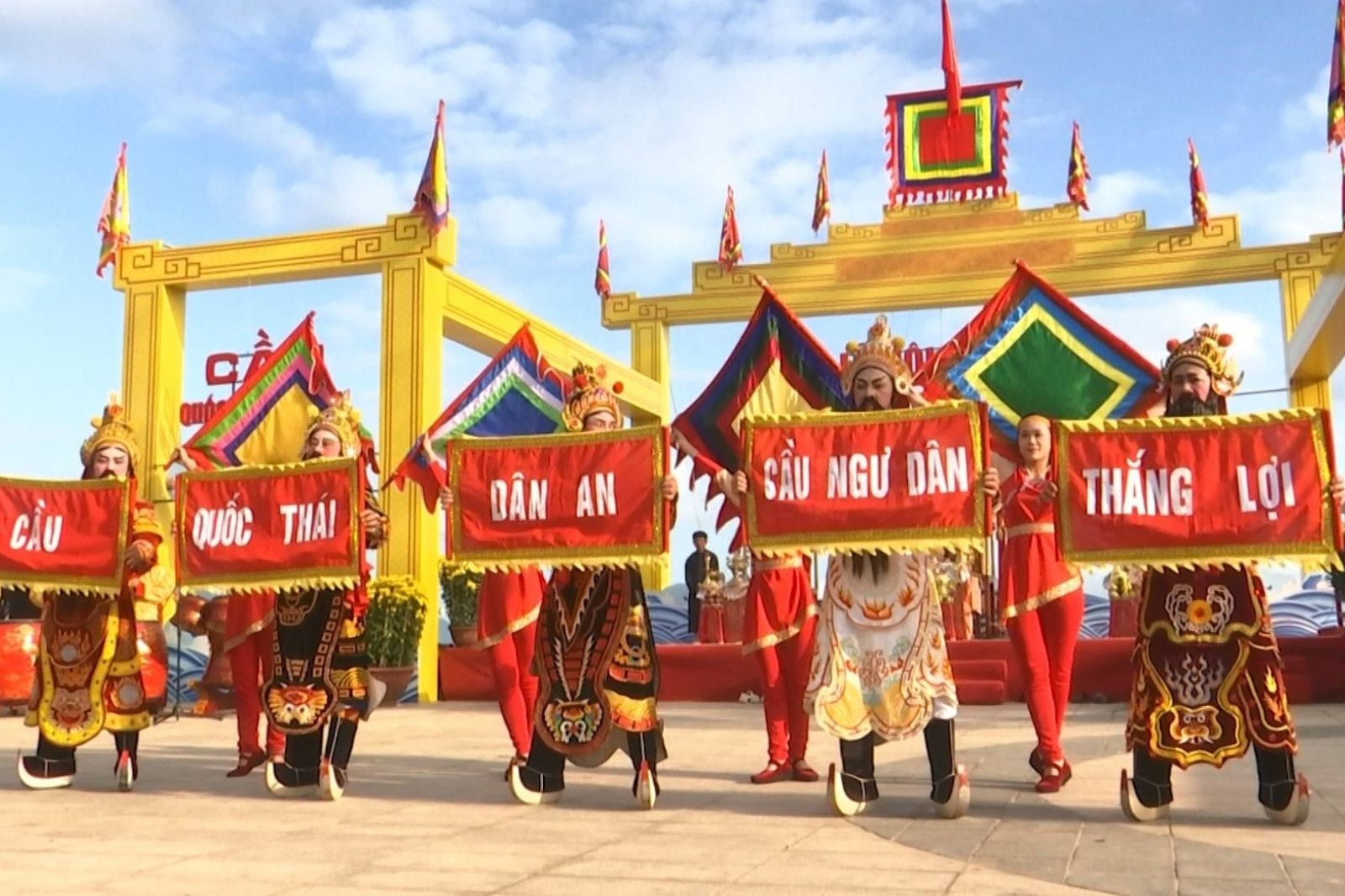
  • Ceremonial Part (solemn rituals):
    • Rituals of welcoming deities, announcement, sacrifices to rivers and lands, and sacrifices to Ca Ong (worshipping Ong Nam Hai).
    • Ritual of thanking souls of the deceased, offering incense to pray for blessings.
    • Village elders serve as chief celebrants, reading prayers on behalf of the community. All villagers participate in offering incense, expressing respect and devotion.
  • Festive Part (joyful and lively):
    • Performances of Ba Trao singing (paddling songs), dragon/lion dance, and folk arts.
    • Folk games: Boat racing, net weaving, ball tossing, tug-of-war...
    • Traditional wrestling tournament (a characteristic feature in Hai Khe region) attracting wrestlers and spectators.

The harmony between solemn traditional rituals and lively festival activities creates a unique attraction for the Cau Ngu Festival. It is not only an occasion for fishermen to convey their prayers for a favorable sea season, but also contributes to preserving coastal cultural identity, strengthening neighborly ties, and offering visitors experiences steeped in the breath of Quang Tri fishermen's life.

The solemn and sacred ceremonial part
Photo: The solemn and sacred ceremonial part

3. The enduring value of this cultural heritage

The Cau Ngu Festival is not only a valuable intangible cultural heritage but also a spiritual symbol closely linked to the lives of coastal residents in Quang Tri. For many coastal fishing villages, where most people earn their living through sea fishing, the festival carries the meaning of a prayer for peace and safety before setting sail each season, while instilling belief and motivation in fishermen on their journey to conquer the seas.

Beside its spiritual values, the Cau Ngu Festival contributes to preserving unique customs, practices, and cultural identity of the fishing community amidst the impacts of urbanization and climate change. This is an occasion for generations to jointly preserve coastal cultural memories, strengthen solidarity, and transmit traditional values to the youth.

Today, the festival is being integrated with coastal tourism activities in Cua Viet and coastal areas of Quang Tri, creating an attractive cultural tourism product. Visitors can not only immerse themselves in the distinctive festive atmosphere but also have the opportunity to enjoy fresh seafood, learn about fishermen's lives, and explore many famous destinations such as Vinh Moc Tunnels, Hien Luong - Ben Hai River Banks, or pristine beaches of Quang Tri land. This serves as a bridge bringing local coastal culture closer to domestic and international tourists.

4. Tips for attending the Cau Ngu Festival in Cua Viet

To fully enjoy the lively atmosphere and distinctive cultural values of the Cau Ngu Festival, visitors should prepare some essential information regarding time, attire, and sightseeing itinerary in advance.

  • Ideal time: 1st - 3rd lunar months (usually falling around February - April in the solar calendar). Check the specific schedule via the Commune People's Committee or the Department of Culture, Sports and Tourism of Quang Tri.
  • Preparation: Wear polite attire when participating in the ceremonial part. Bring sunscreen and hats as the festival is held outdoors.
  • Combine with travel: Visit Cua Viet Beach, enjoy fresh seafood (fish, shrimp, squid), visit Con Co Island, and historical sites.
  • Notes: Respect local customs, do not litter, and support fishermen by purchasing local products.

With careful preparation, your trip to attend the Cau Ngu Festival will bring memorable experiences, helping you gain a deeper appreciation for the beauty of coastal culture and the life of people in Quang Tri's coastal area.

The festival is held periodically every year
Photo: The festival is held periodically every year

The Cau Ngu Festival in Cua Viet is not only a religious activity imbued with coastal cultural identity, but also a vivid symbol of community solidarity, deep gratitude, and a strong ambition to reach out to sea by Quang Tri fishermen. Amidst the rhythm of modern life, the festival still echoes with drumbeats, prayers, and resilient vitality from people holding fast to the sea. Preserving and promoting the values of the festival is not only retaining a beautiful tradition, but also safeguarding the soul of a land – where the sea and humans blend together in faith, love, and aspirations to reach far.

Loading......

Featured destinations