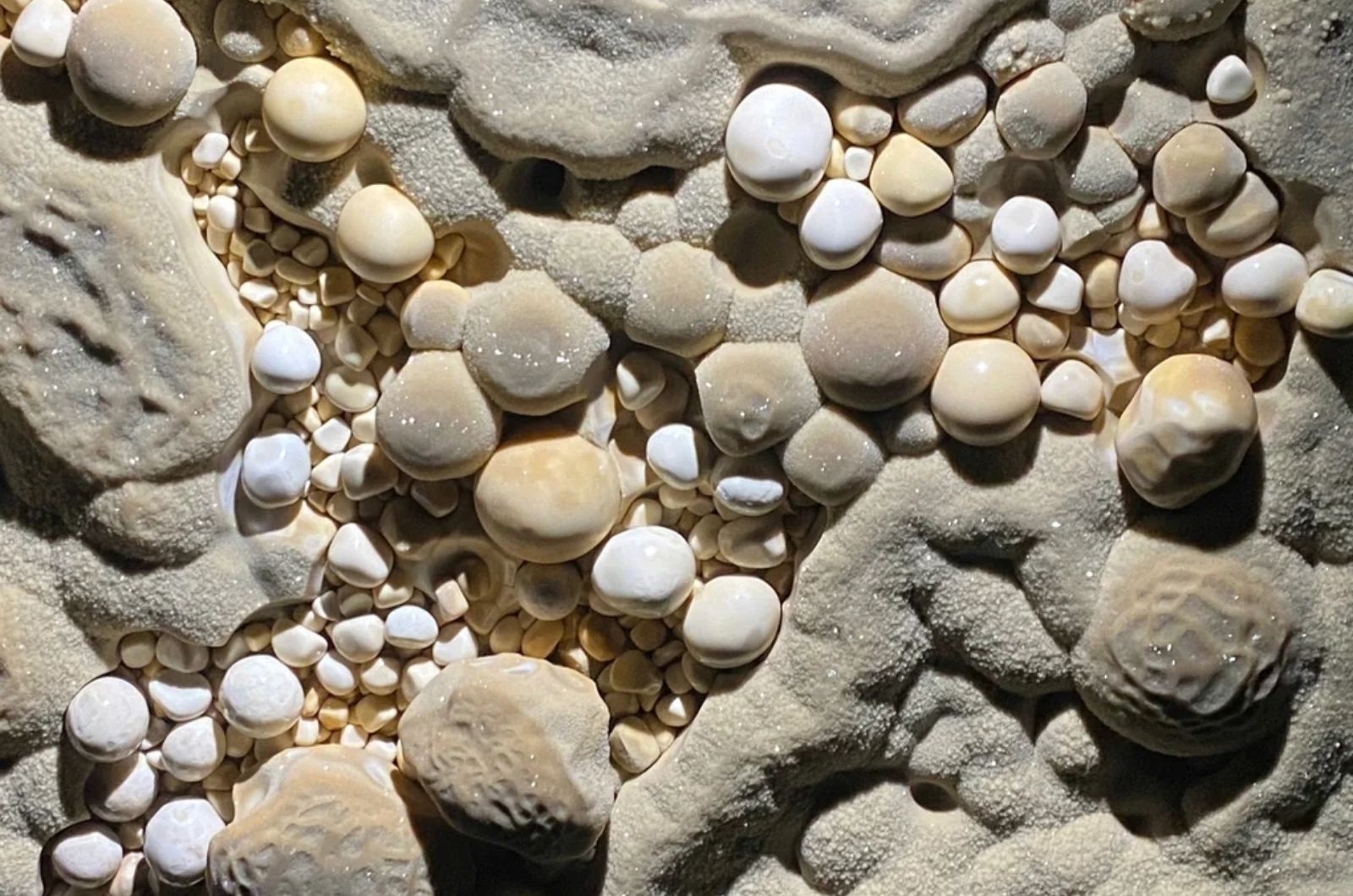
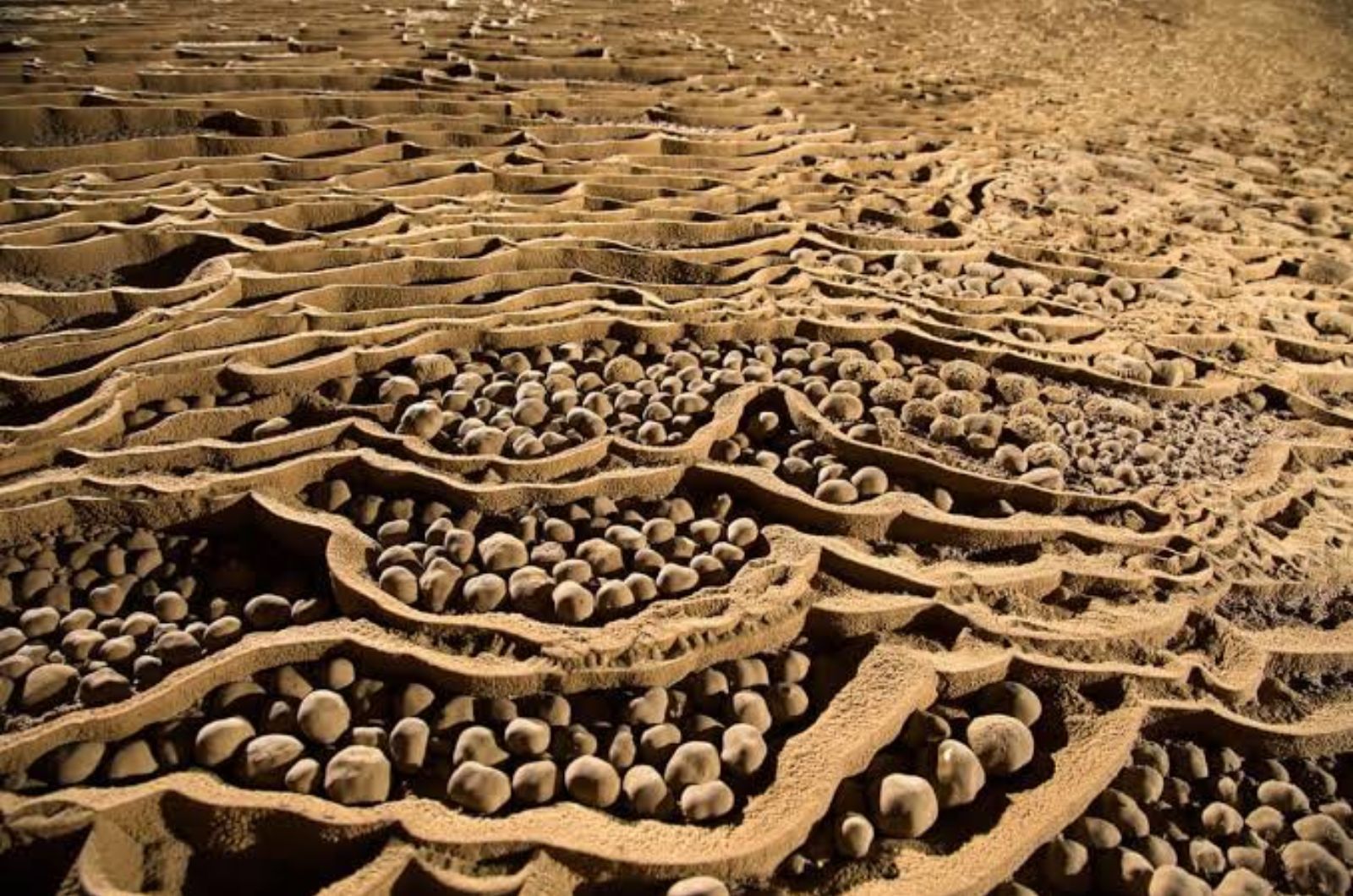
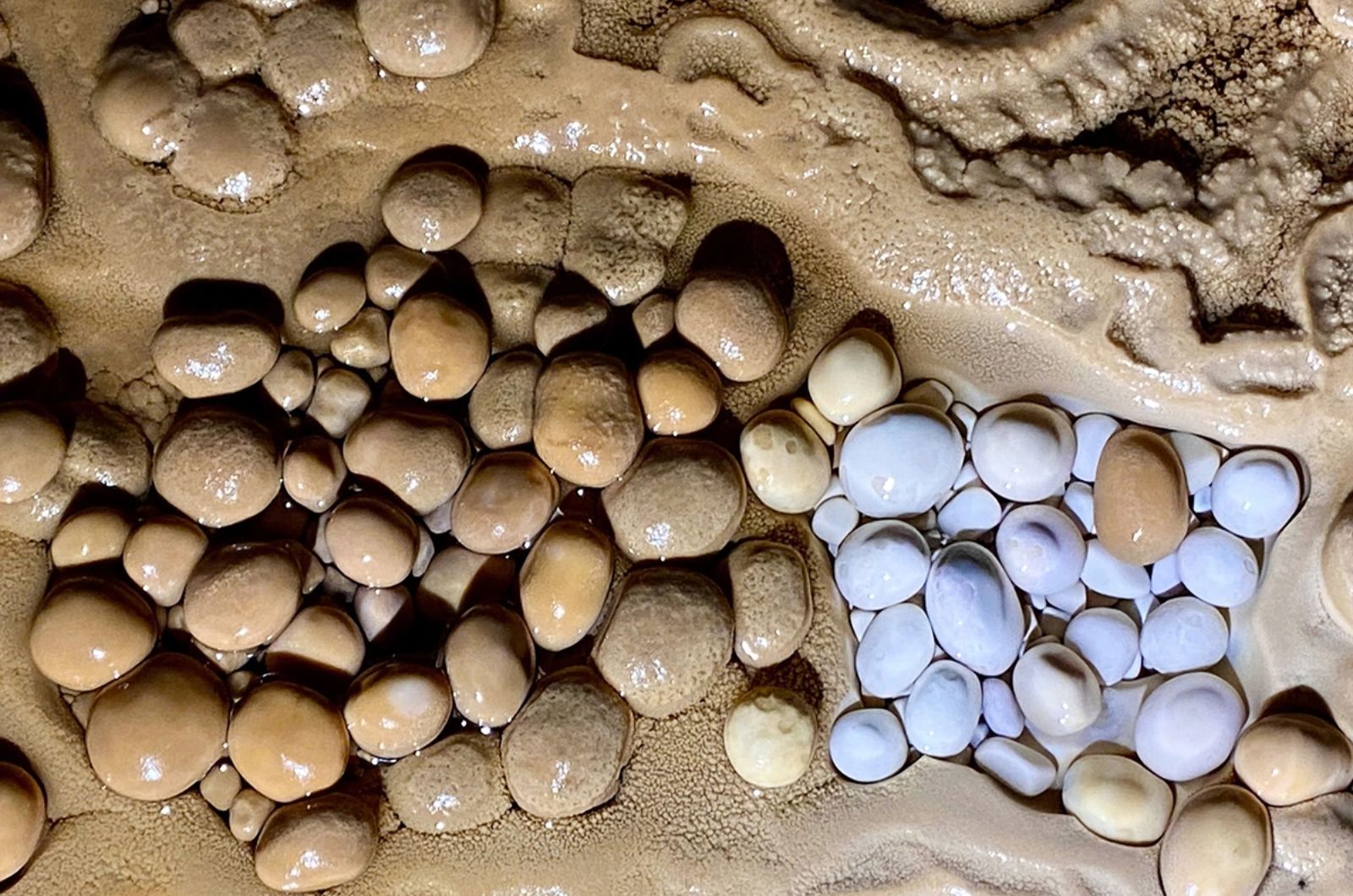
Cave pearls are a type of speleothem with a spherical or elliptical shape, formed through the precipitation of calcium carbonate (CaCO₃) around a small central nucleus. They vary in size, ranging from a few millimeters to several centimeters, with a smooth, glossy, perfectly round, and iridescent surface that reminds many of natural pearls.
The formation process of cave pearls
Cave pearls are created through an extremely slow geological process that can last from hundreds to thousands of years, passing through the following stages:
Rainwater seeps through limestone layers, dissolving minerals and becoming rich in calcium bicarbonate.
As the water drips into shallow pools in the cave (such as rimstone pools), changes in CO₂ concentration cause calcium carbonate to precipitate.
A small nucleus, such as a grain of sand, a rock fragment, a piece of speleothem, or organic matter, is continuously rotated by gentle water currents. As a result, mineral layers deposit evenly around it in concentric rings, gradually forming a cave pearl with its characteristic round shape.
This process only takes place when the cave environment has a stable water flow, moderate velocity, and suitable geochemical conditions. If the current is too strong, the cave pearls will be washed away; conversely, if the water is almost standing still, minerals will grow into stalagmites or stalactites instead of cave pearls.
Due to these strict environmental requirements, cave pearls are a very rare geological phenomenon, appearing only in a few limestone caves around the world, such as in Vietnam, Mexico, the United States, and a few other countries. In Vietnam, the Hung Cave system (Hung Thoong) in Phong Nha – Ke Bang National Park is one of the famous places home to rare cave pearls preserved almost intact.