Chuon Village Wine: The Passionate Flavor of Ancient Hue

Central

Thua Thien Hue

Sovaba.travel

Updated at: 24/09/2026

1. When did Chuon village wine originate?

Chuon village wine originates from An Truyen village (Nom name is Chuon village), an ancient village over 600 years old located along Tam Giang Lagoon, in Phu An commune, Phu Vang district, Thua Thien Hue province. Since the founding of the village, local people have tied their lives to the rivers, fields, and hometown produce. In the culinary treasury of the ancient capital, Chuon village wine has long been honored as the “number one famous wine”, carrying a history closely tied to the Nguyen Dynasty.

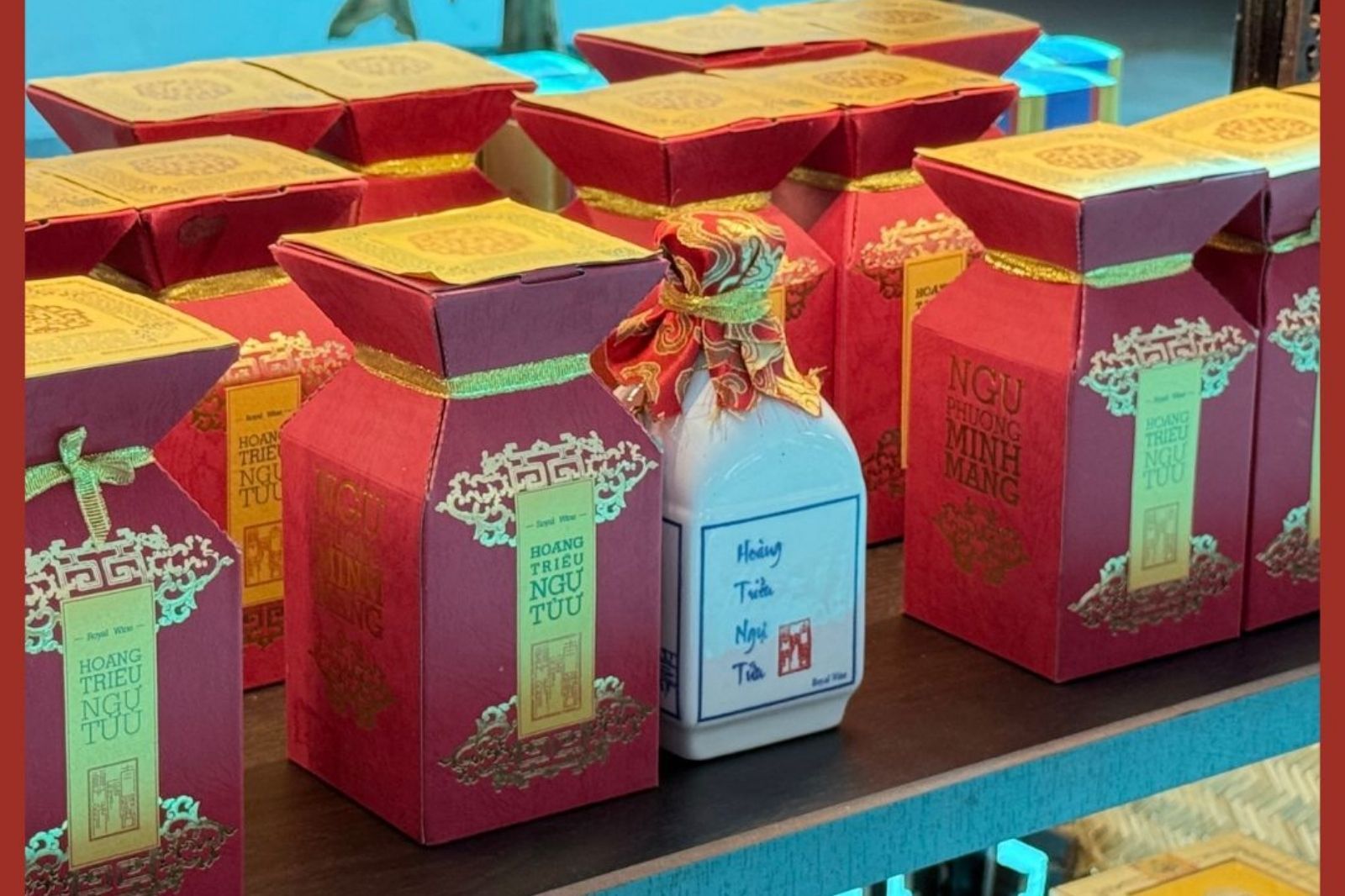
Legend has it that during the Nguyen Dynasty, the royal court selected the most fragrant sticky rice variety and assigned the villagers of Chuon to cultivate, harvest, and distill it into wine to present to the palace. That clear, warm white wine was used in major ceremonial sacrifices, becoming “Hoang Trieu Ngu Tuu” (Royal Imperial Wine) – a symbol of sophistication and nobility. Historical records also note that Chuon village wine was not only favored by royalty for tasting, but also used to steep medicinal herbs according to the famous Minh Mang Thang prescription.
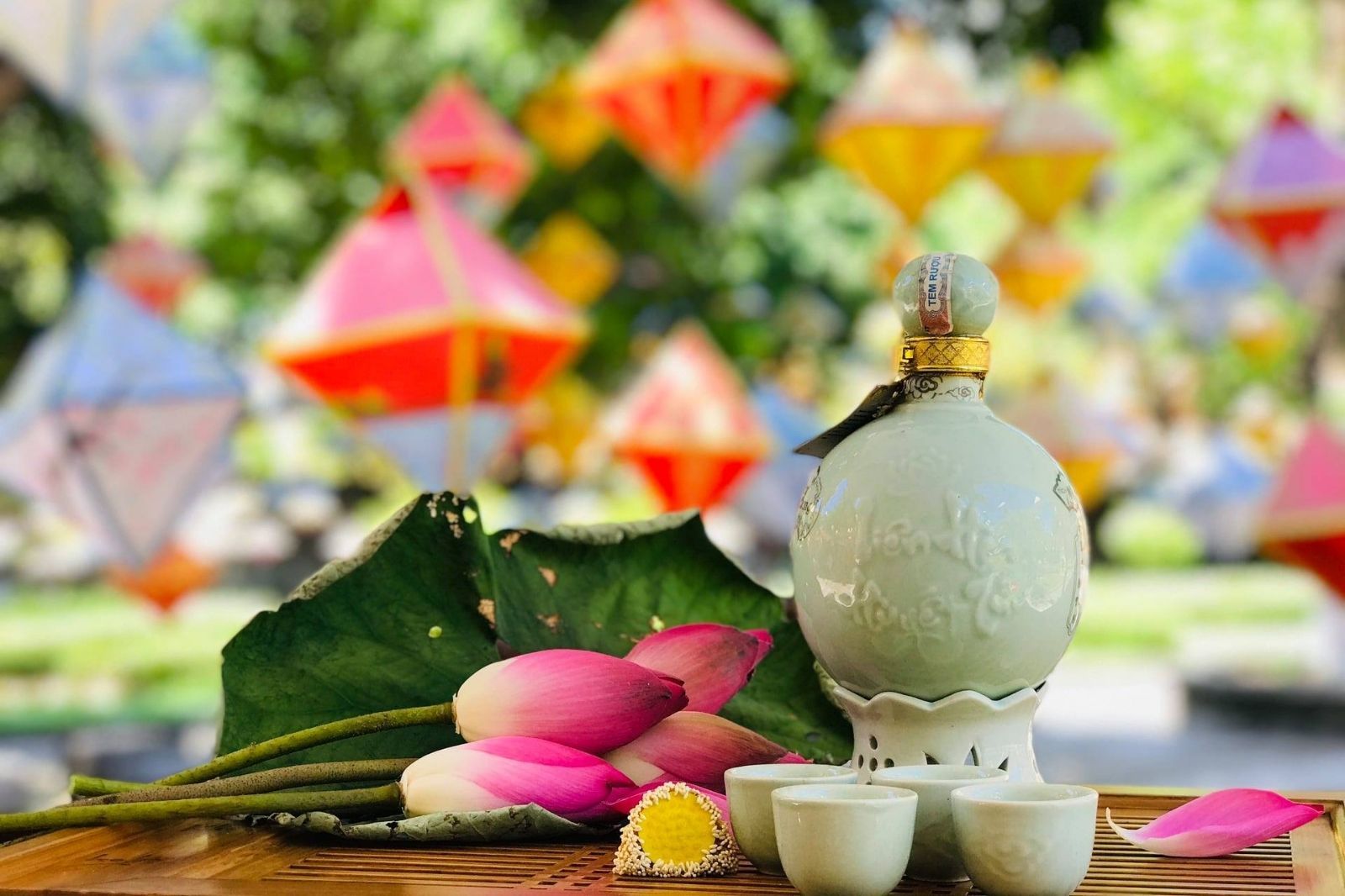
Rượu làng chuồn được mệnh danh là Đệ Nhất Danh Tửu
Photo: Chuon village wine is known as the Number One Famous Wine 

Today, although modern life has changed, Chuon village still keeps the flame of its traditional craft alive. Over 100 family-run alcohol kilns stay lit year-round, kitchen smoke and yeast aromas spread throughout the small hamlet, creating a bustling atmosphere where every drop of wine still holds the soul of Hue’s land, sky, and people.
2. Traditional brewing method of Chuon village wine

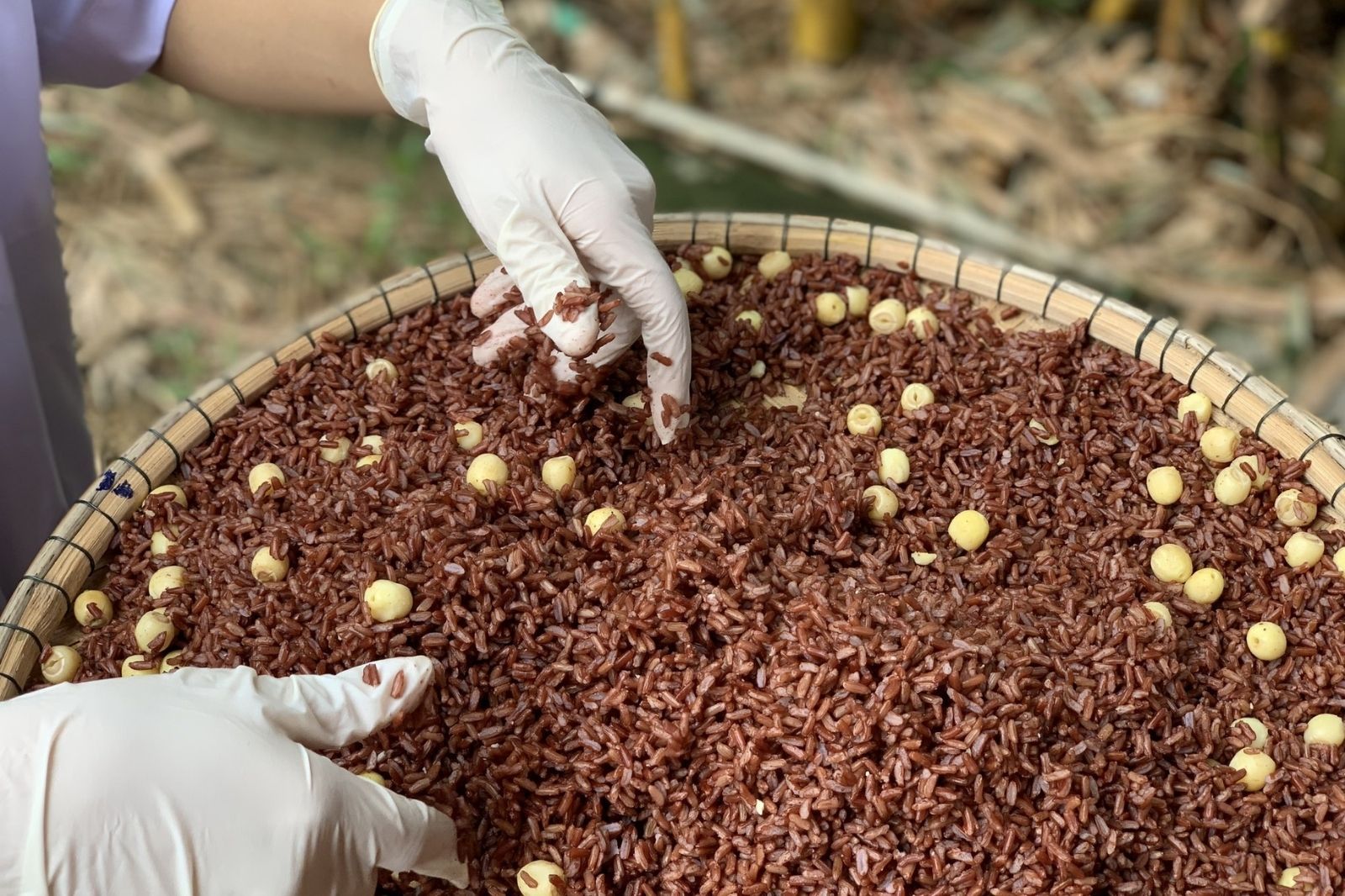
The process of making Chuon village wine is a delicate fusion of handcrafted skill and family secrets passed down through generations. The main ingredient is unpolished red sticky rice, harvested from brackish water fields along Tam Giang Lagoon. This specialty rice absorbs the savory flavor of the lagoon, creating a unique characteristic unlike anywhere else. The rice is carefully selected, soaked, fermented with traditional leaf yeast, and then distilled in ancient copper stills, producing crystal-clear, rich drops of wine.

Gạo dùng để nấu rượu là gạo lứt đỏ
Photo: The rice used to make wine is unpolished red rice 

The traditional process consists of several meticulous steps:

  • Ingredient preparation: Unpolished red sticky rice is harvested from local fields, combined with pure groundwater springs around Chuon village.
  • Fermentation: Yeast is made from various native leaves, blended according to a secret recipe, and fermented with rice to create a natural fermentation process.
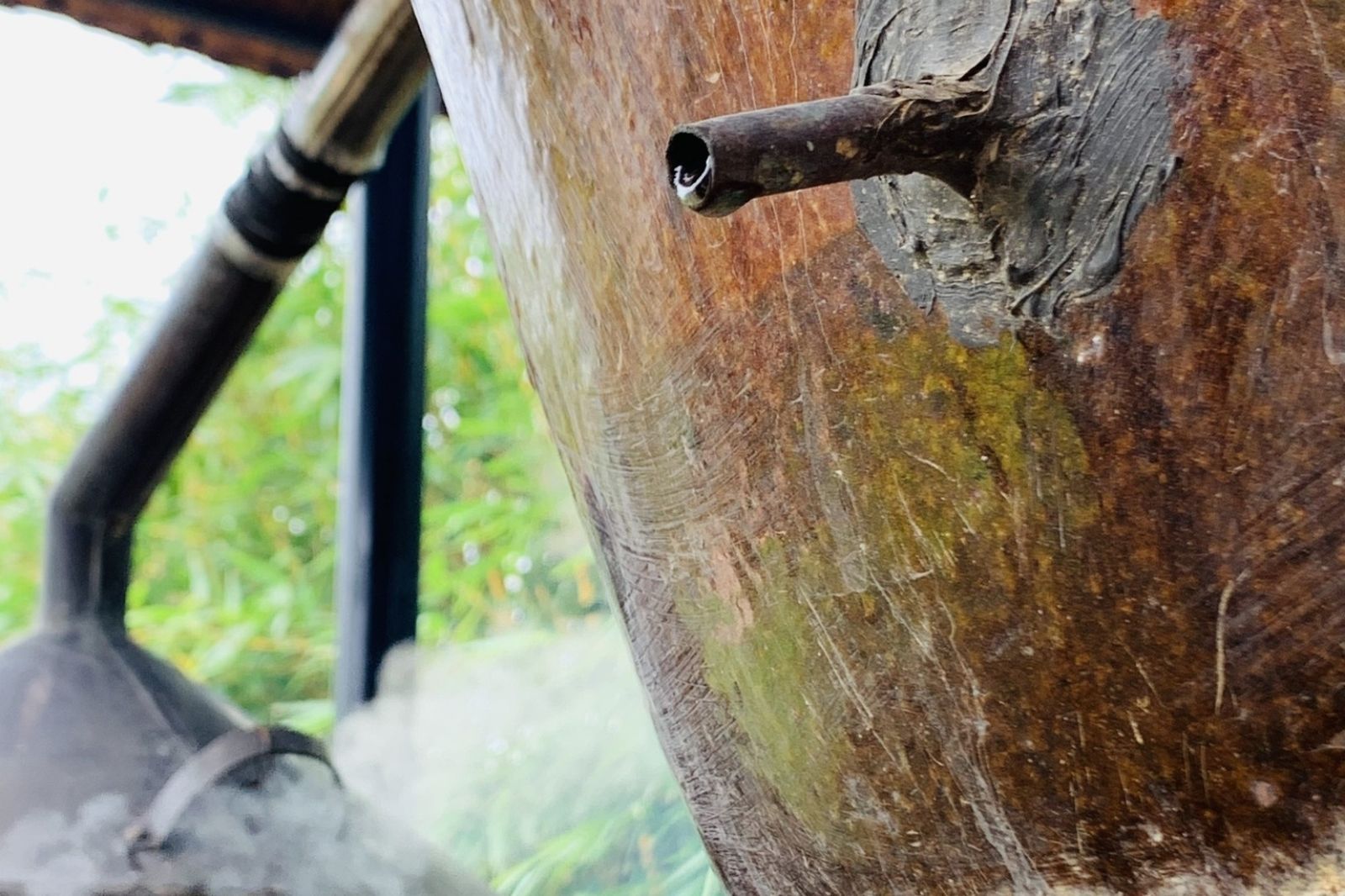
  • Distillation: The wine is cooked using firewood or rice husks, keeping the flame steady. The alcohol vapors are led through a copper still system, thereby preserving the pure flavor without impurities. Each batch usually lasts several days, requiring meticulous care and the craftsman's experience.
  • Premium version: Some special lines of wine are also steeped with the Minh Mang Thang medicinal prescription – a famous formula from the Nguyen Dynasty Royal Medical Institute, enhancing both nutritional value and aroma.

Today, to ensure food safety and hygiene, many distilleries have integrated modern filtration technology. However, the core of the craft—handcrafted methods, traditional leaf yeast, and the dedication of the artisans—remains preserved, ensuring that every drop of Chuon village wine remains deeply infused with the soul of the countryside and the warm flavor of Hue.

Để nấu được rượu làng Chuồn đòi hỏi sự tỉ mỉ trong nhiều công đoạn
Photo: Making Chuon village wine requires meticulous attention in many stages 

3. Signature flavor of Chuon village wine

Chuon village wine stands out with its rich, passionate flavor, spicy on the tip of the tongue yet leaving a smooth, sweet aftertaste that goes deep into the throat without causing headaches or discomfort. The alcohol content is usually quite high, around 40–50% ABV, but thanks to the pure distillation process, the wine feels "thick" and "heady" with just a small sip. When composer Van Cao tried it, he exclaimed a simple yet impressive compliment: “Good… Thick!”.

The aroma of the wine bears a distinct signature: the smell of rice yeast blends with the savory notes of Tam Giang Lagoon, creating a unique difference hard to confuse with other wines. The wine is usually crystal clear, but sometimes glimmers with a golden hue if infused with medicinal herbs, further enhancing its value and appeal. Unlike the strong southern rice liquor or the rustic northern corn wine, Chuon village wine carries the refined, deep spirit of Hue, closely tied to the river landscape and the slow pace of life of the ancient capital’s people.

Many tourists visiting Hue remark that Chuon village wine is not meant for getting drunk, but for tasting, contemplating, and experiencing a very unique aspect of Vietnamese culinary culture, where the yeast seems to embody both the rural spirit and the warmth of Hue’s people.

Hương thơm của rượu làng Chuồn có một vị rất riêng
Photo: The aroma of Chuon village wine has a very unique flavor 

Chuon village wine is not simply a beverage, but a living memory of a countryside village beside Tam Giang Lagoon, a cultural heritage steeped in the soul of Hue people. In every spicy drop of wine lies the aroma of rice, the savory flavor of the lagoon, and the hard work and love for the craft passed down through generations. Hopefully, through the information in this article, you will understand and appreciate even more the “number one famous wine” of Hue – a flavor both rustic and refined, worthy of raising a glass not only at banquets but also in the hearts of those who love Vietnamese culture.

Loading......

Featured destinations