Da Nang Muc Dong Procession Festival – A unique cultural feature honoring agriculture

Central

Da Nang

Sovaba.travel

Updated at: 24/09/2026

1. Origins and profound significance

Phong Le village has long been an ancient agricultural community. In the consciousness of the locals, Shennong is the patron god of agriculture, bringing lush and bumper harvests. For that reason, the Muc Dong festival was born to express gratitude to Shennong and pray for "favorable weather" for a prosperous year.

The special feature that makes this festival unique nationwide is the honor bestowed upon buffalo-herding children (muc dong). Muc dong are young herders closely attached to the fields. According to legend, in Phong Le village there is a sacred "Con Than" (Sacred Mound) where adults dare not set foot, yet strangely, only the herder children and their water buffaloes can approach without any harm. This place gradually became a gathering spot for the herder kids, which led to the creation of the Muc Dong Procession Festival – a festival dedicated exclusively to these children.
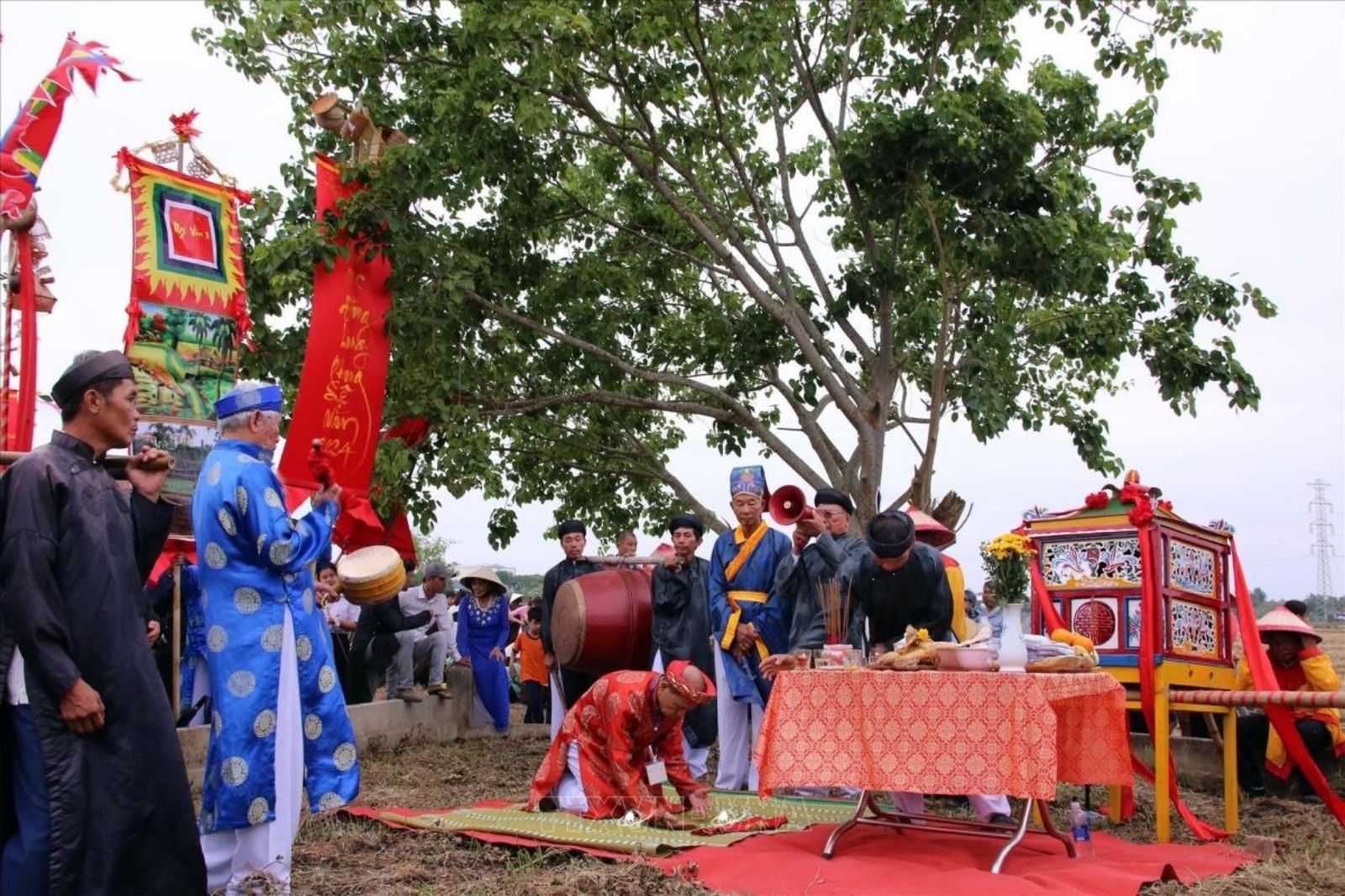
Festival aimed at thanking Shennong and praying for favorable weather for a prosperous year
Photo: Festival aimed at thanking Shennong and praying for favorable weather for a prosperous year

The festival carries not only spiritual significance to pray for bumper crops, but also plays an important role in binding the community, demonstrating solidarity and pride in the village traditions of the people of Phong Le.
2. Timeline and restoration journey

Traditionally, the Muc Dong Festival is held around the end of the 3rd lunar month (on the 29th and 30th days of the lunar month), a time when the harvest season has ended and villagers eagerly prepare for the festival.

In the past, the festival was held every 3 years, then gradually extended to every 6 years, and then 12 years. The last time the festival was held was in 1936 (the 11th year of King Bao Dai's reign), after which it was interrupted for 70 years.

It was not until 2007 that the Muc Dong Festival was restored thanks to the support of the Vietnam Association of Folk Artists, the Da Nang City Folk Arts Association, and the contributions and efforts of the people from the 17 clans of Phong Le village. The festival continued to be held in 2010, 2014, and most recently, local authorities developed a project to restore and maintain this unique festival.

3. Key solemn rituals

The Muc Dong Festival consists of two main important and solemn rituals, expressing respect for Shennong and honor for the herder children:

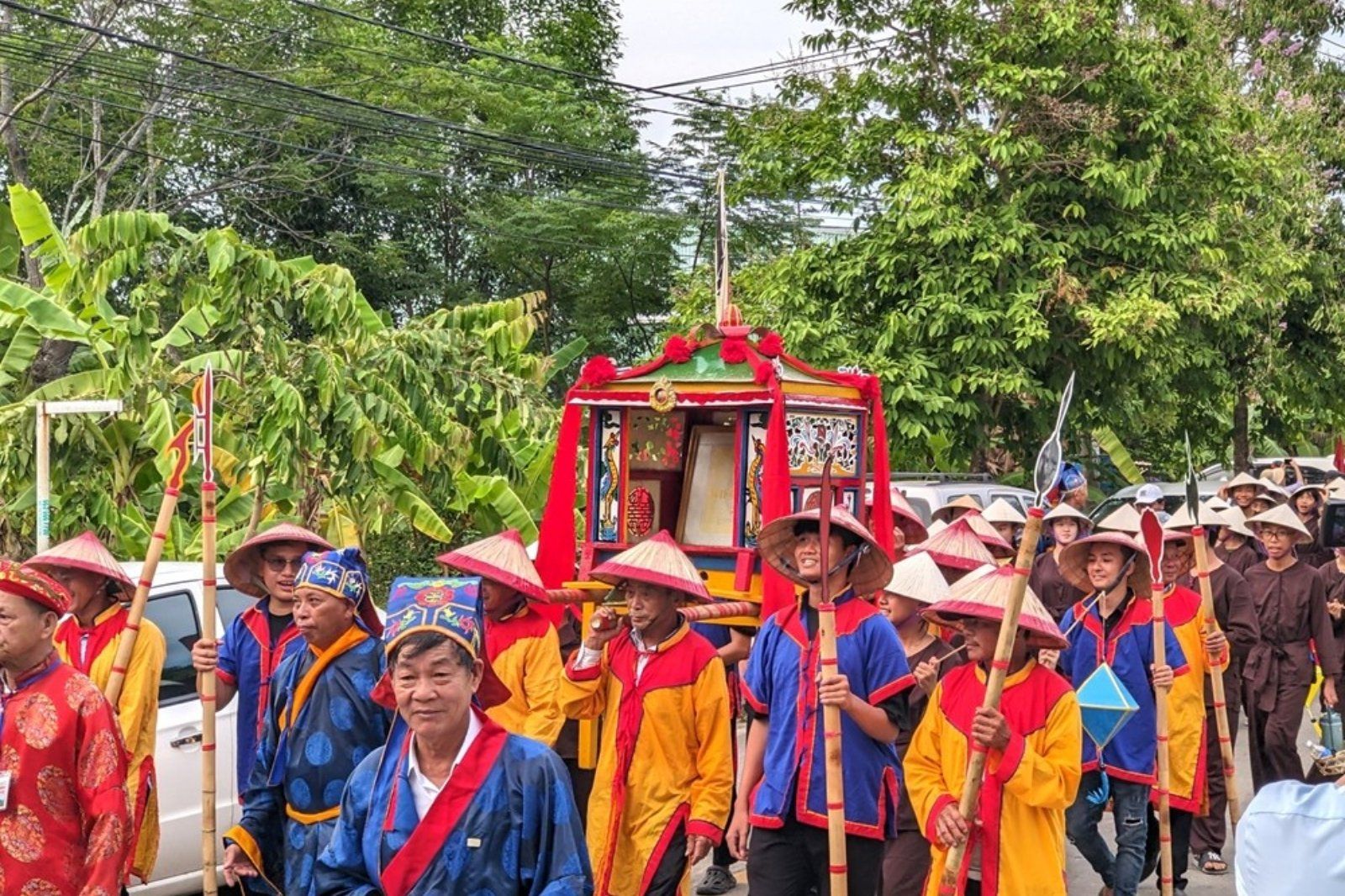
Ritual of processing Shennong to the communal house
Photo: Ritual of processing Shennong to the communal house
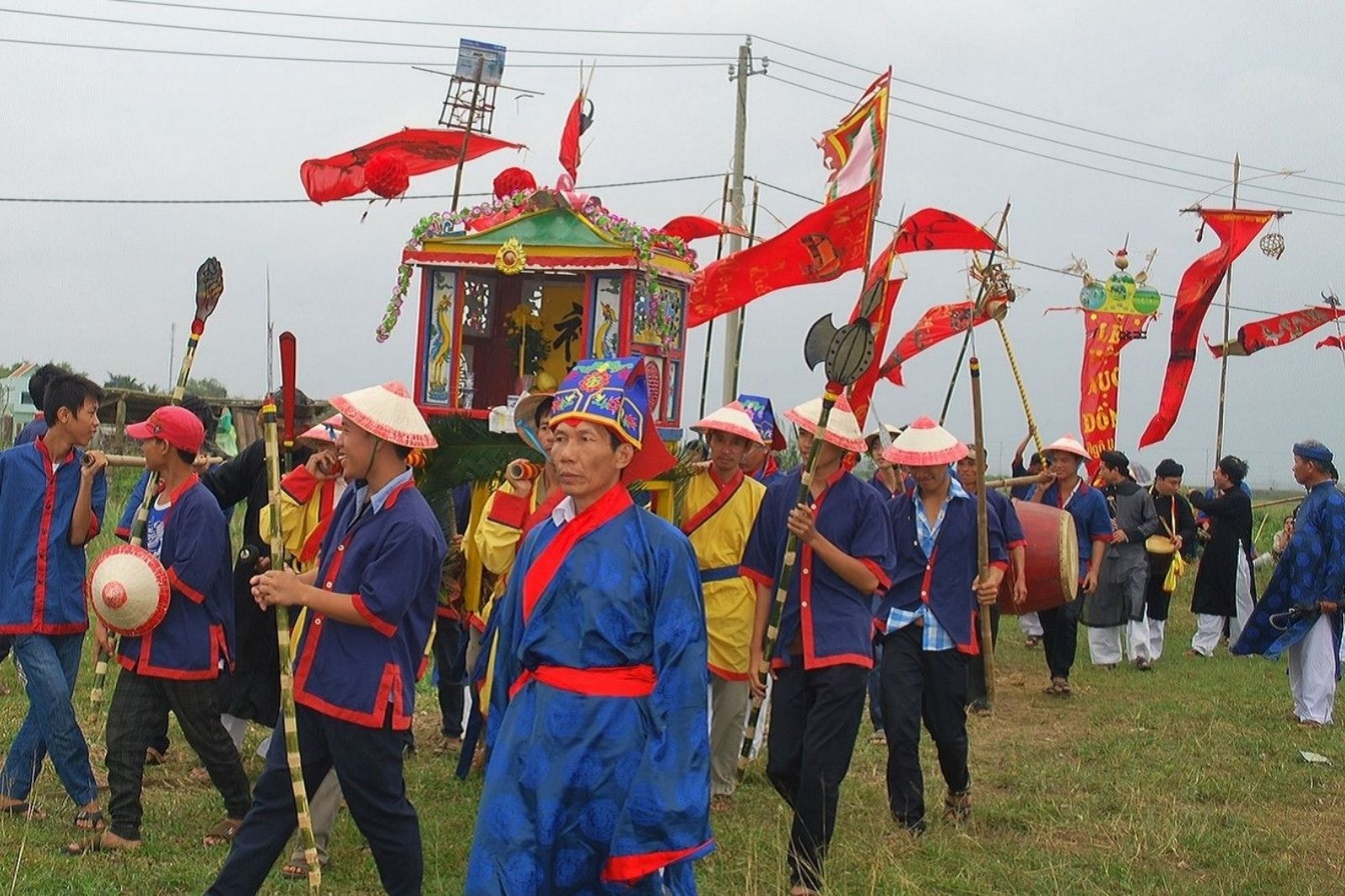
  • Field Stroll Ritual (Afternoon of the 29th day of the 3rd lunar month): The opening ceremony, where the herder children carry flags around the fields, shouting wishes for a bountiful harvest. This is also an occasion for villagers living away from home to return.
  • Ritual of Processing Shennong to the Communal House (Morning of the 30th day of the 3rd lunar month): This is the most important ritual. From early dawn, the procession including the Worshiping Committee, herder children, and villagers depart for Con Than (Sacred Mound).
    • At Con Than, the chief officiant performs a ceremony to ask the God to descend and pray for His help.
    • Next, the group of herder children holding flags run one after another around Con Than.
    • The palanquin carrying Shennong is borne by 4 strong young men back to the Shennong Communal House for the enshrining ritual.
    • Finally comes the offering ceremony to Shennong at the village communal house. Amidst the lively sound of gongs and drums and billowing incense smoke, traditional rituals are performed. At the end of the ceremony, offerings are brought down and distributed to everyone to share the blessings.

Before the festival, clans elaborately prepare long-handled “great flags” hanging symbols of the four sacred animals and especially the four occupations (scholars, farmers, artisans, merchants), among which images of hoes, plows, harrows, and winnowing baskets (symbols of farming) account for the majority, showing great respect for agriculture.

4. Vibrant and joyful festive activities

Beside the solemn ceremonial part, the festive activities of the Muc Dong Festival take place extremely vibrantly and lively, attracting numerous locals and tourists.

The herder children and villagers enthusiastically participate in many traditional folk games such as: dragon-snake game, cluster hitting, co ganh board games, wrestling, stick pushing, tug of war, pot smashing... creating a joyful atmosphere steeped in rural charm.

In particular, on the final night of the festival, there are performances of Muc Dong singing and Tuong (classical opera) at the courtyard of the Ancestral House (Nha tho Tien Hien). The purpose of the singing night is to thank Shennong and the deities for protecting the villagers with prosperity and bountiful crops. Immersing oneself in the sounds of Tuong singing and lively gongs and drums under the flickering torchlight is a delightful and rare cultural experience.

Villagers eagerly participating in the festival
Photo: Villagers eagerly participating in the festival

The Muc Dong Procession Festival is not merely a recreation of an ancient custom, but a timeless cultural message preserved and passed down by Phong Le village. It closes with vibrant drum and gong beats, yet opens up a space of bonding and deep pride in one's roots. Through the image of innocent herder children, through the solemn Shennong procession ritual, and through cheerful folk games, the festival delicately honors the value of labor, prosperity from rice grains, and the sacred role of agriculture. The Muc Dong Festival is not only Da Nang's "precious gem", but also a profound reminder of the beauty of tradition and the necessity of preserving unique cultural values, so that with every festival season, the past comes alive vividly, anchoring human souls amid the bustling flow of modern life.

Loading......

Featured destinations