Dai Giac Pagoda - Quang Binh: Ancient Architecture and Tranquil Atmosphere
Central
Quang Binh
Sovaba.travel
Updated at: 24/09/2026
1. Introduction to Dai Giac Pagoda - Quang Binh
Dai Giac Pagoda is a prominent scenic landmark of Central Vietnam, attracting thousands of pilgrims and tourists each year. Located right in the heart of Dong Hoi City, the pagoda is not only a familiar place of worship for local Buddhists, but also a famous spiritual destination on the Quang Binh tourism map. Spanning a large area of about 8,000 m², Dai Giac Pagoda offers an airy space that harmoniously blends ancient architecture with lush green nature, creating a perfect spiritual landscape.
The name “Dai Giac” means “light of great enlightenment,” expressing the wish to spread the wisdom and compassion of Buddhism to everyone. According to the blessings from Most Venerable Thich Tri Quang, Dai Giac Pagoda is not only a place of practice, but also a symbol of inheriting and promoting the Buddhist tradition of Quang Binh, where miraculous temples like Than Dinh Pagoda once existed in the past.
Photo: The pagoda is considered one of the largest pagodas in Quang Binh
2. History of Dai Giac Pagoda
The history of Dai Giac Pagoda is closely linked to the ups and downs as well as the tireless efforts of monks, nuns, and Buddhists. Before 2010, the land where the pagoda stands was just a 3.5-meter-deep lake. Venerable Thich Tanh Nhiep mobilized monks, nuns, and Buddhists to fill the lake and start building the pagoda with simple materials such as bamboo. In 2013, Typhoon Wutip devastated the structure, but with devotion and unity, the pagoda was rebuilt more grandly. The grand inauguration ceremony took place on March 19, 2016, marking an important milestone, transforming Dai Giac Pagoda into a prominent landmark of Central Vietnam.
The pagoda is not only a place of worship, but is also associated with cultural stories, such as the legend of the love story between Zen Master Thiet Thanh Lieu Dat – the first National Master in the South – and a princess of the Nguyen Dynasty, adding to the historical and spiritual value of the pagoda.
3. The Ancient Architecture of Dai Giac Pagoda
Dai Giac Pagoda stands out with its traditional architecture steeped in Vietnamese identity, harmoniously combining solemnity and mystical beauty. Highlights of the pagoda's architecture include:
9-Storey Amitabha Stupa
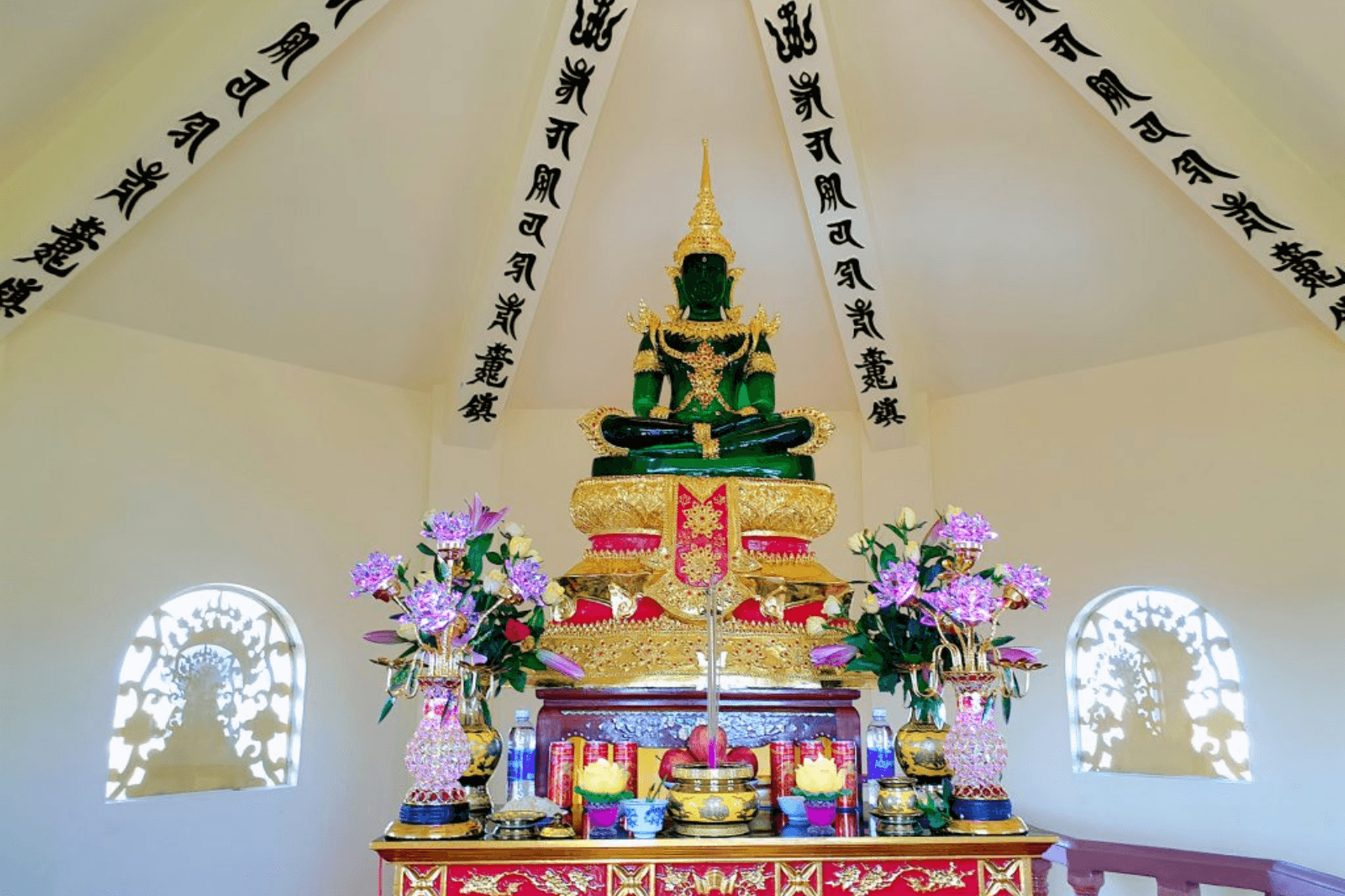
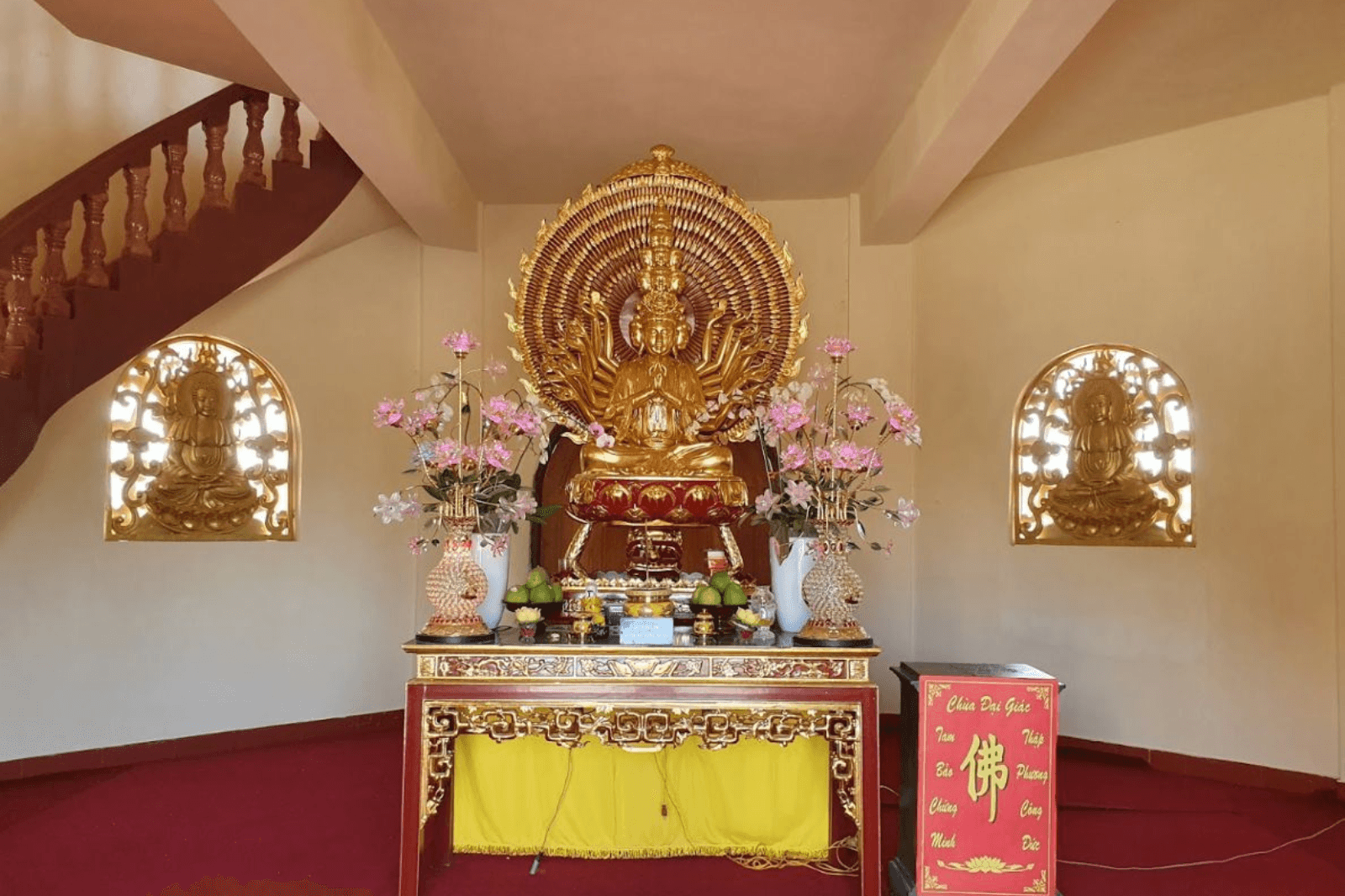
The 9-storey Amitabha Stupa is a magnificent architectural work standing tall in the pagoda grounds. The top floor worships Vairocana Buddha, carved from precious jade brought from Myanmar, exuding majesty and sacredness. The lower floors are meticulously decorated, lacquered, and gilded, worshiping deities according to Buddhist beliefs. In particular, the ground floor houses Cundi Bodhisattva, featuring an intricately carved statue with many arms holding dharma instruments, demonstrating compassion and divine power.
Photo: Jade Vairocana Buddha statue brought from Myanmar
Marble Amitabha Buddha Statue
One of the most prominent features of Dai Giac Pagoda is the monolithic marble Amitabha Buddha statue, standing 9 meters tall and weighing 40 tons. It is considered one of the largest marble statues in Vietnam today, serving as a spiritual symbol of the pagoda. Placed in an open space, the statue conveys a sense of purity and serenity to anyone who pays homage.
Main Hall and Worship Statues
The Main Hall of Dai Giac Pagoda is solemnly designed, with statues of Manjushri Bodhisattva, Samantabhadra Bodhisattva, Avalokiteshvara Bodhisattva, and Ksitigarbha Bodhisattva enshrined on both sides. The bronze statue of Shakyamuni Buddha, designed by Hoang Anh Technology Co., Ltd. (Bac Ninh), is a crucial highlight of the worship space. Architectural details such as wooden beams, soft curved tile roofs, and warm tones like yellow, brown, and brick red create a space that is both ancient and inviting.
Three-Entrance Gate (Tam Quan) and Meaningful Couplets
The Three-Entrance Gate of Dai Giac Pagoda features engraved couplets that express the deep meaning of the pagoda's name: “Great compassion expands, now knowing that this mind is Buddha; Enlightenment is joy and letting go, instantly realizing Buddha is mind!” This couplet emphasizes compassion and enlightenment, serving as a guiding star for those who come to the pagoda to seek peace of mind and cultivate goodness.
4. Tranquil and Sacred Space
Stepping into Dai Giac Pagoda, visitors will immediately feel a sense of peace and transcendence. The pagoda campus is surrounded by green trees, fresh air, and the gentle fragrance of burning incense, creating a quiet sanctuary that helps dispel the cares of daily life. The resonating pagoda bell acts as a reminder of peace and virtue, bringing lightness and serenity to the visitor's soul.
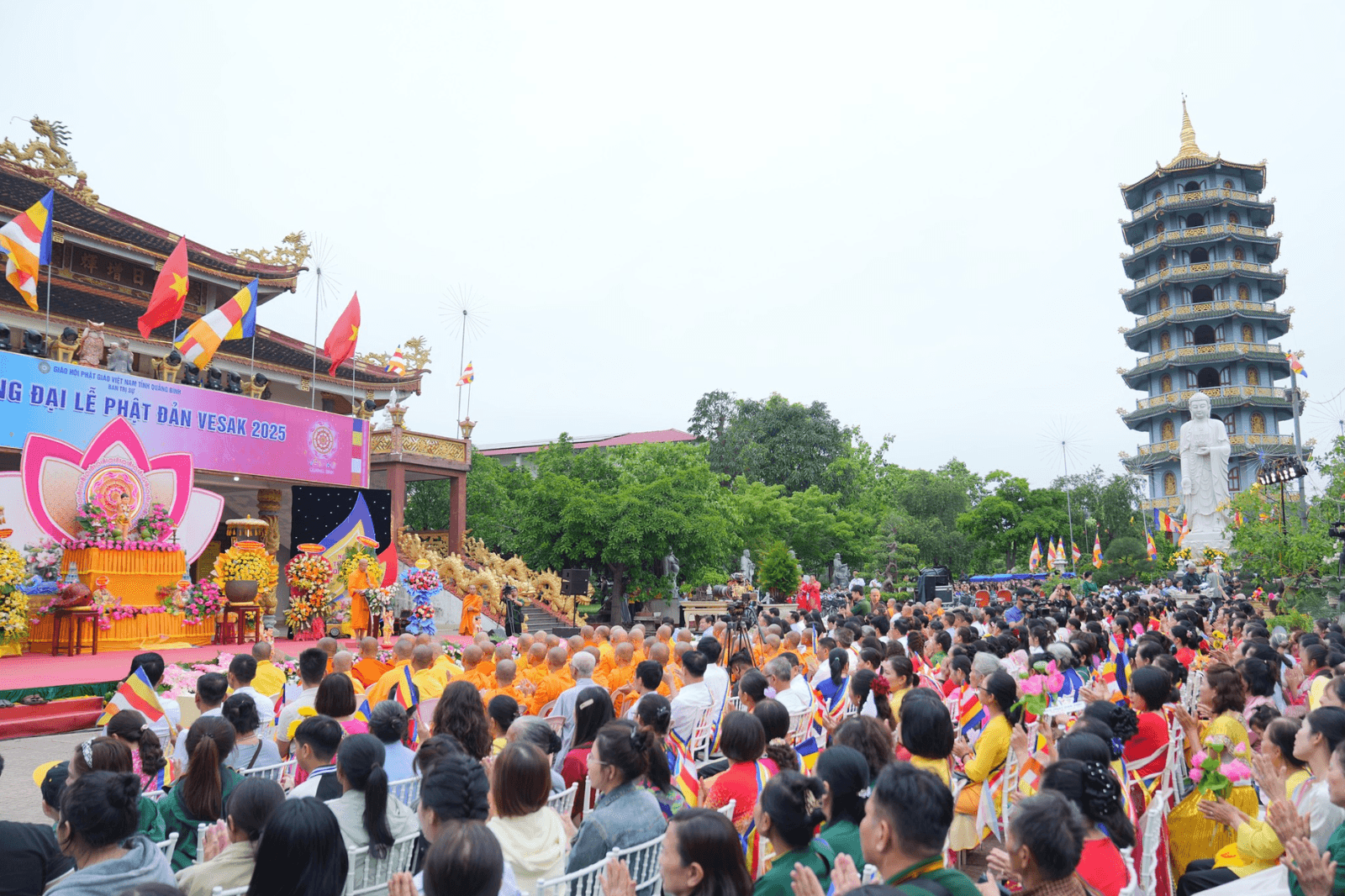
Dai Giac Pagoda also organizes summer retreats titled “Nurturing the Soul” for students, offering the younger generation an opportunity to learn about the Dharma and refine their character. It is also the venue for major Buddhist festivals such as Vesak (Buddha's Birthday) and Vu Lan, drawing large numbers of Buddhists and tourists from all over.
Photo: Dai Giac Pagoda during the Buddha's Birthday season
5. Must-Do Experiences at Dai Giac Pagoda
Visiting Dai Giac Pagoda, you can offer incense, praying for peace, fortune, and health for your family and loved ones. The sacred ambiance along with the majestic Buddha statues will bring a sense of serenity, helping you regain balance in your soul.
Exploring unique architectural structures such as the Amitabha Stupa, the Marble Amitabha Buddha Statue, and the Main Hall provides an opportunity to admire traditional Buddhist art. Every detail at the pagoda is meticulously cared for, reflecting the devotion and creative spirit of its builders.
If you have the opportunity, consider joining the retreats or festivals at the pagoda to gain a deeper appreciation of Buddhist culture and the spiritual life of local residents in Quang Binh. These activities not only help you relax, but also provide valuable lessons about compassion and letting go.
Tips when visiting Dai Giac Pagoda
To ensure your pilgrimage to Dai Giac Pagoda is complete and fulfilling, keep the following tips in mind:
Polite attire: Wear modest clothing, avoiding overly short or revealing outfits, to show respect for the spiritual setting.
Maintain silence and order: Avoid talking loudly, joking, or using inappropriate language on the pagoda grounds.
Best time to visit: The pagoda is open year-round, but major festival occasions such as the 15th day of the 1st lunar month, Buddha's Birthday (15th day of the 4th lunar month), and Vu Lan Festival (15th day of the 7th lunar month) are ideal times to experience the sacred atmosphere and cultural activities.
Convenient transportation: Located in the center of Dong Hoi City, the pagoda is easy to reach by motorbike, car, or taxi. You can use Google Maps or ask locals for quick directions.
Photo: Statue of Cundi Bodhisattva
Dai Giac Pagoda is not only a prominent ancient architectural masterpiece among pagodas in Quang Binh, but also a haven for faith, bringing inner tranquility. Amidst life's hustle and bustle, sometimes we simply need a place to pause, breathe deeply, and be still. Dai Giac Pagoda is not a place to seek glamour, but a destination to rediscover oneself through leisurely steps in the courtyard, the drifting scent of incense in the air, and an extraordinarily serene feeling when letting go of outside noise.
If you visit Quang Binh one day, let Dai Giac Pagoda be your first or last stop—because it is not merely an ancient piece of architecture, but a quiet sanctuary crafted for those who know how to listen and feel. In your journey to discover the sun-drenched and windy land of Central Vietnam, Dai Giac Pagoda is a place where the soul can find shelter, even if just for a fleeting moment.