Dich Long Pagoda: Discover the "Third Most Beautiful Cave in the South" with Unique Stone Architecture

Northern

Ninh Binh

Sovaba.travel

Updated at: 24/09/2026

1. Where is Dich Long Pagoda located?

Dich Long Pagoda is located in Dich Long Village, Gia Tran Commune (formerly Gia Thanh Commune), Gia Vien District, Ninh Binh Province. The cave-pagoda complex nestles halfway up a limestone mountain, about 1–2 km from National Route 1A and near the poetic Day River, creating a peaceful and meditative scenery amidst picturesque natural landscapes.

The harmonious blend of rocky mountains, rivers, and ancient architecture bestows Dich Long Pagoda with a beauty that is both sacred and contemplative. From the center of Ninh Binh City, visitors need only travel about 15–20 km to reach this famous spiritual destination. Besides possessing a striking landscape, Dich Long Pagoda also holds significant historical and cultural value for the ancient capital land. In 1990, the pagoda-cave complex was recognized as a National Historical-Cultural Relic, becoming an attraction for numerous tourists and Buddhist pilgrims from all over.
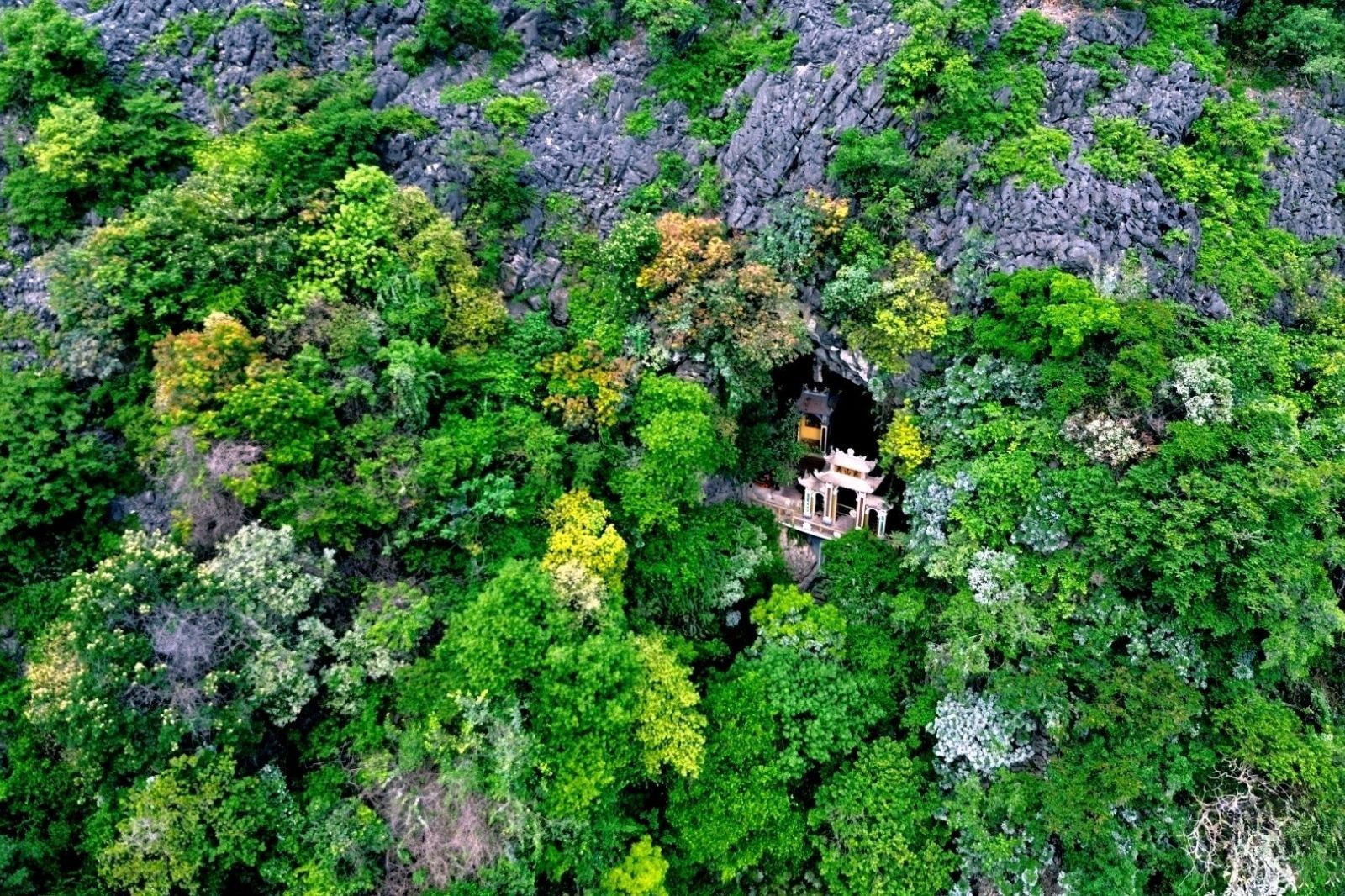
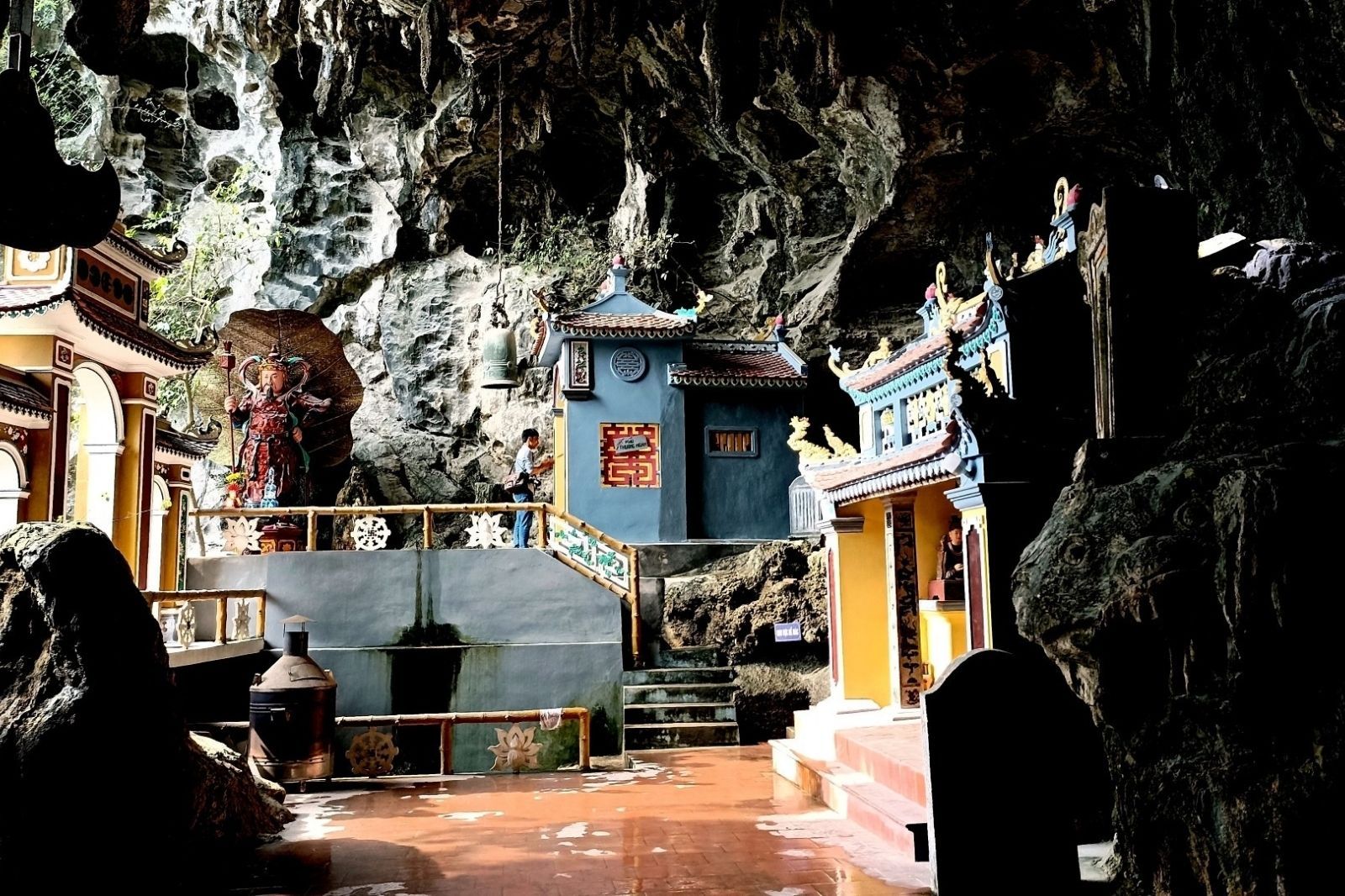
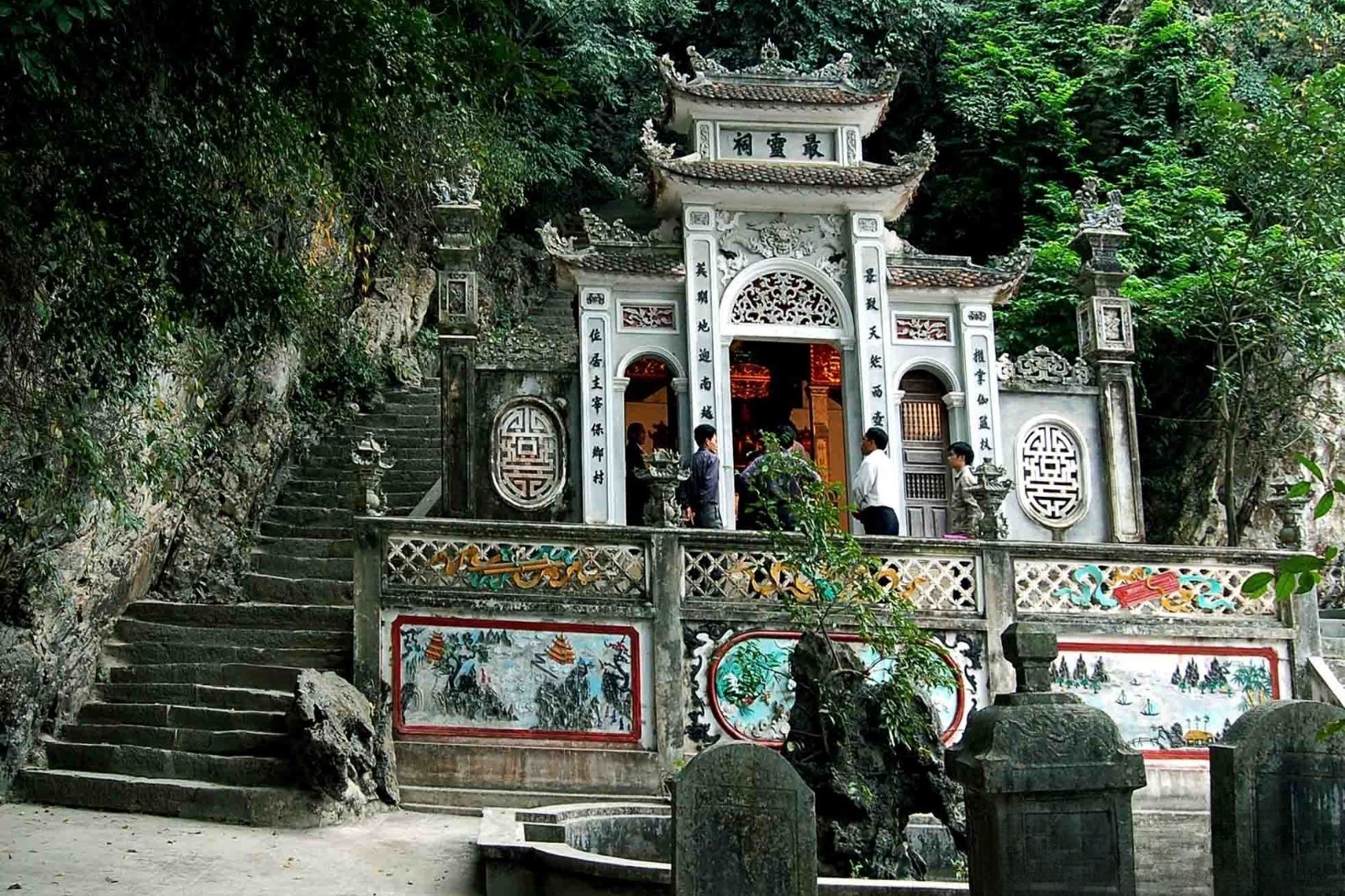
Dich Long Pagoda located halfway up the mountain
Photo: Dich Long Pagoda located halfway up the mountain

2. History of Dich Long Pagoda and the meaning of its name

According to folklore, around 1739–1740 during the reign of King Le Hien Tong (Canh Hung era), a woodcutter while climbing the mountain to gather firewood and fruit accidentally discovered the cave entrance. As the wind blew through the rock crevices, the echoing sound created a whistling melody resembling a flute amidst the mountain forest. Since then, this place has been named "Dich Long", meaning "flute sound in the stone cave" or "mountain flute". Inside the cave are many natural stalactites with unique shapes reminiscent of Buddha statues and sacred creatures in folk beliefs. Recognizing its sacred beauty, local people established altars and built a pagoda to worship the Buddha right inside the cave, originally named "Nham Son Dong Co Am Tu".

In 1821, during an inspection tour through Ninh Binh, Emperor Minh Mang visited this scenic spot and bestowed the title "Nam Thien De Tam Dong" (The Third Most Beautiful Cave in the South), ranking behind Huong Tich Cave (The First Most Beautiful Cave in the South) and Bich Dong (The Second Most Beautiful Cave in the South). That title affirmed the special landscape and spiritual value of Dich Long within Vietnam's system of famous scenic spots. Not only a sacred place of worship, Dich Long Pagoda is also associated with the nation's struggle history. During the anti-French resistance period, it served as a revolutionary base, a place for hiding weapons, and a garrison for resistance forces. Annually, the Dich Long Pagoda Festival is held on the 6th–7th days of the 3rd lunar month, attracting numerous locals and visitors from all over to offer incense, pray for peace and good fortune, and wish for favorable weather and bountiful harvests.

Inside the cave there are many shrines
Photo: Inside the cave there are many shrines

3. What makes the unique stone architecture of Dich Long Pagoda special?

The most prominent highlight of Dich Long Pagoda is its unique stone architecture, a harmonious combination of human craftsmanship and the grand beauty of nature. The entire complex is laid out in the shape of the Sino-Vietnamese character "Tam" (三) at the foot of the limestone mountain, spanning over 1 hectare, with its front facing the poetic Day River, creating a sacred and serene atmosphere.

Standing out within the complex is Dinh Da (Stone Shrine), also known as the Stone Pagoda, consisting of 5 bays dedicated to Saint Nguyen Minh Khong (Ly Quoc Su). The structure impresses with a system of 16 elaborate monolithic stone pillars. Among them, 8 large pillars about 4 m high are carved with intricate dragons soaring through clouds, showcasing the master stone-carving skills of ancient artisans. The remaining 8 pillars, about 3 m high, are inscribed with Chinese characters praising the virtues of predecessors. The entire system of pillars, beams, and purlins is made of bluestone using traditional timber-style frame joinery, creating a rare stone architectural masterpiece preserved to this day.

Beside Dinh Da, the pagoda complex also includes a triple-arched gate (tam quan), a bell tower, Ha Pagoda with a 'Dinh' (丁) shaped architectural layout, a crescent lake, a Buddha garden, a stupa garden, and a system of guardian statues bearing strong traditional Buddhist influences. Notably, a bronze bell weighing nearly one ton hanging in a cave dome about 8 m high serves as a unique highlight, producing sacred echoes throughout the mountainous space.

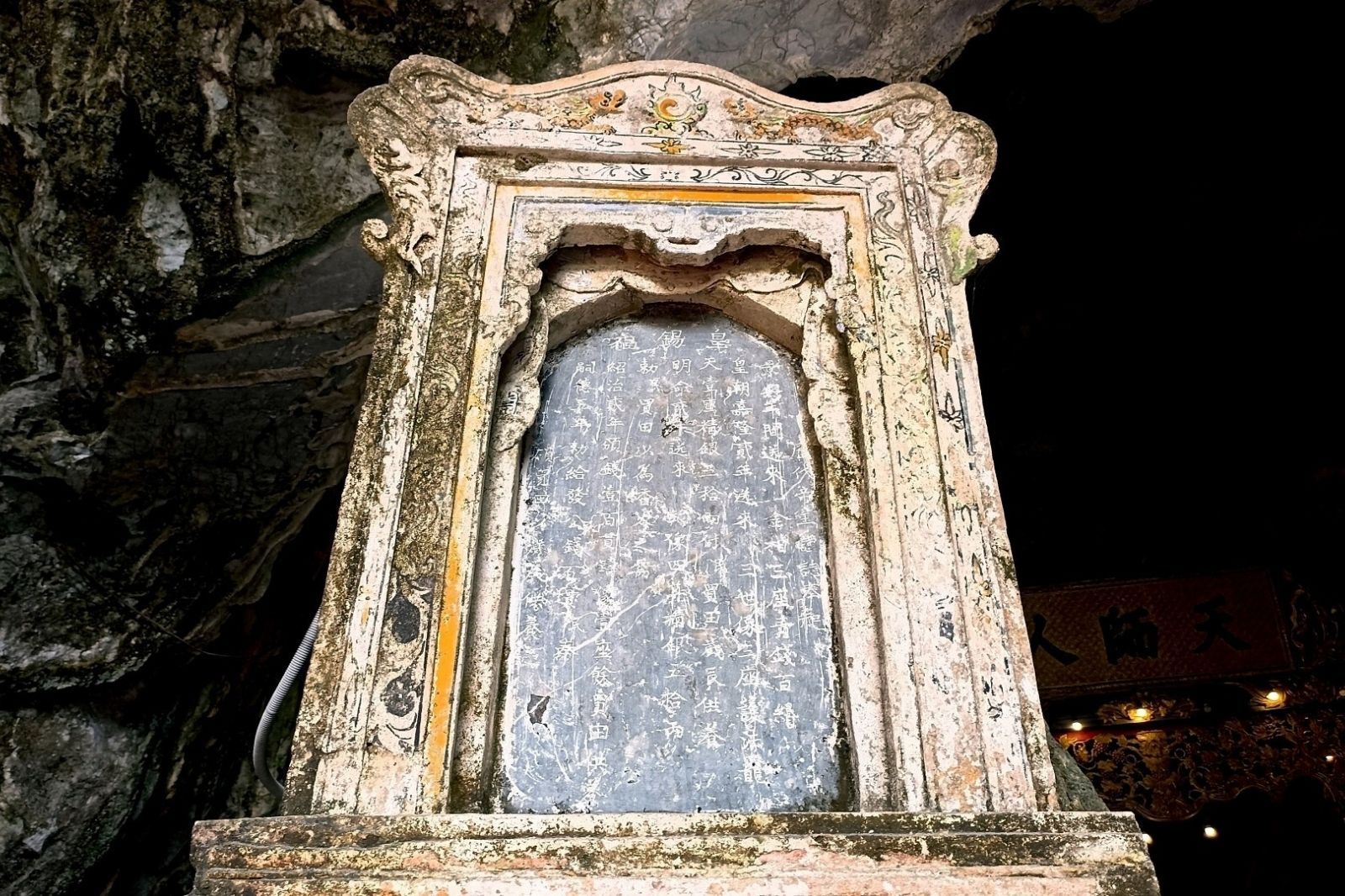
Stone stele carved with Chinese characters inside the cave
Photo: Stone stele carved with Chinese characters inside the cave

4. The natural cave system inside Dich Long Pagoda

The cave system is the heart of the "Third Most Beautiful Cave in the South", consisting of three interconnected caves: Light Cave (Hang Sang), Dark Cave (Hang Toi), and Deep Cave (Hang Sau). To enter the caves, visitors must climb over 100 stone steps from Duc Ong Palace.

  • Light Cave (Buddha Worshiping Cave): About 20m high, featuring sparkling stalactites like hanging bells and a jade well filled with water dripping from stalactites year-round. Natural sunlight streams through skylights, creating a bright and mystical space.
  • Dark Cave: Filled with stalactites of myriad shapes, resembling rolling waves or five-colored clouds. Tapping on the stalactites produces sounds like bells and drums, known as nature's "stone xylophone".
  • Deep Cave (or the end of Light Cave): Features pathways leading up to heaven and down to the underworld on opposite sides, with stalactites shaped like dragons and softshell turtles. Strong winds blow through to create whistling flute sounds, like a giant stone flute.

Stalactites and stalagmites here can emit sounds like musical instruments when gently tapped, combining with water droplets to create a unique natural symphony. Many believe water from the "sacred well" inside the cave has calming and healing properties.

The Third Cave in the Southern Sky
Photo: The Third Cave in the Southern Sky

5. Notable structures and statues at Dich Long Pagoda

Beside its unique cave architecture value, Dich Long Pagoda also leaves a strong impression with its system of structures and worshipped statues rich in historical and spiritual significance, harmoniously arranged within the natural stone space. Each item not only possesses worship value but also contributes to the solemn, ancient beauty of the entire complex.

  • Dinh Da (Stone Shrine): Dedicated to Saint Nguyen Minh Khong (Ly Quoc Su), featuring 5 main bays and soaring bluestone pillars.
  • Ha Pagoda: 3 bays, featuring a stone altar throne and stone ritual objects.
  • Statues: Thousand-armed Buddha statue, two Guardian statues at the cave entrance, and other guardian statues. Notably, a bronze bell weighing nearly 1 ton from the Nguyen Dynasty hangs inside the cave dome.

In addition, the pagoda grounds are dotted with a crescent lake and a Buddha garden with stupas, offering a peaceful and relaxed atmosphere. All blend together to create a space that is both sacred and tranquil, making every step taken during a visit to Dich Long Pagoda a reflective and memorable experience.

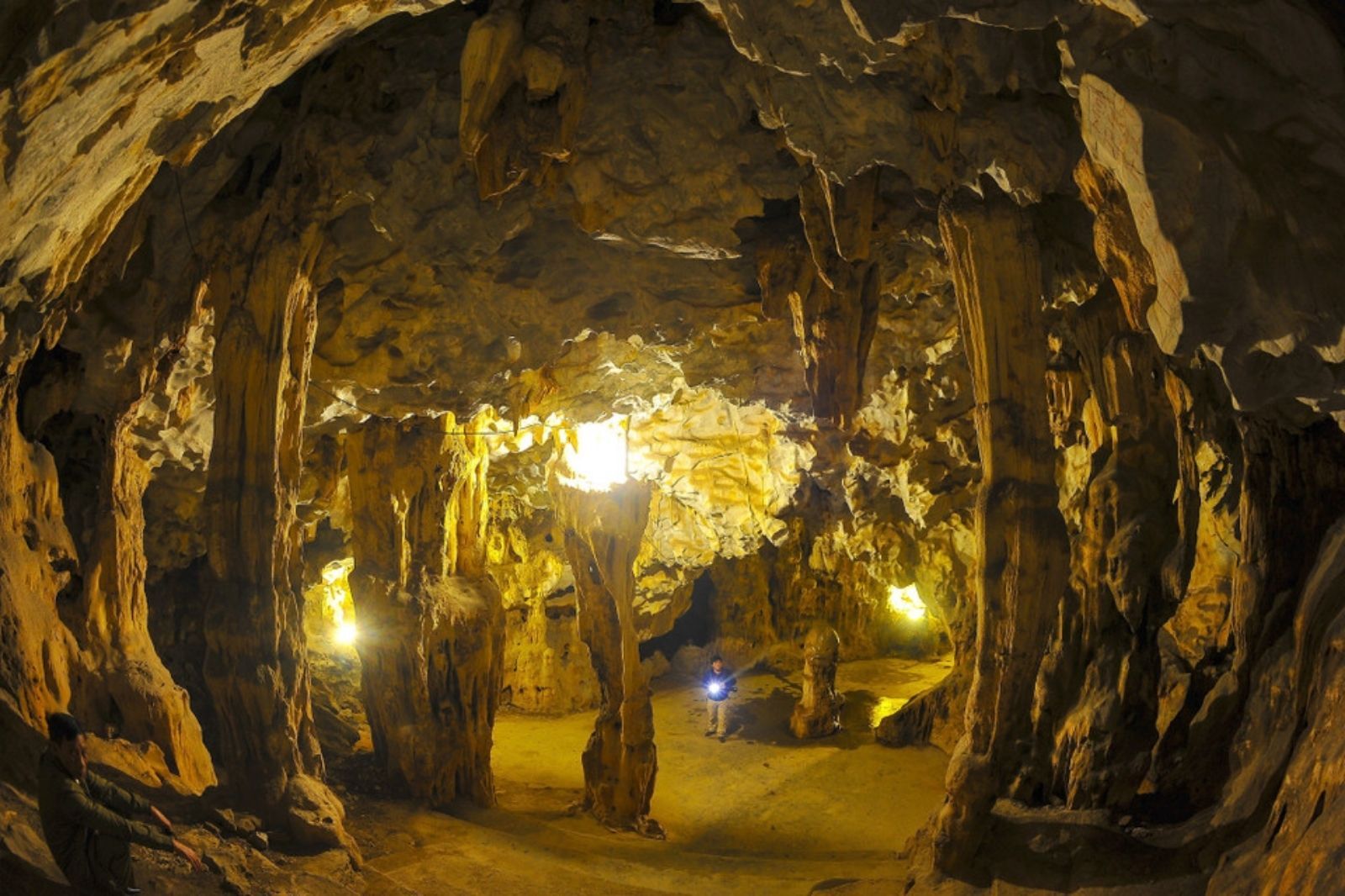
Stalactites and stone pillars inside the Dark Cave
Photo: Stalactites and stone pillars inside the Dark Cave 

6. Detailed directions to Dich Long Pagoda

From Hanoi (about 100 km): Travel along National Route 1A heading south. After crossing Doan Vi Bridge (also called Khuat Bridge) in Ninh Binh, turn right for about 1 km to reach Gia Thanh Commune, Dich Long Village. If coming from Ninh Binh City, travel north for 15-16 km along the provincial road.

  • Transportation: Motorbike or private car is most convenient. Bus from Hanoi to Ninh Binh, then take a motorbike taxi or taxi (about 100,000–200,000 VND). Use Google Maps with the keyword "Dich Long Pagoda" for precise navigation.
  • Travel Time: About 2 hours from Hanoi. The road is easy to travel, but pay attention to the right turn after the bridge.
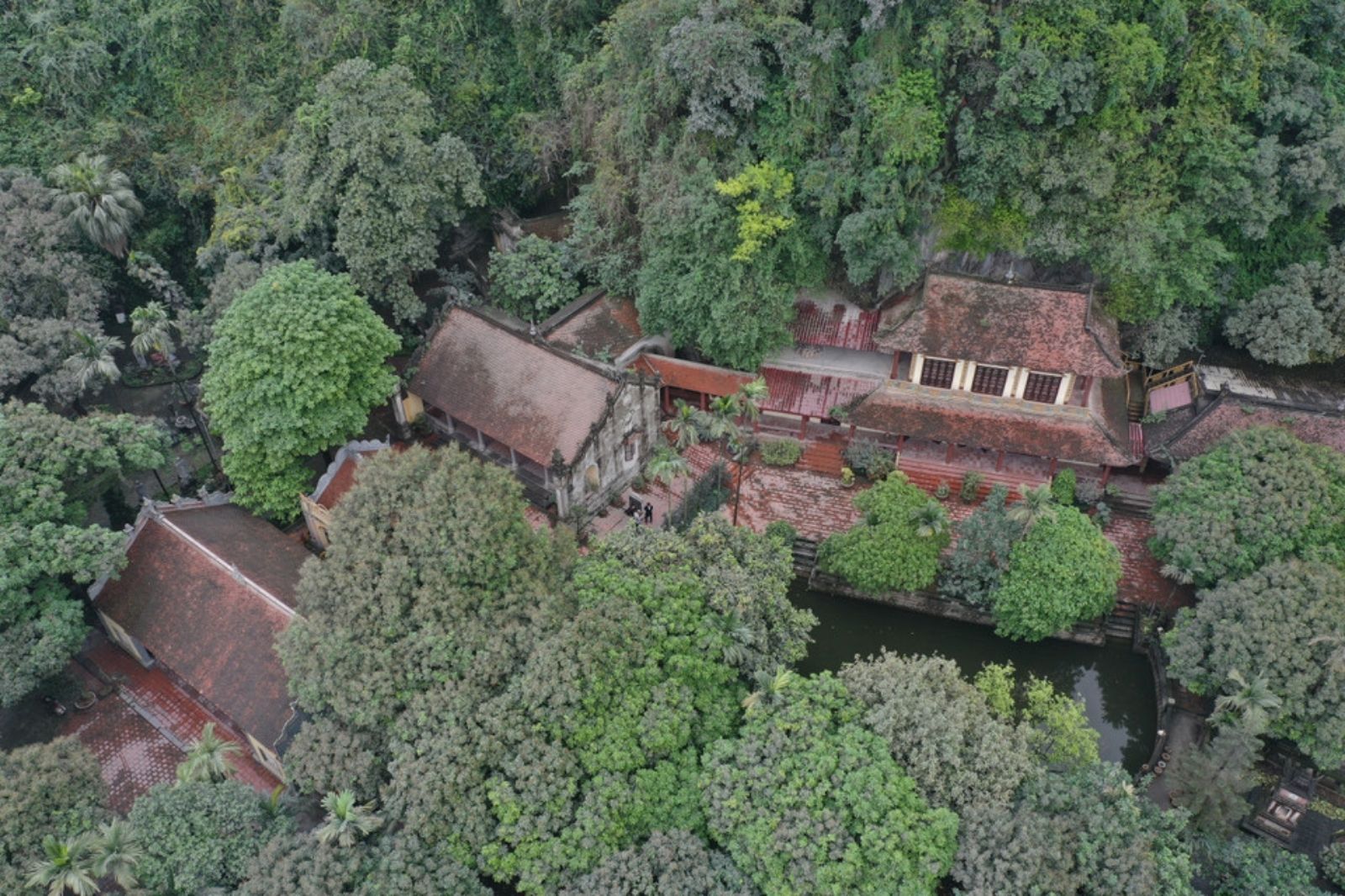
Dich Long Pagoda seen from above
Photo: Dich Long Pagoda seen from above 

Not only possessing ancient beauty and rare, unique stone architecture, Dich Long Pagoda is also a harmonious convergence of historical, cultural, and spiritual values of the Ninh Binh region. Spanning hundreds of years of existence, the "Third Most Beautiful Cave in the South" still retains its sacred and contemplative charm amidst picturesque landscapes, serving as an ideal stop for those seeking peace and exploring the depth of ancient Vietnamese culture. Visiting Dich Long Pagoda, tourists can not only admire exquisite stone structures and the mysterious beauty of natural caves, but also have the opportunity to feel the harmony between humanity and nature through every pagoda roof, cliff face, and echoing bell chime amidst the mountain forest. This will surely be a memorable journey for anyone who loves exploring history, architecture, and the spiritual beauty of the ancient capital of Hoa Lu.

Loading......

Featured destinations