|

Back Home

Discovering Hue's Culture Through Craft Villages

Central

Thua Thien Hue

Sovaba.travel

Updated at: 28/08/2026

1. Tay Ho Conical Hat Village

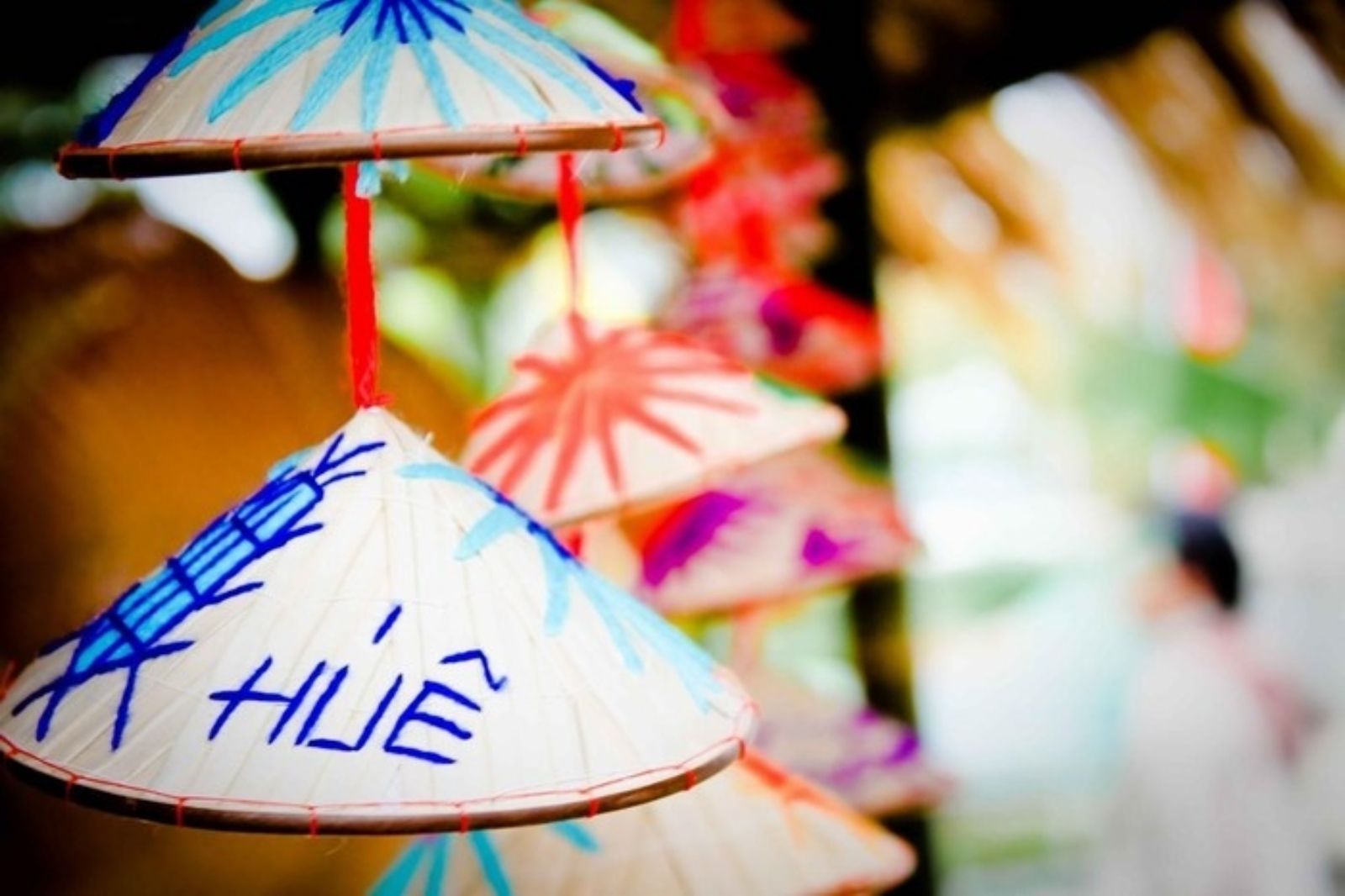
Tay Ho Conical Hat Village, nestled along the poetic Nhu Y River in Phu Ho Commune, Phu Vang District, is considered the birthplace of Hue's poetic conical hat (nón bài thơ) – a graceful symbol closely associated with the purple ao dai of the ancient capital. Over centuries of formation and development, this place still preserves the true essence of traditional craft, skillfully combining hand craftsmanship and patience in every stitch.

The raw materials used to make Tay Ho conical hats do not come by chance. The leaves are selected from the mountainous regions of Quang Nam, where they are thin, white, and durable. Every step – from selecting leaves, sun-drying, and flattening to sewing each circle of thread – is performed entirely by hand, requiring absolute meticulousness and precision. In particular, the poetic conical hat of Tay Ho possesses a unique charm: images of Truong Tien Bridge, the Perfume River, or Hue's flowers and foliage are artfully embedded between two layers of leaves, so that when light shines through, a dreamlike picture of Hue appears right before your eyes.
Tay Ho Conical Hat Village
Photo: Tay Ho Conical Hat Village 

2. Phuong Duc Bronze Casting Village

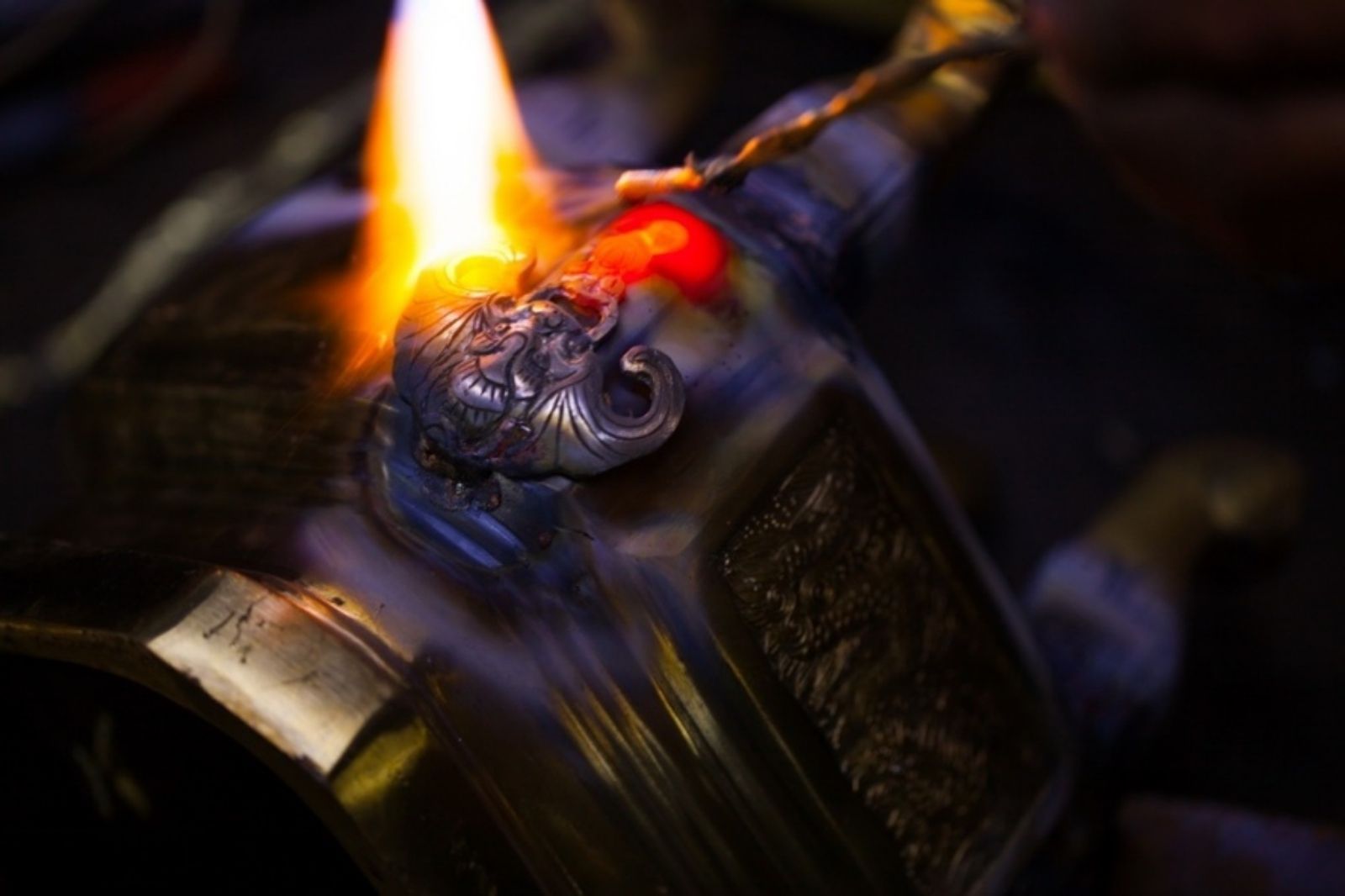
Phuong Duc Bronze Casting Village – located along the southern bank of the Perfume River, just about 3 km from Hue city center – is one of the oldest craft villages in the Ancient Capital, with a history of over 700 years. The bronze casting craft here originated during the Nguyen Lords era, initiated and taught by the founder Nguyen Van Luong, who brought the craft from Dong Xa (Sieu Loai, Bac Ninh). Since then, the furnace fire has never gone out, preserved and developed across generations.

Phuong Duc has created many immortal masterpieces associated with famous monuments in Hue and throughout the country. Notable examples include the Great Bell of Thien Mu Pagoda (cast in 1710), the bronze gong of Dieu De Pagoda (1864), and the majestic bronze cauldrons in the Imperial Citadel, all carrying profound historical, artistic, and spiritual value.

The process of creating a bronze product here is a perfect combination of refined technique and the artisan's dedication. Bronze is melted at high temperatures, poured into clay molds, and then undergoes intricate carving of patterns. Every chime of a bell and every line on a Buddha statue or bronze cauldron stands as a testament to the art crystallized from the sweat, intellect, and devotion of the Phuong Duc people.

Phuong Duc Bronze Casting Village
Photo: Phuong Duc Bronze Casting Village 

3. Phuoc Tich Pottery Village

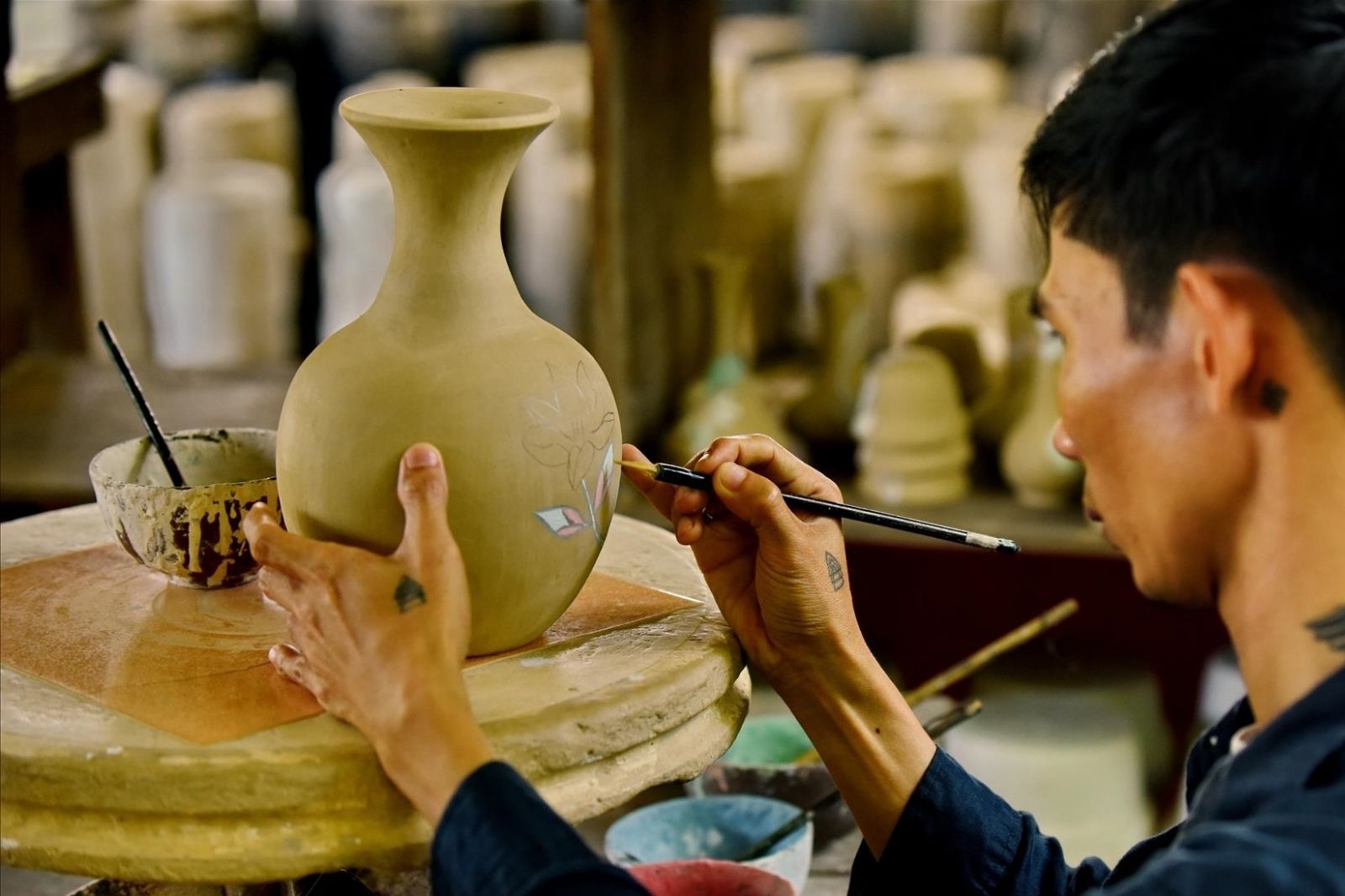
Phuoc Tich Pottery Village lies nestled beside the poetic O Lau River in Phong Dien District, standing as one of the oldest craft villages in Vietnam with a history spanning over 500 years. Pottery here carries a rustic, simple, yet captivating beauty, much like the gentle and deep soul of Hue people. Unlike the glossy finish of Bat Trang ceramics or the vibrant glaze colors of Thanh Ha pottery, Phuoc Tich pottery is crafted from mineral-rich local clay, shaped by skilled hands and fired using ancient traditional techniques. Products ranging from jars, vats, and flower vases to worship items all bear a raw, unpretentious, and intimate charm. Notably, the pottery is not covered with elaborate glazes, keeping the warm red tone of baked clay, creating a cozy feeling that endures over time.

Not only famous for its pottery craft, Phuoc Tich village also preserves hundreds-of-years-old traditional wooden houses (nhà rường) alongside lush green gardens, creating a peaceful space separated from modern life, where visitors can both admire the essence of ancient pottery and listen to tales of the Hue countryside.

Phuoc Tich Pottery Village
Photo: Phuoc Tich Pottery Village 

4. Thanh Tien Paper Flower Village

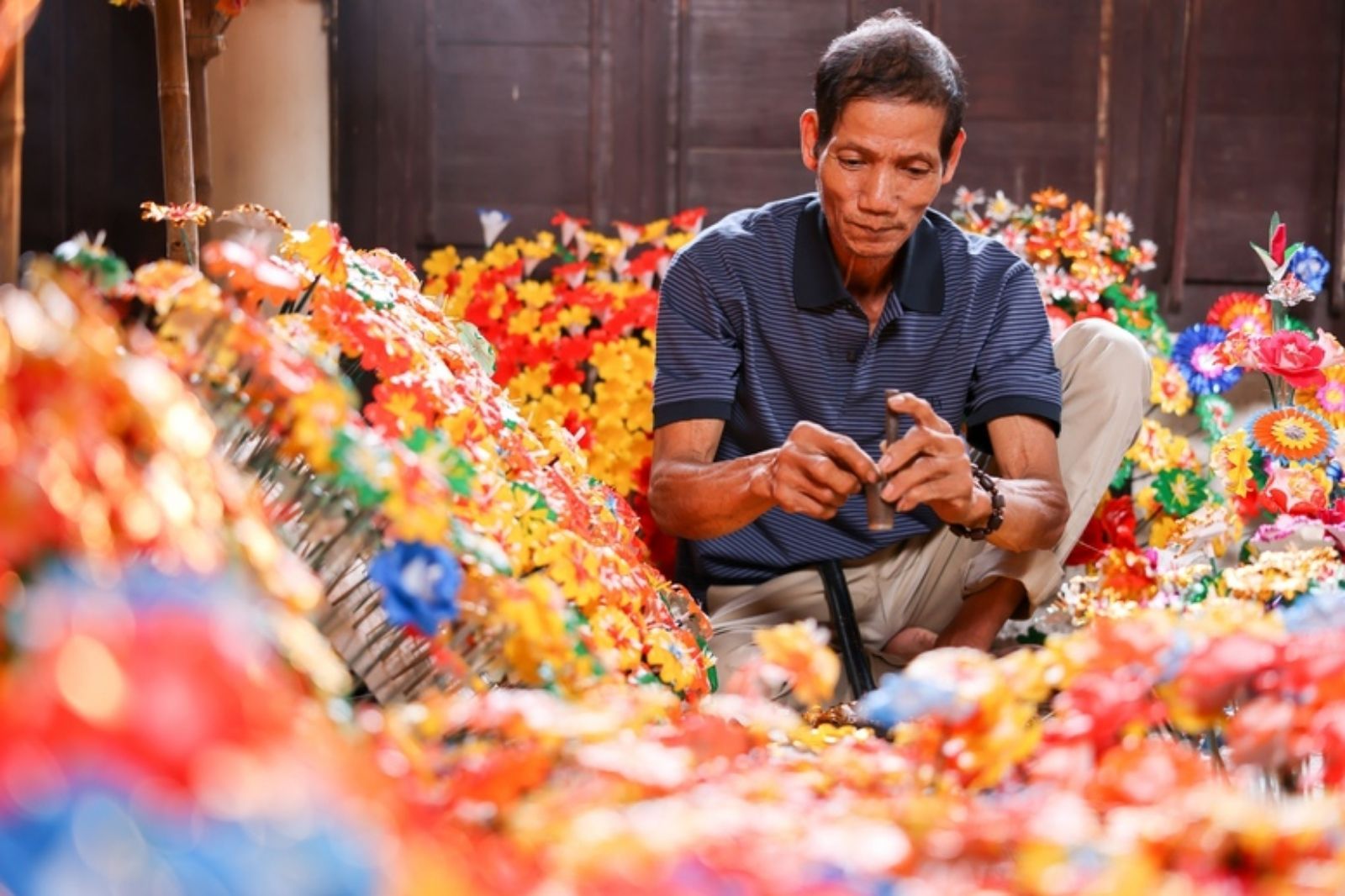
Thanh Tien Paper Flower Village – located on the banks of the Perfume River in Phu Mau Commune, Phu Vang District – has preserved the art of paper flower making for over 400 years. Far more than just handcrafted items, the vibrant blossoms here carry profound spiritual significance, deeply tied to the religious life of Hue residents. The raw materials used are simple and eco-friendly: bamboo for stems, colorful paper, and natural glue for assembling. Under the skillful hands of artisans, each petal of lotus, chrysanthemum, or rose comes to life vividly and harmoniously like real flowers. Every blossom is the result of hours of meticulous cutting, bending, and gluing, crafted not only for beauty but also to convey the deep respect of descendants to their ancestors.

Today, Thanh Tien paper flowers are still present during Tet holidays, ancestral worship ceremonies, and major events in Hue's rural villages, serving as a thread connecting the past and present, reminding everyone to preserve traditional cultural beauty.

Thanh Tien Paper Flower Village
Photo: Thanh Tien Paper Flower Village 

5. Sinh Folk Painting Village

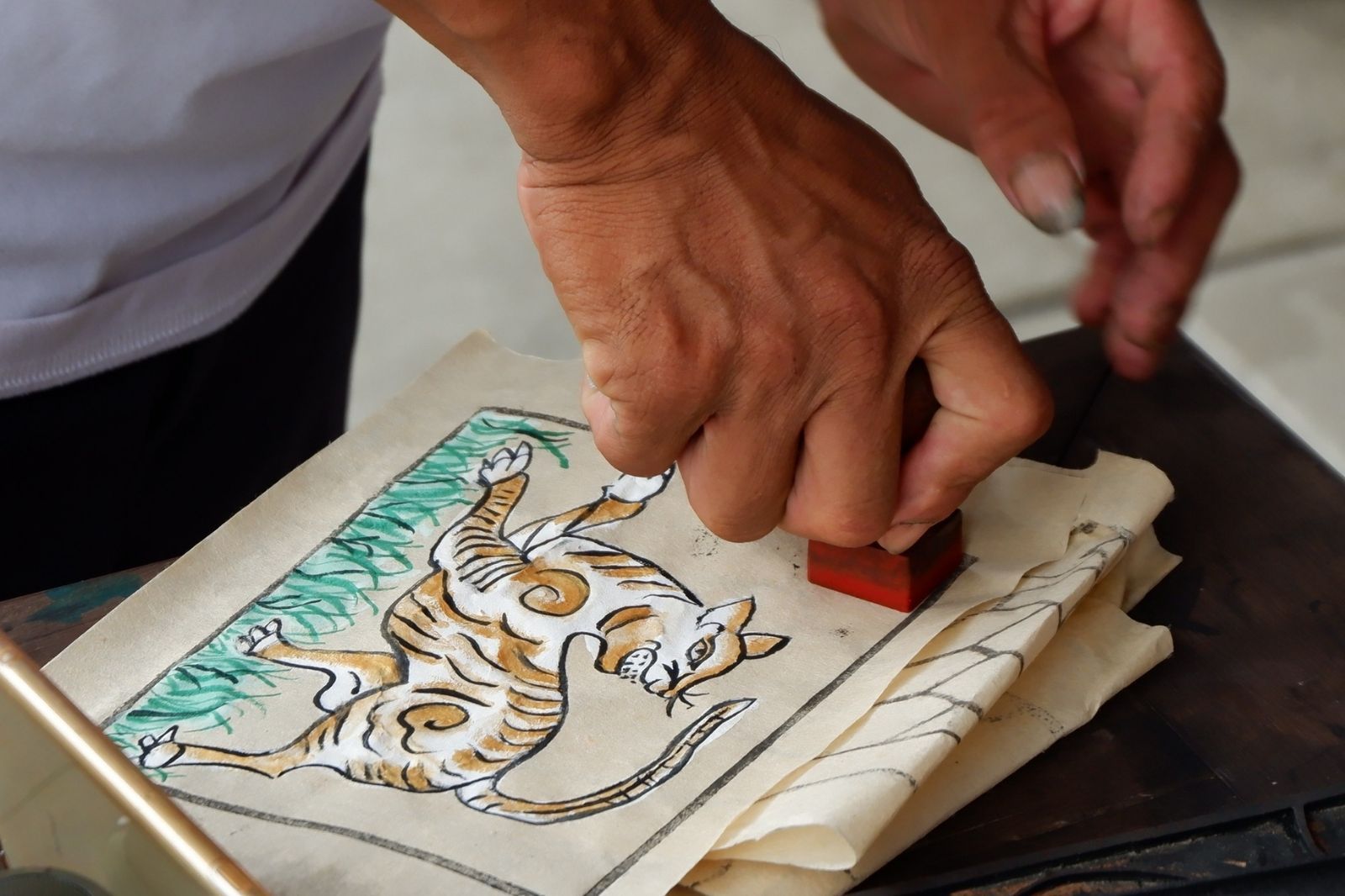
Sinh Village – the familiar name of Lai An village, located along the lower reaches of the Perfume River, just about 2 km from Thanh Tien paper flower village in Phu Vang District – is one of the oldest craft villages in the southern realm of Vietnam, boasting a history of over 400 years. Evolving from a purely agricultural village, Sinh Village transformed into a center for unique folk paintings, serving the religious and worship needs of the local people.

The distinctive feature of Sinh village paintings is that they are entirely hand-painted on do paper using traditional jackfruit-wood blocks. Colors are naturally extracted: black from charcoal, red from vermilion, yellow from pagoda tree flowers, and green from leaves, creating durable and harmonious tones. Each painting is a unique artwork reflecting the spirit, beliefs, and lifestyle of the riverine community.

Despite facing the risk of fading over time, Sinh village has resiliently maintained its craft, passing down secret techniques through generations. Today, these rustic yet soulful paintings appear not only on altars during festivals and Tet, but have also become cherished folk artworks sought after and collected by many domestic and international visitors.

Sinh Village Folk Painting
Photo: Sinh Village Folk Painting 

6. Thuy Xuan Incense Village

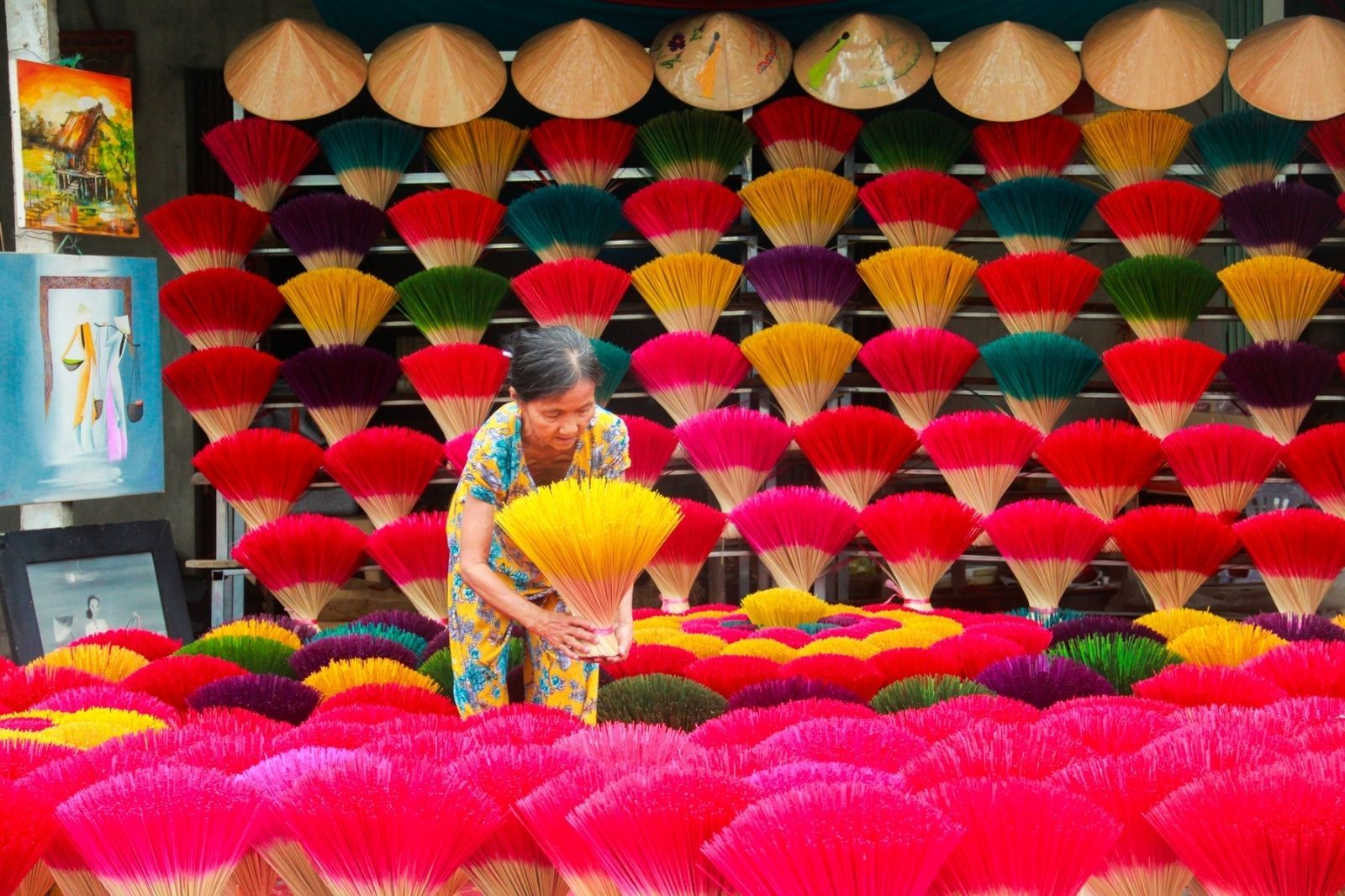
Thuy Xuan Incense Village – located about 7 km southwest of Hue city center on Huyen Tran Cong Chua Street, near poetic Vong Canh Hill – has long been a favorite stop for travelers. You can easily reach it by motorbike or car, enjoying the scenery while feeling the peaceful rhythm of a 700-year-old craft village. Beyond being an incense production site, Thuy Xuan Incense Village is closely linked to Hue's spiritual life and customs. The agarwood, cinnamon, and lemongrass incense sticks here are crafted entirely by hand from agarwood powder, herbs, and natural ingredients, without any chemical additives.

The incense-making process requires meticulous attention and skill: incense powder is thoroughly kneaded with water, carefully rolled around bamboo sticks, and then dried under the sun to keep its pure fragrance intact. The gentle, warm aroma wafting from the village feels like a welcoming invitation, tempting anyone passing by to bring home a few bundles of incense as a piece of Hue's soul.

Thuy Xuan Incense Village
Photo: Thuy Xuan Incense Village 

7. Bao La Bamboo Weaving Village

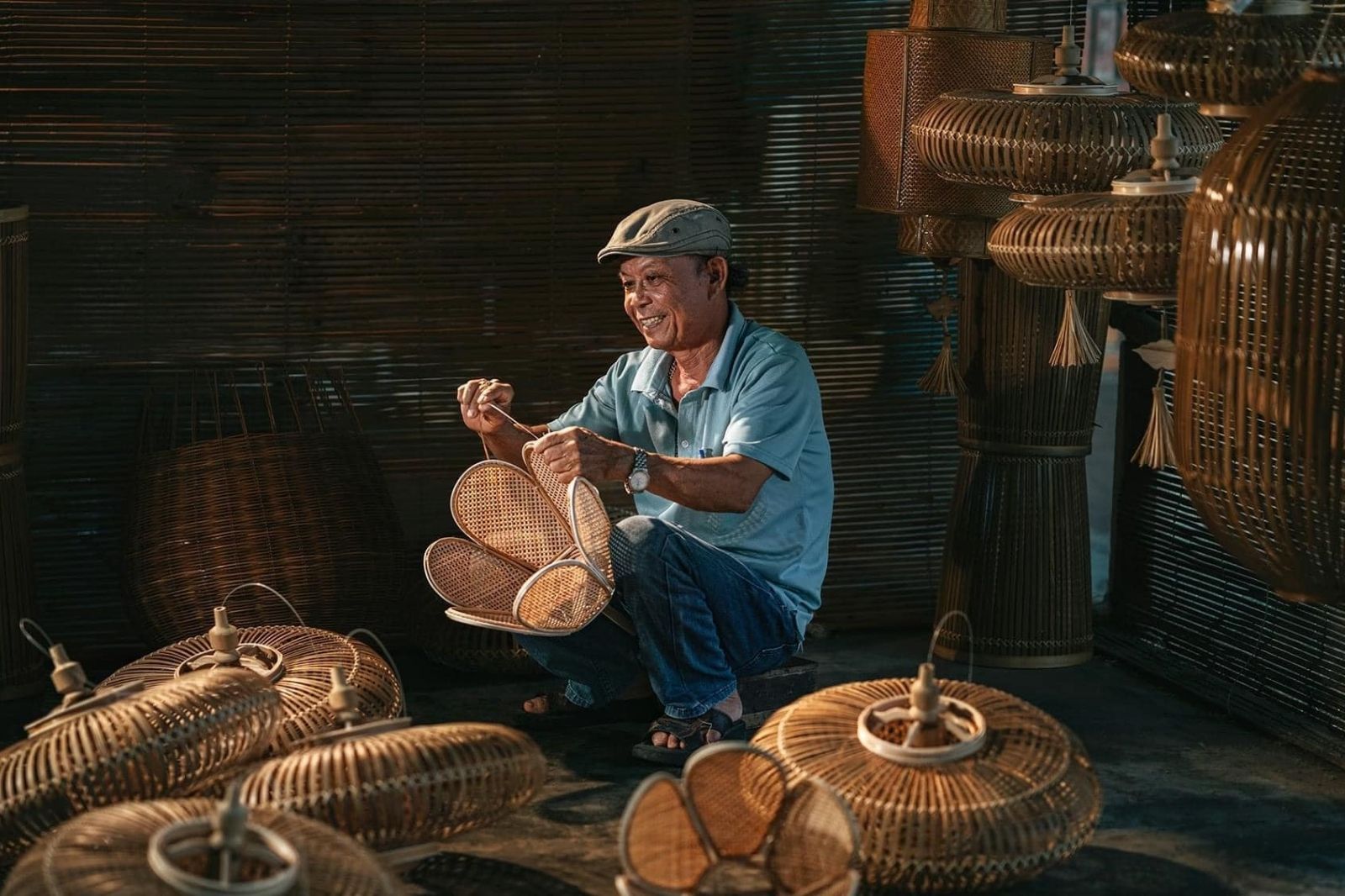
Located about 15 km north of central Hue in Quang Phu Commune, Quang Dien District, Bao La Bamboo Weaving Village rests peacefully on the northern bank of the Bo River, making it an ideal destination for traditional craft lovers. Established during the Nguyen Lords period, starting as a pastime during farming off-seasons, Bao La bamboo weaving has now become the primary livelihood, fulfilling daily living needs while offering eco-friendly products.

Bao La's product range is immensely diverse: from traditional baskets, sifters, bamboo cots, cradles, and beds to modern bookshelves, hanging lamps, and decorative items. The special highlight is that everything is crafted from bamboo through a process of selecting, splitting, smoothing, termite-proofing, and hand-weaving by artisans across 5 specialized hamlets. Visiting Bao La, travelers can not only admire the dexterity and creativity in every product but also directly participate in weaving experiences with locals to bring home a memorable souvenir. 

Bao La Bamboo Weaving Village
Photo: Bao La Bamboo Weaving Village 

Exploring traditional craft villages in Hue is not only a journey of sightseeing and hands-on experiences, but also an opportunity to touch living cultural values preserved for hundreds of years. From the graceful Tay Ho conical hat village and aromatic Thuy Xuan incense village to the rustic Phuoc Tich pottery village... each destination holds its own story and soul.

If you wish to fully experience the beauty of the Ancient Capital – from cultural heritage and charming landscapes to colorful craft villages – let a Hue tour by Sovaba accompany you. With flexibly designed itineraries, knowledgeable local guides, and authentic practical experiences, your trip will surely leave you with unforgettable memories.

Loading......

Featured destinations