Discovering the Little-Known Story Behind Dong Khanh Tomb

Central

Thua Thien Hue

Sovaba.travel

Updated at: 24/09/2026

1. History of Emperor Dong Khanh

King Dong Khanh, named Nguyen Phuc Ung Duong (also known as Ung Ky), was born in 1864 and passed away in 1889 at the young age of 25. He was the eldest son of Kien Thai Vuong Nguyen Phuc Hong Cai – who was considered the "father of three emperors": Kien Phuc, Ham Nghi, and Dong Khanh. The people of Hue passed down a heartbreaking folk verse: “One family gave birth to three kings: one survived, one died young, one suffered a long defeat” – encapsulating the tragic fate of the three brothers: Kien Phuc died young, Ham Nghi was exiled for resisting the French, while Dong Khanh ascended the throne with the support of the French colonialists after the Can Vuong movement initiated by Ham Nghi.
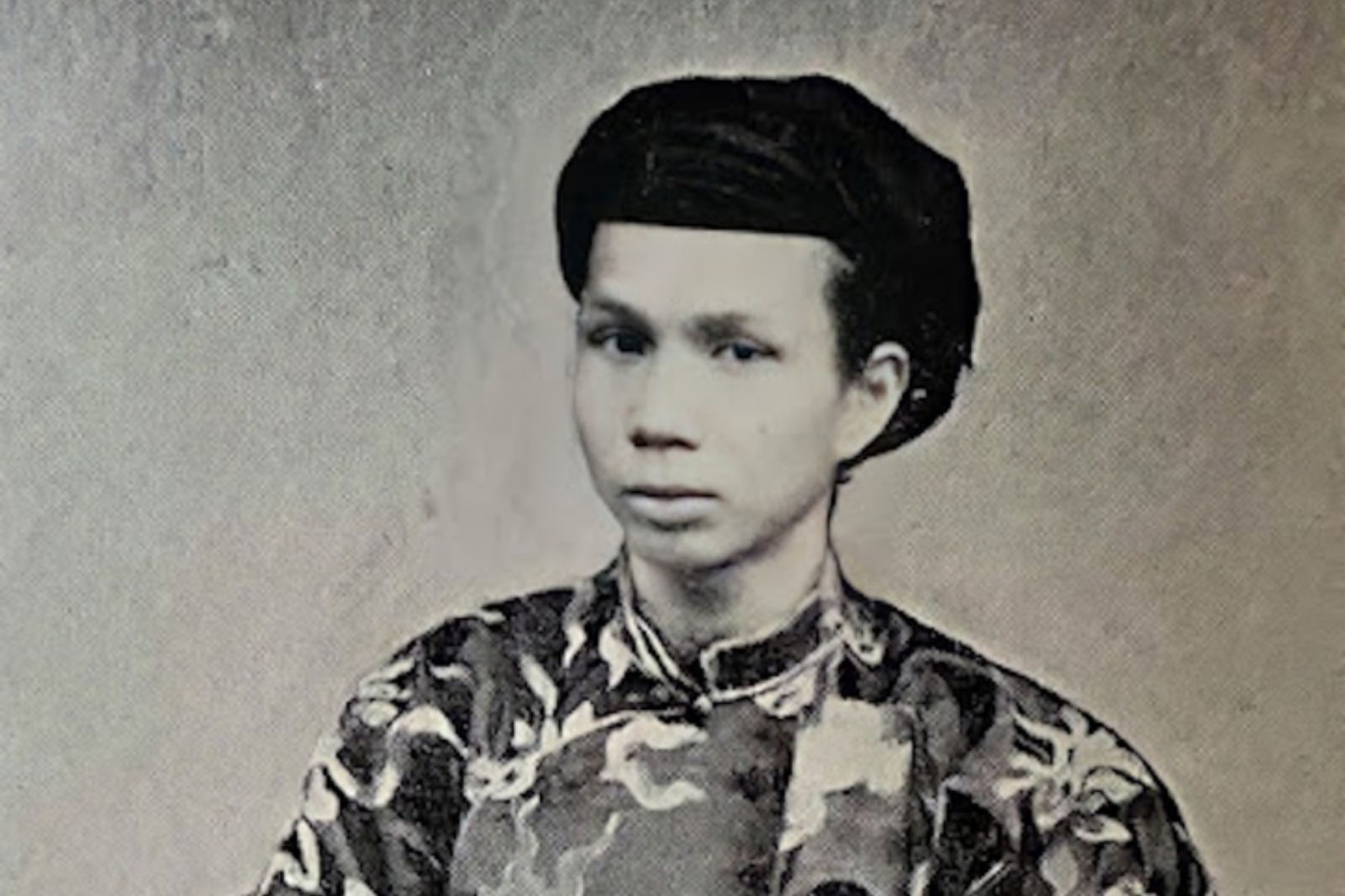
King Dong Khanh ascended the throne for 3 years
Photo: King Dong Khanh after 3 years on the throne 

Dong Khanh officially ascended the throne in 1885, reigning for over three years during a period when the Nguyen Dynasty was weak and dependent. Historical records often refer to him as a pro-French king, as the focus of his reign leaned toward stabilizing royal affairs and constructing cultural works rather than continuing resistance. Yet his brief life was full of tragedies: from a childhood raised in the royal palace under the patronage of his uncle – King Tu Duc, to an abrupt death from a severe illness at a very young age. Few people know that besides his royal role, Dong Khanh was also a talented artist: he enjoyed painting, and a work signed Ung Mong – depicting the Imperial Citadel of Hue – once appeared at a Sotheby’s auction, revealing a rarely mentioned delicate side of this ill-fated king.
2. The construction process of Emperor Dong Khanh's Tomb

Unlike other tombs built with meticulous planning while the king was still reigning, Dong Khanh Tomb had an unexpected creation journey that spanned nearly 35 years (from 1888 to 1923), across four royal reigns: Dong Khanh, Thanh Thai, Duy Tan, and Khai Dinh.

Initially, in 1888, King Dong Khanh ordered the construction of Truy Tu Palace in Cu Si village to worship his father – Kien Thai Vuong. Before the project was completed, the king suddenly passed away. Due to financial exhaustion, King Thanh Thai (his successor) could not build a new tomb, so he renamed Truy Tu Palace to Ngung Hy to worship Dong Khanh and buried his remains on Ho Thuan Son hill 300 meters away. By 1916, King Khai Dinh – Dong Khanh's son – renovated and completed the tomb complex, adding structures like Bai Dinh (Courtyard of Honor), Bi Dinh (Stele Pavilion), and Buu Thanh (Enclosure Wall). This is evidence of filial piety in Nguyen Dynasty culture, while also reflecting historical transition through the combination of modern materials like cement and steel.

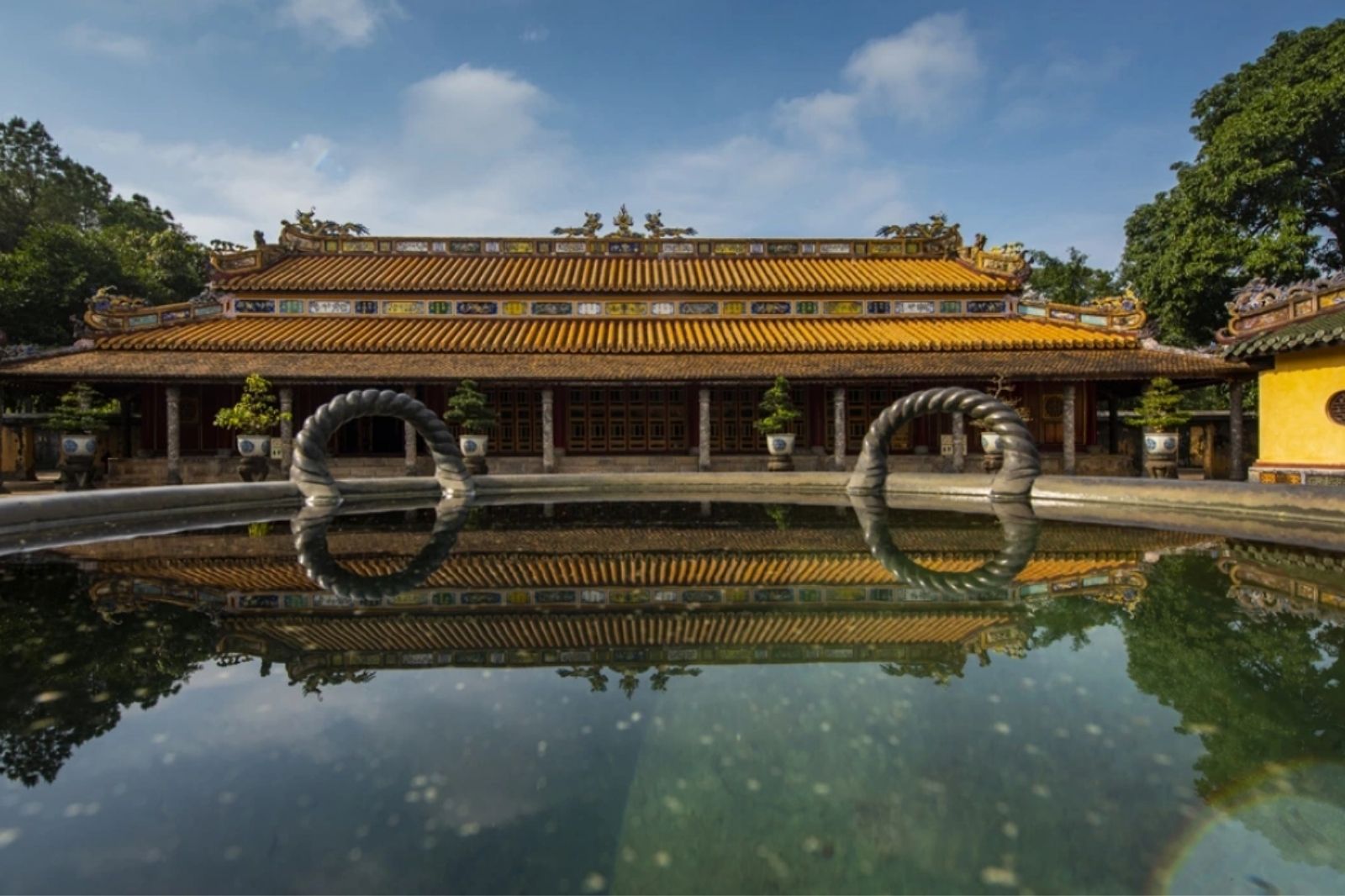
The tomb took 35 years to construct
Photo: Construction of the tomb spanned 35 years 

A little-known story: The construction of the tomb was interrupted due to political volatility and was not completed until 1923 under the reign of Khai Dinh. This makes Dong Khanh Tomb a "special milestone" in Hue royal tomb architecture, not following traditional rules but bearing a "patched-together" mark across different eras.

3. Architecture of Emperor Dong Khanh's Tomb

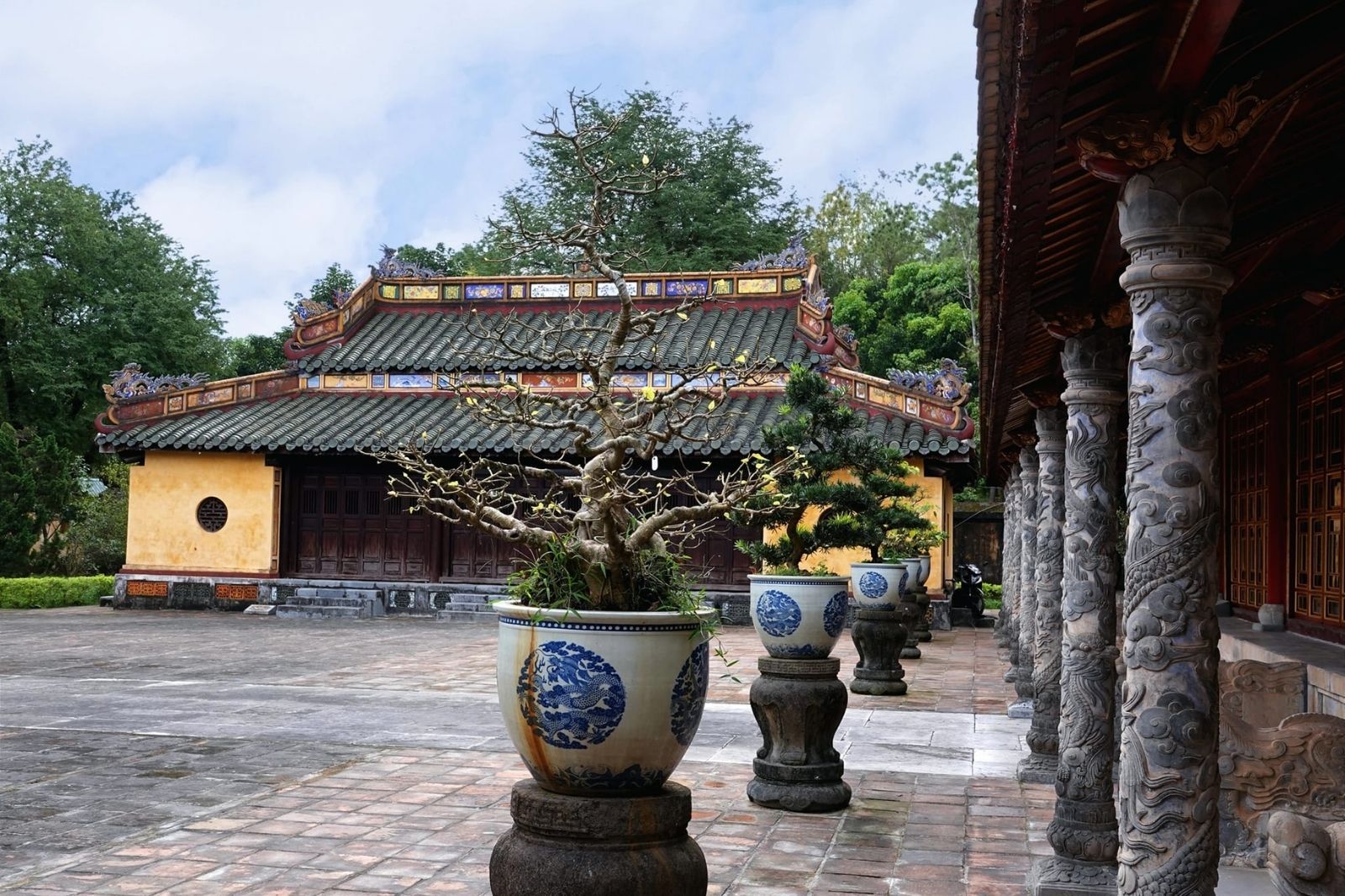
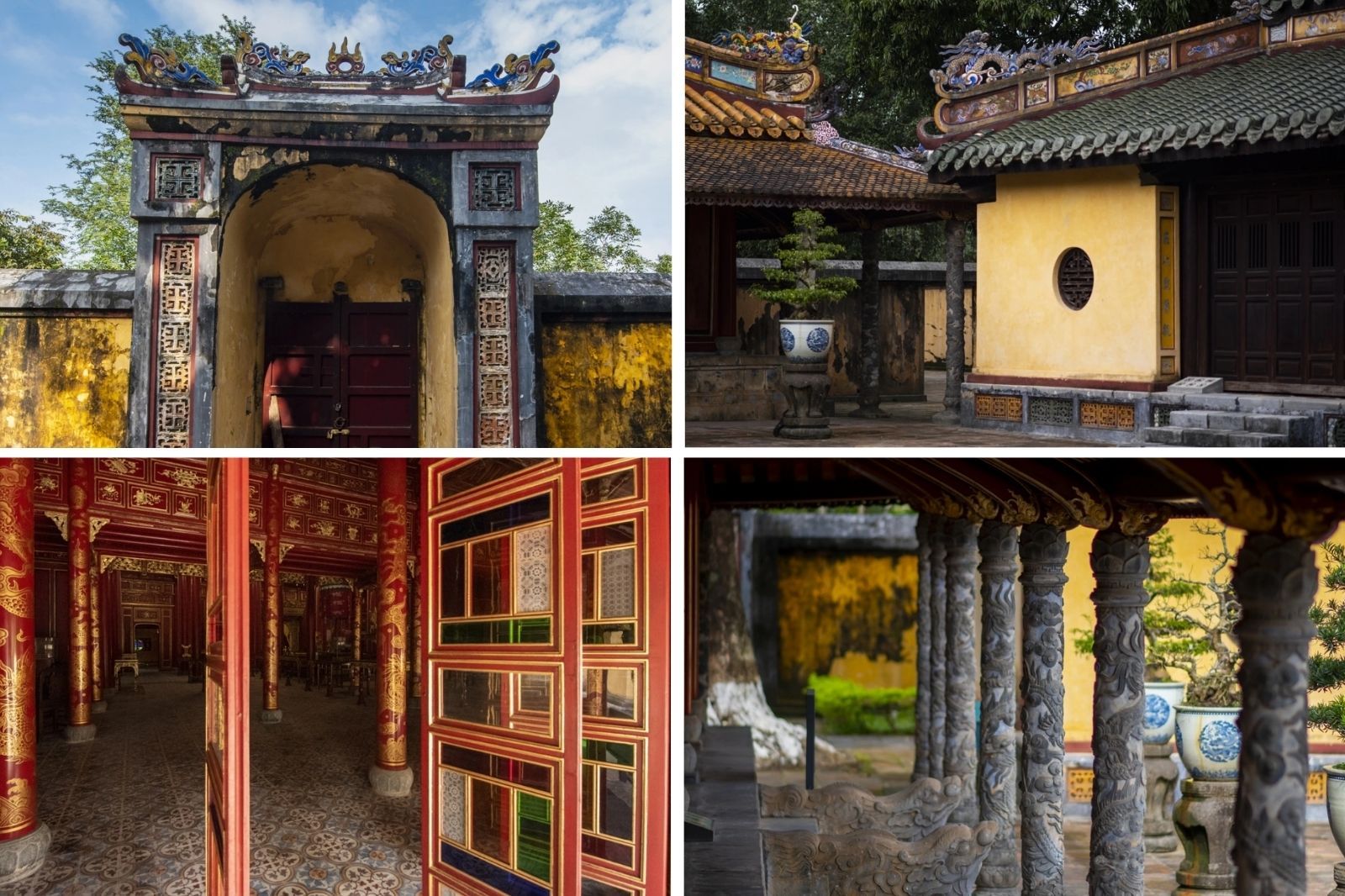
Dong Khanh Tomb is divided into two main areas: the palace shrine area (for worship) and the tomb area (for burial), covering a total area of about 10,000 m². The palace shrine area faces southeast, featuring a crescent pond as a feng shui screen, surrounded by 3-meter-high brick walls. The main gate, Cung Mon, is a 3-bay 2-story wooden structure leading into Ngung Hy Palace – the main building featuring 100 gilded red-lacquered ironwood pillars, decorated with colorful enamel (phap lam) and 24 glass paintings depicting the "Twenty-Four Stories of Filial Piety".

The tomb area is situated on a high hill, with the square Buu Phong mound measuring 1.6m high, surrounded by three concentric brick walls. A highlighted feature is the architectural fusion: cement statues of mandarins replacing traditional stone, exhibiting tall and slender figures; and the Stele Pavilion (Bi Dinh) built in a Roman style blended with East Asian elements. This reflects the period of cultural intersection under French influence, making Dong Khanh Tomb distinct compared to Tu Duc Tomb (poetic) or Khai Dinh Tomb (splendid).

Dong Khanh Tomb is divided into two main areas
Photo: Dong Khanh Tomb is divided into two main areas  

4. Little-known stories behind the tomb and life of Emperor Dong Khanh

Beyond official history, the Tomb of King Dong Khanh is also associated with many interesting anecdotes that help readers better understand this king:

Peculiar fondness for classical opera (hat boi) and royal concubines: King Dong Khanh was passionate about hat boi, especially the play "Van Buu Trinh Tuong". He named his favorite concubines after traditional herbal medicines such as Dai Hoang, Nhan Sam, and Cam Thao, a humorous detail reflecting his personal character.

Mysterious death and French intervention: In 1889, the king became gravely ill and could not eat or drink. Traditional Vietnamese royal doctors failed to cure him, so he asked French doctor Cotte for treatment, but still passed away half a month later. Legend has it that he was haunted by nightmares about high official Phan Dinh Binh, leading to screams during his illness.

Tomb close to family: Surrounding Dong Khanh Tomb are the graves of his father (Kien Thai Vuong), his wife (Empress Phu Thien Thuan), and his daughter-in-law (Tu Cung – mother of King Bao Dai), creating a cozy family cluster amidst the Hue countryside.

These stories not only enrich history but also allow visitors to feel the cultural depth when visiting.

5. Location of Emperor Dong Khanh's Tomb and useful travel tips

Dong Khanh Tomb is located in Thuong Hai Village, Thuy Xuan Ward, Hue City, about 7km from the city center, between Thieu Tri Tomb and Tu Duc Tomb. The admission fee is around 100,000 VND, open daily from 7:00 AM to 5:00 PM. 

Useful travel tips:

  • Ideal time: Early morning or late afternoon to avoid the heat, combined with a visit to Tu Duc Tomb (3km away).
  • Tour guide: Hire on-site to hear detailed stories about the "Twenty-Four Stories of Filial Piety" and the architecture.
  • Preparation: Bring water, hats, and read Dai Nam Thuc Luc in advance for deeper context.
Visitors can purchase tickets to visit Dong Khanh Tomb
Photo: Visitors can purchase tickets to visit Dong Khanh Tomb  

Dong Khanh Tomb is neither the most grand structure in the Hue tomb complex nor the most famous destination. Yet it is precisely this modesty that gives the site a unique charm. Amidst the aged walls and the unusual convergence of East and West, one finds not only the story of an ill-fated king but also the traces of a dynasty trembling before the tides of time. Visiting Dong Khanh Tomb, one does not merely gaze upon a monument, but listens to history whispering, gaining a deeper understanding of the rarely told pieces of the ancient capital.

Visit sovaba.travel to discover more Hue travel tips and the unique cultural beauty of this heritage land.

Loading......

Featured destinations