Explore the Phu Quoc Pearl Cultivation Process: From Oyster Shell to Million-Dollar Jewelry
Southern
Phu Quoc - Kien Giang
Sovaba.travel
Updated at: 24/09/2026
1. Phu Quoc Pearl Farming: Rich History and Development
Pearl harvesting in Phu Quoc dates back to the 20th century, beginning with the uncertain method of natural pearl diving. Divers had to inspect tons of oysters just to find a few complete pearls.
Today, with the adoption of advanced techniques from leading countries such as Japan and Australia, Phu Quoc has established large-scale cultivation and crafting workshops. The combination of ideal natural conditions (calm Gulf of Thailand, suitable salinity) and the skilled hands of artisans has elevated Phu Quoc pearls to international acclaim, becoming a symbol of luxury and sophistication.
2. Meticulous Culturing Process: The Art of "Breathing Life" into the Sea
To create a standard-compliant pearl, the cultivation process at facilities such as Quoc An, Ngoc Hien, or Long Beach undergoes several rigorous stages:
Stage 1: Breeding selection and nucleus insertion
Healthy oysters that meet standards for age and size are carefully selected. Highly skilled technicians perform a delicate "surgery": inserting a nucleus (a foreign object shaped into the desired form) into the oyster's gonad. This is the most difficult step, requiring extreme meticulousness so the oyster does not reject the nucleus.
Stage 2: Nurturing in the ocean depth
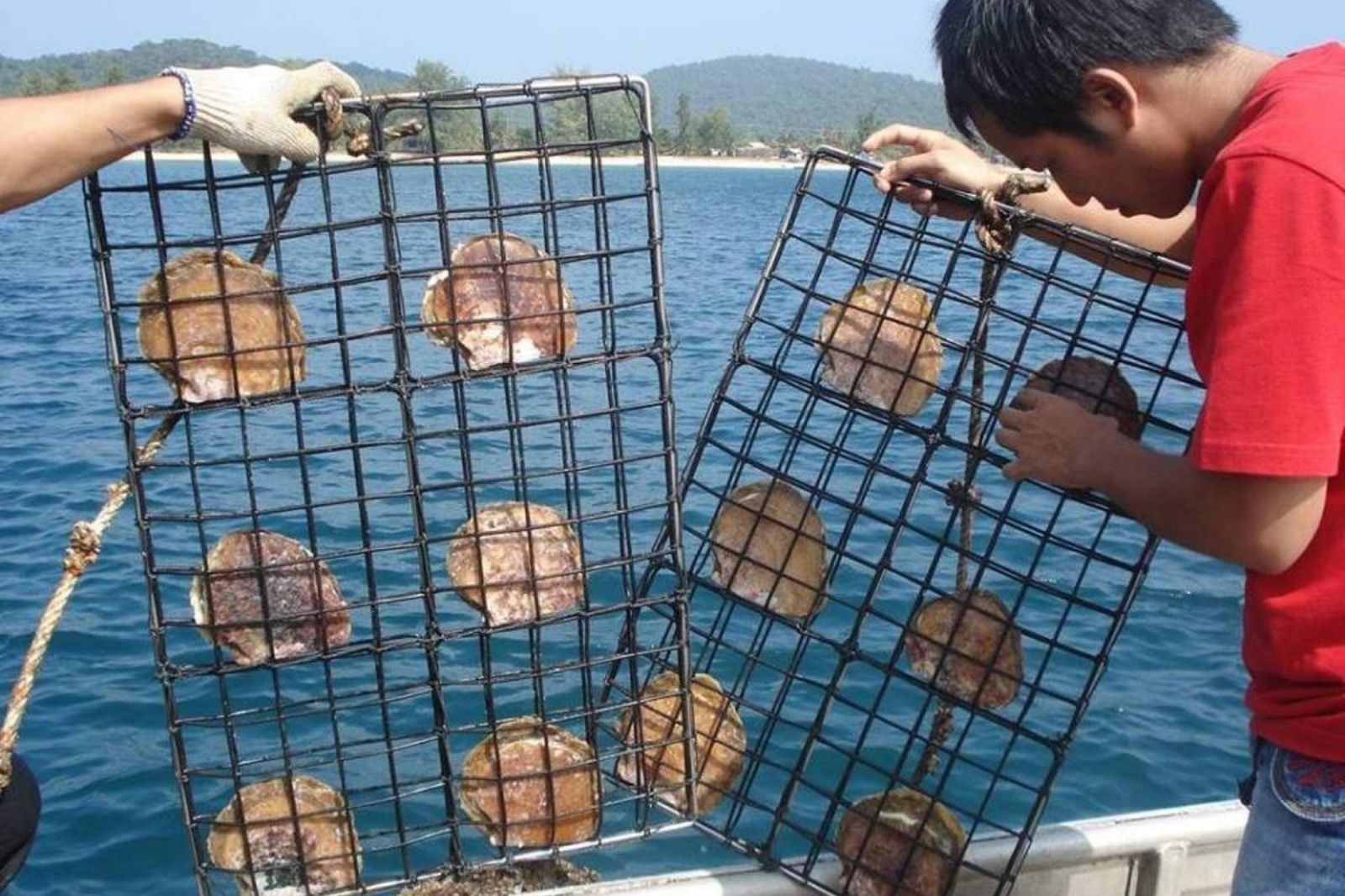
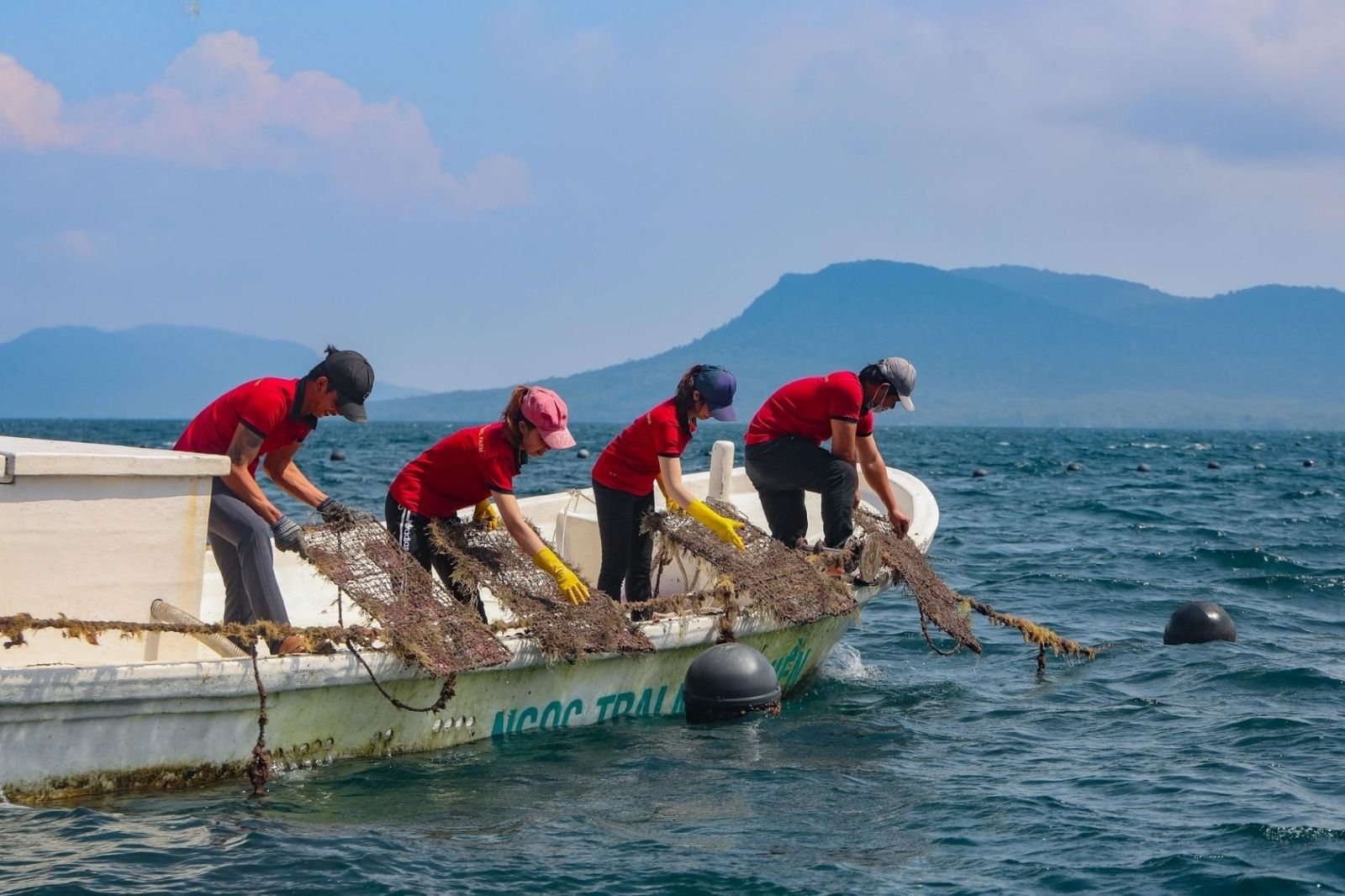
After nucleus insertion, oysters are placed in iron cages and lowered into the sea cultivation area. Here, the oysters naturally secrete layers of nacre around the nucleus over time. This process is completely natural. Farmers must periodically clean the cages, check health, and monitor water conditions to ensure optimal oyster growth.
Stage 3: Harvesting and crafting
Depending on the pearl type, cultivation time can range from 6 months to 8 years, or even longer.
Colors: The resulting products come in various colors such as ivory white, gold, pink... with the rarest being black pearls and ocean blue pearls.
Crafting: Pearls extracted from shells are cleaned, selected, and sorted. Only pearls with perfect luster and roundness are crafted alongside gold, silver, or platinum to create "million-dollar" jewelry sets.
From strict standards in cultivation to master craftsmanship, Phu Quoc pearls have proven their unique value. Each pearl delivered to customers is the ultimate convergence of the ocean's gifts and human technical excellence.
Photo: The pearl cultivation process is conducted under strict standards
3. Top 3 Reputable Pearl Farming and Crafting Facilities in Phu Quoc
If you are looking for trusted locations to visit and shop, here are the top 3 names:
Long Beach Pearl: (124 Tran Hung Dao, Duong Dong). The largest facility with over 3,000 unique, luxurious designs.
Ngoc Hien Pearl: (Duong To Hamlet). Renowned for applying Japanese technology, offering high-end pearl lines such as Tahiti, South Sea, Akoya, and Mabe.
Quoc An Pearl: (Suoi May Hamlet, Duong To). An ideal destination to learn deeply about cultivation techniques and purchase exquisite handcrafted items.
The diversity in design styles at Long Beach, the Japanese technology of Ngoc Hien, or the exquisite craftsmanship of Quoc An all contribute to confirming the status of Phu Quoc pearls. If you have the chance to visit Pearl Island, stop by to admire the magnificence of these million-dollar masterpieces firsthand.
4. Tips for Travelers to Distinguish Real and Fake Pearls
The pearl market is very diverse; to avoid buying low-quality items, you should keep the following characteristics in mind:
Shape: Real pearls are rarely 100% perfectly round. In a strand of pearls, individual pearls usually have slight variations in size and shape (oval, teardrop). If the pearls look completely identical, they might be artificial.
Luster and color: Real pearls have a natural, subtle, slightly uneven luster and typically show only 1-2 iridescent hues under light. Fake pearls are usually overall glossy and reflect excessively vibrant colors.
Self-healing ability: A handy tip is to gently rub the pearl against a glass surface. Real pearls can self-heal minor surface scratches and maintain their shine after being wiped clean.
In the world of luxury jewelry, knowledge is the best "shield" for acquiring authentic value. Let every piece of pearl jewelry you choose not only sparkle on the outside, but also reaffirm the discerning insight and keen aesthetic taste of its owner.
Phu Quoc pearl jewelry ranges in value from a few million to hundreds of millions of VND depending on size, luster, and color. Among them, black pearls are considered the absolute finest, with prices reaching up to 23,000,000 VND per pearl.
Photo: Pearl cultivation boat
The journey from a lifeless grain of sand at the ocean floor to magnificent jewelry masterpieces is a vivid testament to the harmony between nature's gift and human artistry. Phu Quoc pearls are not merely a luxury accessory, but also encapsulate the breath of the sea, the perseverance of cultivation artisans, and the pride of Pearl Island. Whether you choose a majestic black pearl or a pure ivory white one, it is not just owning an "ocean treasure", but also preserving a pristine memory, a symbol of eternity and timeless beauty. Let those pearls tell your story of elegance, steadfastness, and endless love for beauty on your journey back to the blue sea.
Follow Sovaba Travel to stay updated on more fascinating information about Phu Quoc's culture, tourism, and cuisine.