Exploring Cam Ne Mat Weaving Village in Da Nang – A Journey to Traditional Mat Weaving Craft
Central
Da Nang
Sovaba.travel
Updated at: 24/09/2026
1. History of Cam Ne mat-weaving village
Cam Ne mat weaving village originated from Hoang Hoa (Thanh Hoa) and was brought to Da Nang in the 15th century, following King Le Thanh Tong's southern campaign. Thanks to favorable natural conditions beside the Cam Le River with fertile soil, the mat weaving craft quickly took root, becoming part of the cultural exchange between the North and Central regions. Under the Nguyen Dynasty, Cam Ne floral mats became famous throughout the region and were selected to be presented to the King, with special mats reaching up to 2.5 meters wide and 25 meters long, demonstrating exquisite craftsmanship. As a result, many artisans in the village were bestowed royal titles and rewards, marking a brilliant golden era of the craft.
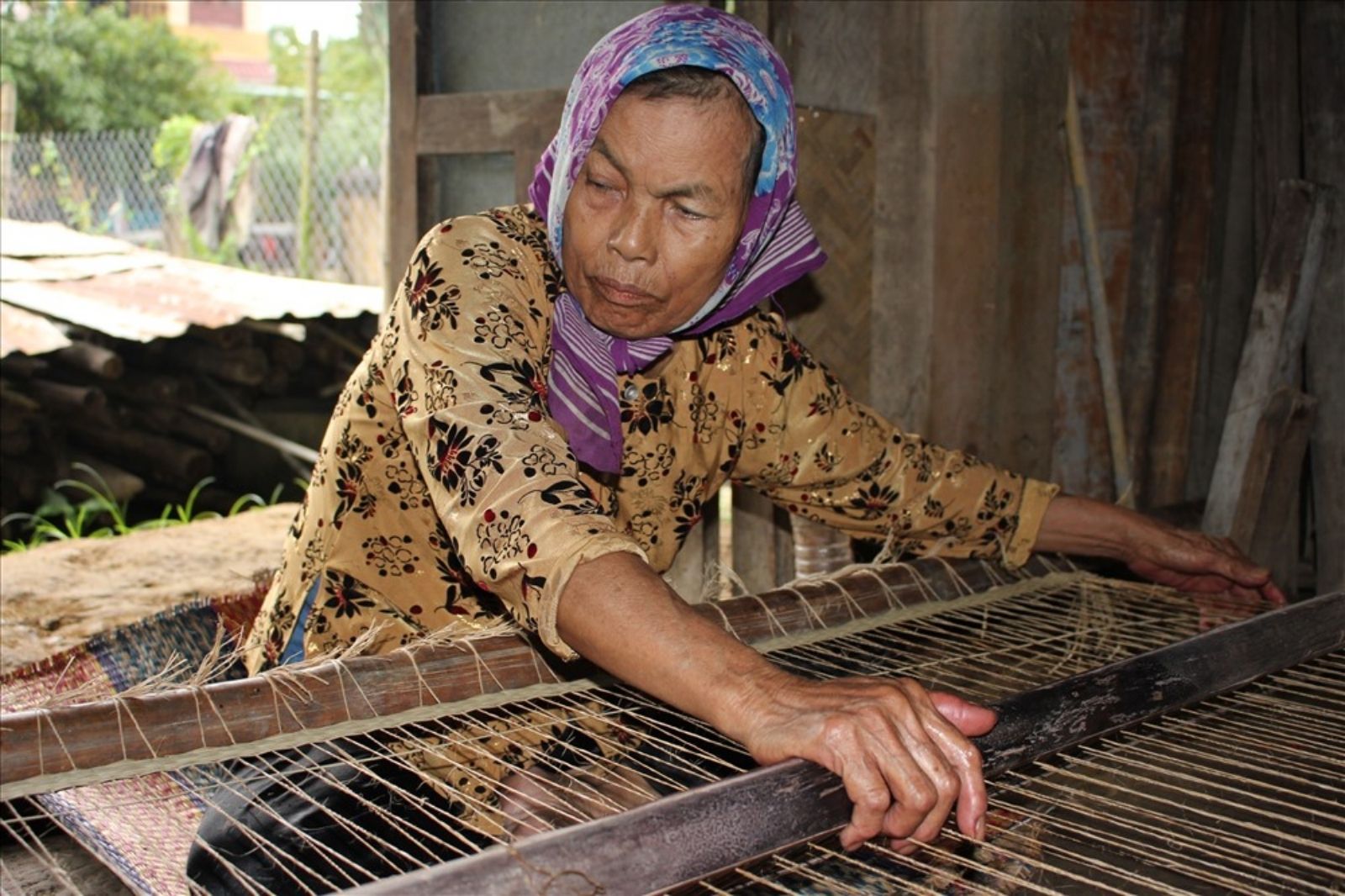
Photo: Elderly people in the village are still dedicated to the mat weaving craft
From the 1980s to the 1990s, Cam Ne was a bustling craft village with hundreds of mat-weaving households, exporting products throughout Central Vietnam. However, time and social changes have caused the traditional craft to gradually fade away. Currently, only a few households, mostly elderly artisans, persistently maintain the trade. Nevertheless, Cam Ne mat weaving village remains proof of the enduring vitality of Vietnamese culture, where the value of labor and the spirit of preserving tradition are still handed down through generations.
2. Location and how to get to Cam Ne mat-weaving village, Da Nang
Located in Hoa Tien commune, Hoa Vang district, about 14 km southwest of Da Nang city center, Cam Ne mat village is an ideal destination for those who love traditional Vietnamese rural ambiance. Beside the poetic Cam Le River, the village bears a peaceful beauty with tree-shaded paths and the gentle scent of sedge wafting in the breeze.
Directions: From the center of Da Nang, you can follow the route Duy Tan – Nguyen Huu Tho – Le Dai Hanh – Truong Chinh (National Route 1A), then turn into Hoa Tien commune. The journey takes only about 20 minutes by motorbike, personal car, or taxi at a reasonable cost.
If traveling in a group, you should choose personal transportation to easily explore the charming village roads, stop for photos, or chat with locals to better understand the centuries-old traditional mat weaving craft here.
3. Traditional mat-weaving process in Cam Ne
Cam Ne mat weaving is one of Da Nang's long-standing traditional handicrafts, famous for its meticulousness, skillfulness, and refinement in every step. Each finished mat is the result of smooth coordination between two skilled artisans, along with expertise and experience accumulated over generations.
The main raw materials for weaving mats are sedge strands and jute fibers, imported from other regions as they are not grown locally. To create a standard mat, artisans must go through several meticulous steps:
Preparing raw materials
Sedge strands are harvested and dried just enough to keep their natural green hue. For floral mats, the fibers must be bleached and dyed in colors (yellow, red, blue, green) using natural dyes, then sun-dried 1 to 3 times to ensure durable and vibrant colors.
Setting up the loom and weaving mats
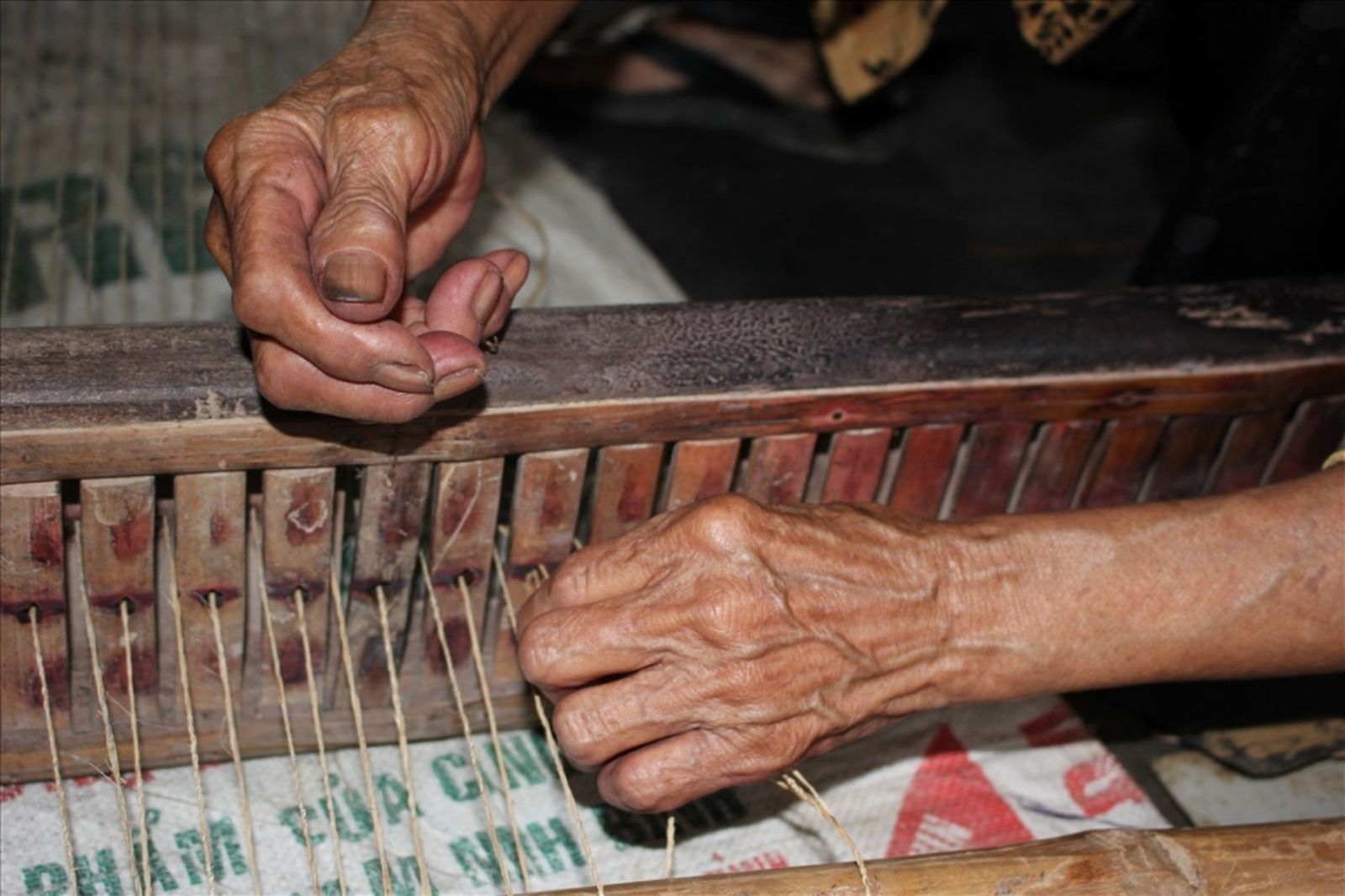
The loom is set up with single or double threads, depending on the type of mat. The person holding the reed handle (a tool made from old areca palm wood) sits at the top, manipulating the sedge and jute fibers to create intricate patterns, while the other person passes the shuttle, ensuring the mat is flat, straight, and evenly woven. A complete mat requires about 10 hours of continuous weaving, after which it is sun-dried to make it firm, glossy, and colorfast.
Photo: The stage of setting up the loom for mat weaving
Product finishing
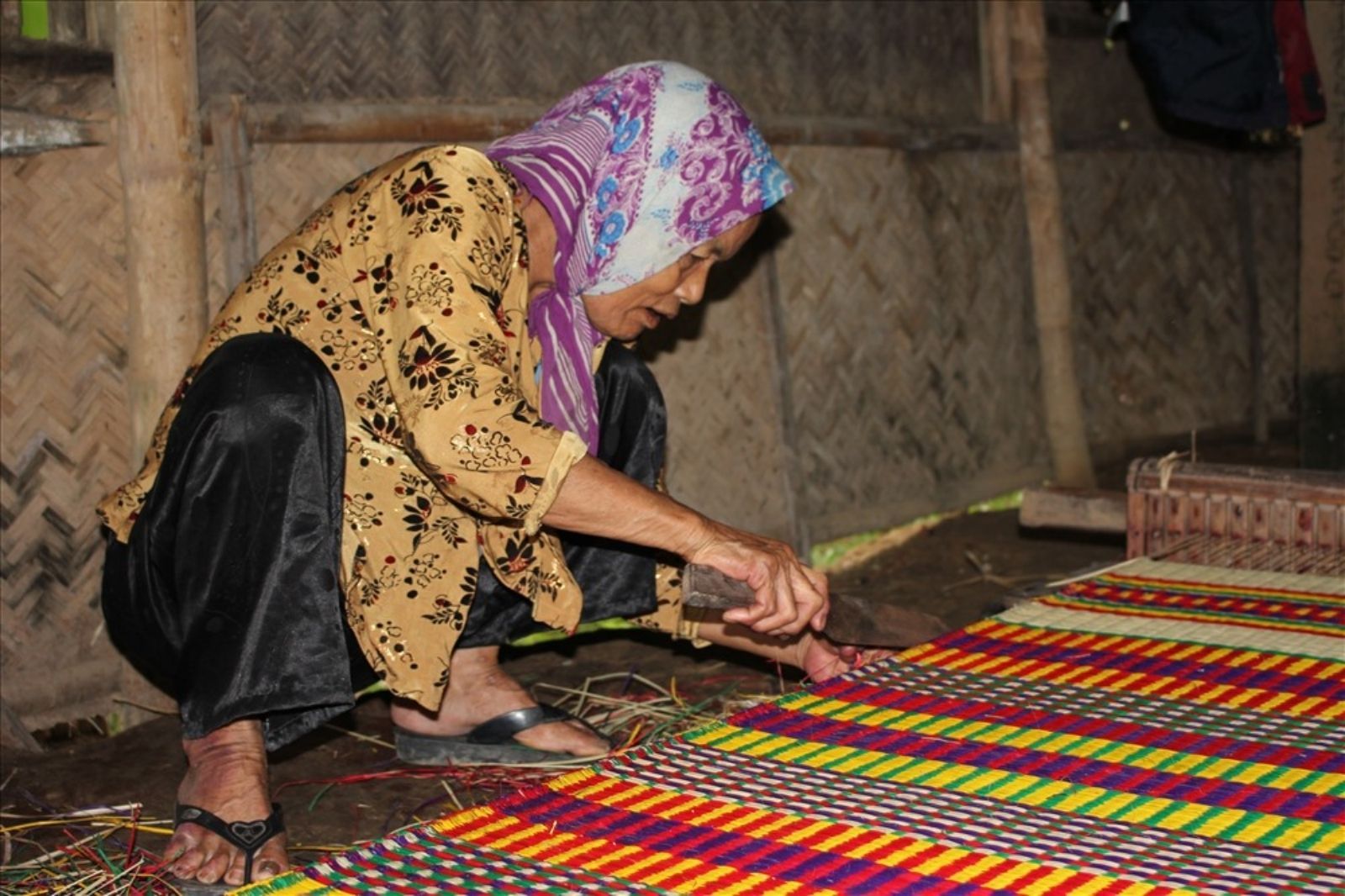
The ends of the strands are skillfully folded to create thick and sturdy borders, a unique characteristic of Cam Ne mats – completely different from other types of mats that are usually just printed with patterns after being woven plain white.
The entire process not only demands high technical skill and patience, but also reflects the passion and love for the craft of the locals here. As a result, each Cam Ne mat possesses outstanding durability, a natural sedge fragrance, and an unmistakable traditional charm.
4. Cultural significance and travel experiences at Cam Ne mat-weaving village
Cam Ne mat village has long been famous for its unique, durable, and beautiful products rich in Vietnamese cultural identity. Here, craftspeople meticulously create two main product lines:
Plain mats: Woven from natural white sedge strands, boasting rustic and elegant beauty. Prices range around 250,000 – 300,000 VND/piece.
Floral mats: Highlighted by vibrant colors and intricate patterns, priced at around 700,000 – 800,000 VND/pair, often chosen as gifts or home decor.
A distinctive feature of Cam Ne mats is the thick borders and flat, smooth surface, providing a comfortable feel when lying down, cool in summer and warm in winter, accompanied by a pleasant natural sedge scent. The patterns on the mats are hand-woven directly without printing molds, depicting folk tales, nature images, or traditional cultural symbols of high artistic value.
Compared to industrial mats, Cam Ne mats are more durable, eco-friendly, and embody the breath of Vietnamese folk art – deserving to be a refined souvenir for both domestic and international tourists.
Not just a place of production, Cam Ne mat village is also considered a living cultural symbol, preserving the essence of Vietnam's traditional weaving craft for over 500 years. When visiting, tourists can:
Observe artisans weaving mats right at the loom,
Experience hand-weaving under dedicated guidance,
Buy genuine handmade mats as gifts for loved ones.
The ideal time to visit is from November to the Lunar New Year, when the craft village is vibrant with colors and gently scented with sun-drying sedge. The journey will be even more complete when visitors enjoy local cuisine such as Mi Quang or Da Nang fish cake noodle soup.
Currently, Cam Ne mat village is being guided by local authorities towards developing craft village tourism, supported by various projects such as building weaving workshops and opening training classes to preserve and promote traditional heritage values for future generations.
Photo: Tourists can visit the craft village to understand more
A trip to Cam Ne mat village is not only a tour of a traditional craft village in Da Nang, but also a journey back to Vietnamese cultural memories, where diligent hands continue to preserve the mat weaving craft for over half a millennium. Amidst the rhythmic sounds of reeds and shuttles echoing in the peaceful atmosphere, visitors can feel the passion for the trade, the pride, and the enduring vitality of Cam Ne locals. In the midst of modern life, Cam Ne mat village retains its simple, rustic charm – a living cultural symbol and testimony to the value of "preserving the traditional soul in a modern era." If you have the chance to visit Da Nang, take the opportunity to visit this place to listen to the heartfelt story of mat weaving and bring home a piece of countryside charm filled with the warmth of the Quang region.