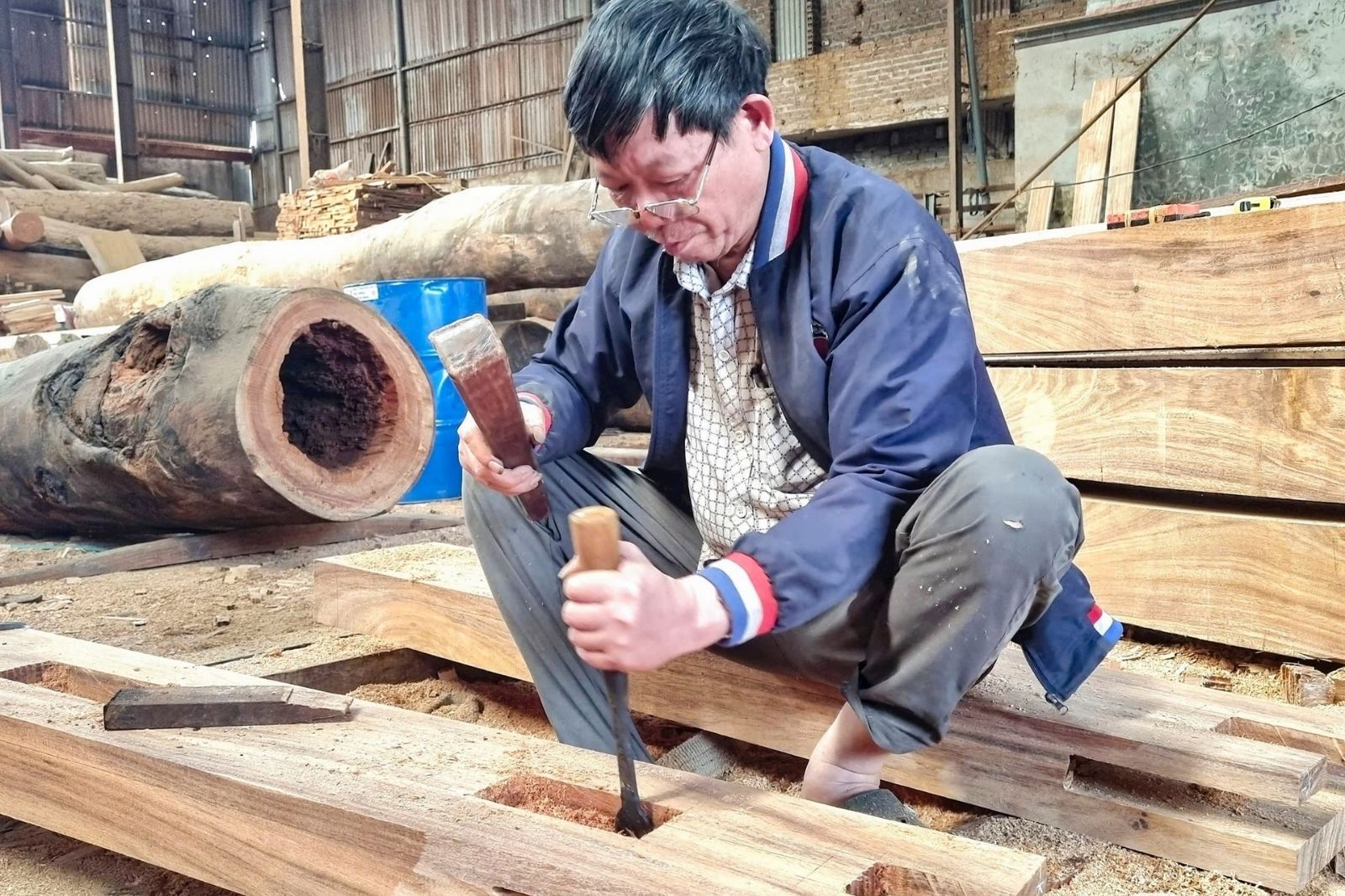
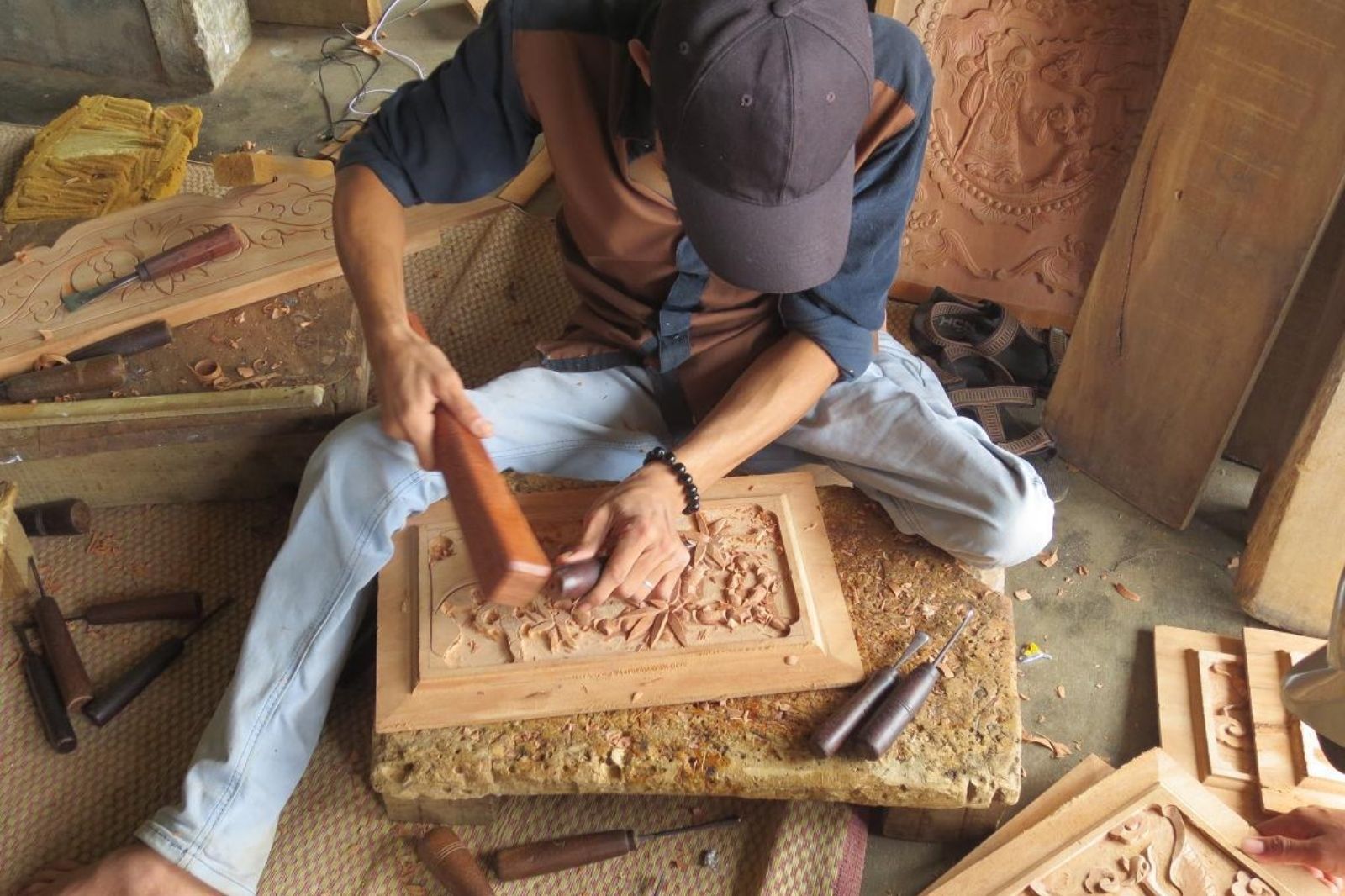
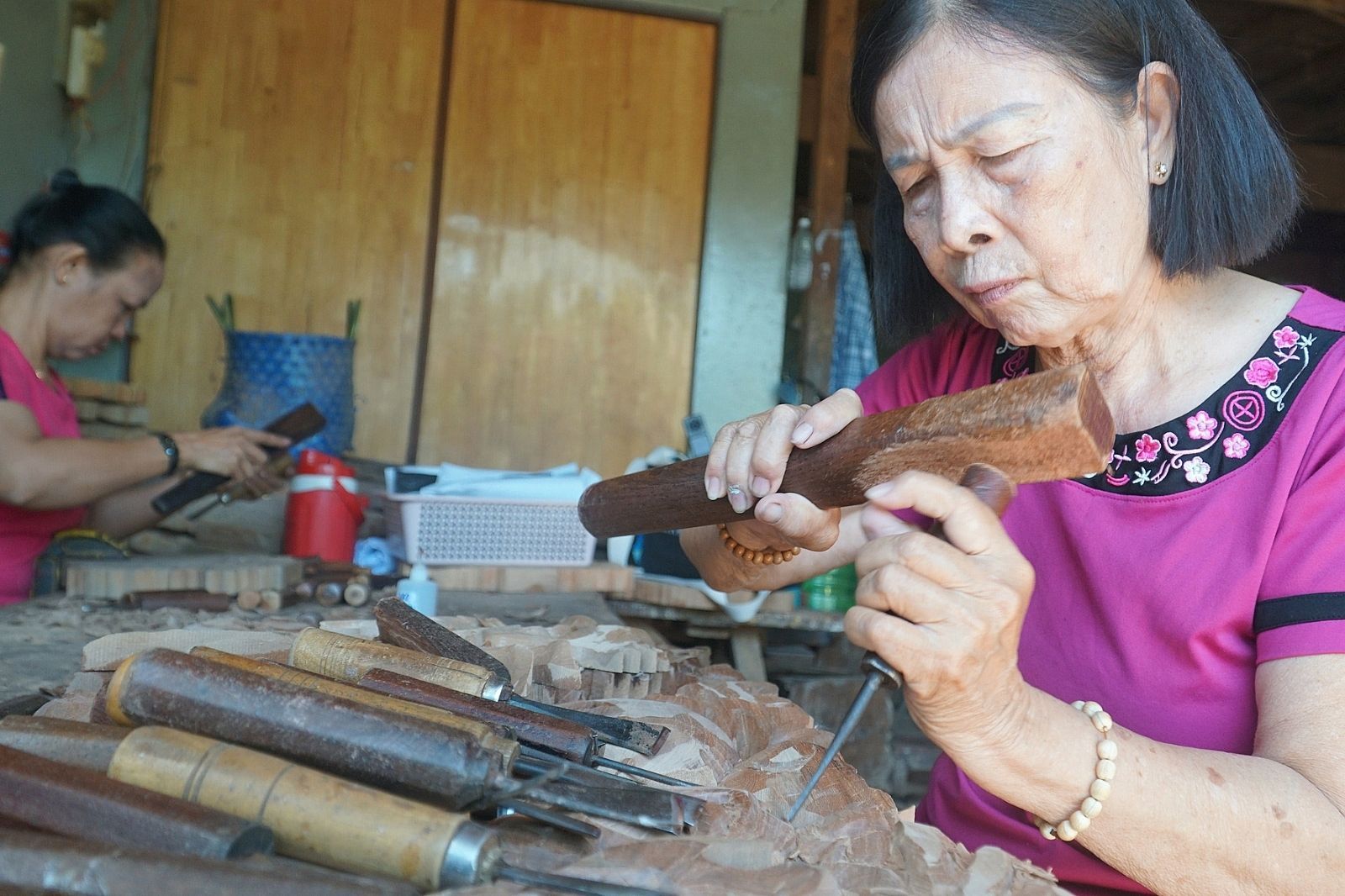
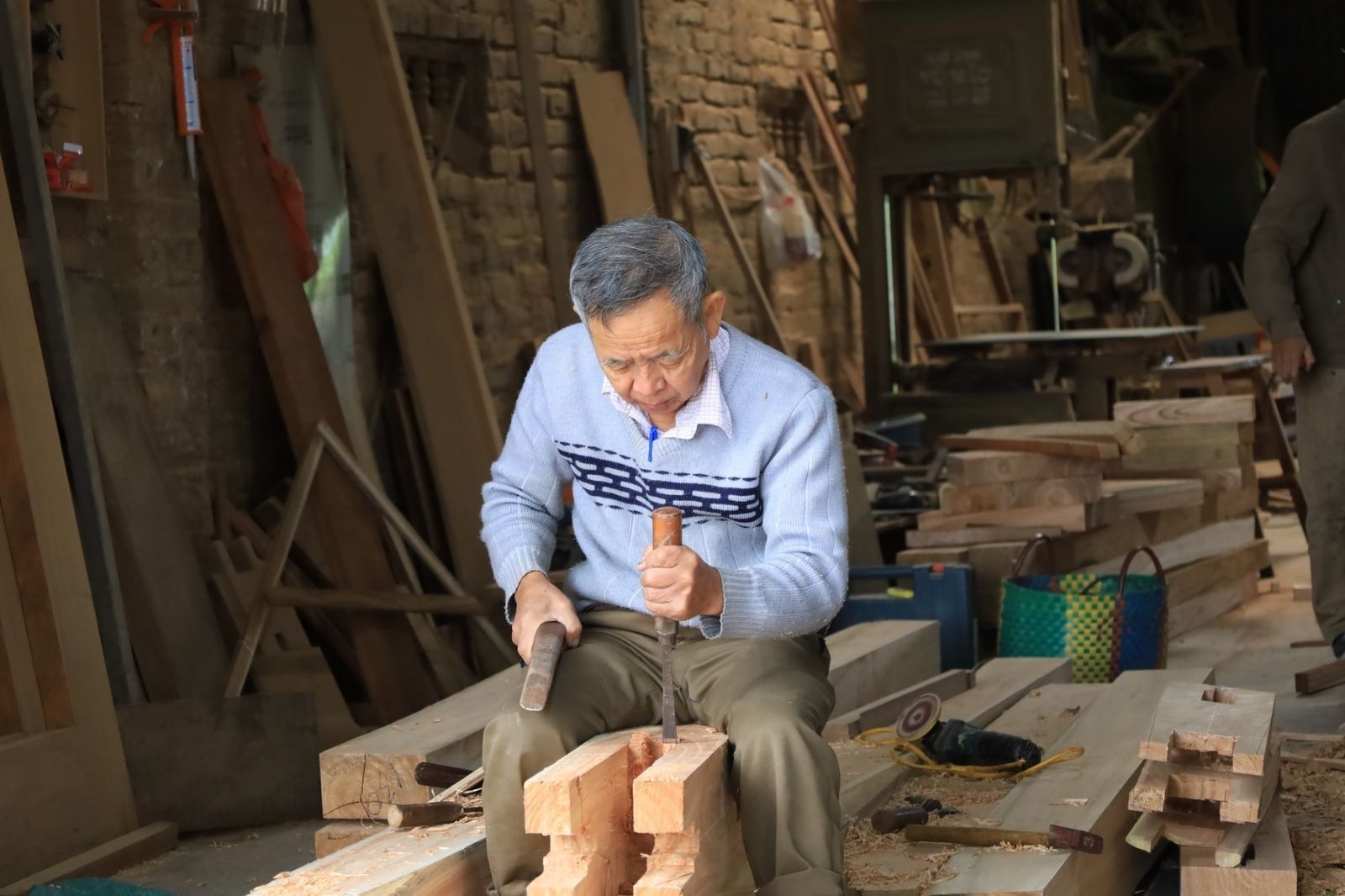
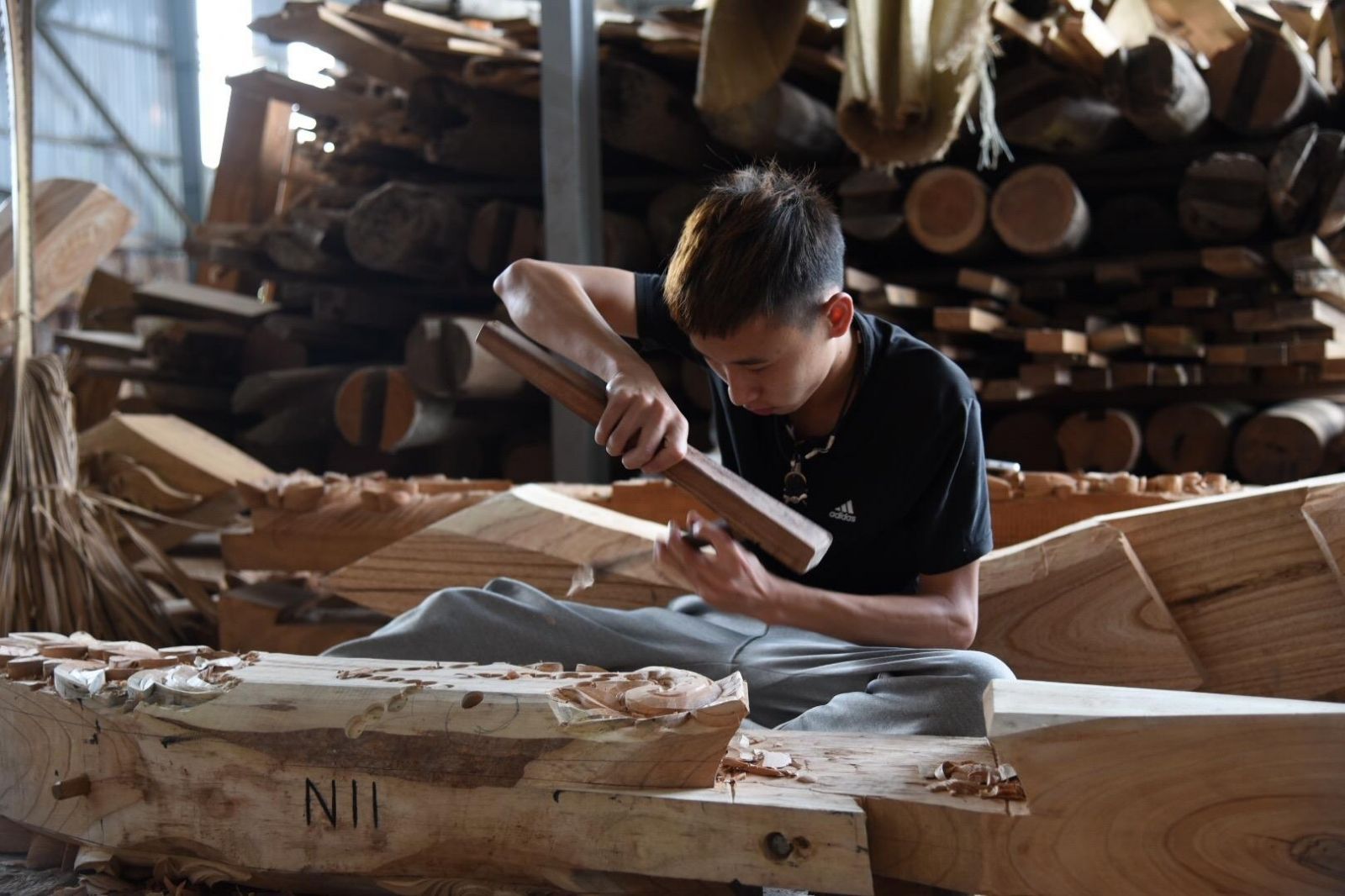
Nestled beside the gentle Thach Han River, Gia Do Village has long been known as one of the cradles of traditional woodworking in Quang Tri. Over generations, the sounds of chiseling and planing have continuously echoed as the familiar rhythm of the countryside, reflecting the diligence and artistry of the local carpenters. From seemingly lifeless logs of wood, through skillful hands and wisdom passed down through generations, Gia Do's artisans have created structures and wooden products that hold both functional and enduring artistic value over time.
If Cat Sơn Carpentry Village is famous for its intricate artistic carvings, Gia Do makes its mark with the technique of building traditional 'nha rưong' (timber-framed houses) – an architectural hallmark of Central Vietnam. Gia Do craftsmen once traveled across Quang Tri's rural areas and neighboring provinces to construct wooden houses, communal houses, ancestral temples, and many valuable ancient architectural works. Beyond serving daily life needs, the village's products contribute to preserving the cultural, aesthetic, and traditional identity values of the Vietnamese people.
Despite enduring the shifts of time and competition from modern manufacturing industries, Gia Do carpentry continues to be preserved by successive generations as an essential soul of their homeland. Today, the craft village is not only a sanctuary of traditional woodworking skills but also an attractive destination for those seeking to learn about craft village culture and the longstanding artisan values of Quang Tri.