Gio An Ancient Wells – A Journey to Discover the Fascinating Ancient Water-Conveyance Technique in Quang Tri

Central

Quang Tri

Sovaba.travel

Updated at: 24/09/2026

1. Where are the Gio An ancient wells located?

Nesting at the foot of basalt red-soil hills in Gio An Commune, Gio Linh District, Quang Tri Province, the Gio An ancient well system is not only a unique irrigation work but also an enduring cultural symbol of the ancient Champa people. The Gio An ancient well system is scattered across the villages of An Nha, An Huong, Hao Son, Long Son, and Tan Van. Each well site possesses its own unique appearance, yet together they form a unique ancient water-conveyance complex spanning a radius of about 3–4 km.

From National Highway 1, following Route 75 for over 7 km, visitors will gradually leave behind the bustling road to reach a more rustic space: red earth, hillside slopes, and crystal-clear streams of water that have been tied to the local people for generations.

In particular, the location of Gio An is very convenient for extending your journey of exploring Quang Tri. From here, you can combine visits to the Truong Son National Martyrs' Cemetery, Doc Mieu, Cua Viet Beach, or Hien Luong – Ben Hai, creating a route rich in historical value and deeply imbued with local cultural identity.
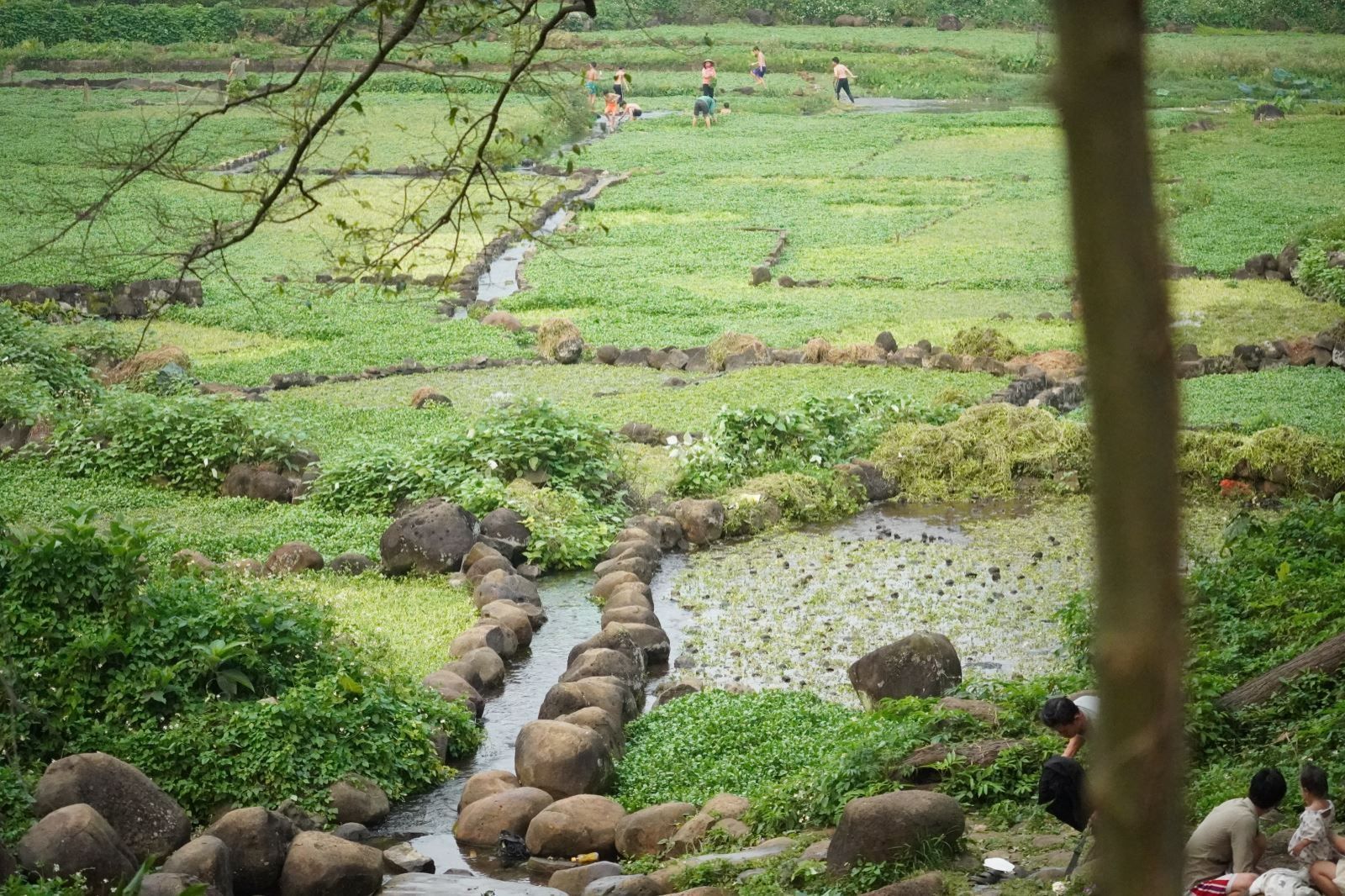
This is a water conveyance structure

Photo: This is a water conveyance structure 

2. History of the Gio An ancient wells

Over thousands of years, the Gio An ancient wells still retain pure water veins as part of the memory of the Quang Tri land. Current popular studies suggest that the system dates back around 1,800–2,000 years, associated with the water-conveyance techniques of the Champa people and continued to be preserved by local residents over generations. Some hypotheses even place the date further back, possibly up to around 5,000 years.

In 2001, the Gio An ancient well system was recognized as a National Historical and Cultural Relic, with 14 main wells preserved within a planned area of about 3.74 hectares. There used to be dozens, even nearly a hundred wells, but war and time have faded many traces. The remaining wells today not only preserve stories of ancient water-conveyance techniques, but also continue to nourish fields, gardens, and rau liet (watercress), a lush green specialty that has become part of Gio An's distinct flavor.

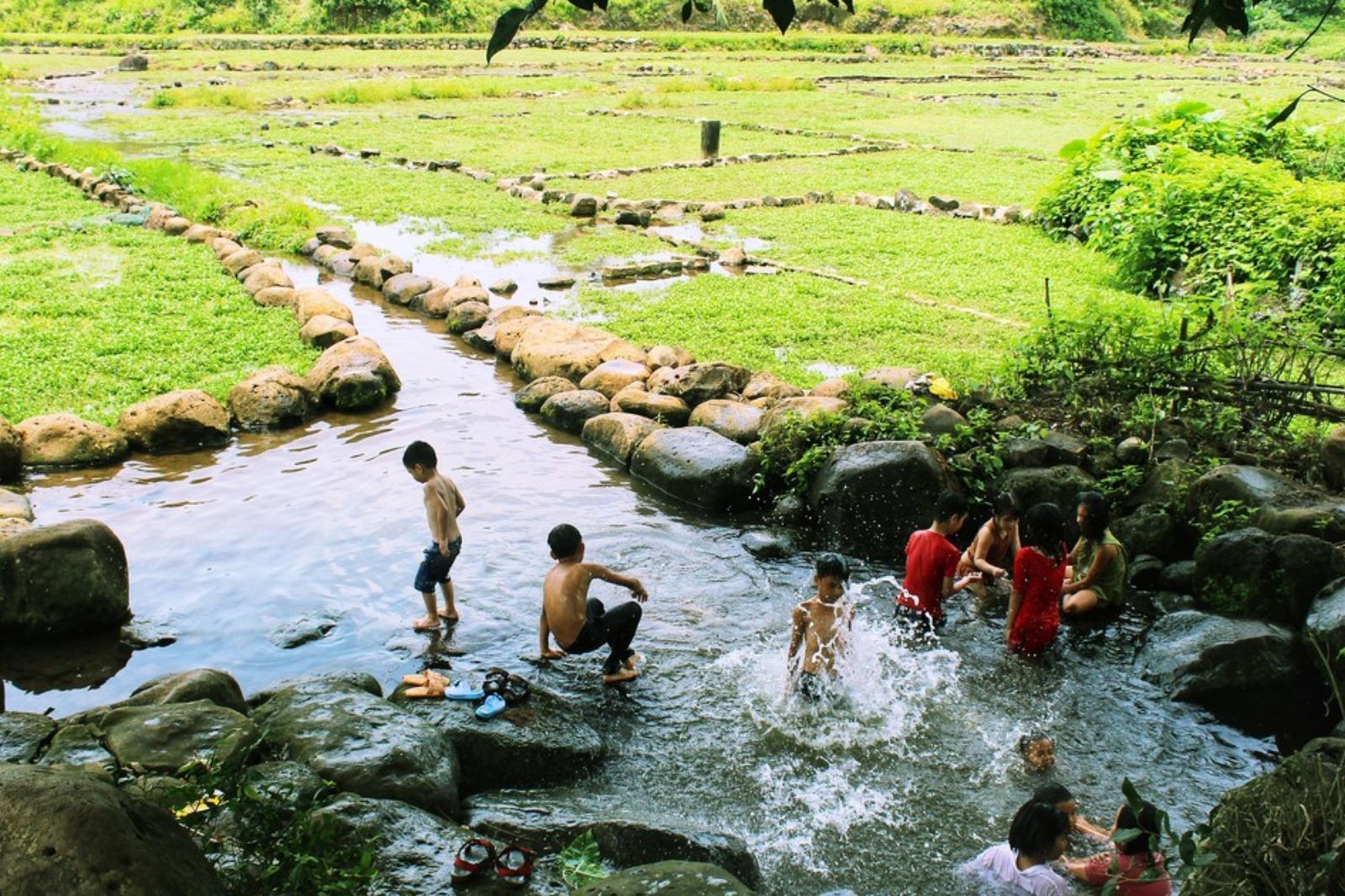
Stones stacked on top of each other

Photo: Stones stacked on top of each other 

3. Decoding the fascinating ancient water-channelling technique at the Gio An ancient wells

At first glance, the Gio An ancient wells look unbelievably rustic. No deep wells, no pumps, no binding mortars—only natural stone slabs arranged at the foot of the hill. Yet behind that simplicity lies a remarkably sophisticated water-conveyance technique of the ancients. Instead of digging deep into the ground, they located the exact spots where natural underground veins emerged, then used stacked stones in layers so that water passed sequentially through settling, storage, and channeling stages. Each area had its own function: the water source protected by stone, settling basins catching sediment, storage basins holding clean water, and stone troughs continuing to carry water to the fields and gardens.

In some wells, the system was arranged in tiers: settling water at the top, clean water in the middle, living quarters below, before flowing to the fields. A few well designs even utilized the principle of communicating vessels, allowing water to rise, overflow, and find its path onward naturally.

In some wells, the system was arranged in tiers: settling water at the top, clean water in the middle, living quarters below, before flowing to the fields. A few well designs even utilized the principle of communicating vessels, allowing water to rise, overflow, and find its path onward naturally. What is admirable is that the ancients hardly tried to "force" the water to flow to their liking. They read the terrain, understood the water veins, and let nature complete the rest. As a result, the water streams of Gio An still retain their freshness, staying cool in summer and persistent even through dry seasons.

Tourists checking in while visiting the ancient well

Photo: Tourists checking in while visiting the ancient well 

4. Challenges in preserving and promoting the value of the Gio An ancient wells

Despite their immense historical and cultural value, the Gio An ancient well system is facing many challenges. Agricultural cultivation near the well areas, especially soil and stone excavation, has affected the water quality and the condition of several wells. In addition, pollution from waste and the impact of urbanization are issues that need to be addressed.

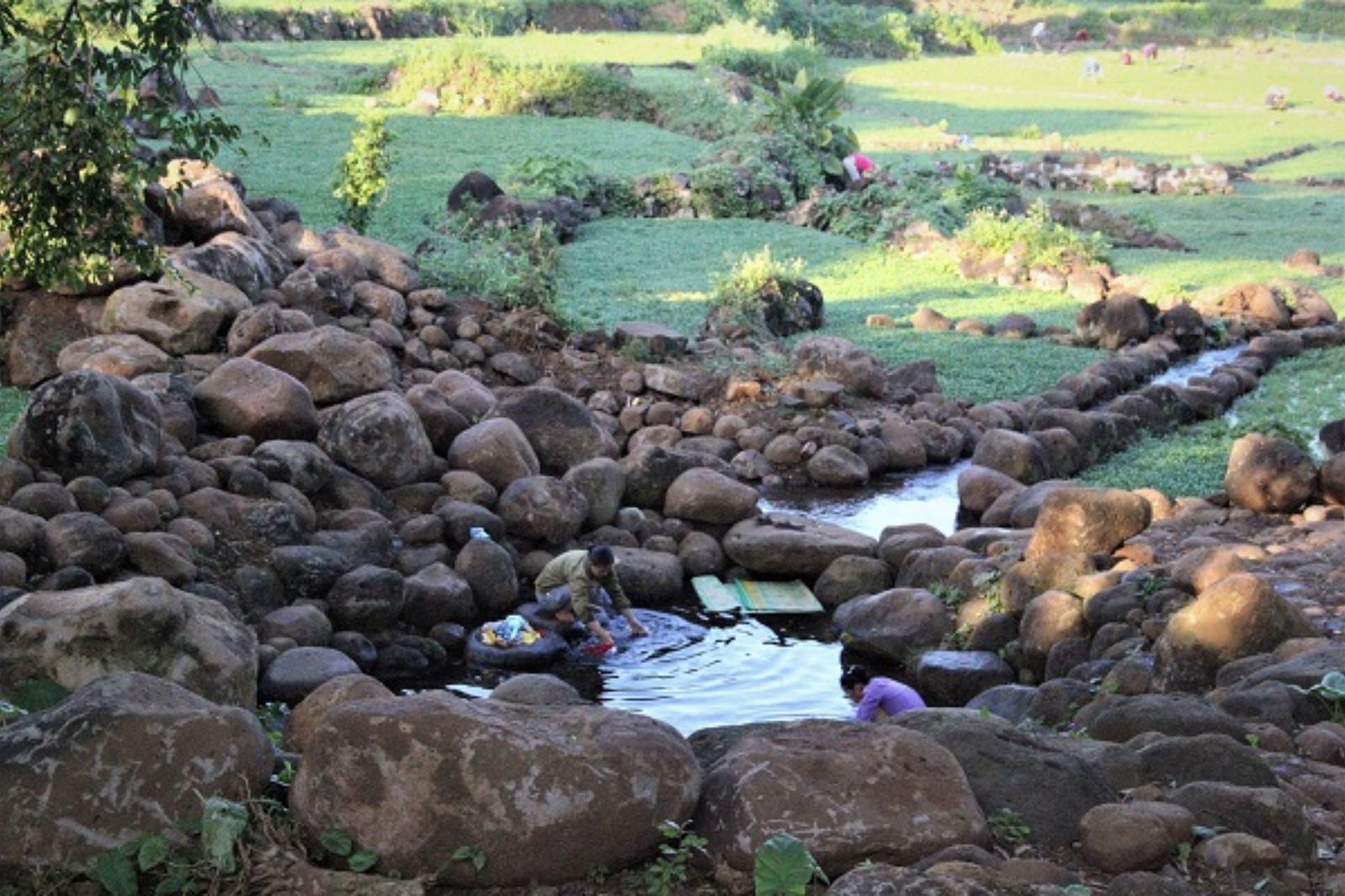
Water stream from the ancient well system
Photo: Water stream from the ancient well system 

Quang Tri province has been implementing conservation, renovation, and restoration plans for the relic with a total budget of over 3.2 billion VND. The goal is to protect the ancient well system sustainably while developing community-based tourism to improve local livelihoods and promote the cultural values of this land.

The Gio An ancient well system is not merely an irrigation work, but also a living cultural heritage that preserves the wisdom, creativity, and soul of the ancient Cham people. The clear, cool streams flowing over thousands of years stand as proof of human ingenuity and perseverance in living in harmony with nature. Visit Gio An at least once, stand beside an ancient well, listen to the flowing water, and feel the breath of history. It is not just a trip, but a journey to discover the cultural and spiritual values of a land rich in tradition.

Loading......

Featured destinations