History & Architecture of Con Market – A Long-Standing Market in the Heart of Da Nang City
Central
Da Nang
Sovaba.travel
Updated at: 24/09/2026
1. Where is Con Market in Da Nang?
Con Market is located right at the intersection of Hung Vuong and Ong Ich Khiem Streets (some documents also mention the Quang Trung intersection), in Hai Chau 1 or Hai Chau 2 Ward, Hai Chau District, Da Nang City. The official address is usually recorded as 290 Hung Vuong or 318 Ong Ich Khiem.
The market sits in a prime location in the city center, opposite Go! Supermarket (formerly Big C), close to the old inter-provincial bus station and many famous tourist destinations such as the Dragon Bridge, Han River Bridge, Cham Museum, or the Cathedral (Chicken Church). You can easily reach here by motorbike, taxi, Grab, or bus. If traveling from Da Nang Bus Station, just turn onto Ton Duc Thang Street and cross the Nga Ba Hue Overpass to arrive. Opening hours are usually from around 5–6 AM to 7–8 PM, with the food area operating more vibrantly in the afternoon and evening.
Photo: History of transformation from a deserted sand dune into a bustling economic center
2. History and development of Da Nang's Con Market
Con Market did not form by chance, but was closely associated with the urbanization process of Da Nang City. According to historical records and research by the Da Nang Historical Science Association, this market began to appear in the 1940s, when Da Nang was still named Tourane under French colonial rule. At that time, the area was just a high, deserted sand dune with reeds, cacti, and small creeks. The increase in population together with the demand for goods exchange led local residents to set up temporary stalls made of bamboo and tents, creating the first primitive market.
By 1958, the Da Nang City Hall officially planned and established the market with two initial pavilions to relieve the load on Han Market – the city's oldest market. Thanks to its favorable location near the train station and the central bus station, Con Market quickly became a bustling trading point, serving as a hub for goods coming from Hue, Quang Nam, and many neighboring provinces.
After 1975, Con Market continued to serve as a major trading hub for Da Nang. In December 1984, the People's Committee of Quang Nam - Da Nang Province invested in completely rebuilding the market to commemorate the 10th anniversary of the liberation of Da Nang. The project was inaugurated on March 27, 1985, under the name Da Nang Commercial Center, covering an area of about 14,000 m². After more than 25 years of operation, in 2012, responding to the people's wishes, the People's Council of Da Nang City decided to restore its familiar name, Con Market.
From a temporary market on a pristine sand dune, Con Market today has developed into one of the largest wholesale and retail markets in Central Vietnam, while becoming a symbol closely tied to the development and commercial life of Da Nang City across various historical periods.
Photo: Con Market dons a new look and continues to grow strongly
3. Distinctive architecture of Con Market through different periods
The architecture of Con Market in Da Nang is clear evidence of the city's development process through each historical period. From a simple temporary market on a sand dune, this place has been renovated and expanded many times to meet the growing commercial demands of the local people.
1940 – 1950 Period (Formation Phase): The market consisted only of bamboo huts and thatched roofs temporarily erected on a deserted sand dune. This simple, rustic architecture suited the socio-economic conditions of the early formation period.
1960 – 1984 Period (Expansion): The market was gradually fortified with tiled market halls and surrounding trading kiosks, concentrating many valuable items such as gold, silver, and groceries. Thanks to its location near the railway and major traffic routes, the market space became increasingly spacious and convenient.
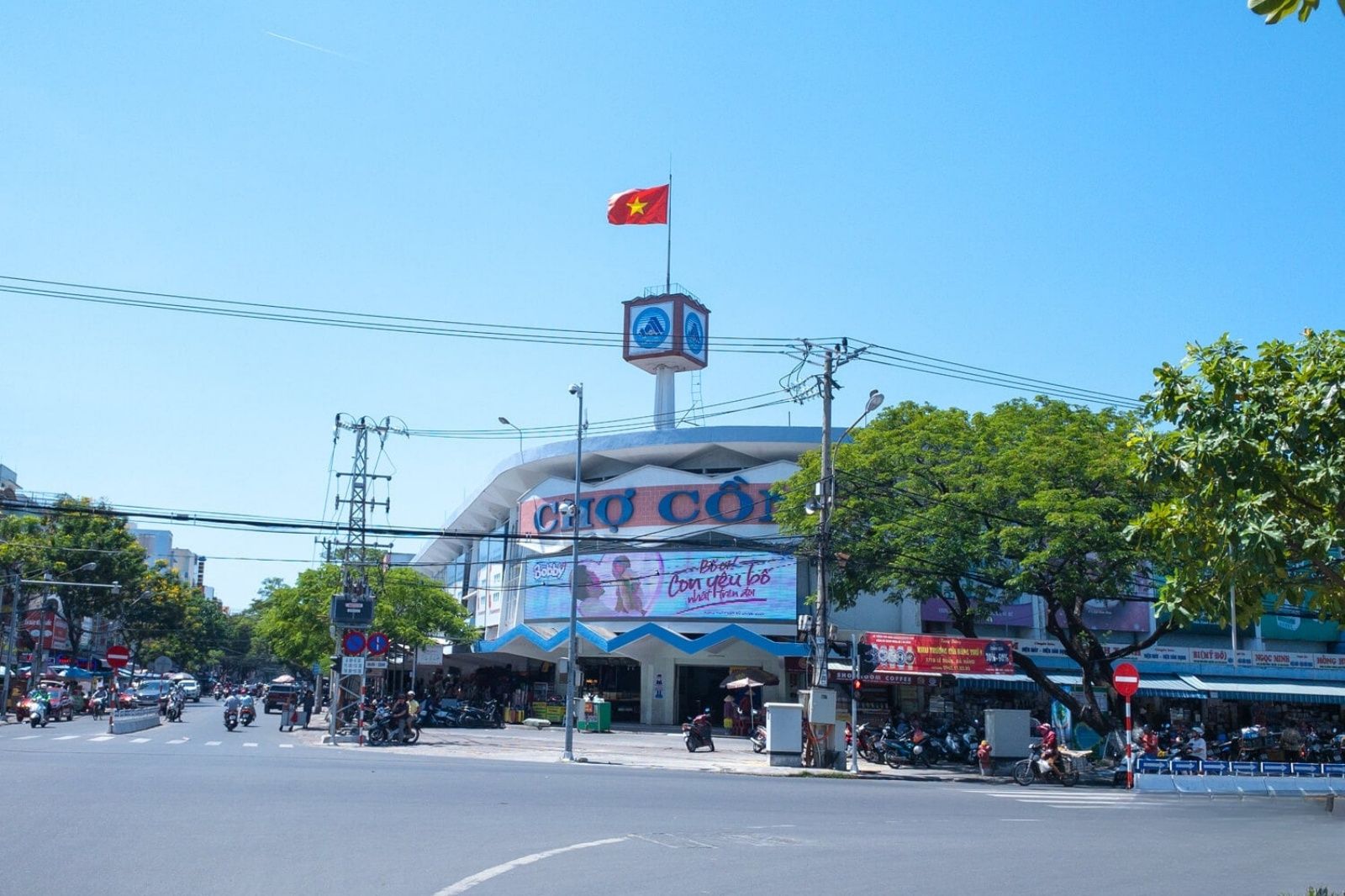
1985 – Present Period (Modern Reconstruction): After being rebuilt, the market became a large-scale complex consisting of a main 3-story building for general department goods and services, two 2-story buildings for offices and stalls, along with six single-story covered market halls specializing in food and groceries. The total usable area reached approximately 14,000 m², combining traditional market models with the commercial center design of that period.
Currently, although the city plans to rezone and upgrade Con Market in the future, the building still retains its architecture from 1985 as a familiar landmark, deeply attached to the memories and commercial life of Da Nang residents.
Photo: Con Market is the irreplaceable cultural and economic soul of Da Nang
4. Explore the interior of Con Market today
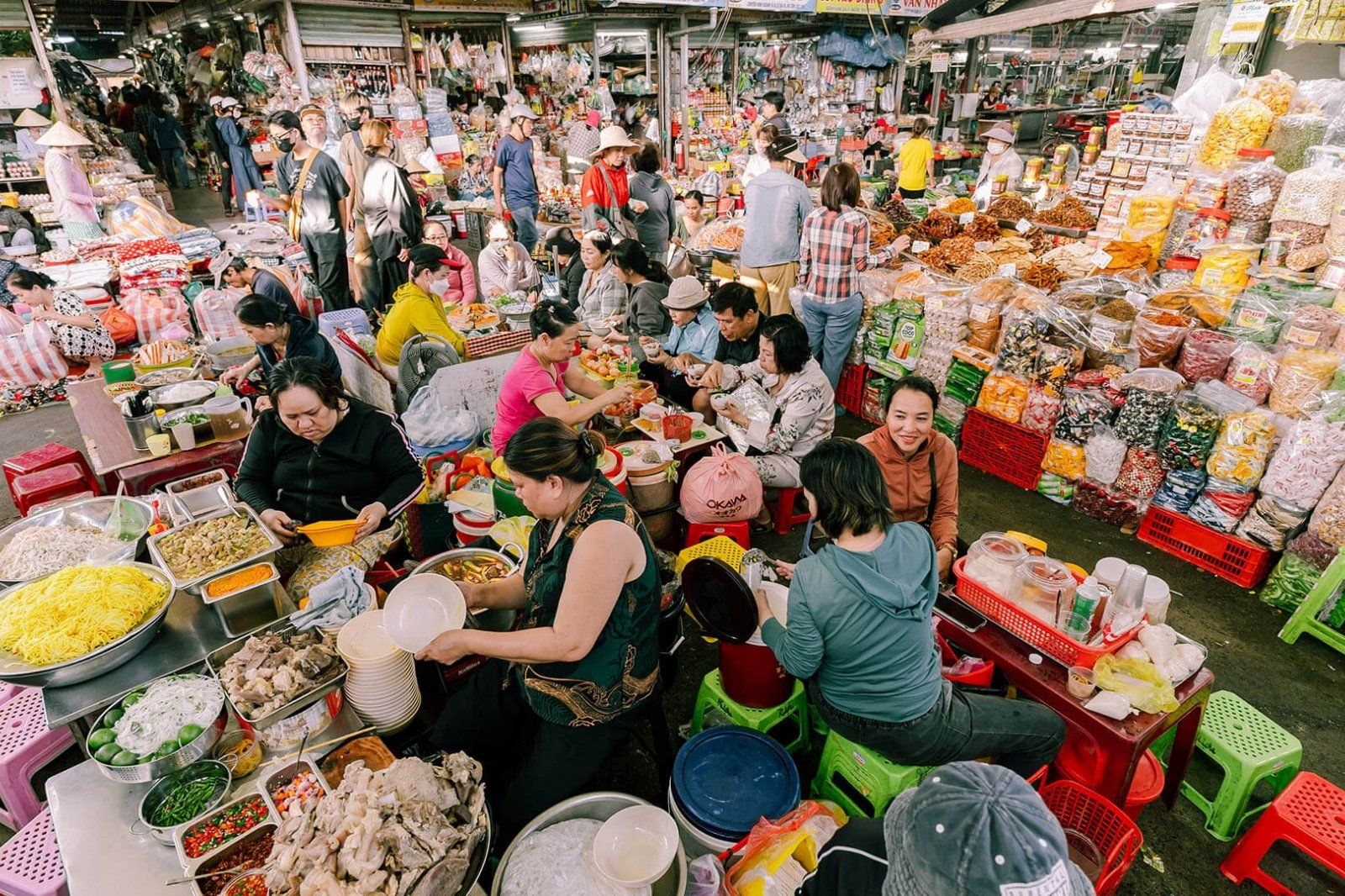
With a scale of over 2,000 stalls, Con Market Da Nang today is considered one of the most bustling shopping and culinary paradises in the city. Not only serving the trading needs of local residents, the market has also become a familiar stop for tourists wishing to explore the signature lifestyle and cuisine of Central Vietnam.
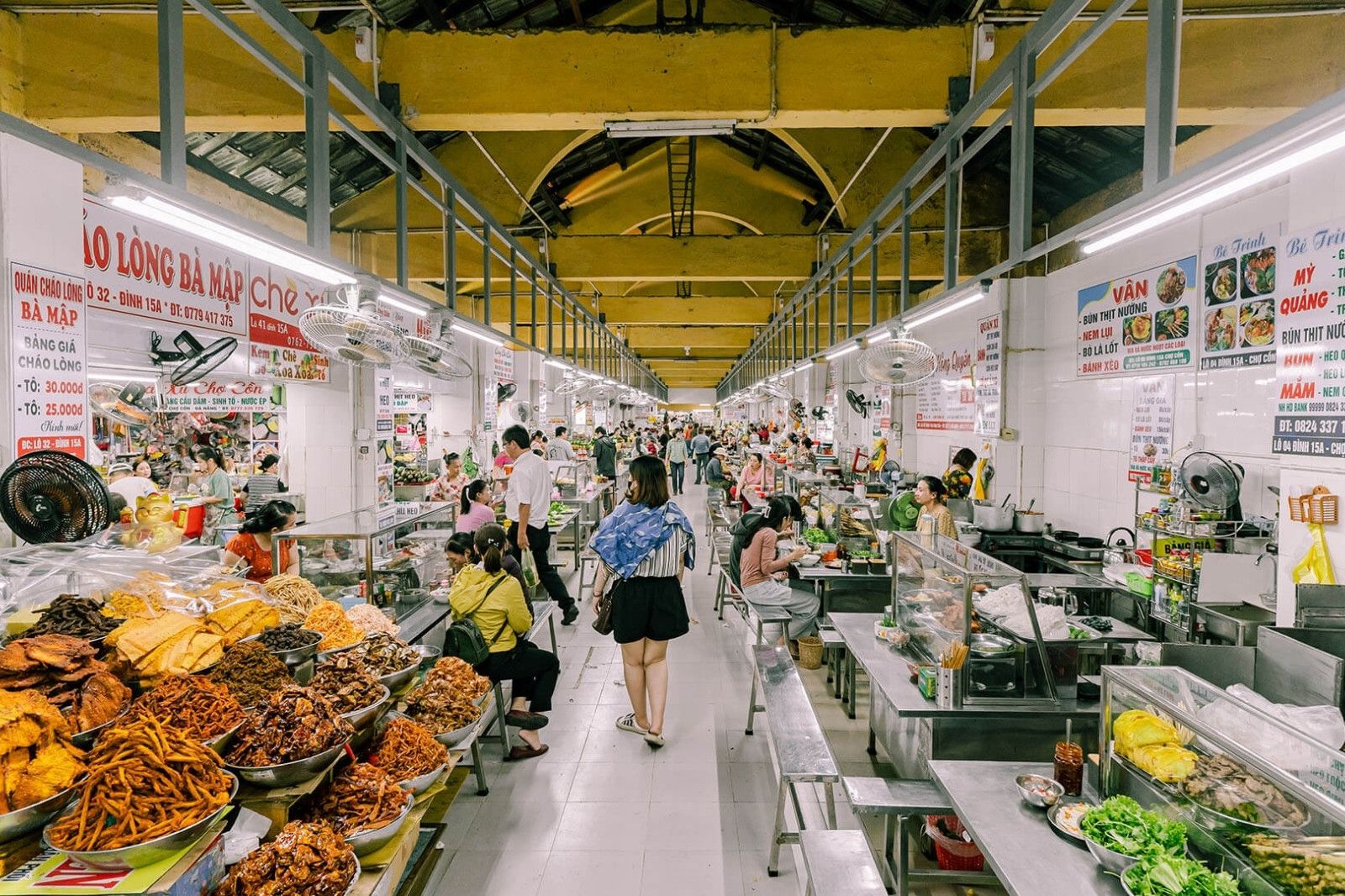
Ground Floor and Main Market Hall Area: This is the busiest area, featuring stalls selling fresh food, vegetables, seafood, meat, and fish. Additionally, the indoor food court is neatly arranged, serving quick and clean meals for visitors.
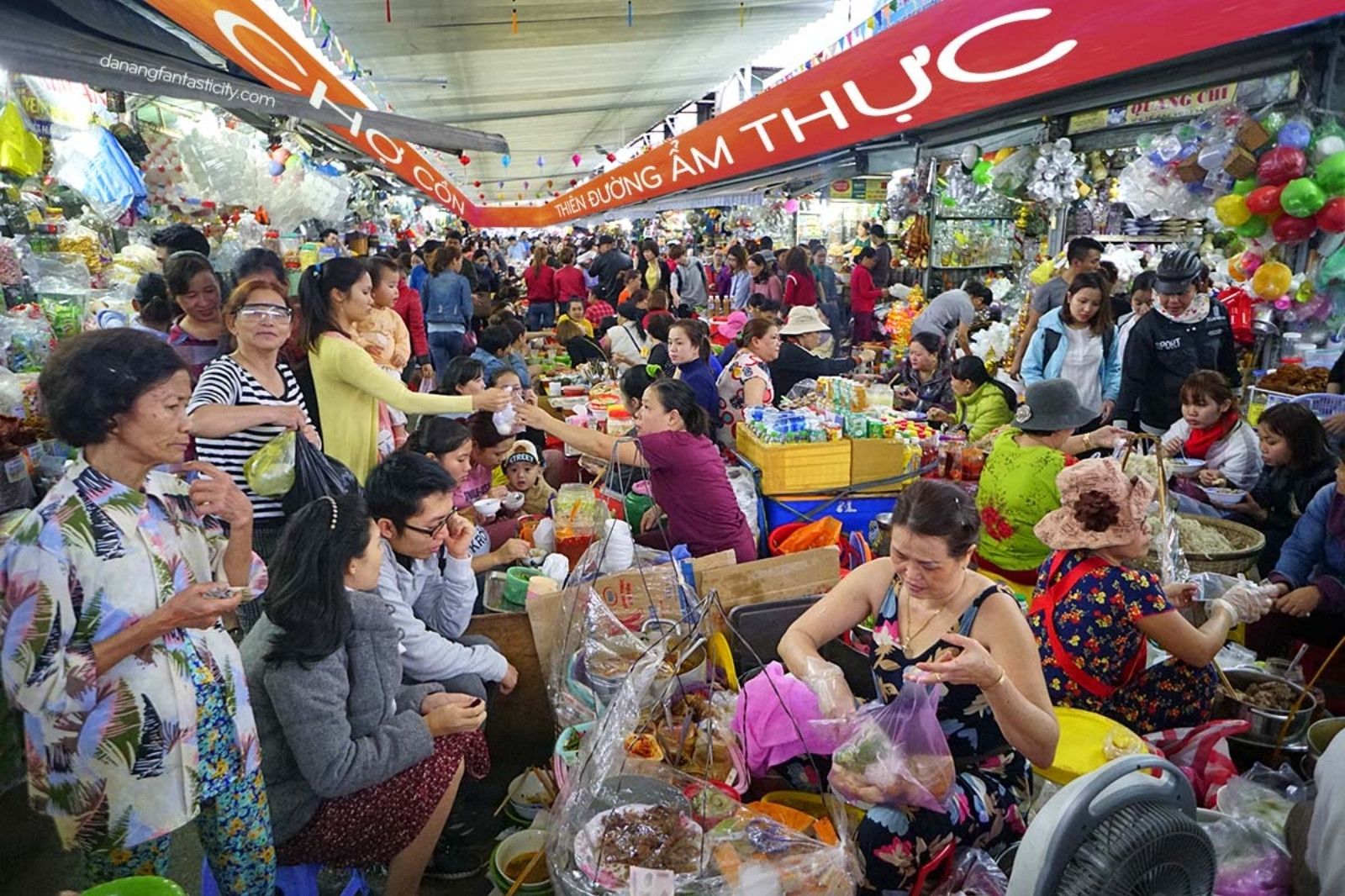
Outdoor Food Area: Considered the “soul” of Con Market in the afternoon and evening. Here, visitors can enjoy a wide array of delicious dishes such as Mi Quang, Banh Xeo, Banh Beo, Bun Cha, sucking snails, durian sweet soup, or avocado ice cream, with affordable prices ranging from just 15,000 to 50,000 VND per dish.
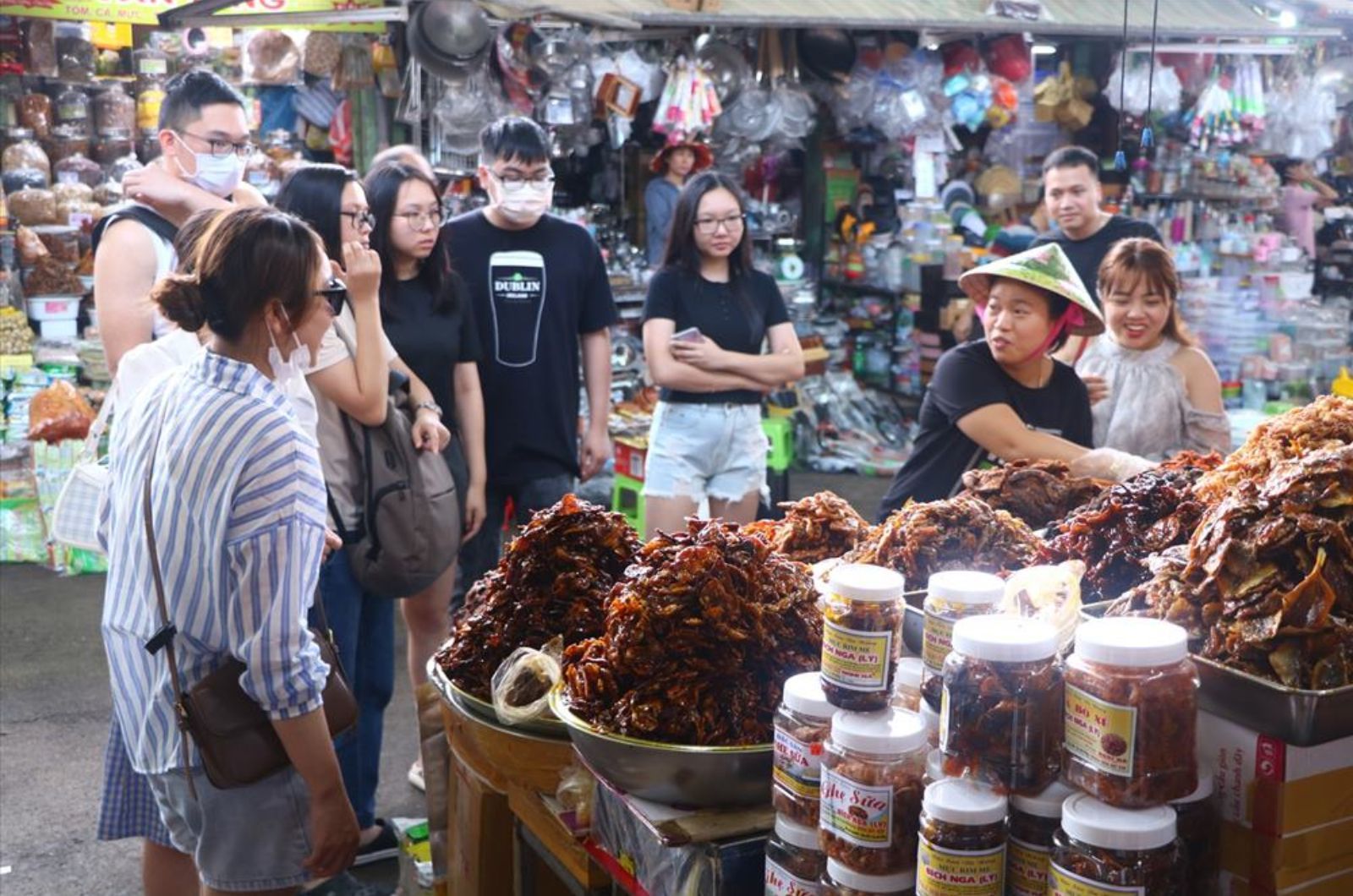
Other Areas: Includes stalls selling dried goods and Central Vietnam specialties such as fermented fish sauce (mam nem), sesame dry cake (banh kho me), and dried seafood, along with fashion clothing, souvenirs, household goods, and electronics.
Compared to many other traditional markets, Con Market has quite a spacious and clean environment, creating a pleasant feeling for visitors. Tourists often choose to visit the market in the morning to buy specialties or in the late afternoon to enjoy local food and stroll around. For a complete experience, you should keep your parking ticket carefully and negotiate politely when shopping.
Photo: Con Market is becoming increasingly crowded and bustling
5. Lesser-known interesting facts about the history of Con Market
Behind the hustle and bustle of Con Market Da Nang today are many little-known historical stories. Not only an old commercial hub, this market is also associated with special milestones in the city's past – from the war era and secret revolutionary activities to the formation of a vibrant commercial area. The following interesting details will help you better understand the unique history of Con Market:
Once a “hell” during the French period: Before becoming a market, this sand dune was a place where French colonialists brutally executed Viet Minh soldiers.
Secret support for the revolution: Many small traders (such as Ms. Tran Thi Thom) covertly supplied medicine and food to resistance areas despite being closely monitored by secret agents.
Railway station & boiling water from steam trains: During the years 1960-1975, trains stopped for 45 minutes at Con Market station to unload goods. Local residents used to ask for boiling water from the train locomotives for daily use.
Locals “stubbornly” kept the old name: Despite being renamed Da Nang Commercial Center in 1985, residents continued to call it “Con Market” for 27 years, leading to the official name restoration in 2012.
The largest wholesale market: Once a wholesale supply hub for the entire city and surrounding region, contributing to the formation of the vibrant commercial neighborhood around it.
Photo: Con Market becomes a bustling shopping paradise in Da Nang
Con Market, with nearly a century of rich history, is the irreplaceable cultural and economic soul of Da Nang. From a pristine sand dune to the largest wholesale market, having gone through multiple reconstructions and name changes, Con Market has always affirmed its strong vitality. The ambitious new zoning project, combining modern 8-story architecture with a traditional market area and night cuisine, promises to turn Con Market into a civilized commercial and tourism symbol. This intersection between deep memories and a revamped appearance makes Con Market an indispensable destination in any Con Market tour, where visitors can fully feel the rhythm and identity of this dynamic coastal city.