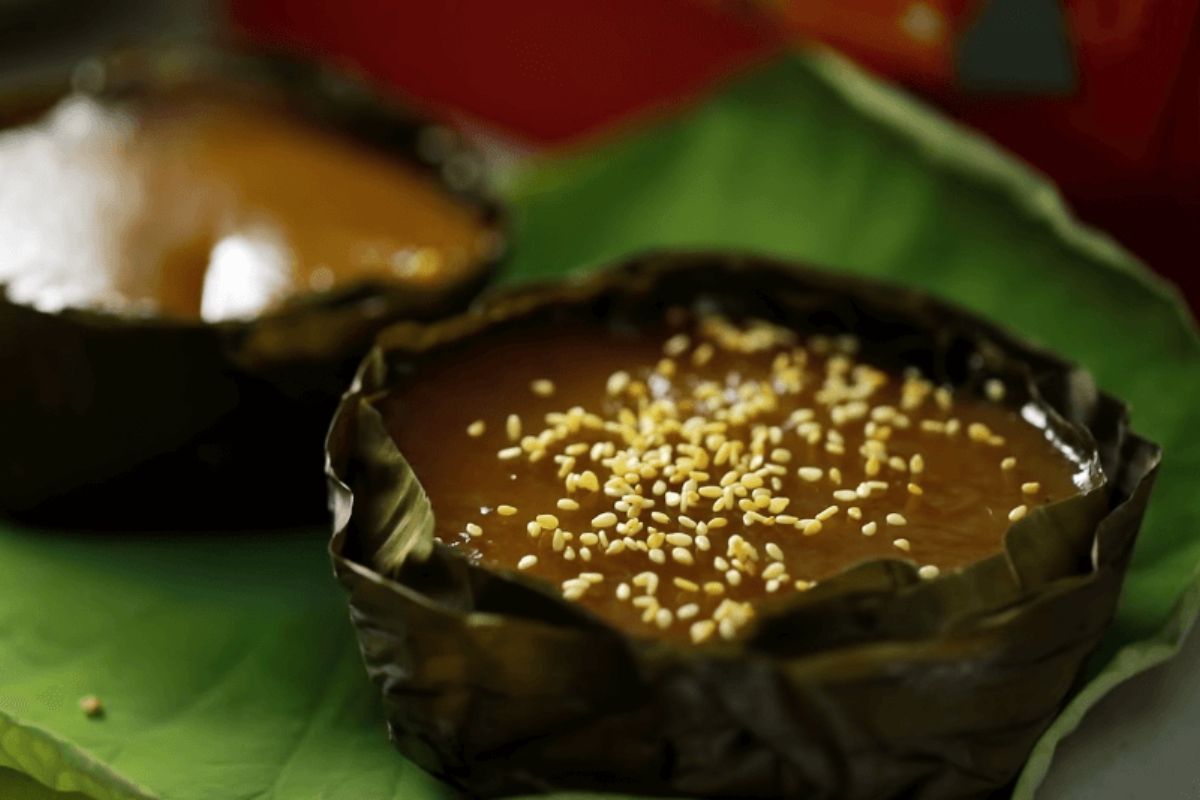
Hoi An Banh To: The "Lucky" Cake Imbued with the Soul of the Quang Countryside
Central
Da Nang
Hoi An
Sovaba.travel
Updated at: 24/09/2026
1. What is Hoi An Banh To?
Hoi An Banh To (also known as Quang Nam Banh To) is a traditional cake made from glutinous rice flour, sugar, and fresh ginger. The cake is square or round, with a glossy golden-brown color, a smooth surface, a chewy and sticky texture inside, and a rich sweet taste laced with a subtle spicy kick from ginger.
Unlike many other Tet cakes in Vietnam, Banh To is not crispy but possesses a signature chewiness, making it easy to slice and preserve for a long time (it can keep for up to a month if tightly wrapped). This cake commonly appears on ancestral altars during the Lunar New Year (Tet), the Mid-Year Festival (Tet Doan Ngo), and major death anniversaries in the Quang region.
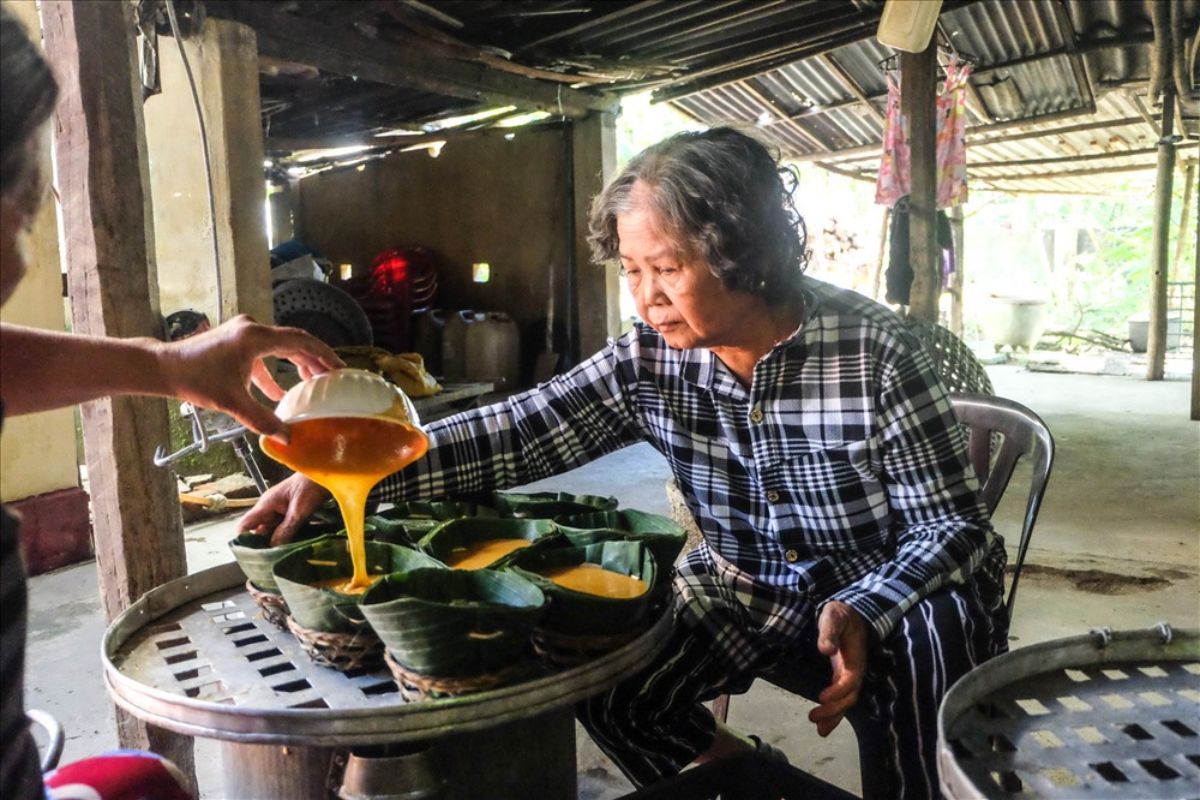
Photo: Banh To is a traditional cake made from glutinous rice flour
2. The origin and significance of Banh To in the culture of the Quang region
The origin of Hoi An Banh To is believed to stem from the Chinese community settling in Hoi An in the 16th-17th centuries. Many culinary researchers believe it is a localized Vietnamese version of "niangao" (sticky rice cake), a traditional Chinese New Year cake usually made to worship ancestors and pray for a peaceful new year.
When the Chinese came to Hoi An to trade and live, they brought along the cake recipe and gradually blended it with local ingredients such as Quang Nam glutinous rice, bowl sugar (duong bat), and fresh ginger. Over time, Banh To became a signature dish of the Quang people, expanding beyond the Chinese community to spread widely in the local folklore.
Regarding its meaning, the word "to" (ancestor/nest) in Banh To carries two deep layers of significance:
Family home / Ancestral roots: Reminding people of their origins, as the proverb goes, "birds have nests, humans have ancestors."
Good luck and prosperity: The cake is made from glutinous rice – a symbol of abundance, sugar – representing sweetness, and ginger – signifying driving away evil spirits and wishing for health.
In Quang culture, no home lacks Banh To on the Tet feast tray, demonstrating gratitude to ancestors and wishes for a prosperous new year.
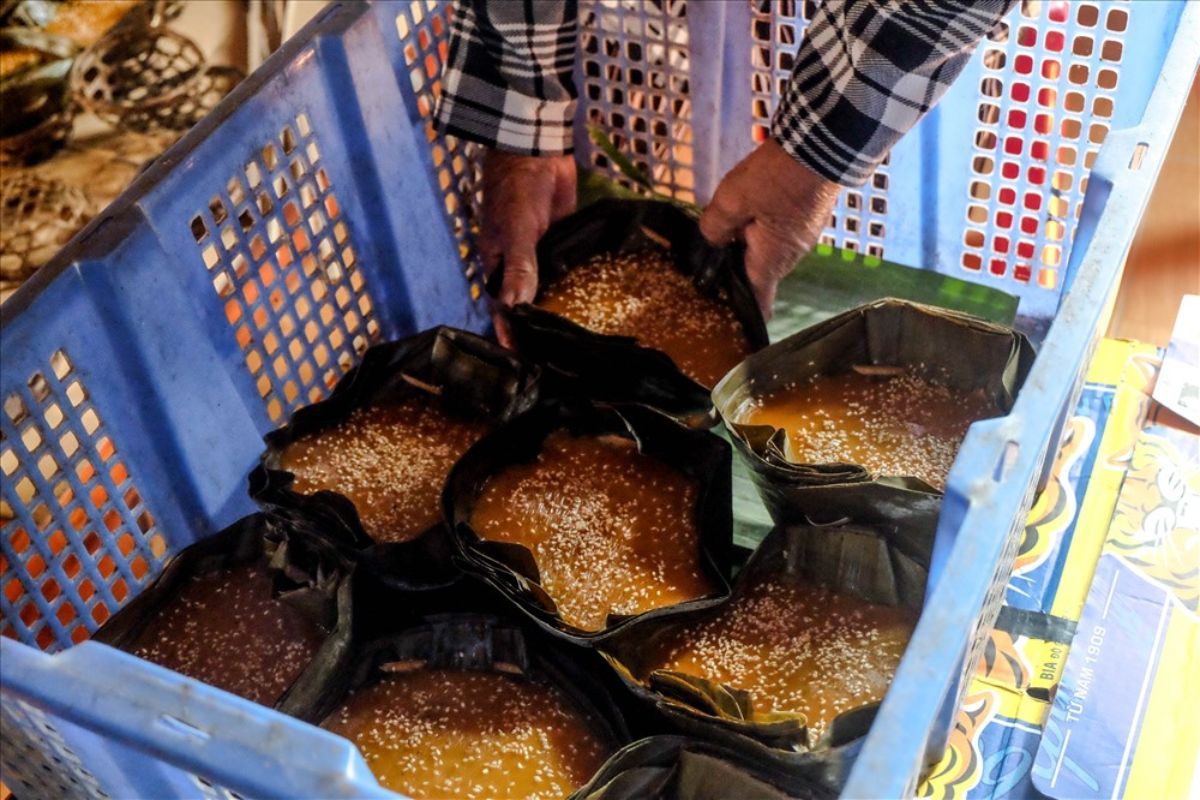
Photo: Banh To carries the meaning of good luck during Lunar New Year
3. Why is Banh To considered a 'lucky' cake during Tet?
Banh To is dubbed the "lucky" cake due to the deep feng shui and cultural significance it holds. The Quang people believe that:
Eating Banh To at the beginning of the year brings resilience and sustainability in work and life (matching the chewiness of the cake).
The golden-brown color of the cake symbolizes prosperity and wealth.
Slicing Banh To into thin pieces to share with relatives and friends demonstrates bonding and spreading good fortune.
The ginger in the cake helps dispel cold and illness, bringing abundant health throughout the year.
In particular, on New Year's Eve or the first day of Tet, people often slice Banh To to offer on the ancestral altar first before distributing it to descendants as a New Year blessing.
4. What is special about the ingredients of Hoi An Banh To?
The ingredients for Hoi An Banh To are very simple, yet require high quality to create its signature flavor:
Glutinous rice: Must be 'nep cai hoa vang' or fragrant Quang Nam glutinous rice, with large, uniform, highly sticky grains. The rice is thoroughly soaked and ground into fine flour.
Sugar: Typically uses bowl sugar (traditional block cane sugar) or palm sugar to create a mild sweetness and a beautiful golden color. Some places use white granulated sugar, but traditional sugar gives a richer flavor.
Fresh ginger: Finely pounded to create a warm spicy flavor, neutralize any raw rice odor, and help the cake remain aromatic for a long time.
Additional ingredients: Sometimes coconut milk, pandan leaves (for natural green color), toasted sesame seeds, or tapioca starch are added to enhance chewiness.
The combination of local sticky rice and pungent ginger creates a unique highlight compared to Banh To in other regions.
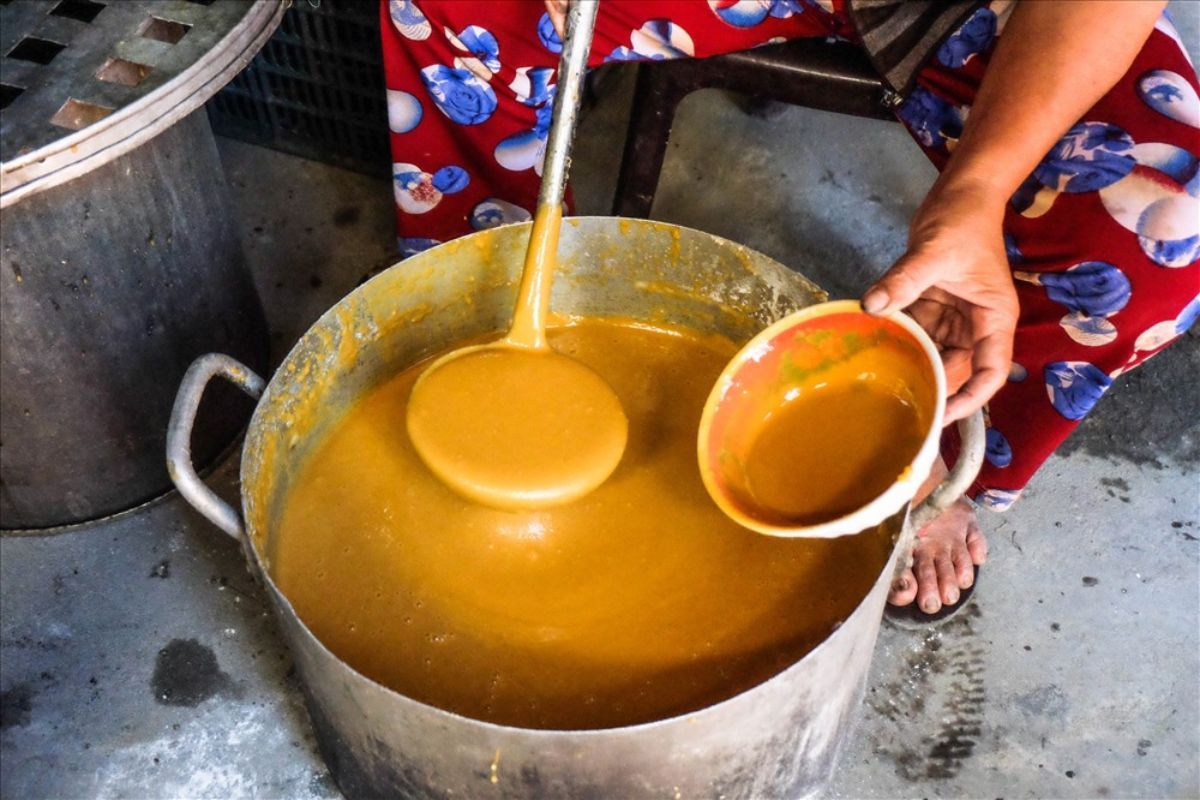
Photo: The cake has the distinctive golden color of traditional bowl sugar
5. How Hoi An locals make traditional Banh To
The process of making Banh To requires patience and meticulousness, often done by hand in families or long-standing bakeries in Hoi An.
Ingredients (for 1 cake mold of about 1kg):
500g glutinous rice flour (or soaked and ground sticky rice)
300-400g sugar (traditional bowl sugar or palm sugar)
50g fresh ginger (finely pounded)
200-300ml water (or coconut milk)
Banana leaves or wooden mold lined at the bottom
Instructions:
Soak glutinous rice for 8-12 hours, wash clean, drain, and grind into fine flour (or use ready-made glutinous rice flour).
Dissolve sugar in hot water completely, add finely pounded ginger, simmer gently, and allow to cool.
Mix glutinous rice flour with the sugar-ginger mixture into a smooth batter, stirring evenly to avoid lumps.
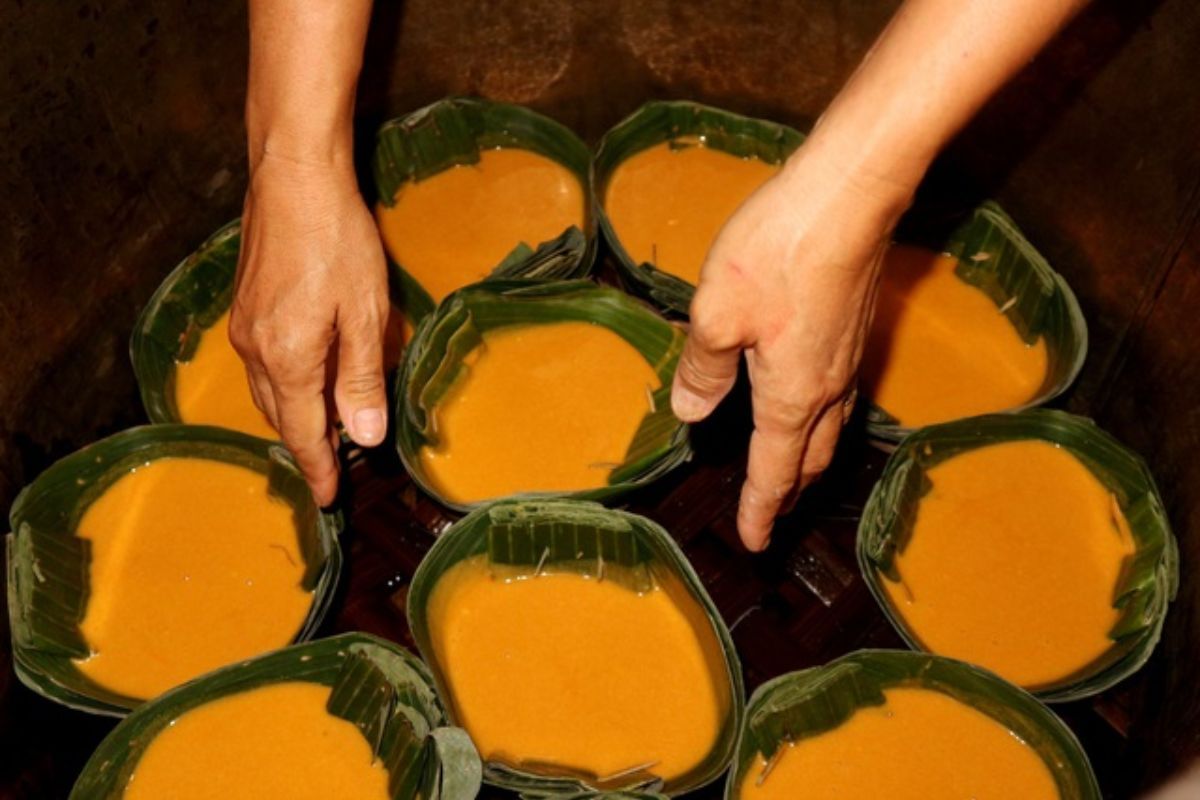
Line the mold (or round container) with banana leaves, pour in the mixture, and smooth it evenly.
Steam over a water bath in a large pot on low heat continuously for 6-8 hours (often overnight). Occasionally add hot water to prevent drying out.
Once the cake is cooked (surface is glossy and springs back when lightly pressed), remove and let cool completely, then wrap in banana leaves or parchment paper.
Tip: Steaming for a long time helps the cake become smooth and soft without drying out. Once cooled, the cake hardens, but reheating will make it soft and chewy again.
Photo: Banh To being steamed over a water bath
6. Where to buy delicious and authentic Hoi An Banh To?
If you want to taste authentic Hoi An Banh To, visit these long-standing addresses in Hoi An Ancient Town or Quang Nam:
Ba Ba Hoi (Tran Phu Street, Cam Chau, Hoi An): A bakery with over 50 years of history, delivering authentic traditional taste.
Co Hanh or Ngoc Ho: Famous for chewy, aromatic Banh To, priced at around 35,000 - 50,000 VND per cake.
Ong Hai Dong or bakeries in Hoi An Market: Freshly baked daily, especially busy during Tet.
Online: Many Quang Nam specialty shops offer nationwide delivery (such as Bao Minh Bakery, Da Nang Specialties).
When purchasing, choose cakes with an even golden color, smooth texture, and a pleasant ginger aroma for authentic quality. Avoid buying cakes that are overly soft or have an unusual smell.
Photo: The cooked cake has a golden color and a fragrant ginger flavor
Hoi An Banh To is not only a cake associated with traditional Tet, but also a symbol of abundance, good fortune, and homeland memories of the Quang land. The mild sweet, fragrant chewy taste combined with the warm spice of ginger makes Banh To an unforgettable flavor for both locals and travelers from afar. If you wish to bring a piece of Hoi An's soul home as a gift, Banh To is a meaningful choice that is easy to preserve and ideal for gifting to relatives and friends. You can easily find and buy Banh To at Hoi An Market, traditional bakeries in the ancient town, or local specialty stores, so that every time you enjoy it, you'll recall a rustic, warm, and hospitable Hoi An.