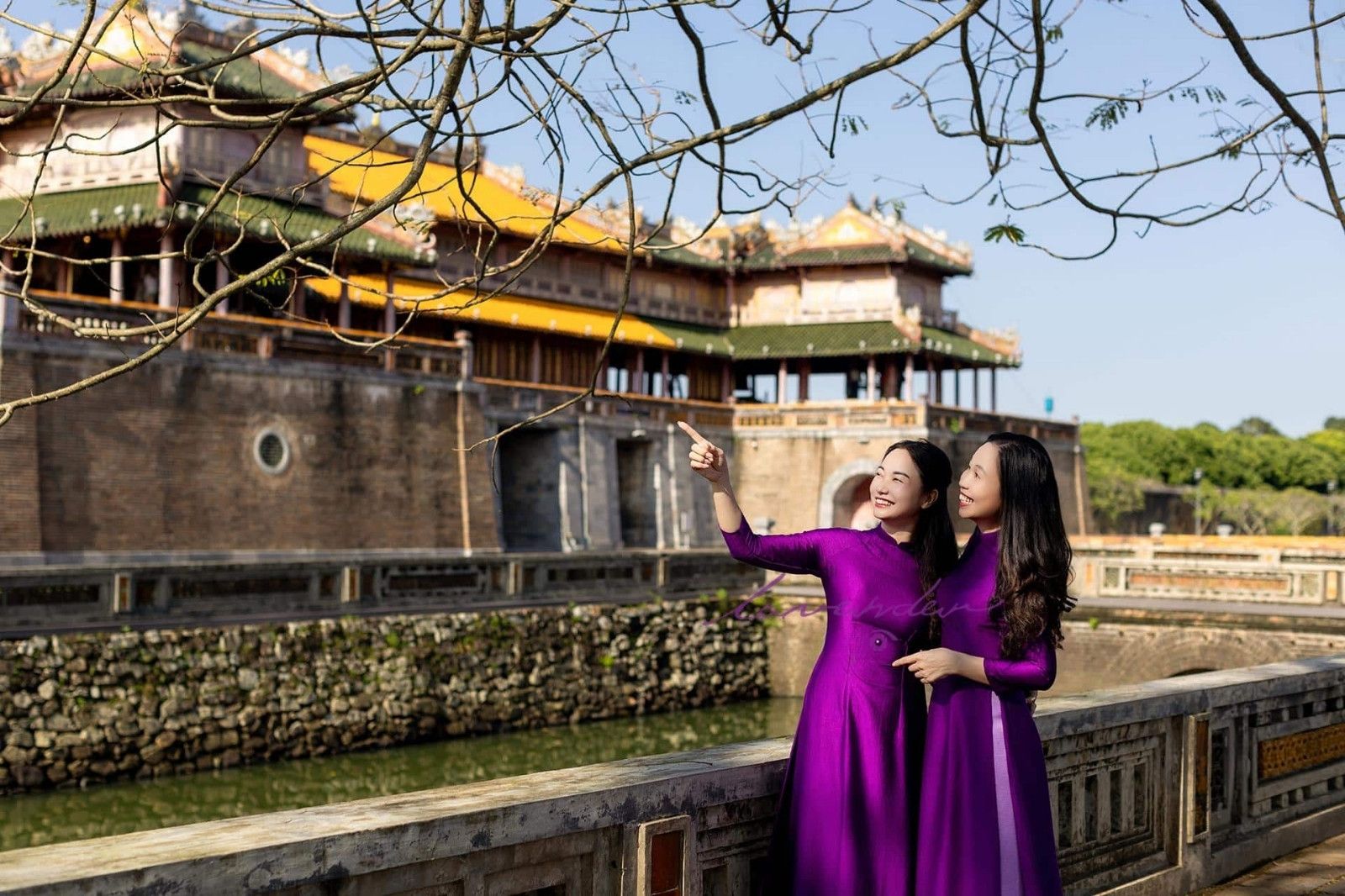
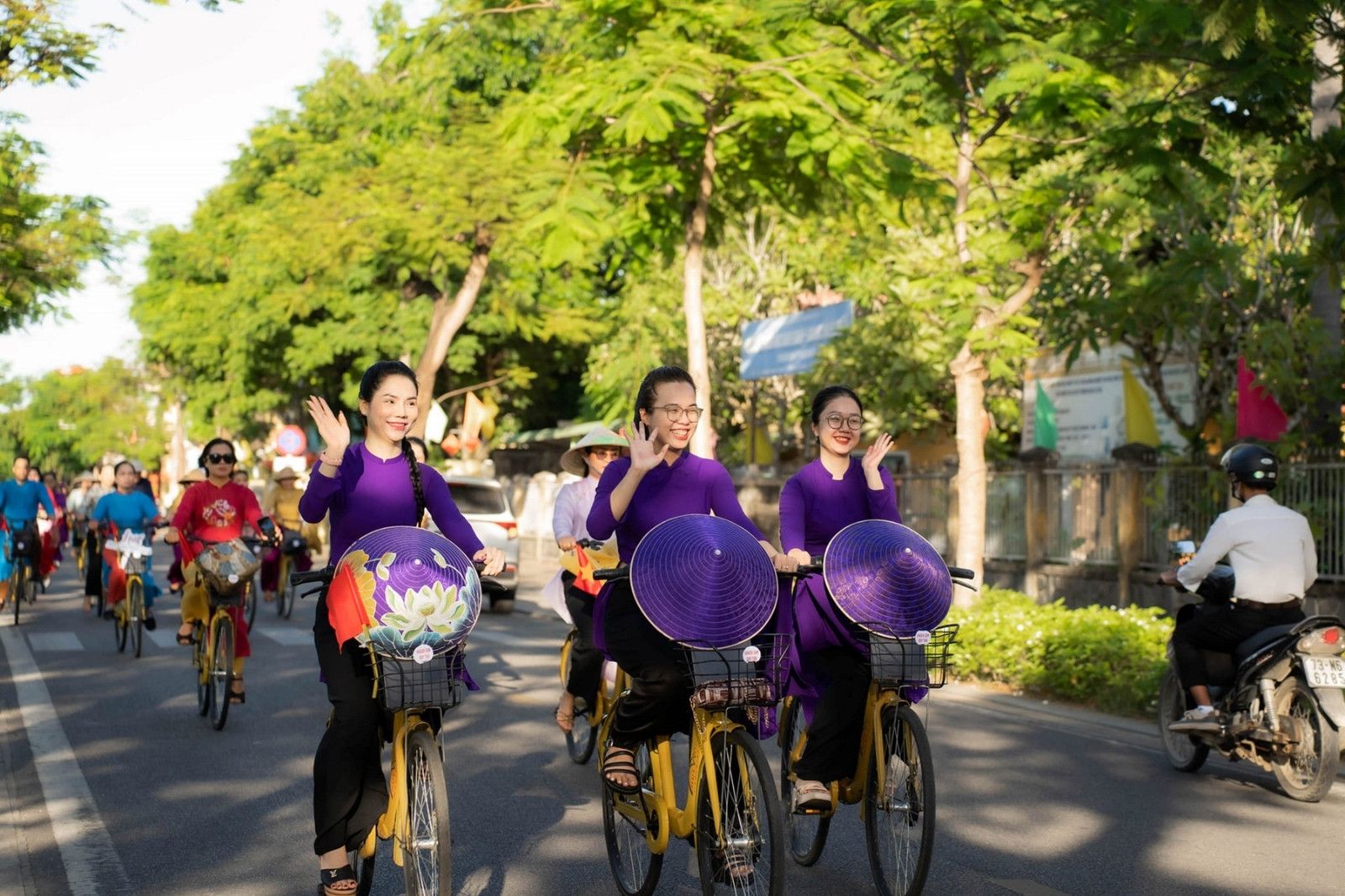
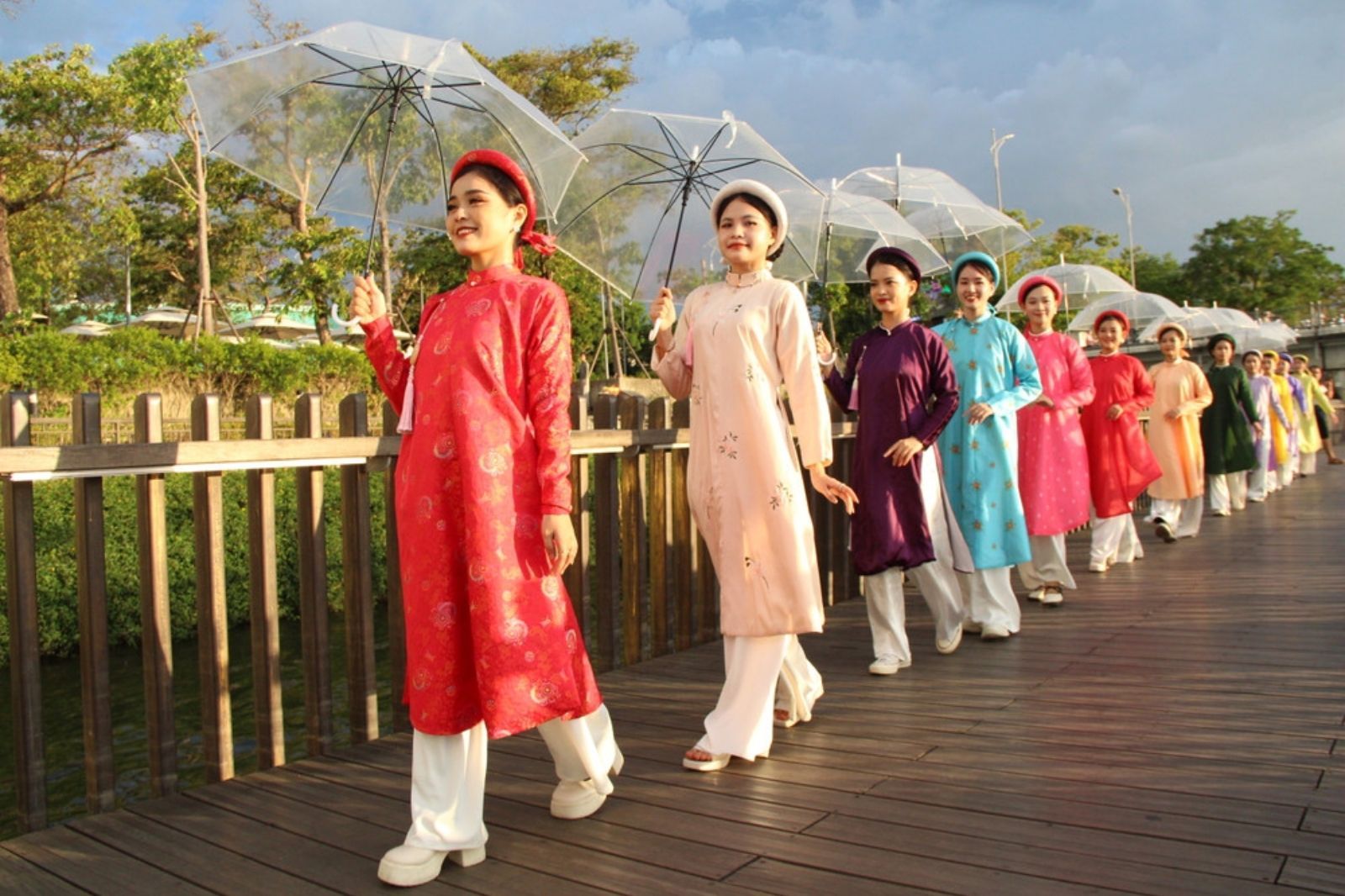
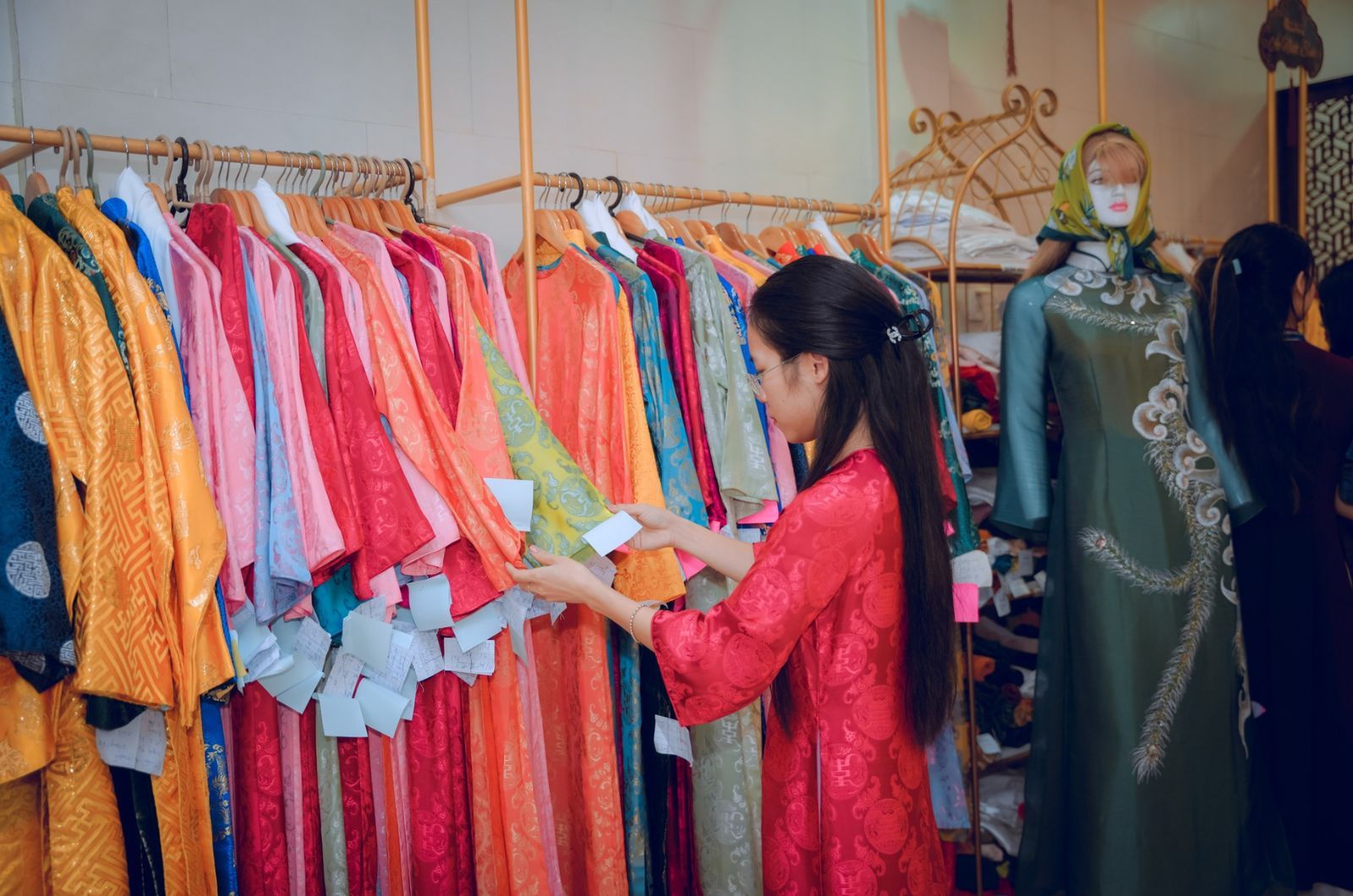
Before becoming a familiar image in photos along the Perfume River or under Huế's lush green canopy, the Áo Dài underwent a very long journey. The earliest traces can be found in the áo ngũ thân (five-panel robe), a style of dress formed in the daily life of Đàng Trong (Inner Realm) inhabitants around the early 17th century. As Thuận Hóa – Phú Xuân gradually became a crucial southern region, the five-panel robe spread widely alongside the people's lives.
The turning point came in 1744. After proclaiming himself Lord and establishing the Phú Xuân Citadel, Lord Nguyễn Phúc Khoát (Võ Vương) enacted dress reforms, mandating the five-panel robe as daily attire for the people of Đàng Trong, from the Gianh River southward. From this point, a garment previously tied to daily life acquired deeper meaning regarding order, etiquette, and the cultural identity of Phú Xuân. The role of this reform is also why Lord Nguyễn Phúc Khoát is often remembered as the 'forefather of the Áo Dài'.
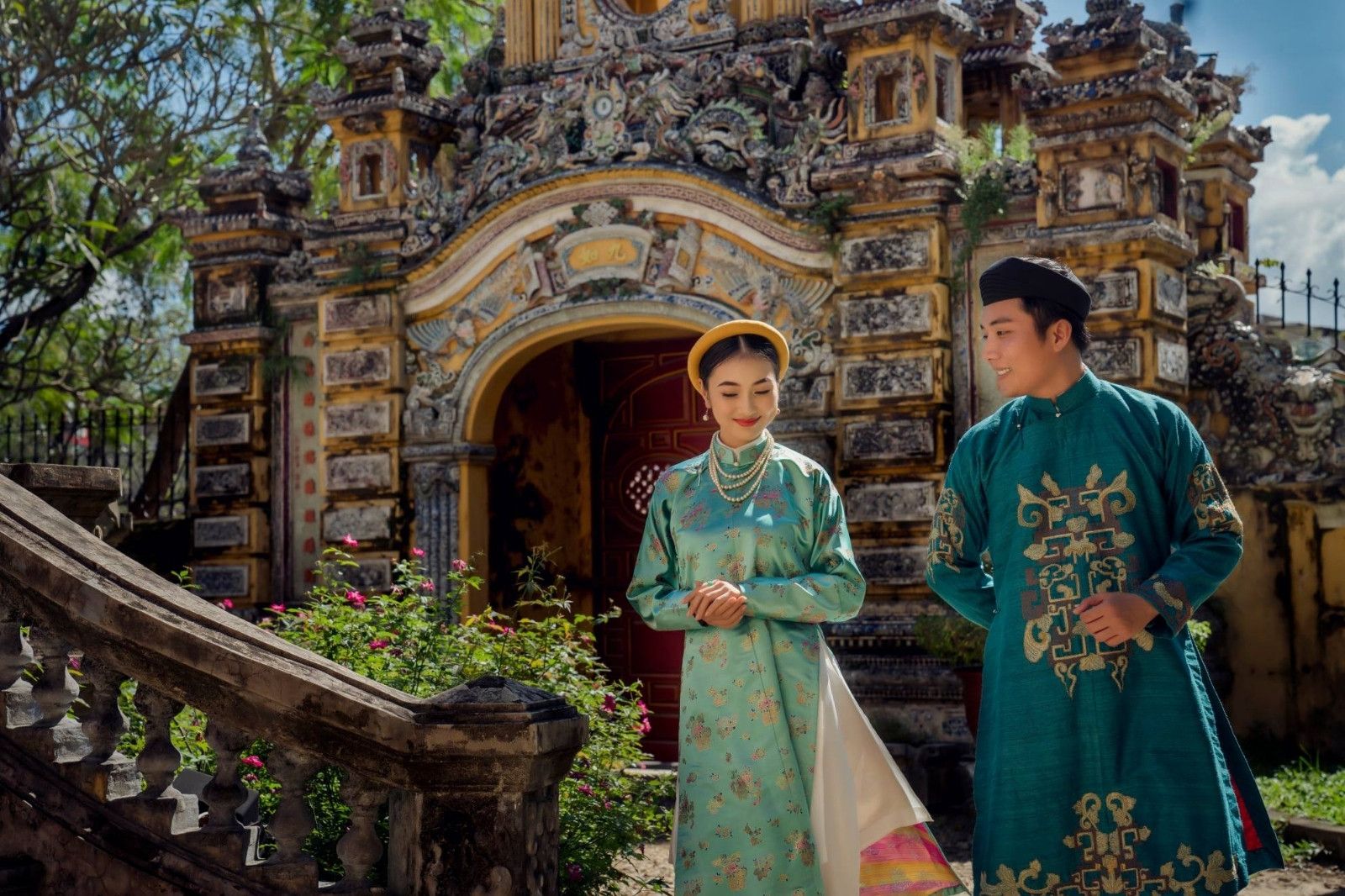
During the Nguyễn Dynasty, the dress continued to be refined in style and specification. Under the reign of King Minh Mạng, the five-panel dress with a standing collar, five buttons on the right side, and worn with trousers became a standardized and widely used costume. From the royal court and mandarins to folk life, the garment appeared in many facets of Huế society at that time. As Phú Xuân became the capital of the Nguyễn Dynasty, Huế naturally became the place where this traditional dress was preserved, polished, and deeply woven into royal culture.
Interestingly, the five-panel robe was not merely a product of tailoring techniques. Every section of the garment conveyed moral symbolism. The five panels represented the four parents (paternal and maternal) and the wearer; the five buttons symbolized Benevolence – Propriety – Righteousness – Wisdom – Trustworthiness. Thus, the robe covered the body while serving as a reminder of the values held dear in family and life.
Through generations, the Áo Dài has evolved to suit changing times, from cuts and materials to color schemes. Yet in Huế, the shadow of the five-panel robe has never faded. It lives on in robes worn on festive days, in schoolgirls heading to class, in traditional ceremonies, and in everyday moments.