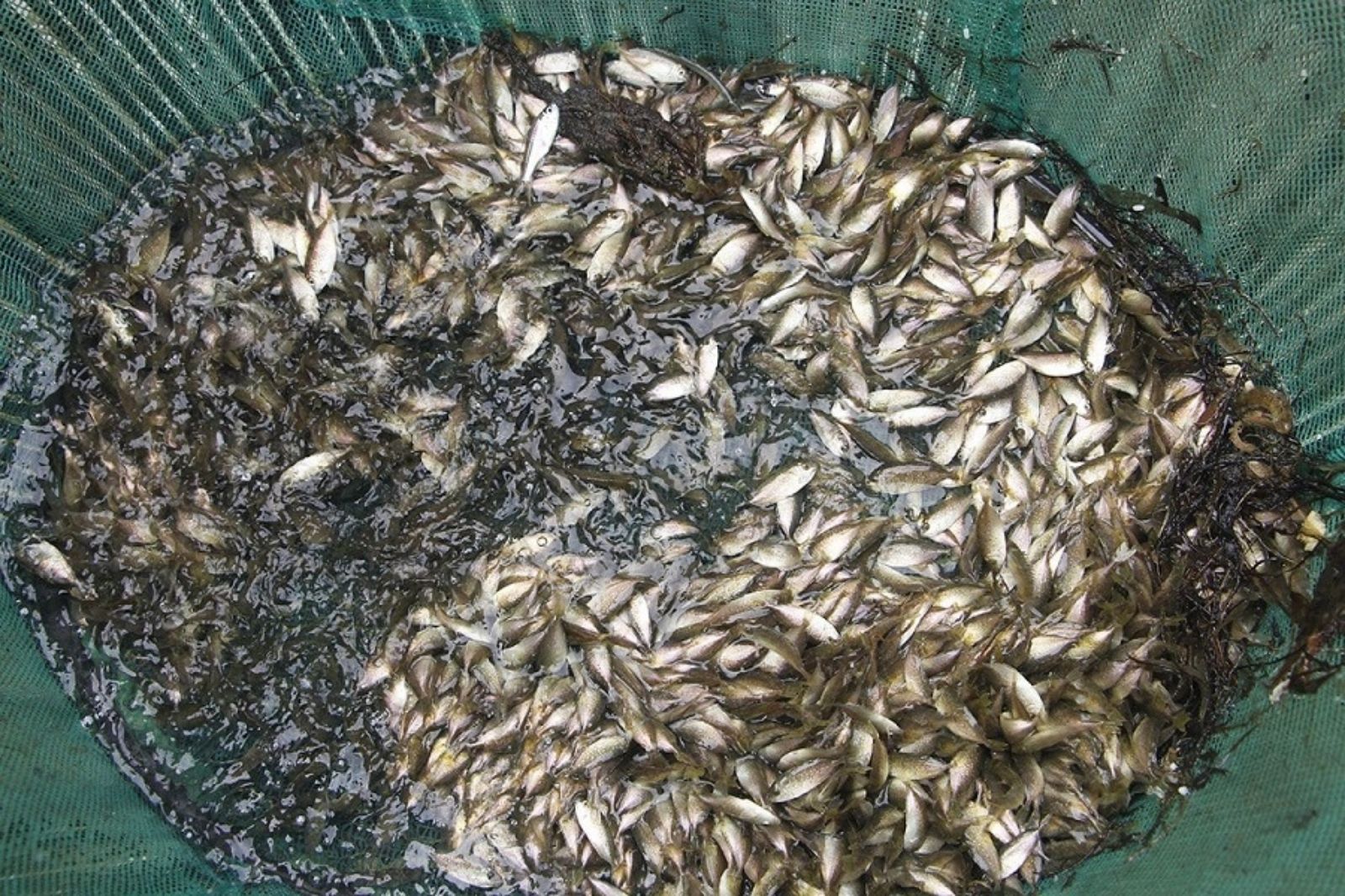
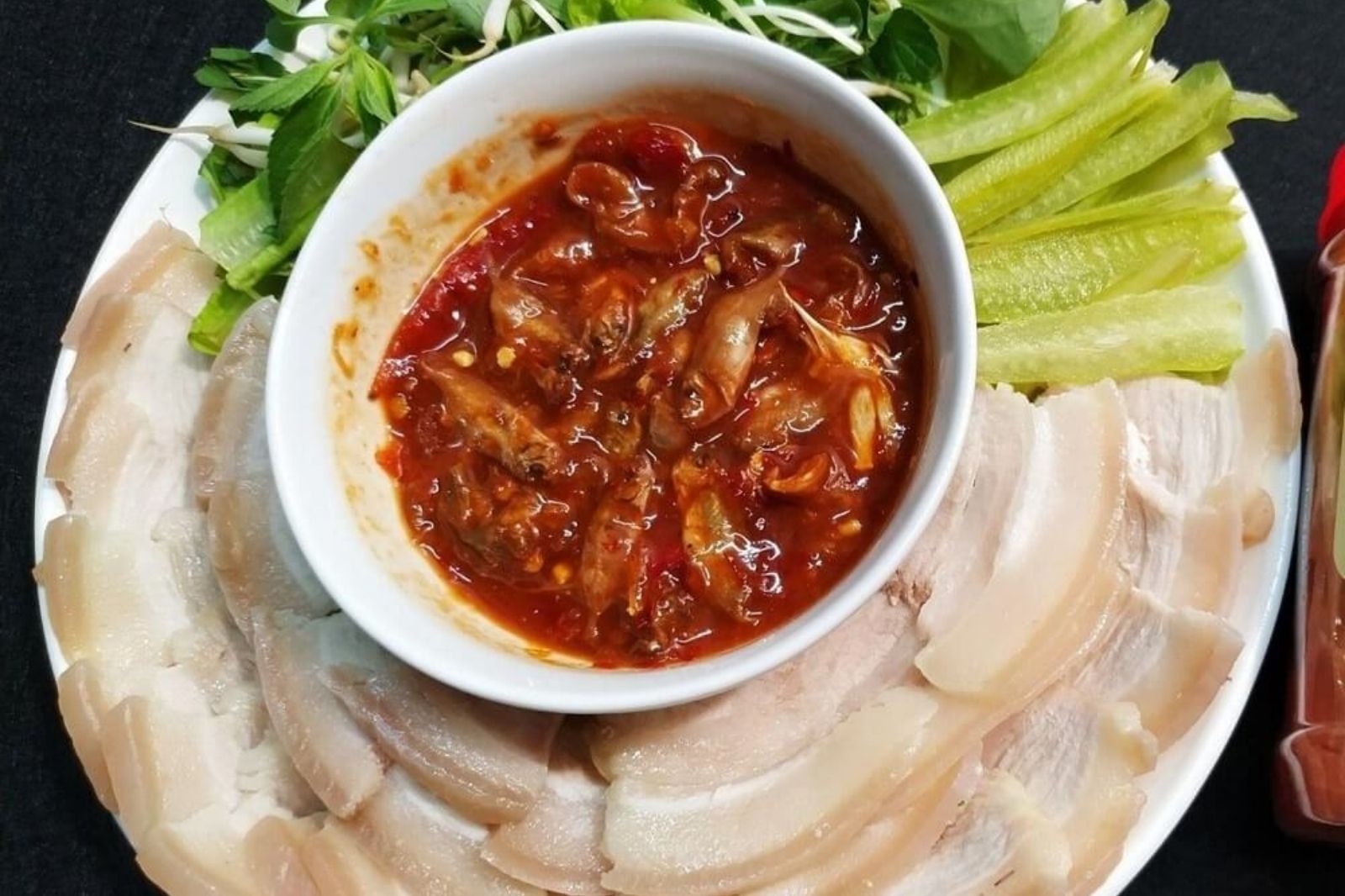
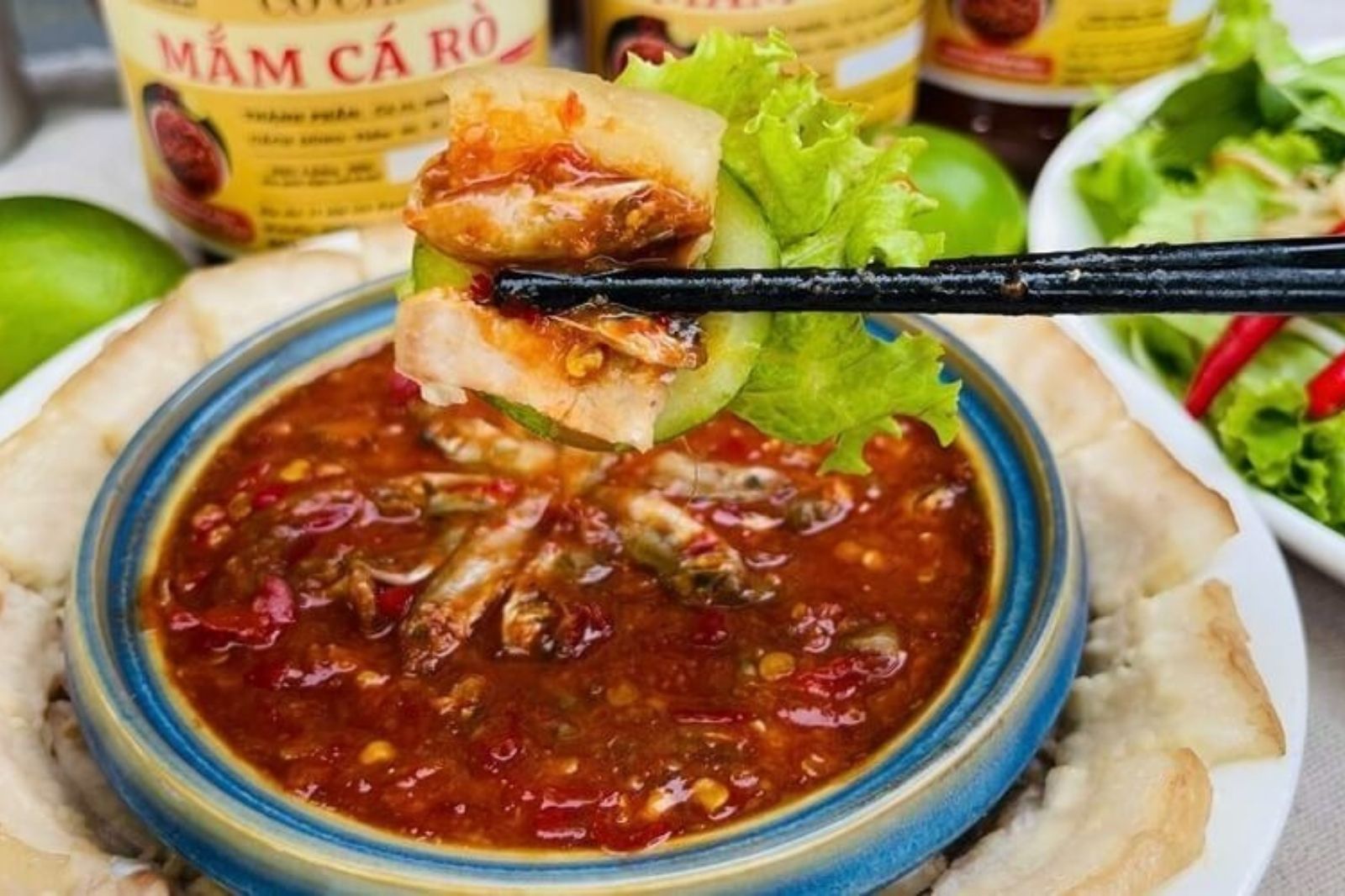
Hue mắm rò originates from the coastal area of Thuan An, famous for having one of the richest sources of seafood in Thua Thien Hue. The main ingredient is baby spinefoot fish (cá rò, also known as cá giò), a fish species that only appears seasonally, usually from the 4th to the 7th lunar month. Because of this short seasonal availability, mắm rò becomes a precious specialty, prompting many people to buy and stock up for later use.
Centuries ago, the people of Hue knew how to use fresh baby spinefoot fish to ferment into mắm rò, creating a flavor closely linked to Central Vietnamese culinary culture. Unlike many other types of fermented fish pastes, Hue mắm rò is elaborately prepared and naturally fermented to fully preserve the natural sweetness of marine fish and its characteristic aroma. This rustic dish often appears on countryside dining tables, where just a small plate of mắm rò is enough to make the meal richer and more flavorful.
Today, mắm rò is no longer just a dish exclusive to the people of Hue, but is enjoyed in many places. Long-standing brands such as Mắm Bà Duệ, Dì Cẩn, or Cô Ri still maintain traditional methods, bringing delicious jars of mắm rò that are both familiar and cherished.