Hue Royal Cuisine: Exquisite Delicacies Once Served to the Nguyen Dynasty Kings
Central
Thua Thien Hue
Sovaba.travel
Updated at: 28/08/2026
1. Distinctive features of Hue imperial cuisine
Hue royal cuisine developed strongly under the Nguyen Dynasty (1802–1945), Vietnam's last feudal dynasty. In the royal court, each dish was not just food, but a statement of the stature and style of the emperor. The royal meals were prepared under the supervision of the Royal Medical Institute, ensuring they were not only delicious but also nutritious, harmonizing five colors (5 colors), five flavors (5 flavors), and the five elements (metal, wood, water, fire, earth).
Characteristics of Hue royal cuisine lie in the meticulousness at every stage:
Premium ingredients: Only fresh, rare ingredients were used, often local specialties or royal tributes.
Elaborate preparation: Dishes were seasoned multiple times (usually 3-4 times) to achieve the perfect flavor.
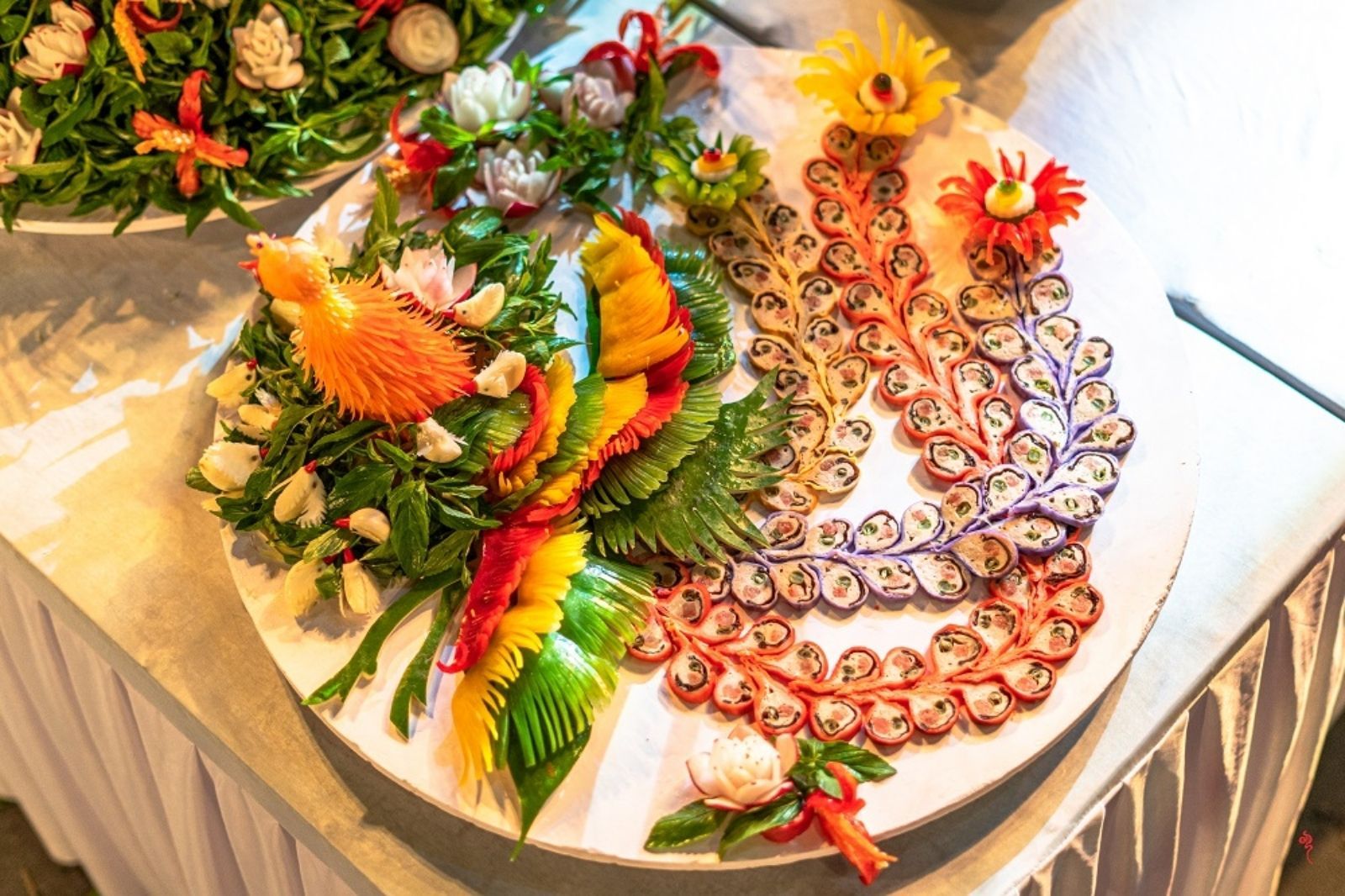
Artistic presentation: Each dish was a culinary artwork, balanced in color, feng shui, and aesthetics.
Solemn etiquette: Enjoying the meal required following strict court rules, from how to use chopsticks to maintaining a serene atmosphere.
Hue royal cuisine did not merely nourish the body; it was an art reflecting the elegant living philosophy and yin-yang balance of the people of Hue.
Photo: Elaborately prepared and decorated dishes
2. Bat Tran - The essence of royal cuisine
Among hundreds of royal dishes, “Bat Tran” – the eight rarest and most precious delicacies, symbolized luxury and power. Here are the prominent dishes on this list:
Peacock Spring Roll (Nem Cong)
Peacock spring roll tops the Bat Tran list, made from finely pounded peacock thigh meat, marinated with warm spices like garlic, galangal, and pepper, then naturally fermented without cooking. This dish is not only delicious and rich, but was also believed to detoxify the body. Today, peacock spring rolls are recreated using chicken or pork while preserving the delicate preparation and presentation.
Phoenix Patty (Cha Phuong)
Phoenix patty, made from rare pheasant meat, is a symbol of nobility. The meat is finely ground, seasoned with traditional spices, wrapped in banana leaves, and steamed. The dish is usually shaped to imitate a phoenix with vibrant colors from turmeric, carrot, and pandan leaves, bestowing a regal beauty. Nowadays, phoenix patty is prepared from free-range chicken or pork to better suit modern times.
Rhinoceros Skin
Rhinoceros skin was an extremely rare dish, using the thin layer of skin under the rhino's armpit. The skin was sun-dried, smoked for 100 days, soaked in wine for a month, then soaked in herbal ash water for 7 days before being thinly sliced and steamed. The finished product was crunchy and uniquely aromatic, demonstrating the utmost complexity of royal cuisine.
Deer Tendon
Deer tendon, harvested from deer thighs, was meticulously separated, boiled until soft, and stewed with fresh bamboo shoots, dried shrimp, and pork roll. This dish was not only delicious but also nutritious, helping to strengthen muscles and health. The harmonious combination of crunchy tendon and light ingredients created a rich, sophisticated flavor.
Orangutan Lips
Orangutan lips were an extraordinary delicacy using the lips of orangutans – a rare ingredient. The dish was prepared with natural ingredients to create a mild, refreshing sweetness, often served to entertain royal guests.
Bear Paw
The bear paw, where the meat is firm and rich in nutrients, was prepared into a precious delicacy served to the king. The cooking process demanded dexterity to preserve its flavor and nutritional value.
Elephant Foot Meat
The tender tendon meat of an elephant's foot was considered the tastiest and sweetest part. This dish appeared only at major royal banquets, reflecting imperial opulence.
Bird's Nest (Yen Sao)
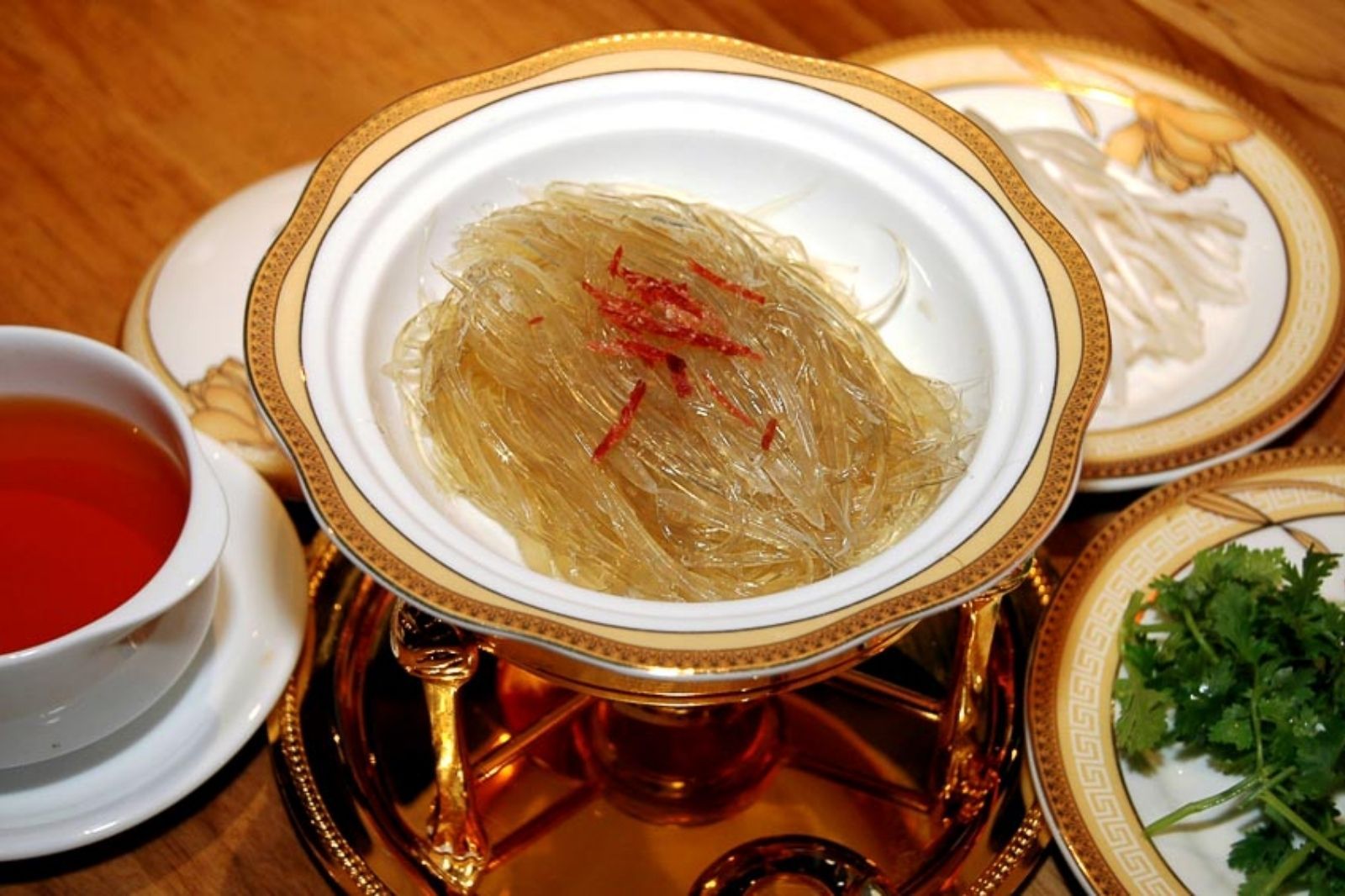
Natural bird's nest was a top-tier, highly nutritious delicacy stewed with coconut water or chicken broth. It was not only delicious but also helped nourish health and combat aging, often appearing at grand banquets or festive occasions.
Photo: Bird's nest is one of the highly nutritious delicacies
3. Other imperial delicacies rich in royal character
Beyond Bat Tran, Hue royal cuisine is also famous for many other dishes that combine folk flavors with royal sophistication:
Steamed Fish Roll with Five-Willow Filling
Steamed fish roll with five-willow filling represents the pinnacle of royal culinary art. Grouper fillet is thinly sliced, seasoned, then rolled with a “five-willow” filling consisting of enoki mushrooms, carrots, onions, ginger, and wood ear mushrooms. The dish is steamed to retain its natural sweetness, delivering a soft, delicate flavor characteristic of Hue.
Braised Duck with Steamed Sticky Rice
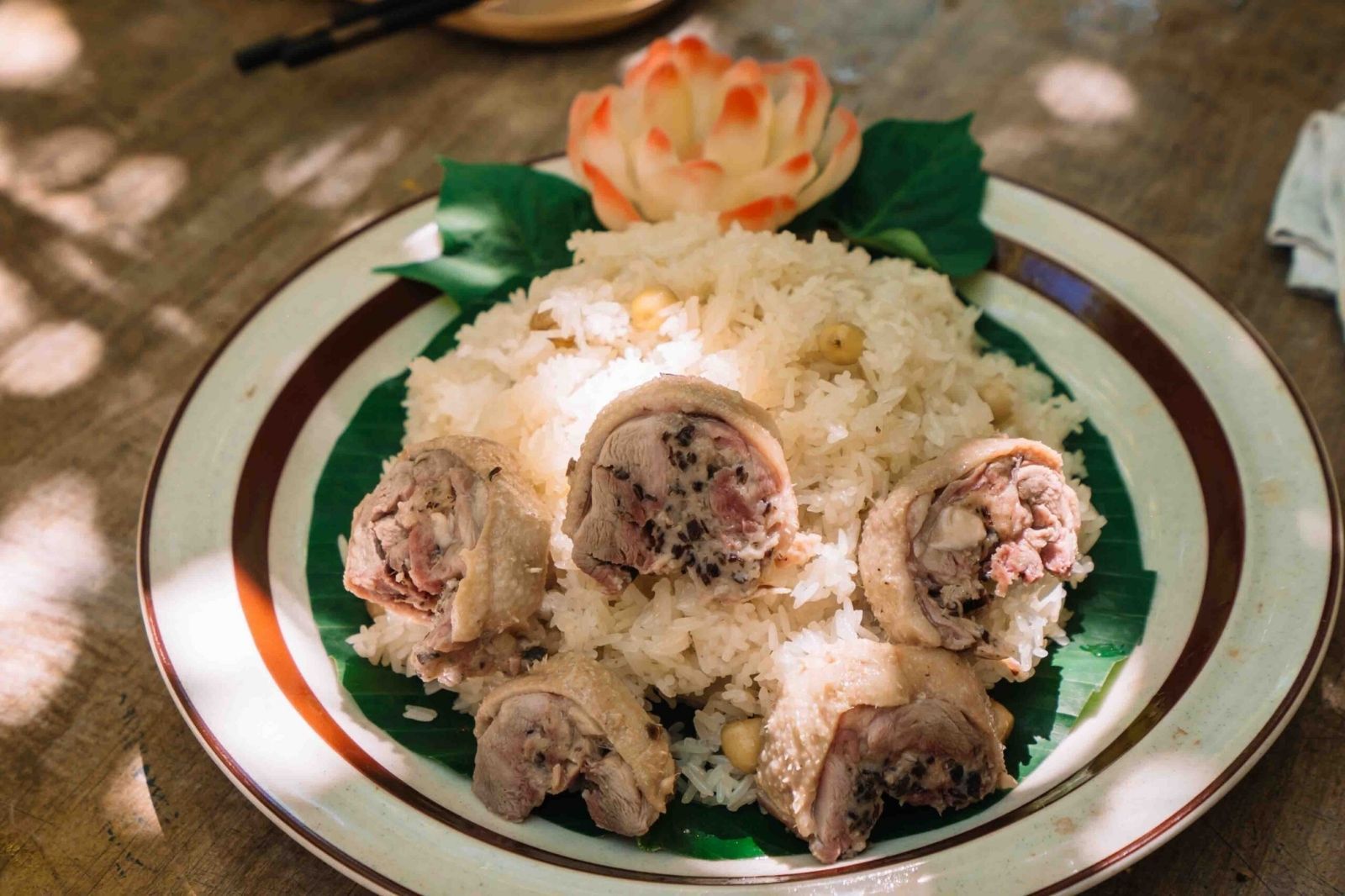
This dish represents the intersection of folk and royal cuisine. Pond-raised duck (ducks raised in clean ponds) is boned, marinated with five-spice powder, ginger, onion, and pepper, then rolled with raw sausage paste, wood ear mushrooms, and steamed in pandan leaves. Steamed sticky rice made from fragrant glutinous rice and lotus seeds creates a harmony between the duck's richness and the sticky rice's fragrance.
Photo: Braised duck with steamed sticky rice
Lotus Rice
Lotus rice is cooked from fine rice wrapped in lotus leaves to preserve a gentle, refreshing aroma. It is often served with lotus seeds, vegetables, and side dishes such as royal sour shrimp and braised pork belly, offering a clean yet luxurious taste.
Lotus Seed and Longan Sweet Soup
Lotus seed and longan sweet soup is a famous dessert made with Hue lotus seeds and sweet longan. This sweet soup is not only refreshing but also nourishing, frequently served at royal banquets.
Royal Tea
Hue Royal Tea, also known as Imperial Night Tea, is brewed from precious herbs such as Adenosma glutinosum, chamomile, and licorice. This tea is not only aromatic and delicious but also good for health, making it a special souvenir when traveling to Hue.
Photo: Royal tea consists of many precious ingredients
4. The culture of savoring Imperial cuisine
Savoring Hue royal cuisine is an experience for all five senses. Dishes were presented on royal utensils made of gold or silver, arranged symmetrically in harmony with feng shui. The king and mandarins used chopsticks gently, touching only the top portion of the dish, with food tasters trying them first to ensure safety. A royal banquet could last 2-4 hours, featuring 35-50 dishes, or even up to 161 dishes during grand celebrations.
The dining ambiance was always solemn and serene, often accompanied by royal court music, evoking the feeling of stepping back into the golden age of the Nguyen Dynasty.
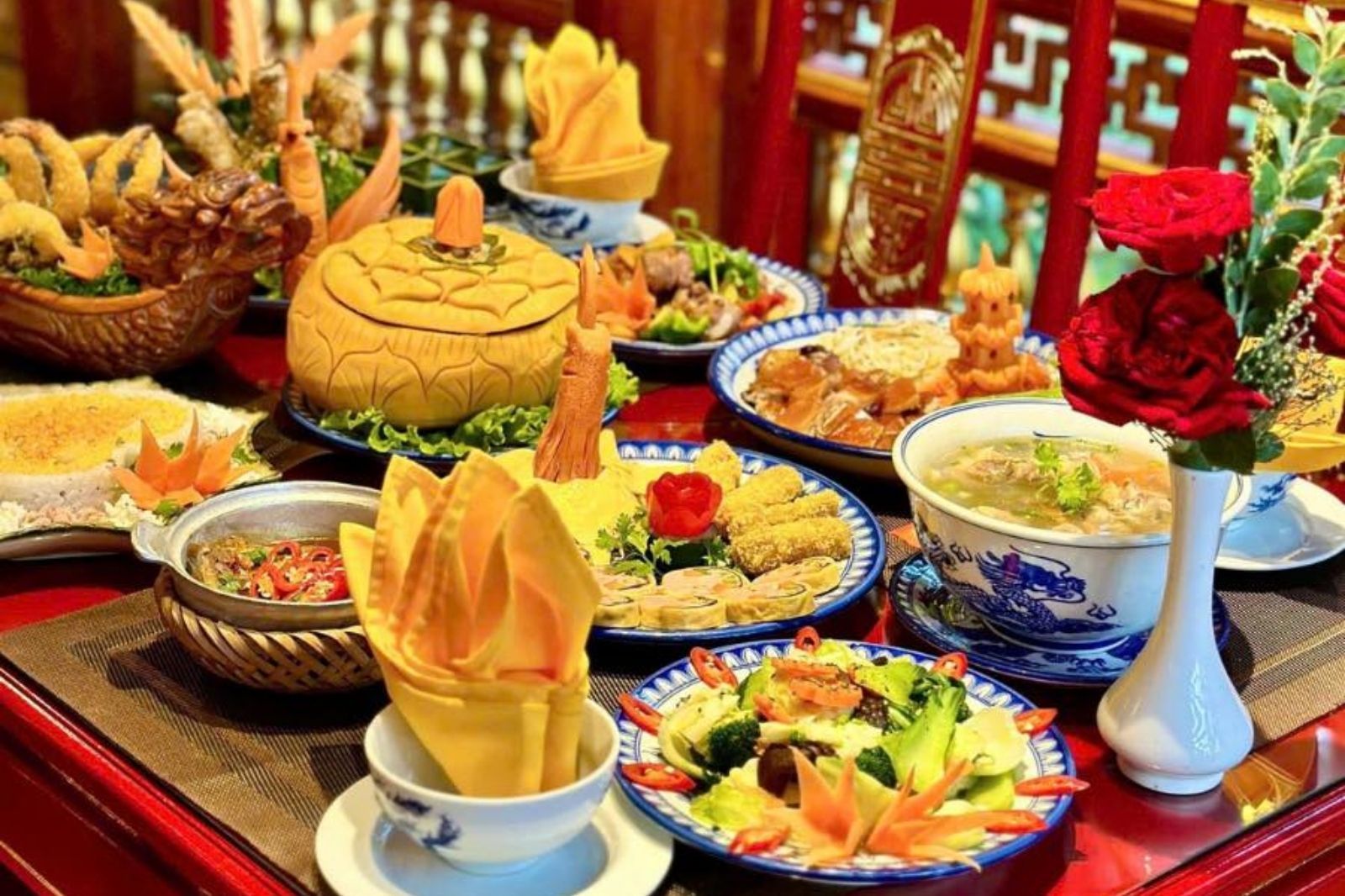
Today, Hue royal cuisine is no longer confined to the royal court; it has become a cultural heritage accessible to all visitors. Several famous restaurants in Hue faithfully recreate the courtly atmosphere and flavors:
Cung Dinh Restaurant (3 Nguyen Sinh Sac, Vy Da, Hue)
Tinh Gia Vien (7 Lane 28, Le Thanh Ton, Phu Hau, Hue)
Kim Long Fine Dining (104/47 Kim Long, Hue)
Photo: Visitors can enjoy royal cuisine at several restaurants in Hue
Some dishes among the “Bat Tran” — the eight rarest delicacies once served to the king — are no longer served due to ingredient scarcity and conservation efforts. Wildlife such as peacocks, pheasants, rhinos, bears, and elephants are strictly protected. Instead, culinary artisans cleverly substitute more common ingredients like chicken, duck, pheasant, or beef to recreate royal flavors. Meanwhile, bird's nest retains its special status, continuing to feature in modern interpretations of “Bat Tran”, preserving tradition while adapting to present-day conditions.
Hue royal cuisine is a harmonious blend of historical value, refined culinary craftsmanship, and the distinct cultural beauty of the ancient capital. Though the golden age of the Nguyen Dynasty has passed, the dishes that once graced royal banquets continue to be preserved, restored, and introduced to travelers far and wide. If you have the chance to visit Hue, indulge in royal cuisine to fully experience the luxurious, refined, and meaningful flavors that emperors once enjoyed. It is not just a meal, but a journey touching the glorious past of the royal capital.