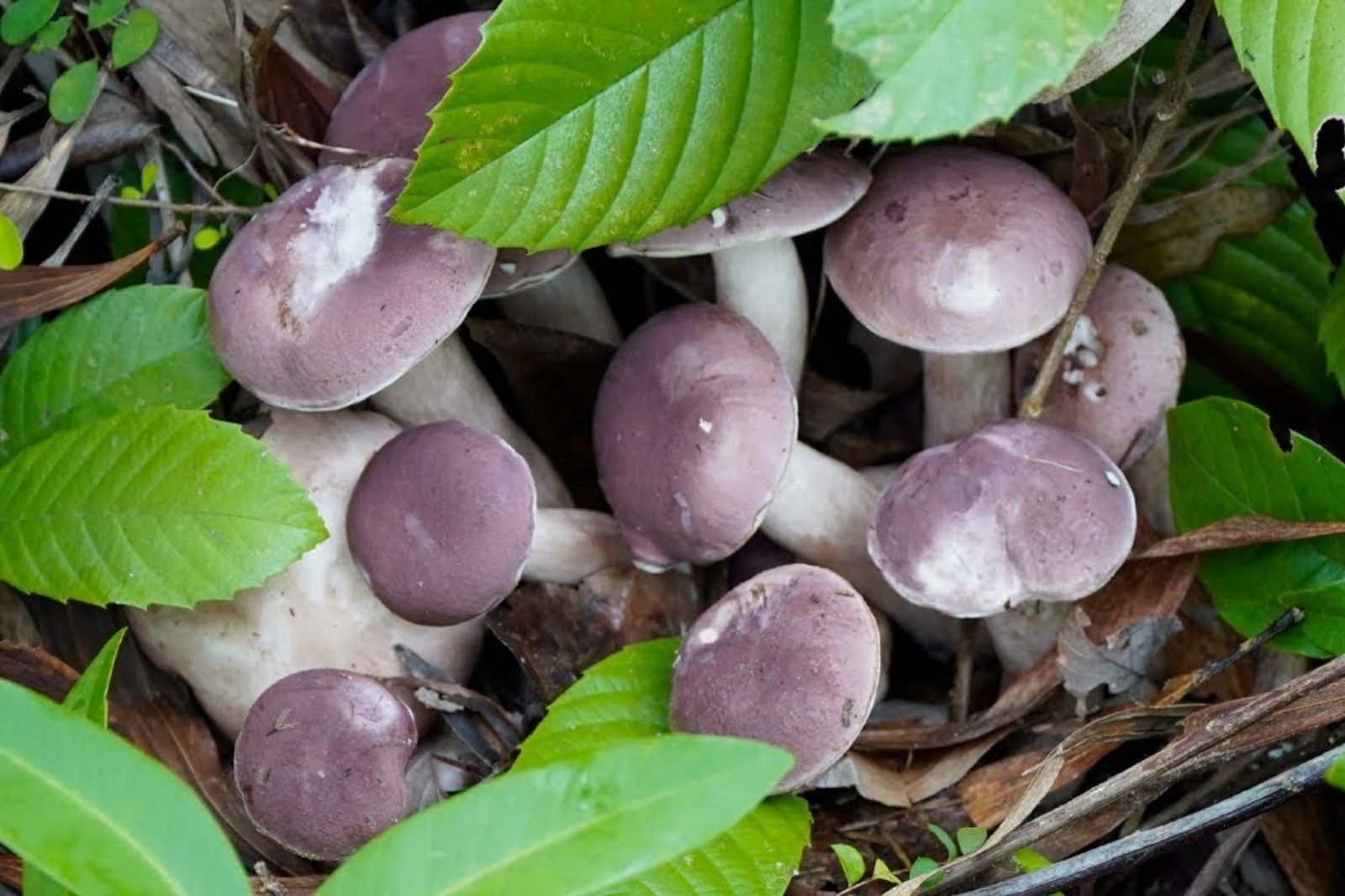
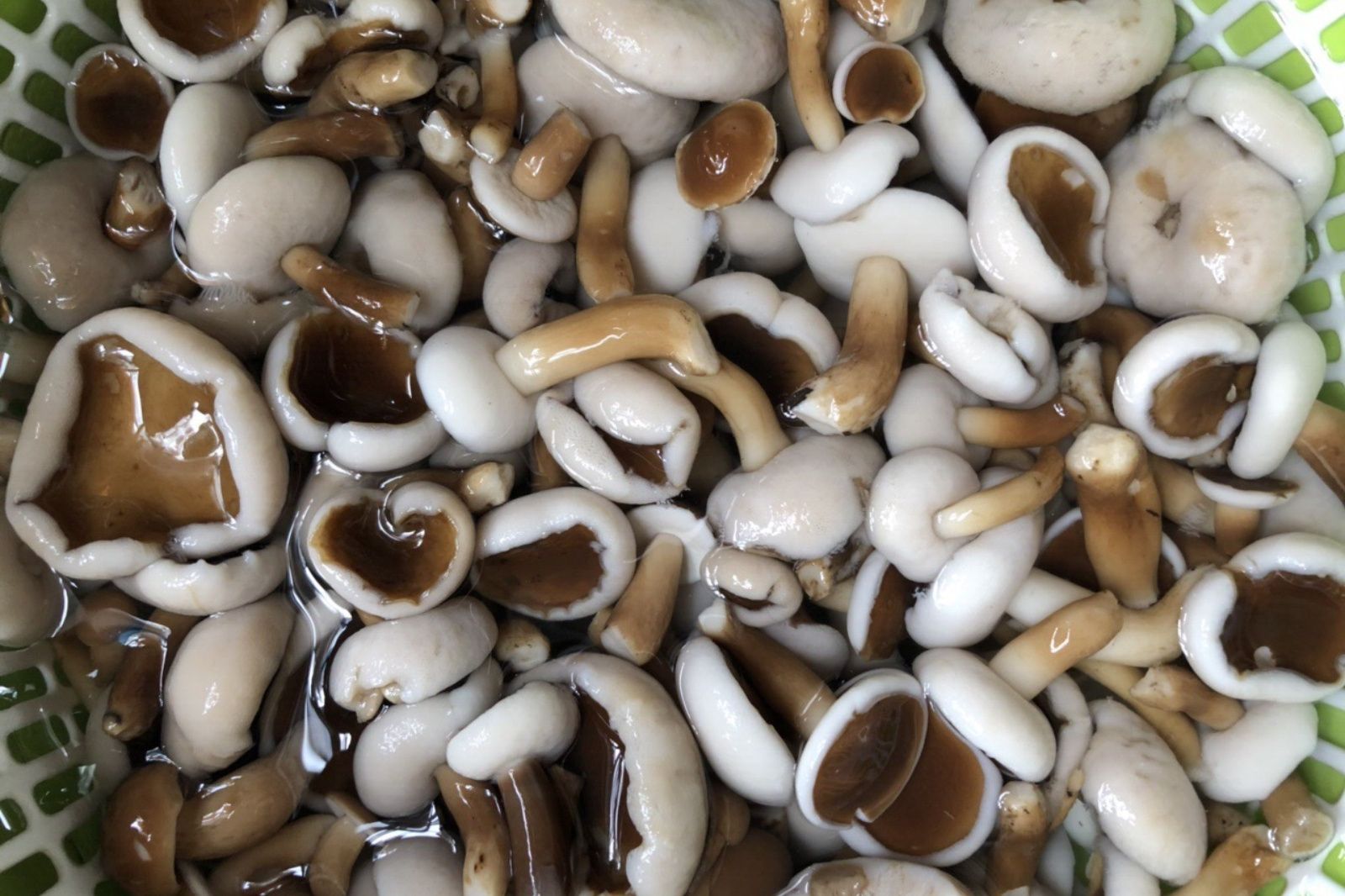
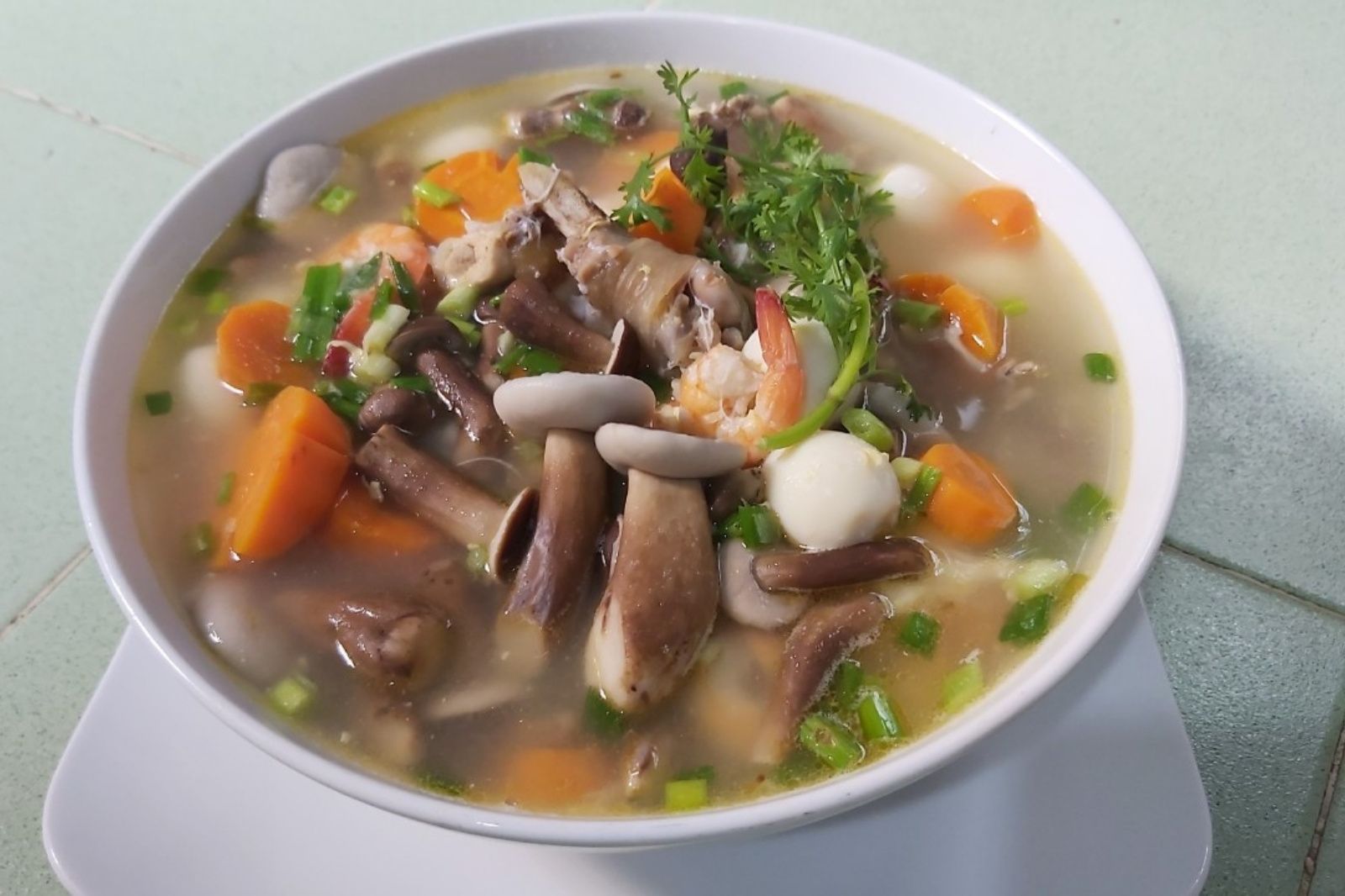
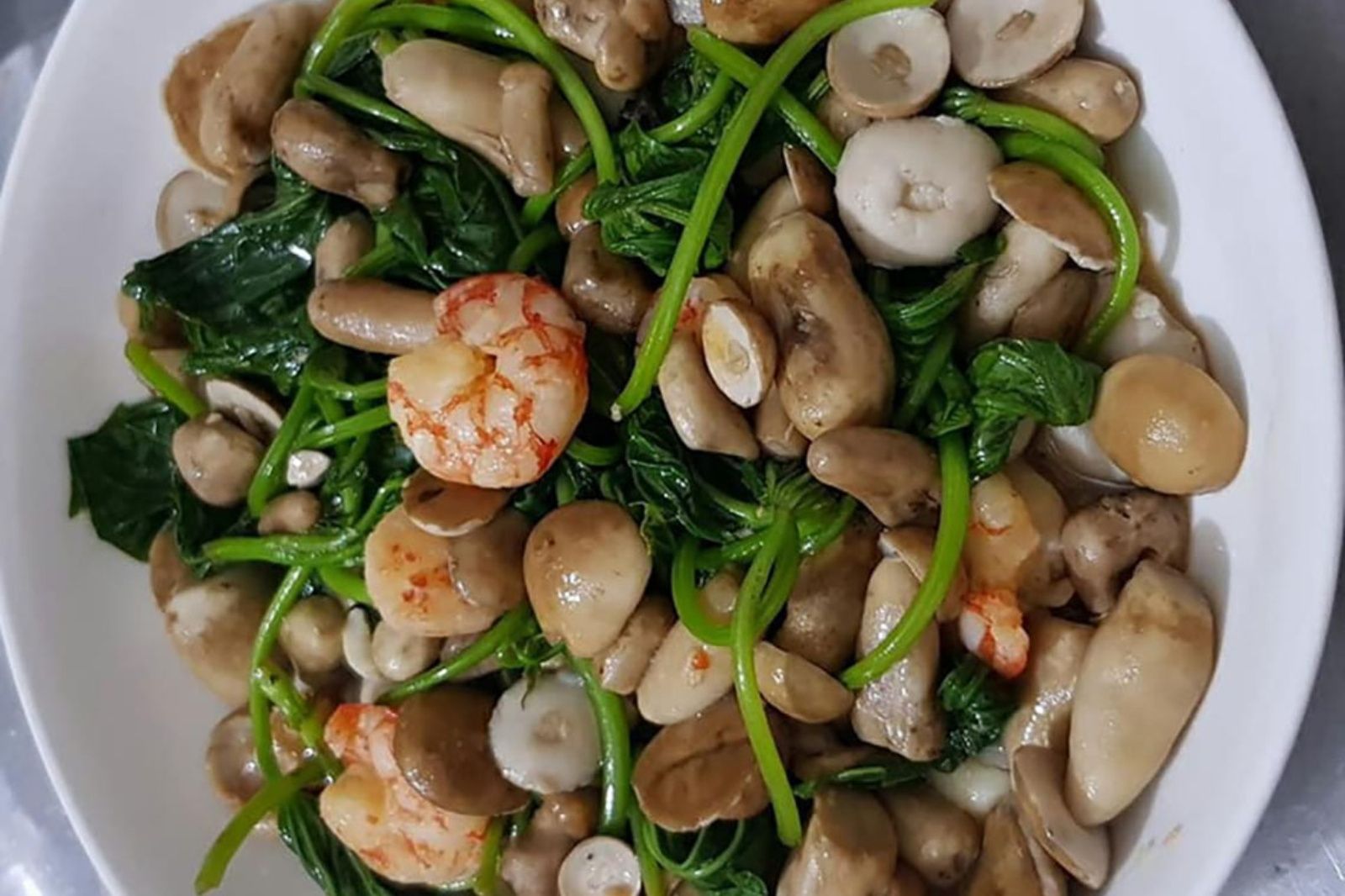
Melaleuca mushroom (scientific name: Tylopilus felleus) is not an all-year-round food. They only appear after the first rains of the season around March to April of the lunar calendar.
Origin and Growth Environment
Melaleuca mushrooms sprout from layers of decaying Melaleuca leaves after a long dry season. When early summer rains pour down, humidity combined with decomposing leaf litter creates the perfect environment for small, brownish-purple, white-rimmed mushroom caps to push up through the soil.
In Phu Quoc, Melaleuca mushrooms are concentrated in Ben Tram, the Ham Ninh mountain range, or northern island forests such as Cua Can. The life cycle of the mushroom is very short, lasting only about one month, and each harvesting round takes place within just one week after the rain.
Classification of Melaleuca Mushrooms
Locals usually divide Melaleuca mushrooms into two types:
- Small-cap mushrooms (Water Melaleuca mushroom): Growing from paperbark forests, these have small, firm caps with the most delicious and rich flavor.
- Large-cap mushrooms (Golden Melaleuca mushroom): Growing from golden wattle/cajuput forests, these are larger in size, but their flavor is not as deep or savory as the small-cap mushrooms.
Despite their short life cycle of just one month, the combination of Melaleuca forest soil and early season rains is enough to create a mesmerizing bitter-sweet culinary legend.