Journey to Thanh Duyen Pagoda in Hue – Preserving the Buddhist Footprints of the Ancient Capital

Central

Thua Thien Hue

Sovaba.travel

Updated at: 24/09/2026

1. History of establishment from a small pagoda

Thanh Duyen Pagoda in Hue, also known as Tuy Van Pagoda, is associated with the expansion of the realm and the development of Buddhism under the Nguyen Lords. Originally established in the second half of the 17th century during the reign of Lord Nguyen Phuc Tan, the pagoda was initially just a small hermitage for monks to practice. In 1692, Lord Nguyen Phuc Thai expanded it and named it Thanh Duyen, meaning "sacred and virtuous affinity".

Through many restorations, especially in 1741, the pagoda became an important Buddhist center of the Thuan Hoa region. However, in 1861, war burned down the entire structure. Seven years later, thanks to the support of the royal court, the pagoda was rebuilt on Tuy Van Mountain on a larger scale. Since then, the pagoda has played an important role in the religious and cultural life of Hue.
Thanh Duyen Pagoda, also known as Tuy Van Pagoda
Photo: Thanh Duyen Pagoda, also known as Tuy Van Pagoda 

Recognized as a National Historical - Cultural Relic since 1996, Thanh Duyen Pagoda is currently one of the four famous royal pagodas of Hue, alongside Thien Mu, Dieu De, and Tu Dam. Over 300 years of existence have turned this place into a witness to the endurance of Buddhism, while reflecting the unique historical and cultural journey of the ancient capital.
2. Unique architecture of Thanh Duyen Pagoda

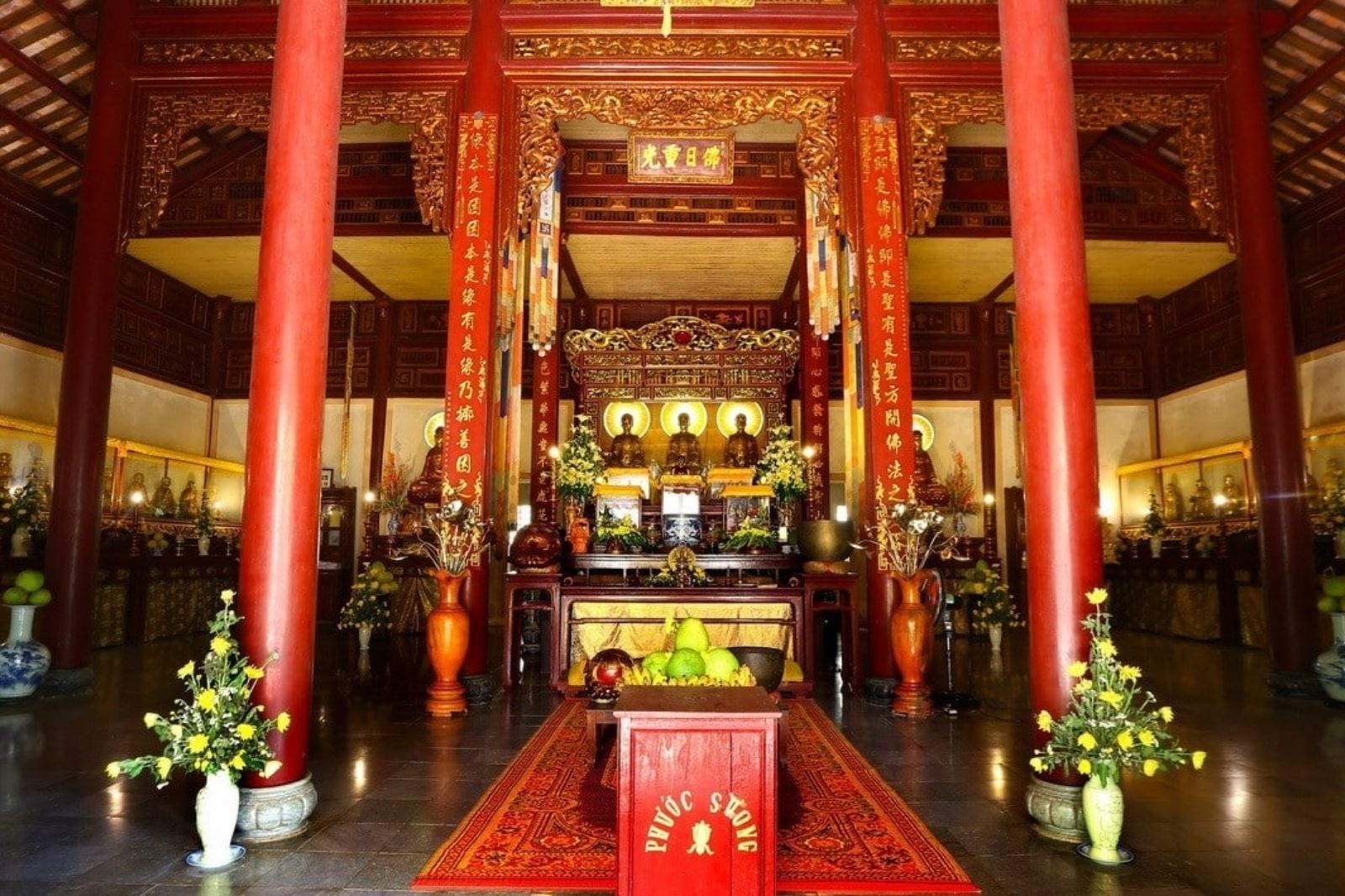
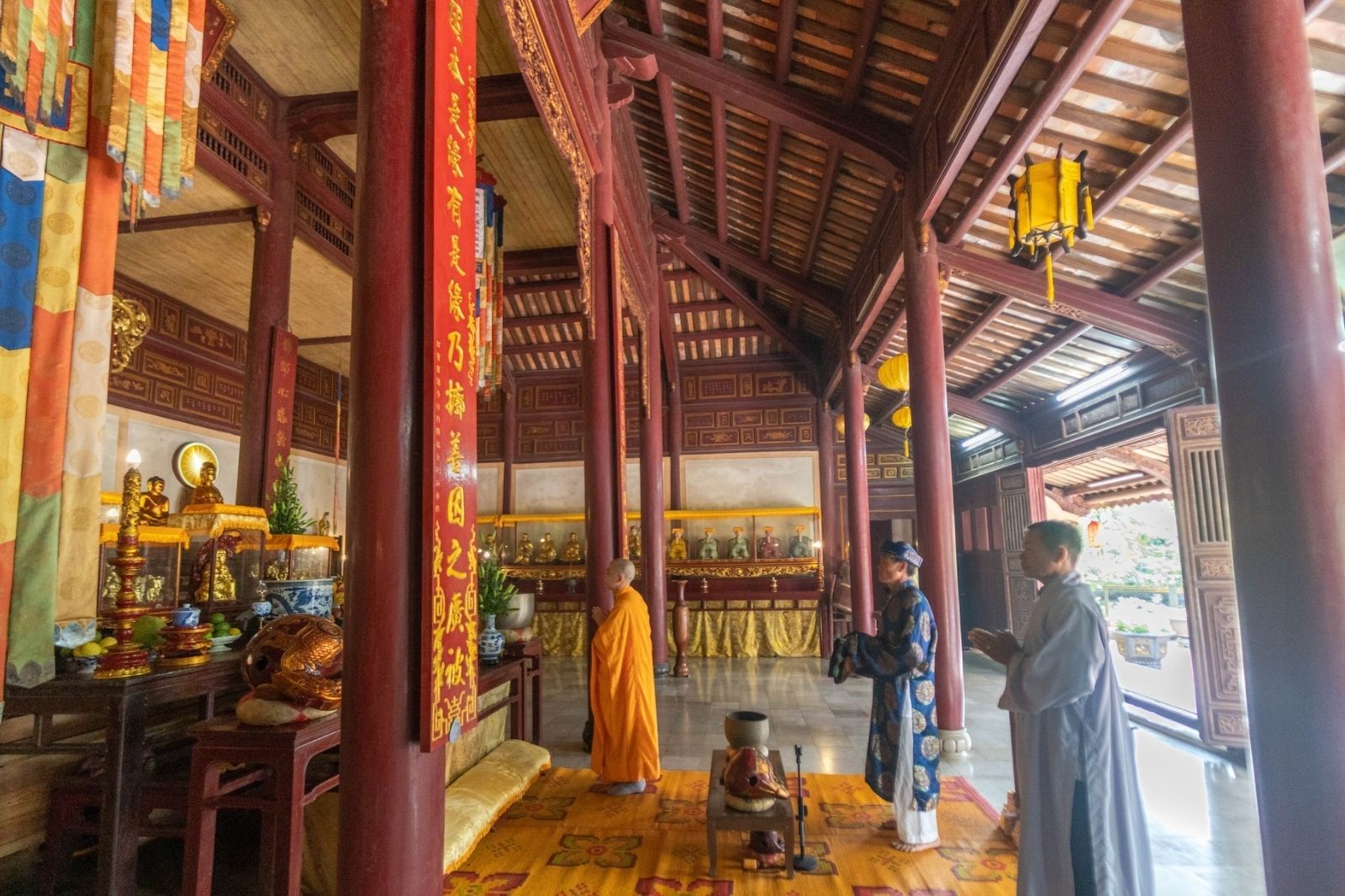
What makes Thanh Duyen Pagoda in Hue special is its architecture imbued with the Nguyen Dynasty style, featuring the "trung thiem diep oc" (overlapping roofs) design that creates a mystical sense of depth. Unlike grand and majestic pagodas elsewhere, Thanh Duyen Pagoda possesses a small, delicate charm, like an ink-wash painting amid the clouds and sky. From the majestic triple-arched gate with ancient stone entryways, visitors step into the main sanctuary dedicated to Shakyamuni Buddha, which preserves precious ancient statues. Adjacent are the Ancestor House, the Lecture Hall, and Dieu Ngu Tower.

However, the true highlight is the ancient tree garden featuring 113 lush green trees, aged between 200 and 300 years: rustling pine trees, dense green bodhi trees, banyan trees, and cluster figs providing cool shade. These ancient trees not only create a peaceful space but are also living proof of the harmony between architecture and nature—a core philosophy of Buddhism. Standing atop Thuy Van Mountain, you will clearly feel the blending of the Tam Giang Lagoon waters below and the drifting white clouds above.

The architecture of the pagoda is strongly imbued with the Nguyen Dynasty style
Photo: The architecture of the pagoda is strongly imbued with the Nguyen Dynasty style 

3. Buddhist imprints at Thanh Duyen Pagoda

As an integral part of Hue Buddhism, Thanh Duyen Pagoda was once a place visited by Nguyen Lords and Nguyen Dynasty kings for worship and prayers for national peace and prosperity. The pagoda is not only a place of religious practice but also a center for spreading the Dharma, preserving hundreds of ancient scriptures and rare sacred artifacts. The Buddhist imprint here is reflected in the combination of Zen and Tantric Buddhism, with rituals passed down from the 17th century.

Furthermore, the pagoda stands as a testament to the spirit of "Buddha in the heart", where visitors can engage in meditation by streaming waters or listen to scripture lectures under the shade of bodhi trees. Set against the backdrop of Hue as Vietnam's Buddhist capital, Thanh Duyen Pagoda reminds us of humanistic values: peace does not come from material things, but from a connection with spiritual roots.

4. Journey to discover Thanh Duyen Pagoda

To have a smooth journey to Thanh Duyen Pagoda in Hue, you should set off from the center of Hue early in the morning, when fog still blankets the mountains. Located about 60km to the southeast, you can go:

By motorbike or car: Follow National Highway 49 towards Phu Loc, turn right onto Provincial Road 10 to climb Thuy Van Mountain. The winding mountain road is safe and takes about 1.5–2 hours. 

The ideal time to visit is spring (January–March) for spring outings, avoiding the rainy season (September–December). Remember to bring drinking water, a hat, and polite attire (long-sleeved shirts, long trousers) to respect the sacred space. Entrance is free, but you can make a donation of around 20,000–50,000 VND.

5. Unmissable activities and festivals

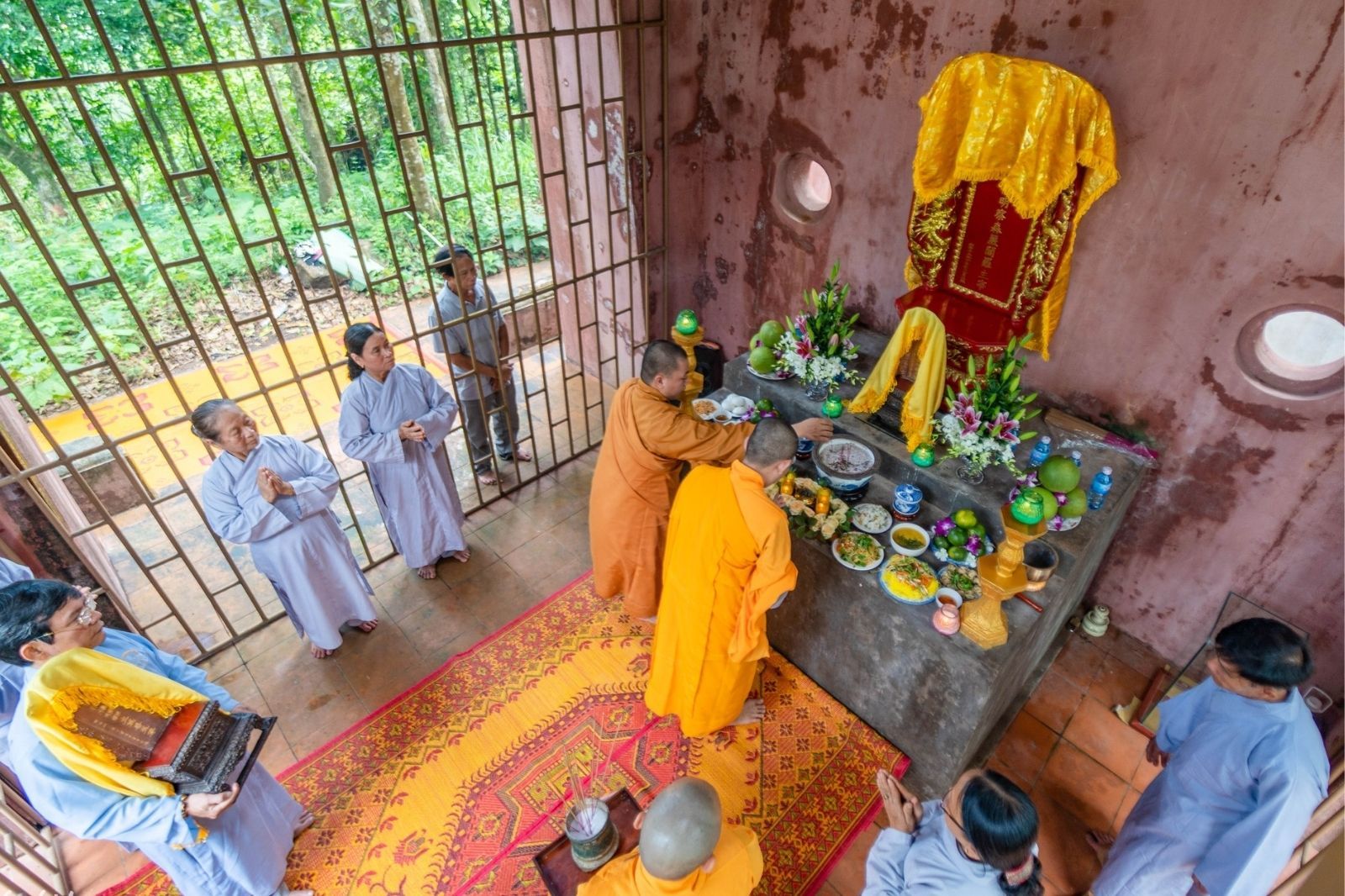
At Thanh Duyen Pagoda, visitors can participate in activities such as offering incense, listening to chants, or light trekking around the mountain to watch the sunset. On full moon and first days of the lunar month, the pagoda holds major chanting ceremonies, attracting Buddhists from all over. Although it does not hold bustling private festivals like the Hue Festival, during Vesak (Buddha's Birthday), the pagoda becomes lively with Buddha processions and floating flower lanterns by the stream—an unforgettable spiritual experience.

Inside Dieu Ngu Tower at Thanh Duyen Pagoda
Photo: Inside Dieu Ngu Tower at Thanh Duyen Pagoda 

A journey to Thanh Duyen Pagoda is not only a visit to an ancient Buddhist landmark, but also an opportunity to look back at a part of history associated with the formation and development of the Thuan Hoa region. Spanning over three centuries, the pagoda continues to serve as an important spiritual sanctuary where people come to pray for peace, seek tranquility, and connect with enduring values of the past. Amid modern life, Thanh Duyen Pagoda stands tall on Tuy Van Mountain as a symbol of faith, resilience, and the spiritual cultural roots of Hue.

Loading......

Featured destinations