Nam Son Pagoda – A miniature "Hue Ancient Capital" of ethereal beauty in Da Nang

Central

Da Nang

Sovaba.travel

Updated at: 24/09/2026

1. Where is Nam Son Pagoda?

Nam Son Pagoda is located in Cam Nam village, Hoa Chau commune, Hoa Vang district, Da Nang city, on Nguyen Kha Trac street, about 10–12 km from the city center. Removed from the crowded urban area, the pagoda boasts a spacious setting with plenty of greenery and is surrounded by landscapes characteristic of Da Nang's suburban outskirts.

Easy Travel Directions:

  • From 2 Thang 9 Street (near Dragon Bridge): Proceed to the Le Thanh Nghi intersection, turn toward Hoa Xuan Bridge but do not cross the bridge, turn right onto Thang Long Street - turn left onto An Hoa 9 Street - turn right onto Cam Le Bridge - cross the bridge onto Pham Hung Street - go straight for 1 km, turn right at the Pham Hung - Me Thu intersection - go 300m, turn left onto Nguyen Kha Trac. The pagoda is right on the right, very easy to spot.

  • Recommended Transportation: Motorbike (rental 100,000 VND/day), taxi (Mai Linh or Tien Sa, about 250,000-350,000 VND/one way), private car. Bus route 12 or 45 also passes nearby.

If combining Nam Son Pagoda with other attractions in Da Nang, visitors can spend about half a day leisurely touring the pagoda and continuing to explore nearby destinations.
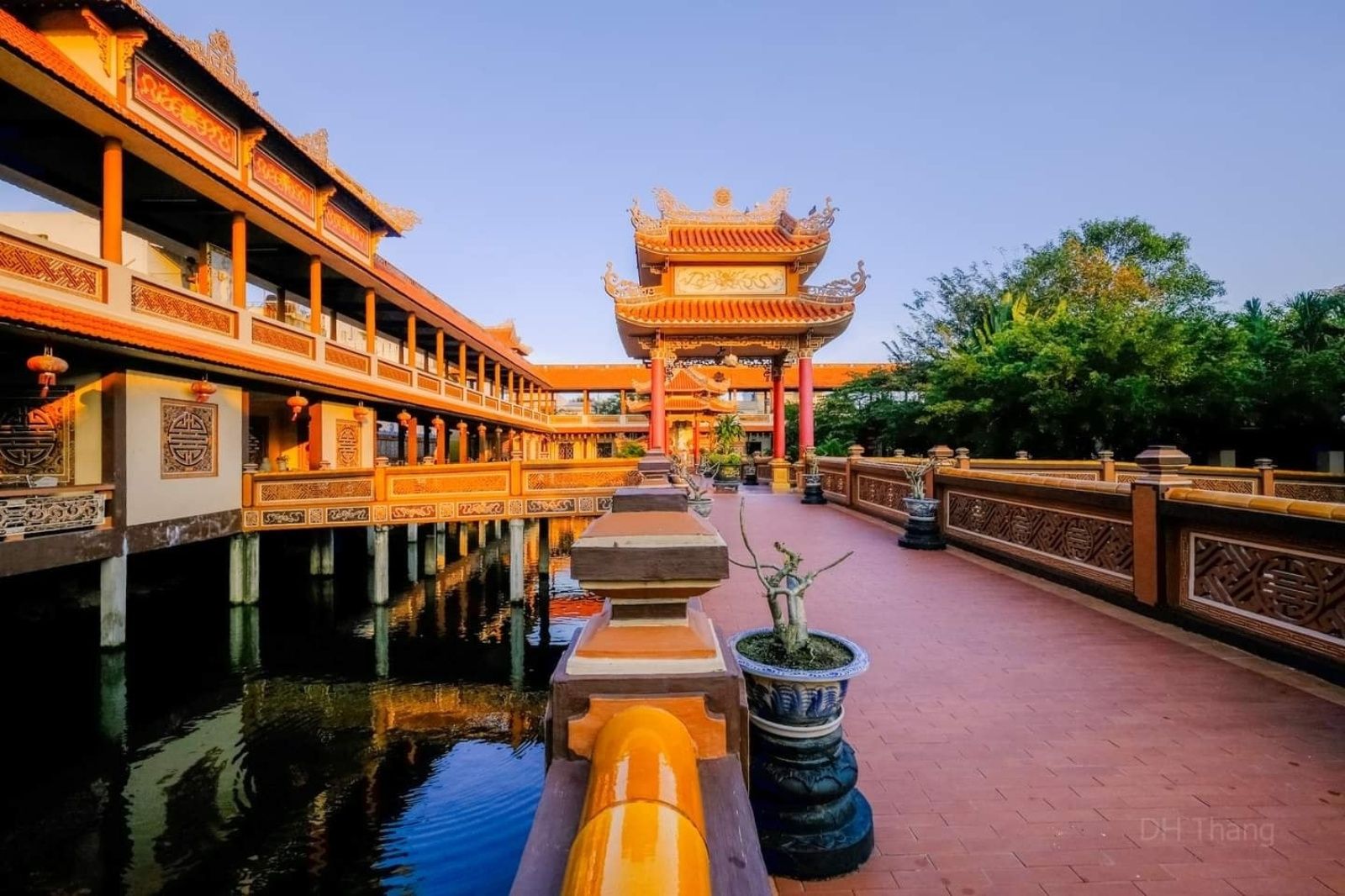
Chùa Nam Sơn hiện tại sau quá trình trùng tu

Photo: Nam Son Pagoda today after restoration

2. History of Nam Son Pagoda

Nam Son Pagoda was initially constructed in 1962, initiated by lay Buddhist Nguyen Van Chau with the contribution of numerous local Buddhists. From a small temple serving the religious needs of the local people, Nam Son was gradually expanded and restored through multiple phases, forming the grand architectural complex seen today.

Throughout the pagoda's development, Most Venerable Thich Hue Phong is known to have played a vital role in planning and shaping its current architectural appearance. The campus spans about 10,000 m² and is arranged with various sections including worship areas, ponds, gardens, and spaces dedicated to Buddhist activities. The structures are arranged sequentially, creating a classic aesthetic amidst Da Nang's suburbs. More than 60 years since its founding, Nam Son Pagoda has become a sought-after destination when visiting Da Nang. The temple roofs, ponds, tree-lined pathways, and corridors imbued with East Asian style give this place its distinct identity, elevating Nam Son from a local temple into a well-known cultural and spiritual tourist attraction.

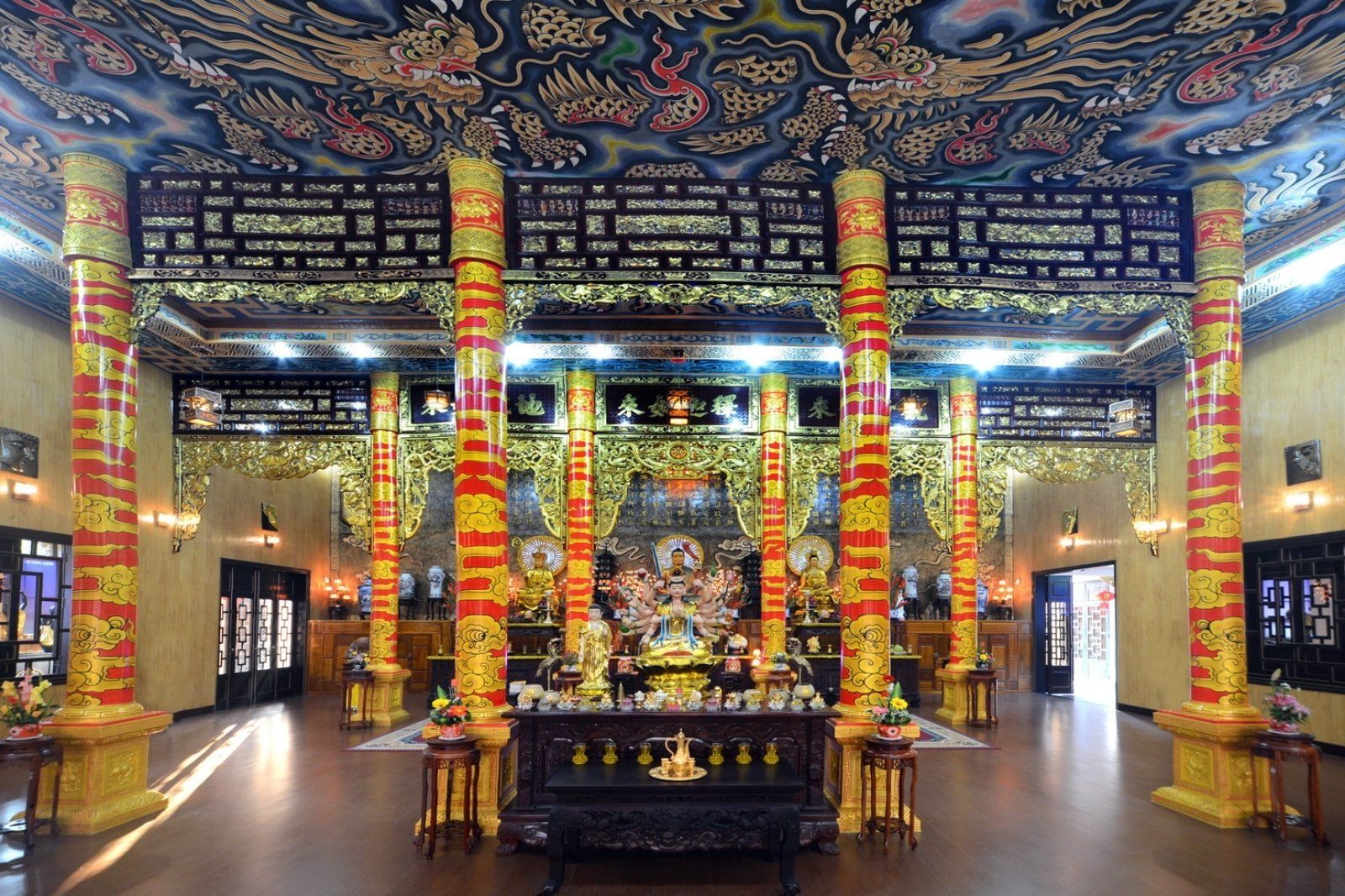
Khu vực Điện Phật

Photo: The Buddha Sanctum area 

3. Unique Architecture of Nam Son Pagoda

If there is a place that easily brings to mind ancient Eastern temples from the very first step, it is Nam Son Pagoda. From the temple gate, brown-red tones, gold-gilded vermilion, and red tiled roofs create a striking appearance. Venturing deeper inside, carved motifs of dragons, phoenixes, clouds, and floral patterns meticulously adorned on every structure contribute to the distinctive ancient charm of the entire complex.

The Main Hall is one of the most prominent structures. Its three-bay house architecture recalls traditional Northern Vietnamese houses, while the spatial organization, color scheme, and decorative details lean toward Hue imperial architecture. This intersection creates a unique look for Nam Son Pagoda, which is also why it is often metaphorically referred to as a "miniature Hue Ancient Capital" in Da Nang.

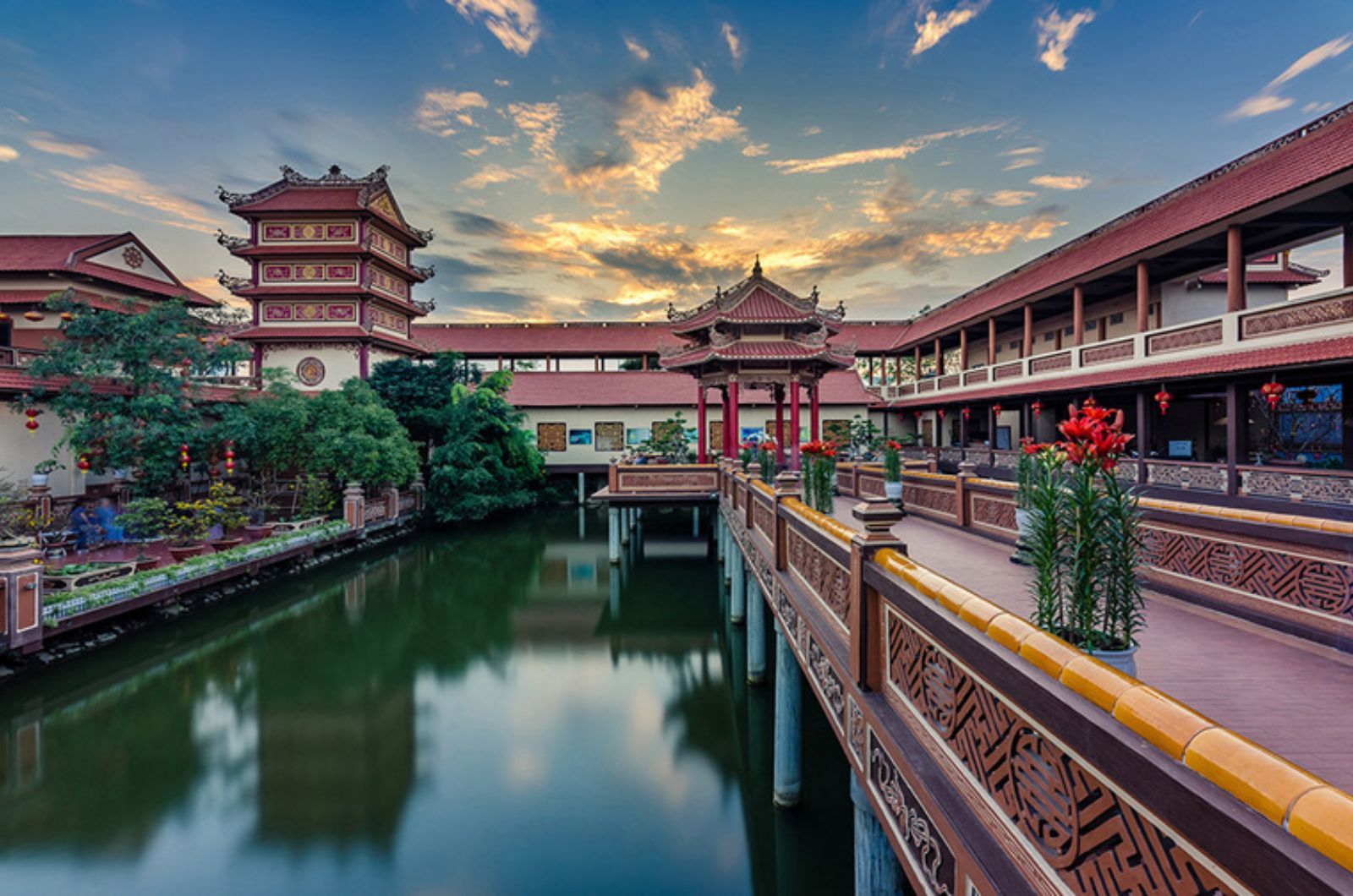
Surrounding the structures are temple courtyards, ponds, rows of trees, and interwoven stone-paved walkways. Greenery and water features are present in every space, from the eaves looking down at the pond to the small paths winding through the gardens. When sunlight filters through the tree canopy, reflecting on the water surface and casting over the red tiled roofs, Nam Son Pagoda emerges with a beauty that is both solemn and richly classic.

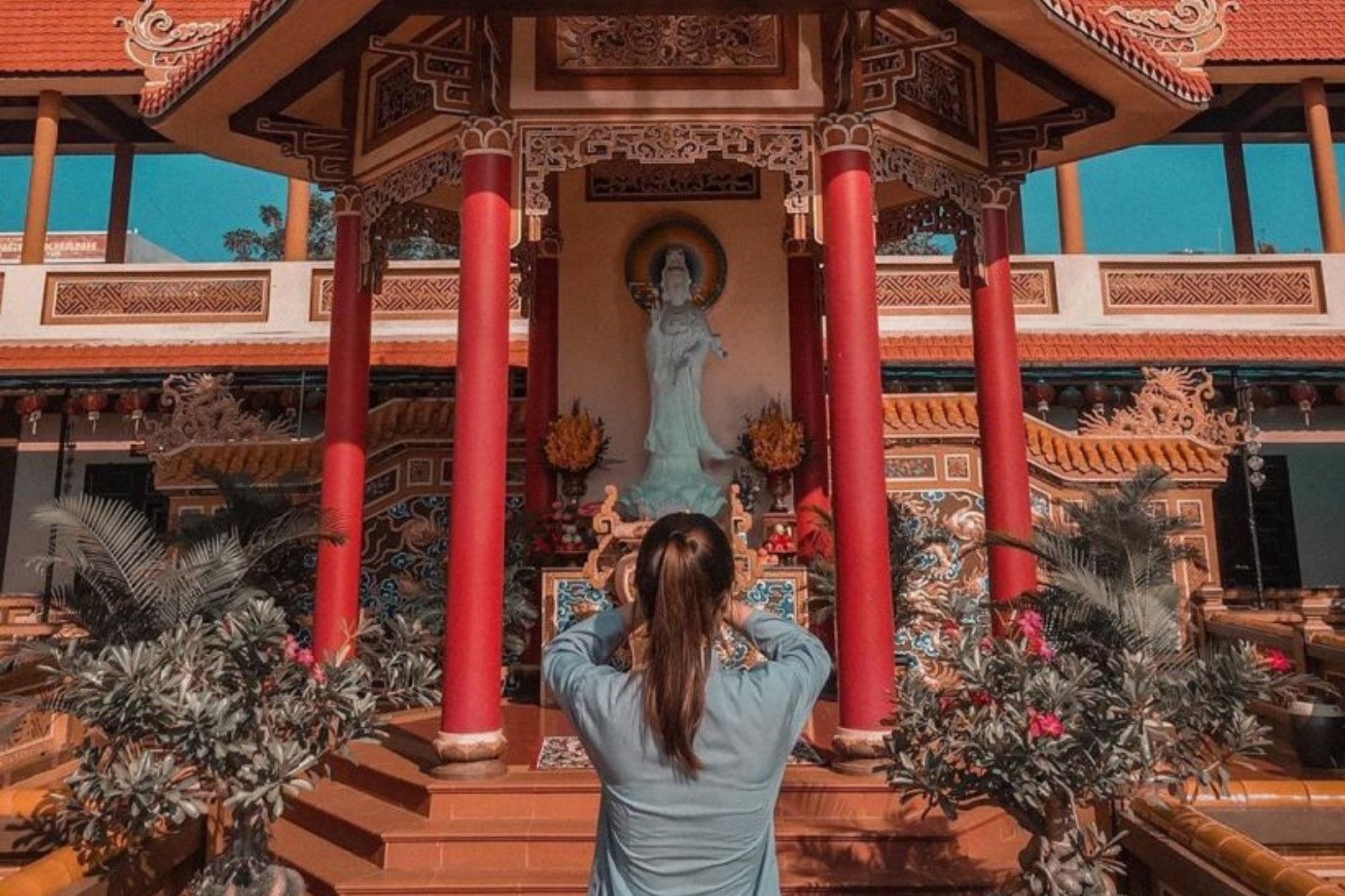
Tham quan chùa Nam Sơn - Tìm về với bình yên

Photo: Visiting Nam Son Pagoda - Finding peace

4. Must-See Highlights at Nam Son Pagoda

The space of Nam Son Pagoda is arranged into multiple interconnected areas, from the main hall and ponds to corridors and gardens. Each spot carries its own unique character, creating a tour journey with diverse perspectives on the temple's architecture and landscape.

  • Main Hall: The central area of the pagoda, serving as the Buddha worship space with a solemn atmosphere, highlighted by statue systems and gold-gilded vermilion details. This is also where visitors often stop to offer prayers and wish for peace.

  • Release Pond (Hồ Phóng Sanh): Situated in the middle of the temple campus, the water body creates an airy, green space among the structures. The water surface, schools of fish, and surrounding trees make this one of the most popular areas for visitors to pause and enjoy the scenery.

  • Tam Tang Bridge: Spanning across the pond, the bridge forms a graceful connection between different areas within the pagoda. From here, one can overlook the water, greenery, and distant temple roofs, making it ideal for souvenir photos.

  • Vong Nguyet Pavilion: Located within the temple grounds, the pavilion offers an airy space with plenty of resting spots. This is an ideal place to take a break after touring the surrounding areas.

  • Zen Monastery and Auxiliary Buildings: These structures complete the overall architecture of Nam Son Pagoda, featuring tiled roofs, wooden pillars, and meticulously detailed decorations.

  • Red Lantern System: Lanterns are arranged along the corridors and interspersed among the greenery, creating striking colors within the temple space. When lit up in the late afternoon or during festivals, the scenery takes on a distinct beauty reminiscent of the ancient ambiance of Hoi An Ancient Town.

Alongside the main structures, Nam Son Pagoda also features fairly spacious gardens, walkways, and reception areas. Visitors can leisurely walk through each area, admire the architecture, rest by the pond, or find a quiet corner to fully feel the beauty of the temple.

5. Travel Guide to Nam Son Pagoda Da Nang

When visiting Nam Son Pagoda, Da Nang, travelers should note the opening hours and several important tips to ensure a safe, convenient, and complete trip:

  • Opening Hours: 5:00 AM – 9:00 PM daily, admission and parking are completely free.
  • Ideal Time:
    • Early morning (5:00 AM – 8:00 AM): Cool weather, gentle sunlight, and fewer visitors, convenient for walking and taking photos.
    • Late afternoon or evening: Glowing lanterns, poetic atmosphere, ideal for sightseeing and relaxing.
  • Important Notes:
    • Attire: Modest and polite (avoid short skirts, shorts). The pagoda provides Buddhist robes (ao lam) for borrowing if needed.
    • Behavior: Walk softly, speak quietly, and do not take photos inside the Main Hall and main sanctums.
    • Others: Maintain general hygiene, do not litter; be careful when walking along the winding paths on the grounds.

Complying with the above notes will make the visit to Nam Son Pagoda comfortable and meaningful. Combining it with a visit to Marble Mountains, Ba Na Hills, or Hoi An will create a perfect 1–2 day Da Nang itinerary.

Du khách có thể tham quan chùa các ngày trong tuần
Photo: Visitors can tour the pagoda on any day of the week 

With its majestic architecture, serene atmosphere, and harmonious landscape, Nam Son Pagoda offers visitors both a spiritual and cultural experience, acting as a "miniature Hue Ancient Capital" right in the heart of Da Nang. Whether seeking worship, relaxation, or stunning photos, every corner of the pagoda leaves a deep impression. Visiting Nam Son Pagoda is not only a journey back to peace but also an opportunity to discover unique cultural and architectural beauty, making your Da Nang trip complete and memorable.

Loading......

Featured destinations