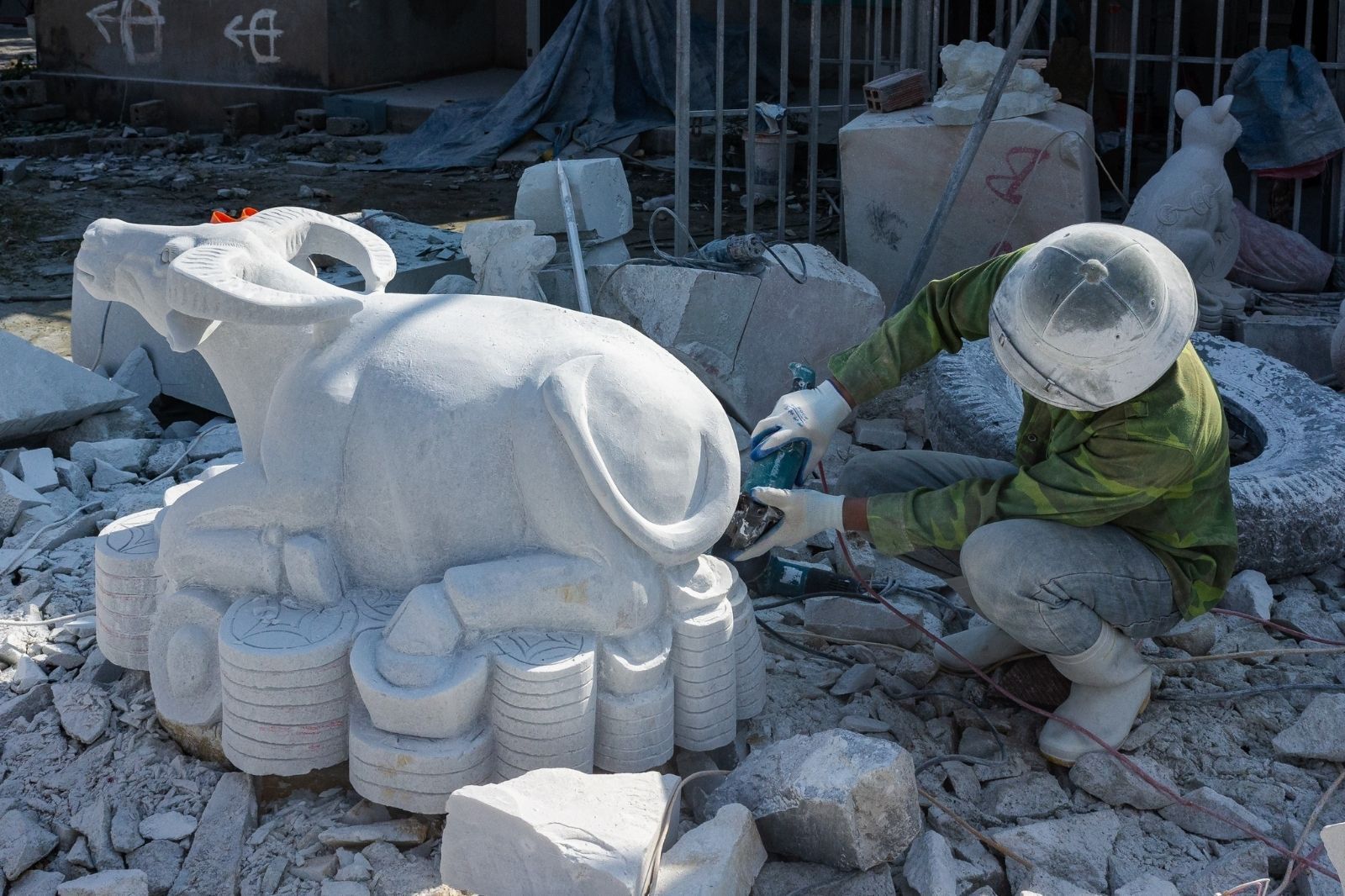
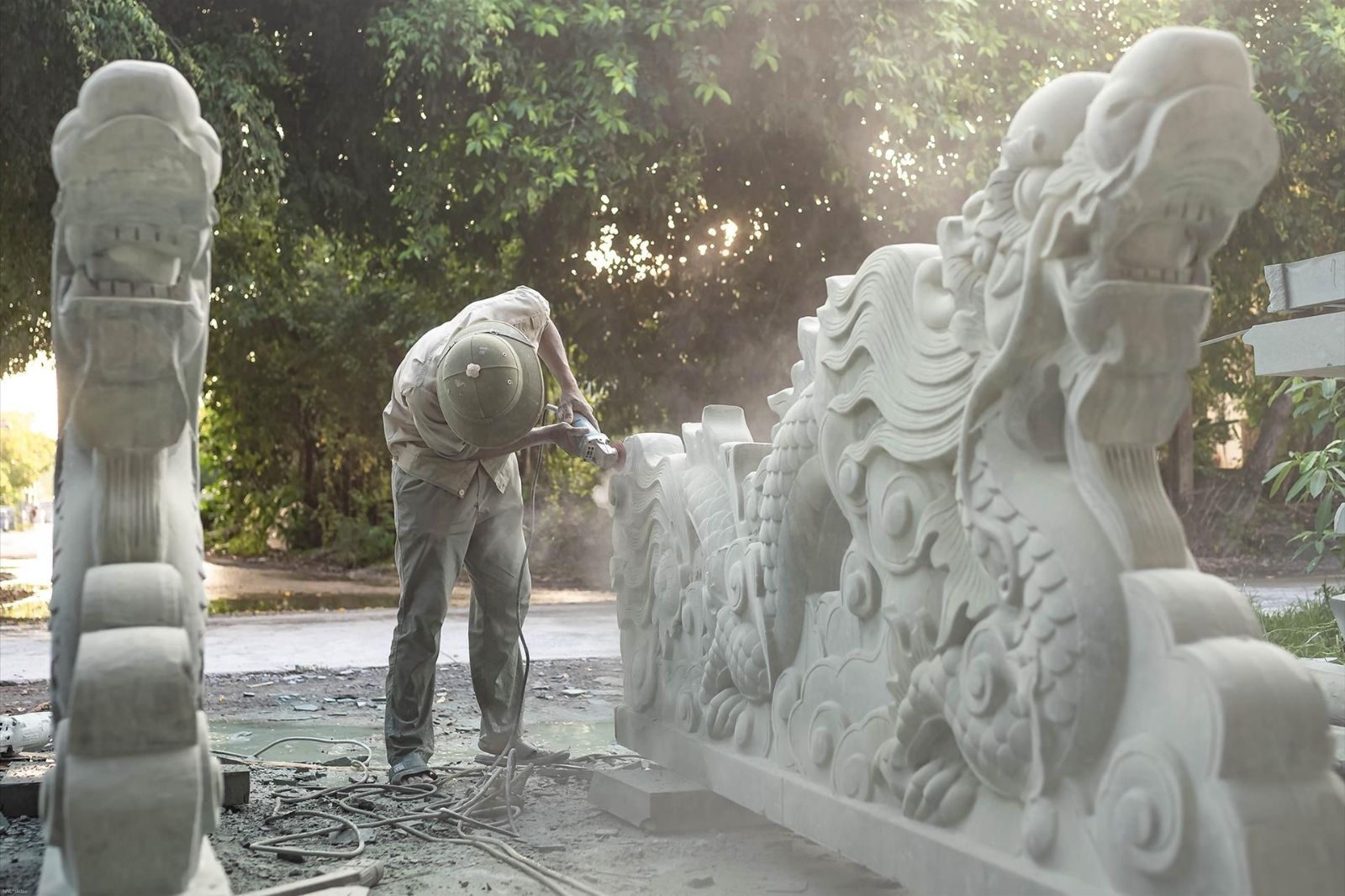
Ninh Van Fine Art Stone Carving Village dates back to the 10th century, when Hoa Lu was known as the "Stone Capital" due to massive stone architectural structures such as city walls and historical monuments. Through various dynasties, the stone carving craft of Ninh Van flourished. From the 17th to 18th centuries, artifacts such as the Long Sang (dragon beds) at the temples of King Dinh Tien Hoang and King Le Dai Hanh in the Ancient Capital of Hoa Lu showcased exquisite carving techniques with motifs of the four sacred creatures and aquatic animals. By the 20th century, Ninh Van artisans contributed to constructing major landmarks such as Ho Chi Minh Mausoleum at Ba Dinh Square (Hanoi), Khai Dinh Tomb (Hue), and Phat Diem Stone Cathedral (Kim Son, Ninh Binh).
- Craft Ancestor Hoang Sung: According to legend, the founder of the stone craft in Ninh Van was named Hoang Sung, originally from Nhoi Village, Thanh Hoa. He was a talented stonemason who migrated here, established his career, married into the village, and passed down the essence of the stone craft to the locals.
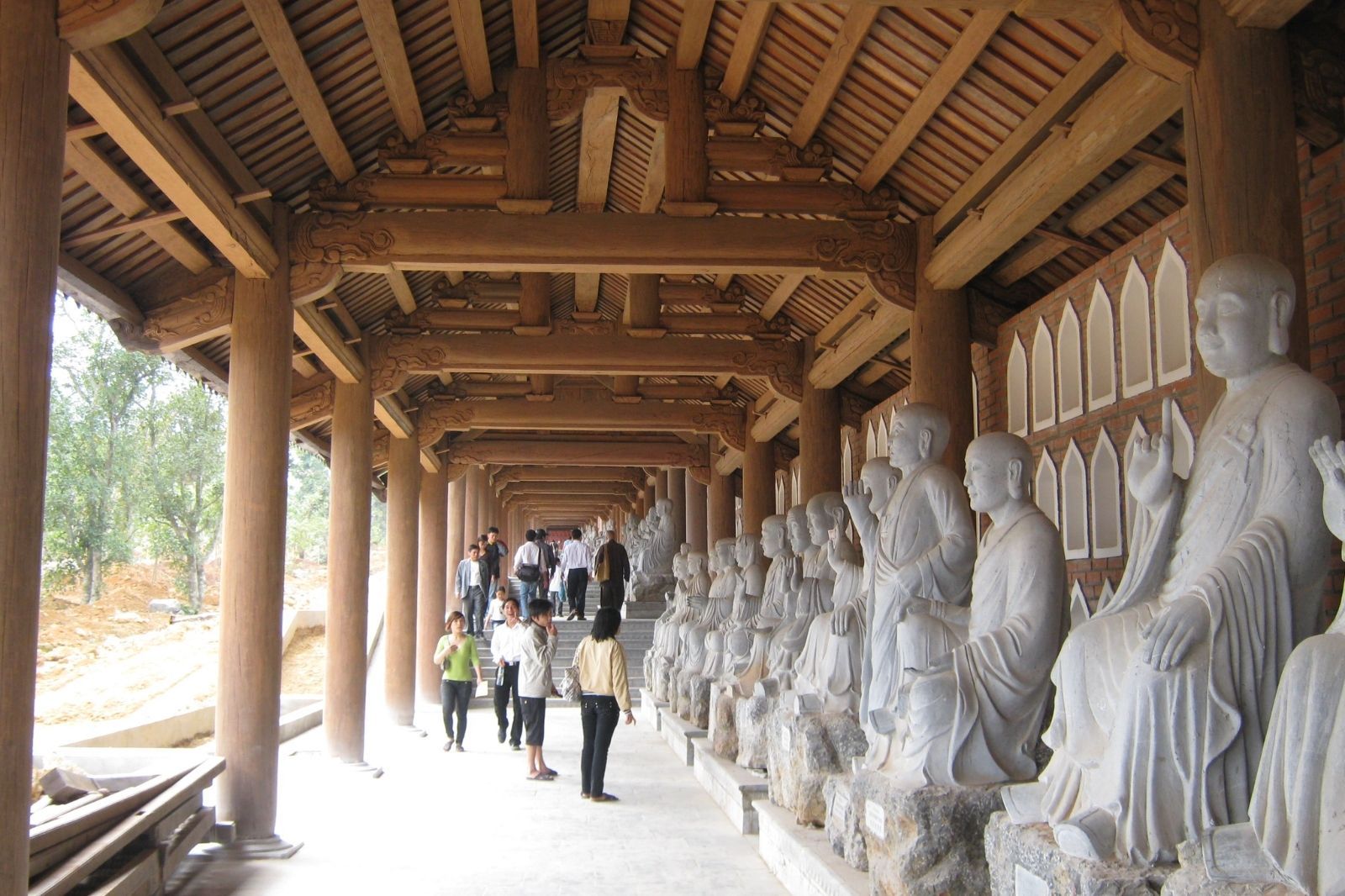
- Architectural Heritage: The talent of Ninh Van artisans is affirmed through surviving stone artifacts and structures such as: the Buddhist scriptures pillar at Nhat Tru Pagoda, the stone Long Sang (dragon beds) at King Dinh and King Le temples in the ancient capital of Hoa Lu, Buddha statues at Huong Tich Pagoda, Phat Diem Stone Cathedral, Khai Dinh Tomb (Hue), and many other key historical sites.
Following the Doi Moi reforms in 1986 and the re-establishment of Ninh Binh province in 1992-1993, the craft village boomed with the emergence of private enterprises. On December 20, 2019, Ninh Van fine art stone craft was officially recognized as a National Intangible Cultural Heritage under Decision No. 4607/QD-BVHTTDL by the Ministry of Culture, Sports and Tourism. Today, the craft village is not only a production hub but also a symbol of preserving Vietnamese cultural identity.