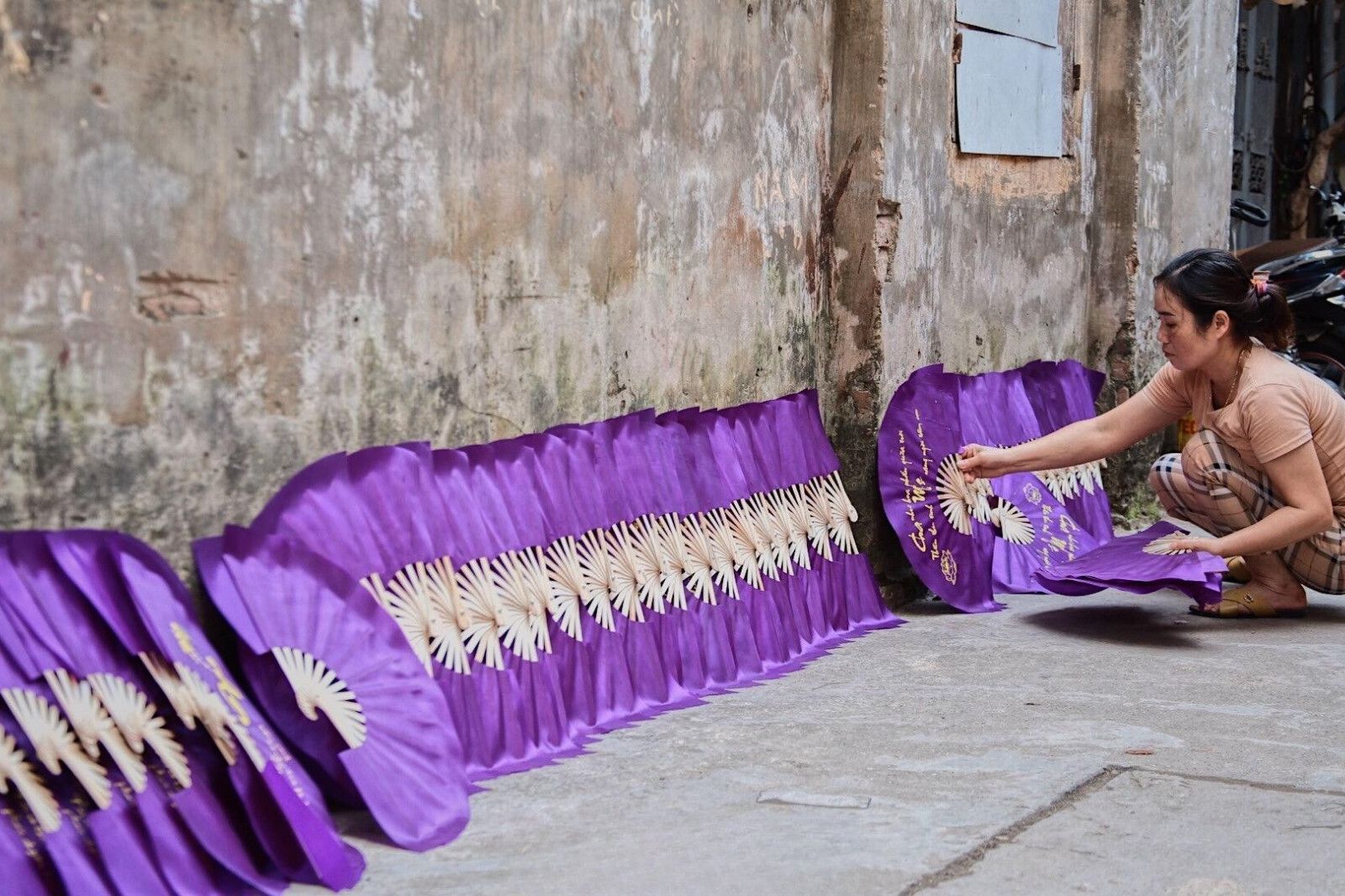
Nestled beside the green fields of Trieu Long commune, Trieu Phong district, Phuong Ngan is an ancient village deeply imbued with the historical and cultural marks of Quang Tri. Although situated on the fertile plain along the Thach Han River, the village's agricultural land area is quite modest. Spanning only about 60 hectares with over 1,000 residents, rice cultivation land accounts for merely around 14 hectares. It is precisely the scarcity of land along with specific natural conditions that forged the determination to rise and the creative working spirit of the local people.
According to the genealogy of the Nguyen family and stories handed down through generations, Phuong Ngan was established in the mid-14th century when Mr. Nguyen Cam and his wife Mrs. Nguyen Thi Sen left Nghe An to move south to reclaim land and establish the village. Originally, this land was named Hoa Ngan, under Trieu Phong prefecture. In the early Nguyen dynasty, due to naming taboo reasons, the village was renamed Phuong Ngan and has retained that name to this day. Through wars, natural disasters, and historical upheavals, many ancient documents are no longer intact, but traditional values and the resilient spirit of the villagers remain preserved as an essential soul of their homeland.
Perhaps it is from this condition of "scarce land and dense population" that the people of Phuong Ngan continuously explored and made use of available natural resources around the village, such as rose myrtle roots in the village forest, water from the Thach Han River, and the wetland ecosystem to develop traditional crafts. Driven by the need to make a living, they created distinctive traditional crafts, contributing to Phuong Ngan's reputation as an identity-rich village preserving the skill, diligence, and intense vitality of the people of Quang Tri.