St. Nguyen Temple Festival: History and rituals of gratitude to St. Nguyen Minh Khong

Northern

Ninh Binh

Sovaba.travel

Updated at: 24/09/2026

1. Where is Saint Nguyen Temple?

St. Nguyen Temple, also known as Duc Thanh Nguyen Temple, is located in the ancient Diem village (now belonging to Gia Thang and Gia Tien communes, Gia Vien district, Ninh Binh province). The relic lies within the land of the ancient capital Hoa Lu, about 15km northwest of Ninh Binh city center, easily accessible via National Highway 1A or the Hoang Long River waterways.

This relic site was built on the foundation of Vien Quang Tu Pagoda – an ancient pagoda founded by Saint Nguyen Minh Khong himself in 1121. After his passing, the local people converted the pagoda into a temple to worship him as a guardian deity. St. Nguyen Temple was recognized as a national historical and cultural relic in 1989, featuring ancient architecture with items such as the triple gate, front hall, sanctuary, and a large festival courtyard. This place is not only a sacred place of worship but also a vivid testament to the history of Vietnamese Buddhism and traditional medicine.
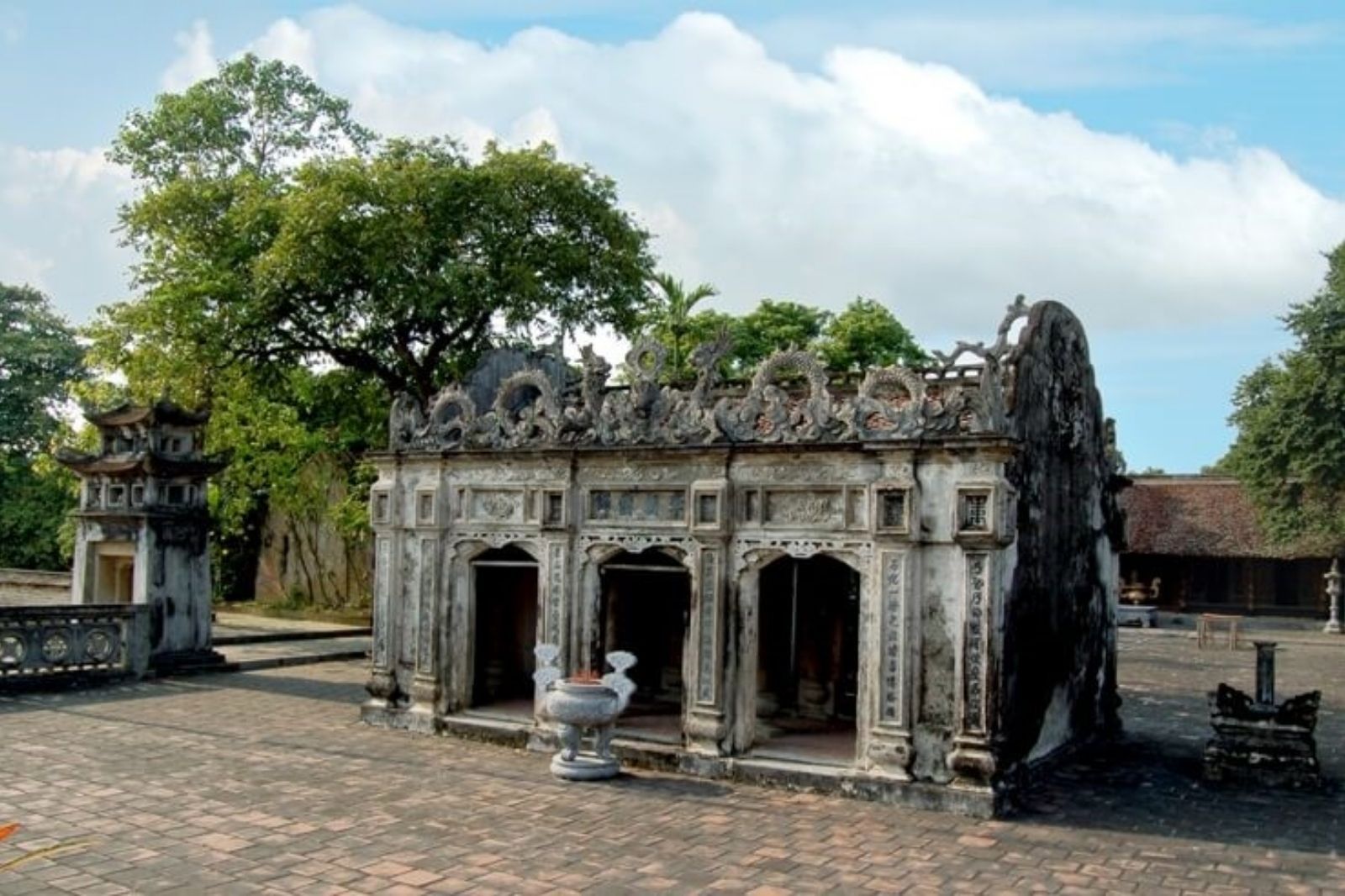
St. Nguyen Temple
Photo: St. Nguyen Temple  

2. Who is Saint Nguyen Minh Khong?

Saint Nguyen Minh Khong, real name Nguyen Chi Thanh, was born in 1065 in Diem village (now Quoc Thanh hamlet, Gia Thang commune, Gia Vien district, Ninh Binh) and passed away in 1141. He was a famous Zen master under the Ly Dynasty, revered by the people as one of the "four immortals" of the Vietnamese nation, along with Saint Giong, Chu Dong Tu, and Lieu Hanh.

His life was closely tied to Buddhism and medicine. From a young age, he studied religion, traveling everywhere to learn magic and medicine. In 1136, he cured King Ly Than Tong of a rare disease where he roared like a tiger, for which he was awarded the title Ly Quoc Su – the highest position for monks in Vietnamese history. He founded hundreds of pagodas in the North, such as Bai Dinh Pagoda (Ninh Binh), Co Le Pagoda (Nam Dinh), and Pha Lai Pagoda (Bac Ninh), contributing to the spread of Mahayana Buddhism.

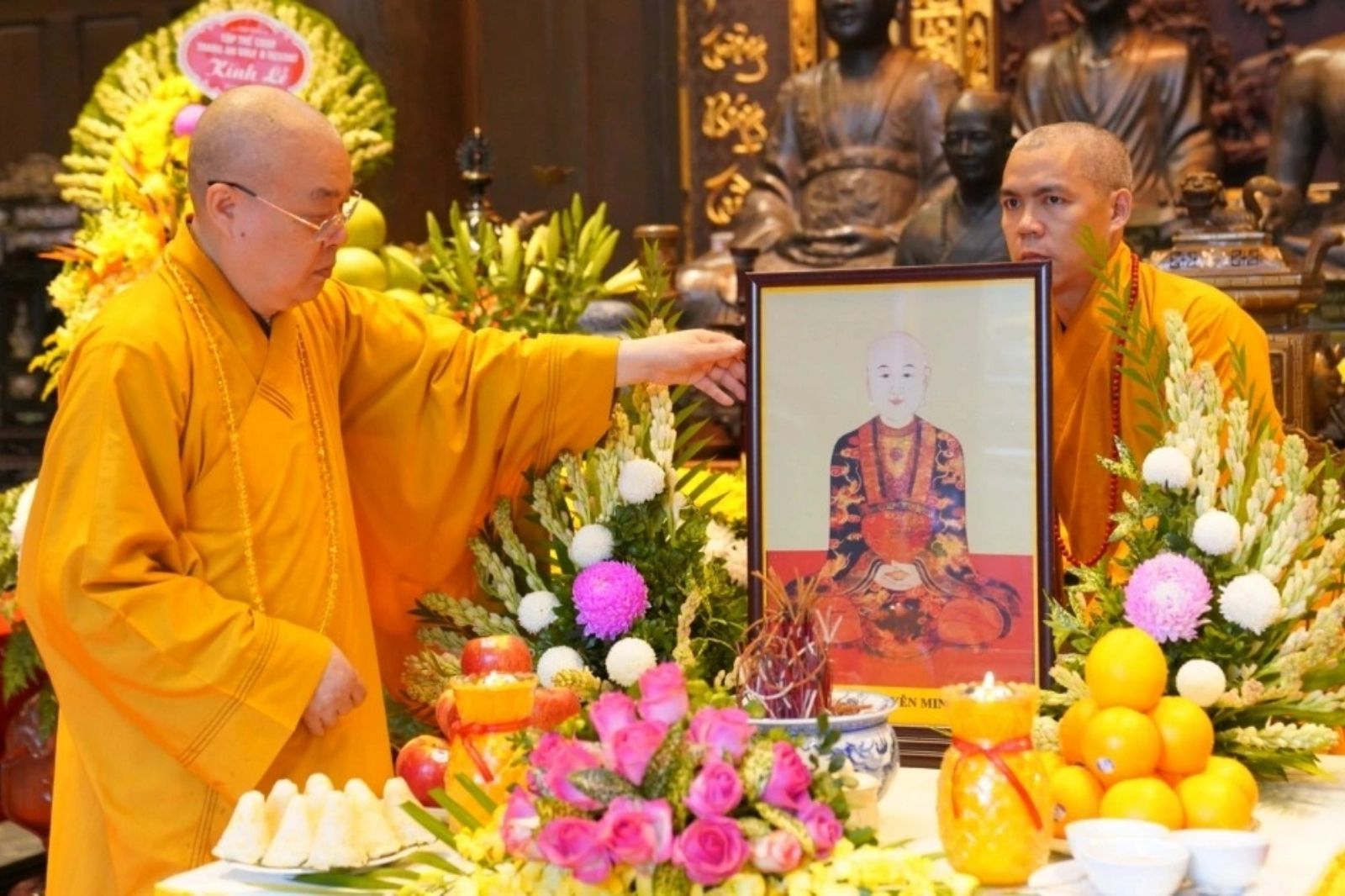
Worship place of Zen Master Nguyen Minh Khong
Photo: Worship place of Zen Master Nguyen Minh Khong

His greatest contribution was in the fields of medicine and bronze casting. As a talented physician, he used herbal medicine and esoteric arts to heal the people, especially incurable diseases. He was also regarded as the ancestor of bronze casting, reviving the technique from the Dong Son era by bringing bronze back from the Song Dynasty and encouraging people to cast the "four sacred bronze treasures" (four sacred objects: bell, gong, statue, urn). Legends about him, such as carrying mountains, building embankments to catch fish, or planting Tra Tu tea, are still handed down among the people, reflecting his strength and compassion.

3. The history of Saint Nguyen Temple and its traditional festival

St. Nguyen Temple originated from Vien Quang Tu Pagoda, built by Saint Nguyen Minh Khong in 1121 as a place for practice and healing. After his death in 1141, the people of Dam Xa village (now Gia Thang) renovated the pagoda into a temple to worship him as a patron saint. Through the Ly, Tran, Le, and Nguyen dynasties, the temple was restored many times and received numerous royal decrees from kings, affirming its historical value.

St. Nguyen Temple Festival is part of the system of Hoa Lu Four Towns festivals (four protector towns of the ancient capital: Saint Nguyen, God Cao Son, God Thien Ton, God Quy Minh). The festival formed in the 12th century, starting as a simple gratitude ritual and gradually developing into a major event with formal ceremonies and festive activities. In 2024, the festival was recognized as a National Intangible Cultural Heritage, marking its enduring value in preserving national identity.

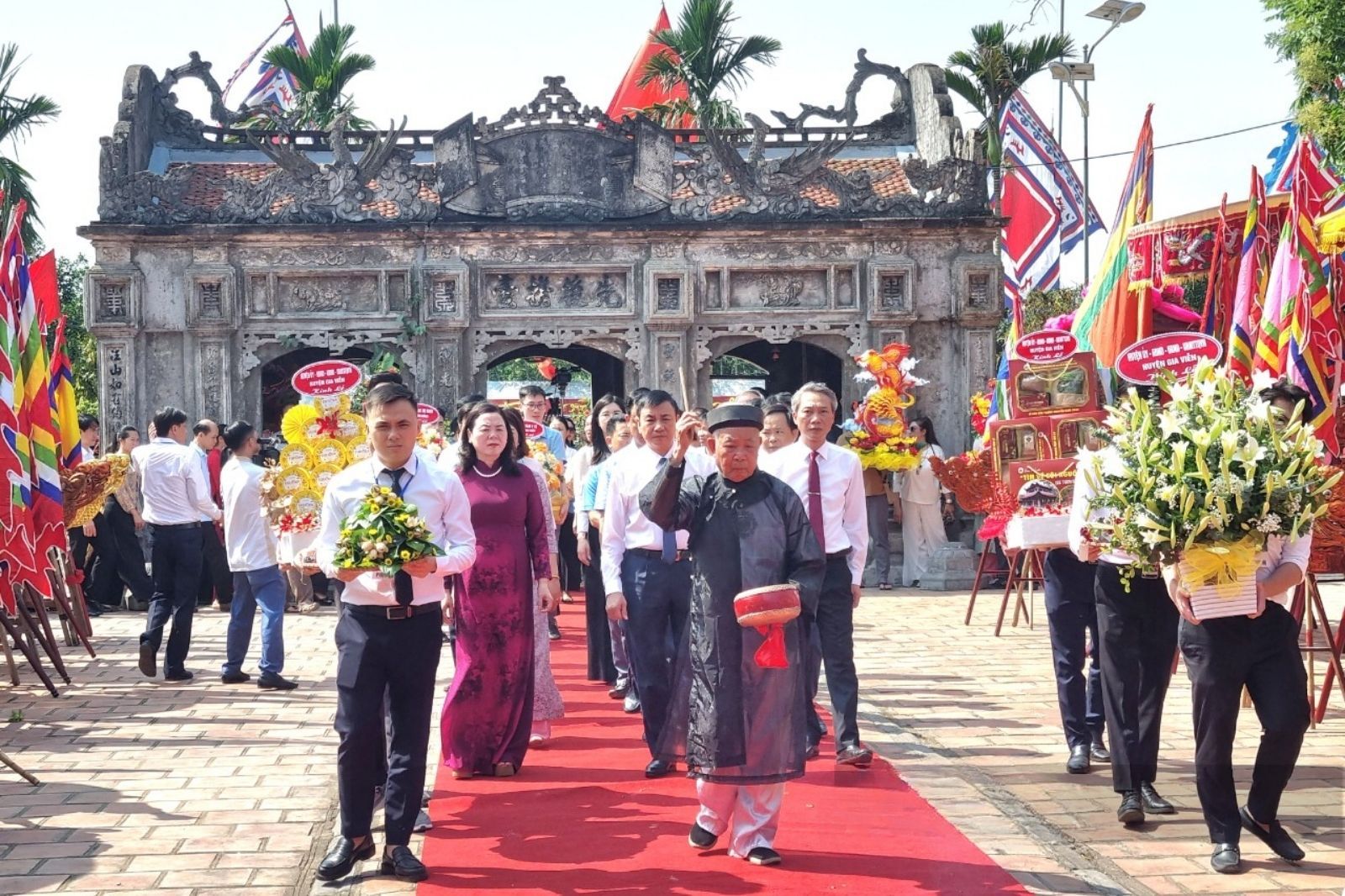
Solemn ritual at St. Nguyen Temple Festival
Photo: Solemn ritual at St. Nguyen Temple Festival

4. When does the Saint Nguyen Temple Festival take place?

St. Nguyen Temple Festival takes place annually from the 8th to the 10th day of the third lunar month, coinciding with spring – the ideal time for visitors to participate. In special years (every 5 or 10 years, depending on economic conditions), the festival is organized on a larger scale called "hoi tong" (general festival). For instance, in 2023 and 2025, the festival attracted thousands of attendees.

The main location is St. Nguyen Temple in Gia Thang commune, Gia Vien district, Ninh Binh. The festival area includes the temple grounds, the Hoang Long River, and neighboring villages, creating a vast space for events.

The profound meaning of the festival lies in preserving sacred culture from ancient times and promoting Ninh Binh's heritage to the world. It is not only a religious ritual but also boosts local tourism and economy, helping the younger generation understand and appreciate history. As a national intangible heritage, the festival contributes to affirming Vietnam's cultural identity in the context of integration.

5. The main rituals of the Saint Nguyen Temple Festival

St. Nguyen Temple Festival is organized with two main parts: a solemn ceremonial section and a lively festival section, along with special Gratitude Rituals showing deep respect for Saint Nguyen Minh Khong.

Ceremony Section – Solemn and Reverent Rituals

The ceremonial part features traditional rituals deeply imbued with history and spiritual culture, demonstrating the people's profound respect for National Teacher Nguyen Minh Khong:

  • Incense offering ritual: Opening the festival, this is the most fundamental activity to express reverence and gratitude for the Saint's merits.
  • Water procession ceremony: An important and sacred ritual, fetching water from the Hoang Long River to the temple, symbolizing prayers for favorable weather and abundant life resources.
  • Sacrificial rituals: Including Tac Luc Khuc, Tac Nam Quan (male rituals), and Tac Nu Quan (female rituals), performed solemnly on a grand scale to pray for national peace, prosperity, and bumper harvests.
  • Traditional rituals: A total of 13 unique rituals are practiced, preserving and passing down ancient spiritual cultural values.

Festive Section – Vibrant Community Culture

The festive part brings a joyful atmosphere that bonds the community through various folk games and unique cultural activities:

  • Folk games: Lively and attracting many participants, such as Tug-of-war, Cockfighting, and the 32-piece Chess game (Co 32 quan).
  • Sports activities: Organizing Volleyball and Football tournaments, creating healthy playgrounds and promoting physical health.
  • Cultural competitions: Aimed at preserving and promoting heritage values through creative activities such as the St. Nguyen Temple Pattern Drawing competition and Royal Decree Writing competition in National Script (Quoc Ngu).
  • Cultural experiences: Visitors have the opportunity to enjoy local tea culture and visit the "Herbal Garden" – an area recreating and promoting the medical heritage of Saint Nguyen.

Special Gratitude Rituals – Honoring the Ancestor's Merits

These rituals are performed to honor the great contributions of Zen Master Nguyen Minh Khong in the fields of Medicine and Bronze Casting:

  • Incense offering at the Relic Site: Expressing deep gratitude at His main place of worship.
  • Bronze casting ritual of the "Saint's Medicine Cauldron": This activity carries a dual meaning, honoring His merit as the patriarch of the Bronze Casting craft and reminding of His role as a legendary physician.
  • Ritual of offering the work "St. Flower Lamp": This work often recalls the Vong Lau tower (lamp symbol) and the Zen Master's practice and enlightenment.

In 2025, the festival takes place on the 960th anniversary of the birth of Saint Nguyen Minh Khong and welcomes the Decision announcing the inclusion of St. Nguyen Temple Festival in the National Intangible Cultural Heritage list.

Monks, nuns, and Buddhists flocking to St. Nguyen Temple Festival
Photo: Monks, nuns, and Buddhists flocking to St. Nguyen Temple Festival

St. Nguyen Temple Festival, with its status as a National Intangible Cultural Heritage, has transcended the framework of a pure belief activity to become a vivid symbol of gratitude and self-reliance of the nation. This event is eloquent proof of the great contributions of Zen Master – National Teacher Nguyen Minh Khong, who left an invaluable legacy in Buddhism, medicine, and bronze casting. On the journey towards the future, the festival does not stop at preserving ancient beauty but also becomes a strong endogenous resource for development, from exploiting unique spiritual tourism to applying science based on traditional medical knowledge into life. The essence of National Teacher Nguyen Minh Khong will forever spread and accompany the sustainable development of the homeland, affirming the firm position of Vietnamese culture in the flow of time.

Loading......

Featured destinations