Su Muon Pagoda (Hung Long Tu): A Place to Find Peace When Traveling to Phu Quoc

Southern

Phu Quoc - Kien Giang

Sovaba.travel

Updated at: 24/09/2026

1. Where is Su Muon Pagoda in Phu Quoc?

Su Muon Pagoda (Chinese name: Hung Long Tu, also known as Am Su Muon or Su Mon Pagoda) is located in Suoi Da Hamlet, Duong To Commune, Phu Quoc City, Kien Giang Province. The pagoda is situated on the slope of Dien Tien Mountain, boasting a terrain of “leaning against the mountain and facing the sea”, backed by mountains and surrounded by lush primeval forests, creating a peaceful scene in harmony with nature.

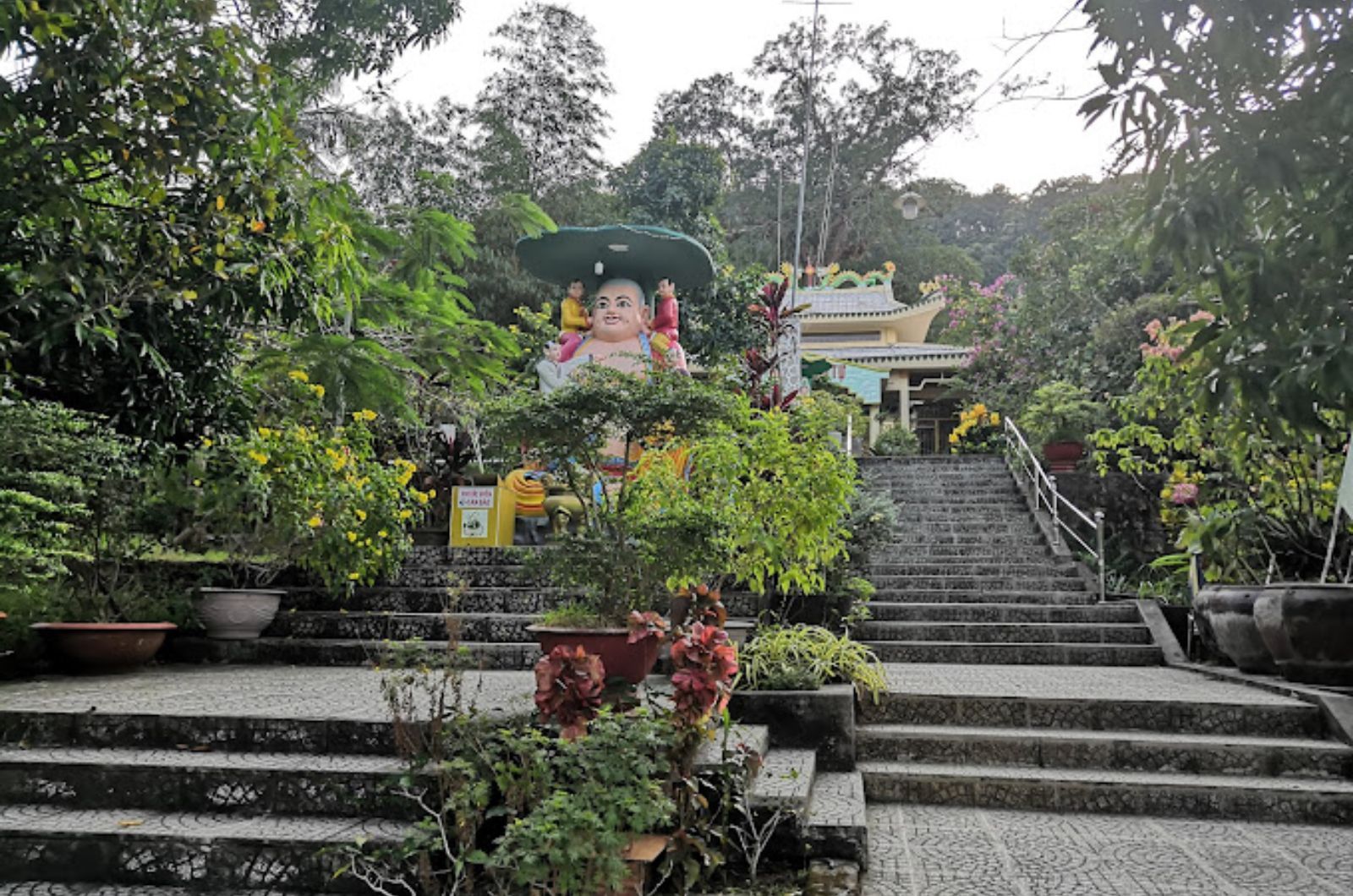
From the center of Duong Dong Ward, visitors only take about 10–15 minutes to travel along the Duong Dong – Ham Ninh route for about 5km to the West, then turn right following the signpost to reach the pagoda. The three-entrance gate (Tam Quan Gate) is located at the foot of the mountain, about 800m from the main sanctuary hall. To reach the pagoda, visitors need to climb 60 stone steps carrying the meaning of “the 60-year cycle” (Luc Thap Hoa Giap), symbolizing a full cycle of human life according to Eastern concepts.
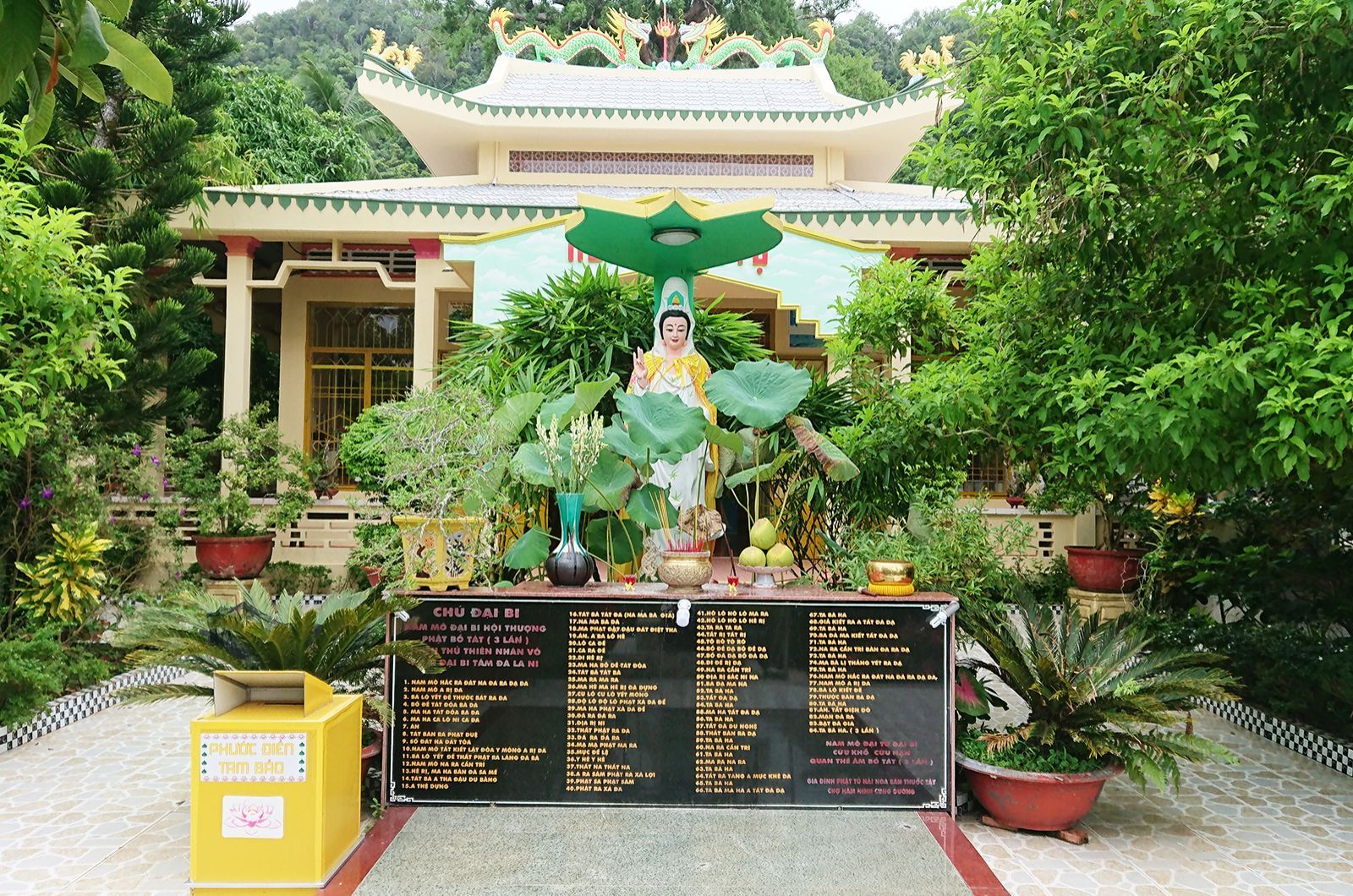
Chùa Sư Muôn hay còn biết đến với tên gọi là Hùng Long Tự
Photo: Su Muon Pagoda, also known as Hung Long Tu 

Thanks to its prime location, isolated from the noise of coastal resort areas, Su Muon Pagoda not only carries balanced feng shui value but is also an ideal stopover for those seeking tranquility and peace in the heart of the pearl island.
2. History of Su Muon Pagoda

Su Muon Pagoda was founded around 1930-1932 by Zen Master Gia Minh (real name Nguyen Kim Mon or Nguyen Van Muon, commonly called Su Muon). Originally an employee at the Bank of Indochina, after achieving enlightenment, he left urban life to become a monk and propagate Buddhism on islands such as Hon Thom and Tho Chu. When stopping at Phu Quoc, the monk chose Dien Tien Mountain to build the pagoda. Initially, the pagoda was just a small structure made of leaves and wood, which quickly became a spiritual center for local residents.

In 1945-1946, during the war, the pagoda was almost completely destroyed. The Zen masters had to temporarily reside at Long Van Ancestral Pagoda. After Zen Master Gia Minh passed away in 1955, Monk Minh Uc (the 4th abbot) restored and rebuilt it. By the 1990s, the pagoda underwent a major renovation lasting over 2 years, expanding the campus and becoming the ancient pagoda it is today.

The popular name “Su Muon Pagoda” has been preserved to commemorate the founding contributions of the first Zen master. This is also one of the most sacred ancient pagodas in Phu Quoc, along with Ho Quoc Pagoda and Sac Tu Pagoda, serving as a source of pride for the people of the pearl island.

3. Unique architecture in harmony with people and nature

Unlike grand and splendid pagodas, Hung Long Tu features a traditional Southern folk architectural style: rustic, simple, yet solemn and welcoming. The main sanctuary is built on a stone foundation about 3m high, with a simple interior decorated with statues of the Buddha and Bodhisattvas.

Key highlights:

  • Statue of Avalokiteshvara Bodhisattva seated on a lotus throne right in front of the main sanctuary.
  • Two natural rock formations carved with images of “dragons paying homage, tigers crouching” – symbolizing the balance of yin and yang.
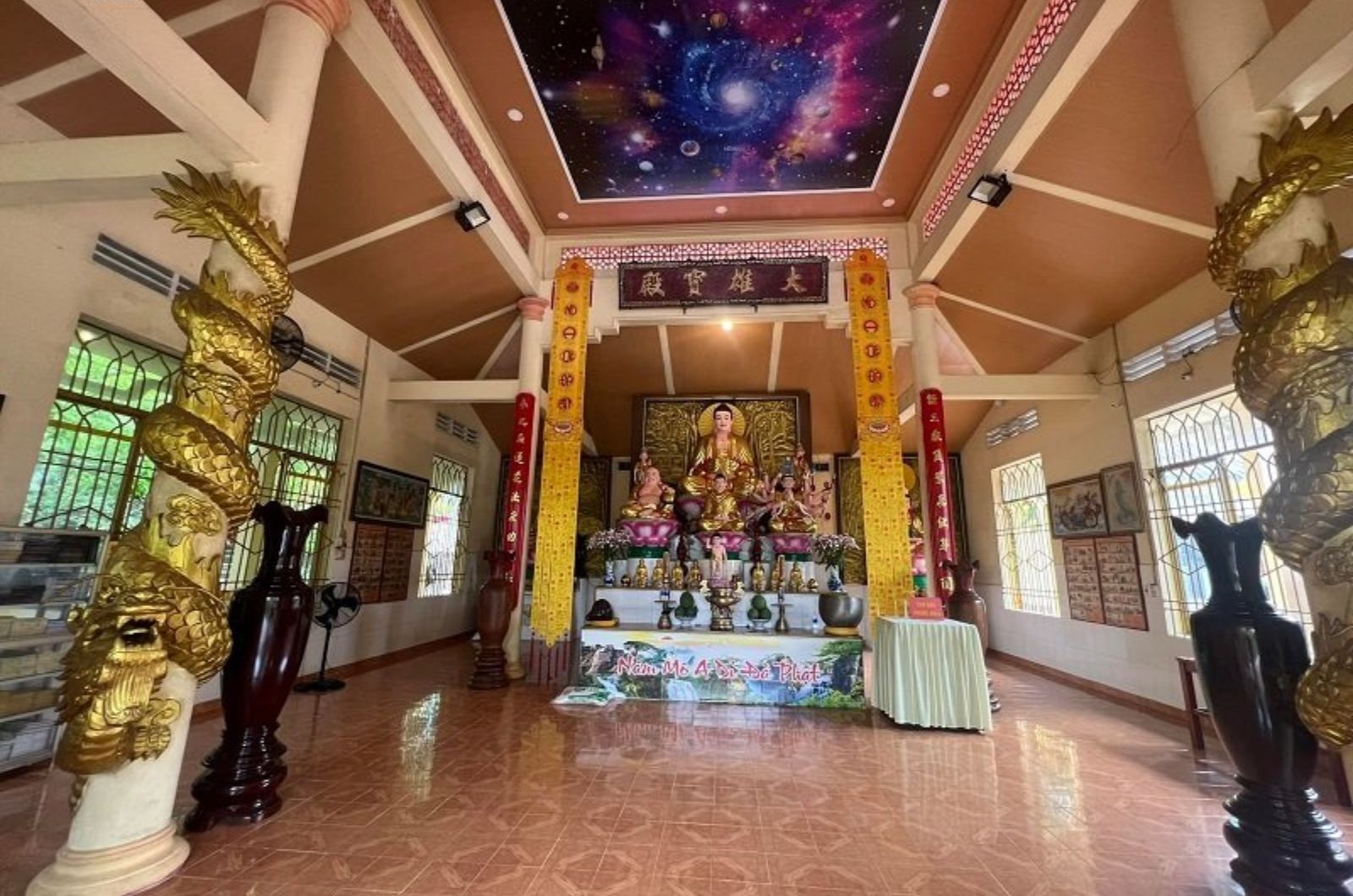
  • A pair of majestic dragons winding around the pillars of the Great Hero Hall, clearly reflecting the name of the pagoda “Hung Long Tu”.

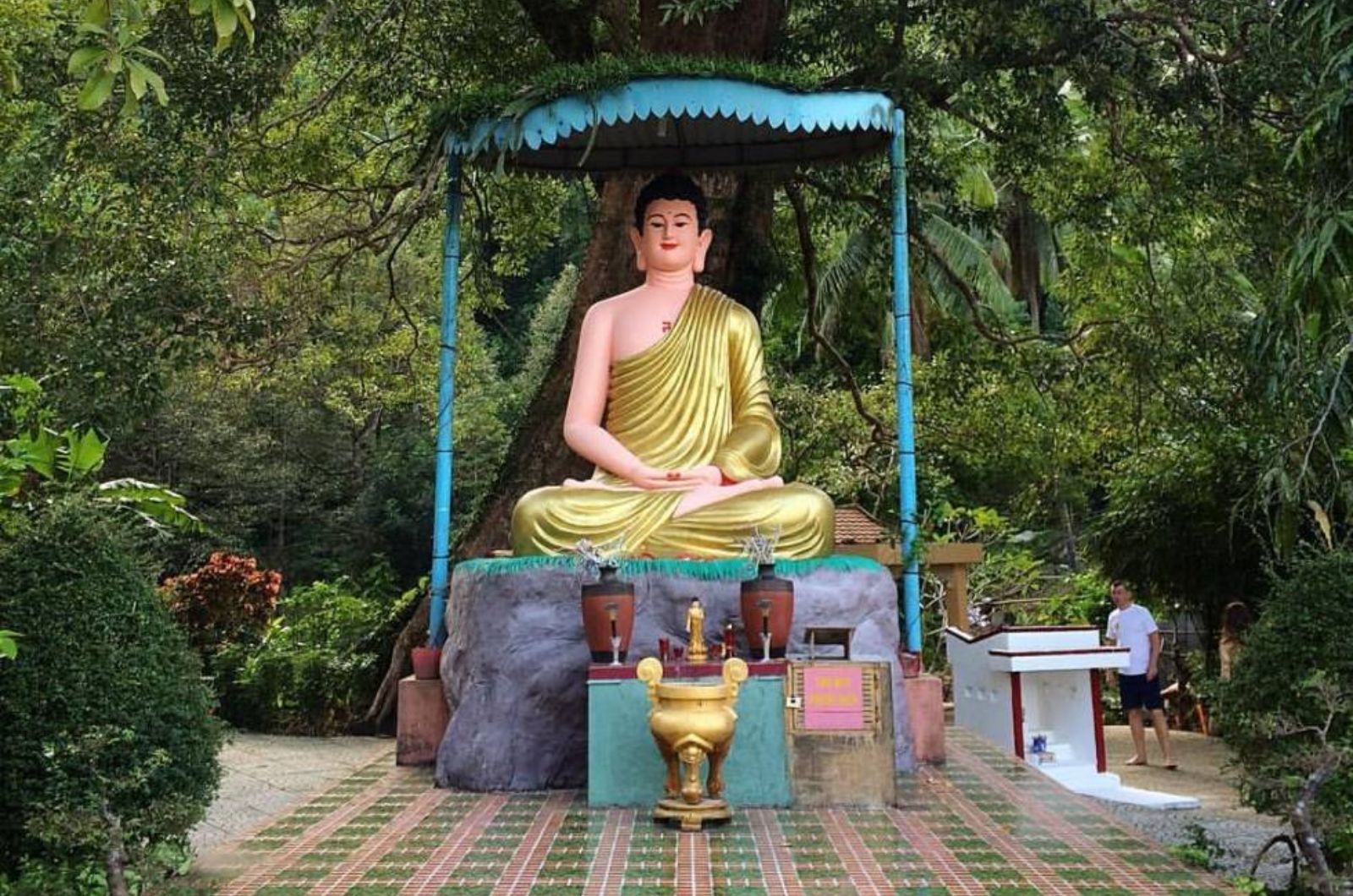
Surrounding the pagoda is a system of ancient trees, gurgling streams, lush green lawns, and straight pepper gardens. In particular, behind the main hall stands a centuries-old Kơ-nia tree with a wide canopy providing shade, beneath which sits a statue of Shakyamuni Buddha meditating. Nearby is a stupa dedicated to former patriarchs located amidst a vast sim forest. The entire space creates a feeling that the pagoda is “nestled” in nature, bringing a deep sense of peace.

Bậc thang lên chánh điện chùa
Photo: Stone steps leading to the main sanctuary of the pagoda 

4. Must-try experiences at Su Muon Pagoda

Coming to Su Muon Pagoda Phu Quoc, visitors do not just stop at worshiping but also have the opportunity to rediscover inner balance and relaxation through meaningful experiences:

  • Offer incense and pray for peace: The pagoda is very sacred for praying for health, good luck, career success, and family happiness. Many tourists share that they feel a noticeable sense of relief after their visit.
  • Sightseeing and admiring the ancient Kơ-nia tree: Strolling under the tree canopy, listening to the birds singing, the wind blowing, and the stream flowing, this is the perfect spiritual medicine after busy days.
  • Admire the architecture and scenery: Climb 60 stone steps and enjoy the panoramic view from the main hall looking out to the sea and pepper gardens.
  • Discover the mysterious water well: A well only 2 meters deep but full of water year-round, considered a legendary symbol by the locals.

With its serene space and rich spiritual values, Su Muon Pagoda is particularly suitable for those who wish to find peace and emotional balance during their journey of exploring vibrant Phu Quoc.

5. Detailed guide to visiting Su Muon Pagoda Phu Quoc

To make your visit to Su Muon Pagoda Phu Quoc complete and convenient, you can refer to the following useful information:

How to get there

  • Motorbike or self-driving car: The most popular choice thanks to easy roads, mostly flat concrete roads, suitable even for first-time visitors to Phu Quoc.
  • Taxi/Grab: Fast and convenient, with costs ranging around 100,000 – 150,000 VND/one way from the Duong Dong area.
  • Package tours: Many travel agencies such as Sovaba Travel design combined itineraries that help save time and optimize schedules.

Ideal time to visit:

  • Open from 7:00 AM to 5:00 PM daily.

Note: You should limit visits during the heavy rainy season if you plan to combine your trip with nearby natural spots like Tranh Stream.

Tượng Phật và cây Kơ-nia
Photo: Buddha statue and the Kơ-nia tree 

6. Important notes when visiting Su Muon Pagoda

To preserve the solemnity and spiritual cultural beauty at Su Muon Pagoda Phu Quoc, visitors should note a few basic rules of conduct:

  • Polite and modest attire: Prioritize collared shirts, trousers, or skirts extending below the knees; avoid wearing clothes that are too short or revealing when entering the main hall area.
  • Maintain a respectful attitude: Move quietly, speak softly, and avoid laughing or making noise in the pagoda grounds.
  • Protect the landscape and artifacts: Do not climb on statues, touch restricted areas, and absolutely do not litter, maintaining general hygiene.
  • Prepare simple offerings: You can offer incense with fresh fruits or sweets; there is no need to prepare elaborate ceremonial offerings for regular visits.

Adhering to these guidelines not only shows respect for a sacred place but also contributes to preserving its peaceful beauty, making every visit more meaningful and complete.

Bên trong chánh điện Chùa Sư Muôn
Photo: Inside the main sanctuary of Su Muon Pagoda

On the journey to explore the pearl island, Su Muon Pagoda (Hung Long Tu) is not merely a sightseeing spot, but also a cultural and spiritual space rich in indigenous value. Boasting a prime location “backed by mountains and facing the sea”, combined with pristine natural scenery and ancient architecture, the pagoda offers visitors a balanced experience of sightseeing, worshiping, and mental relaxation. For Phu Quoc travel itineraries, Su Muon Pagoda is often considered a special highlight, suitable for combining with trips to explore the eastern part of the island such as Tranh Stream, Ham Ninh Fishing Village, or traditional pepper gardens. This is not only a place to pray for peace, but also an ideal stop to help visitors recharge their energy and find inner tranquility amidst a busy schedule.

Loading......

Featured destinations