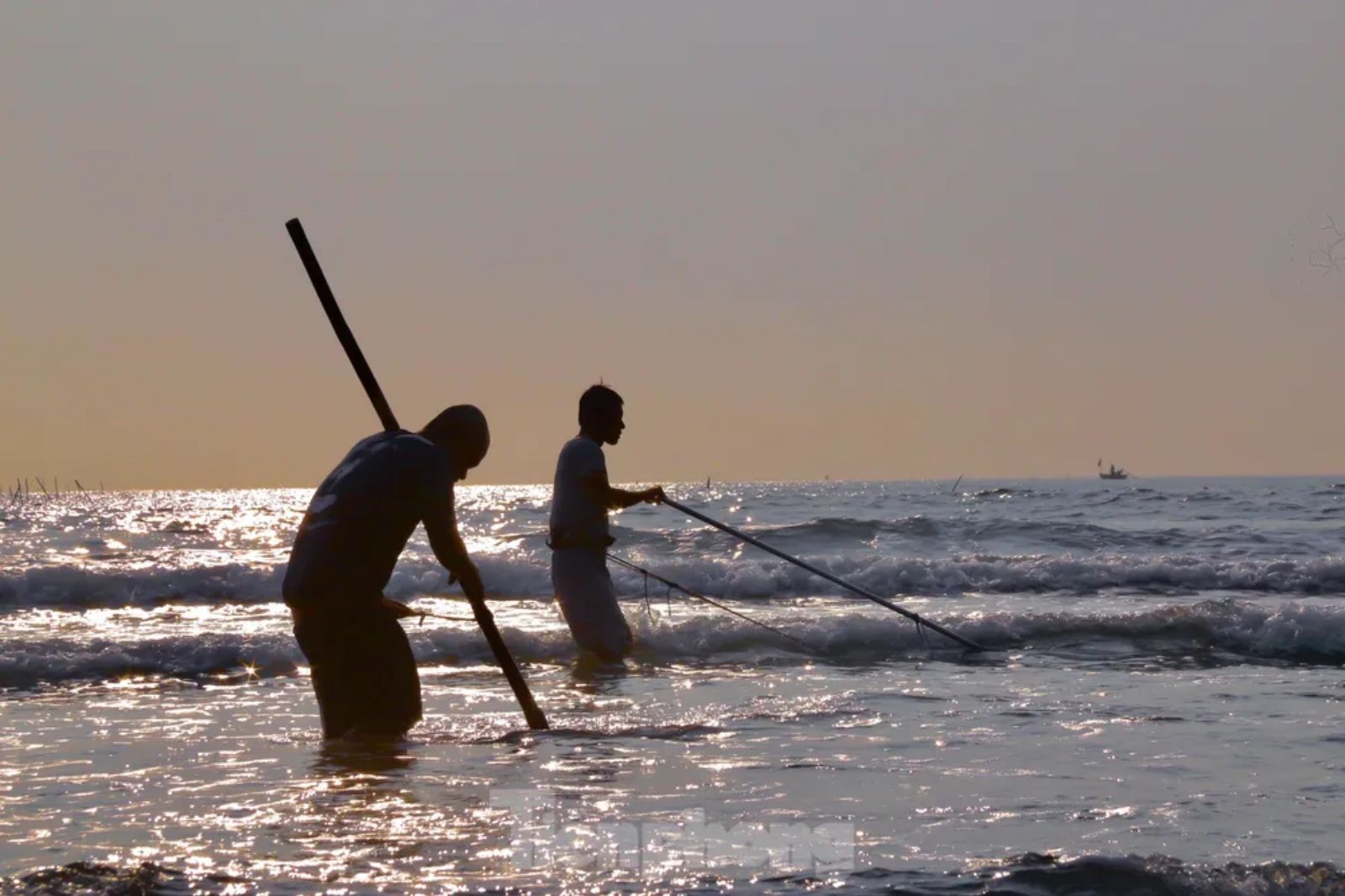
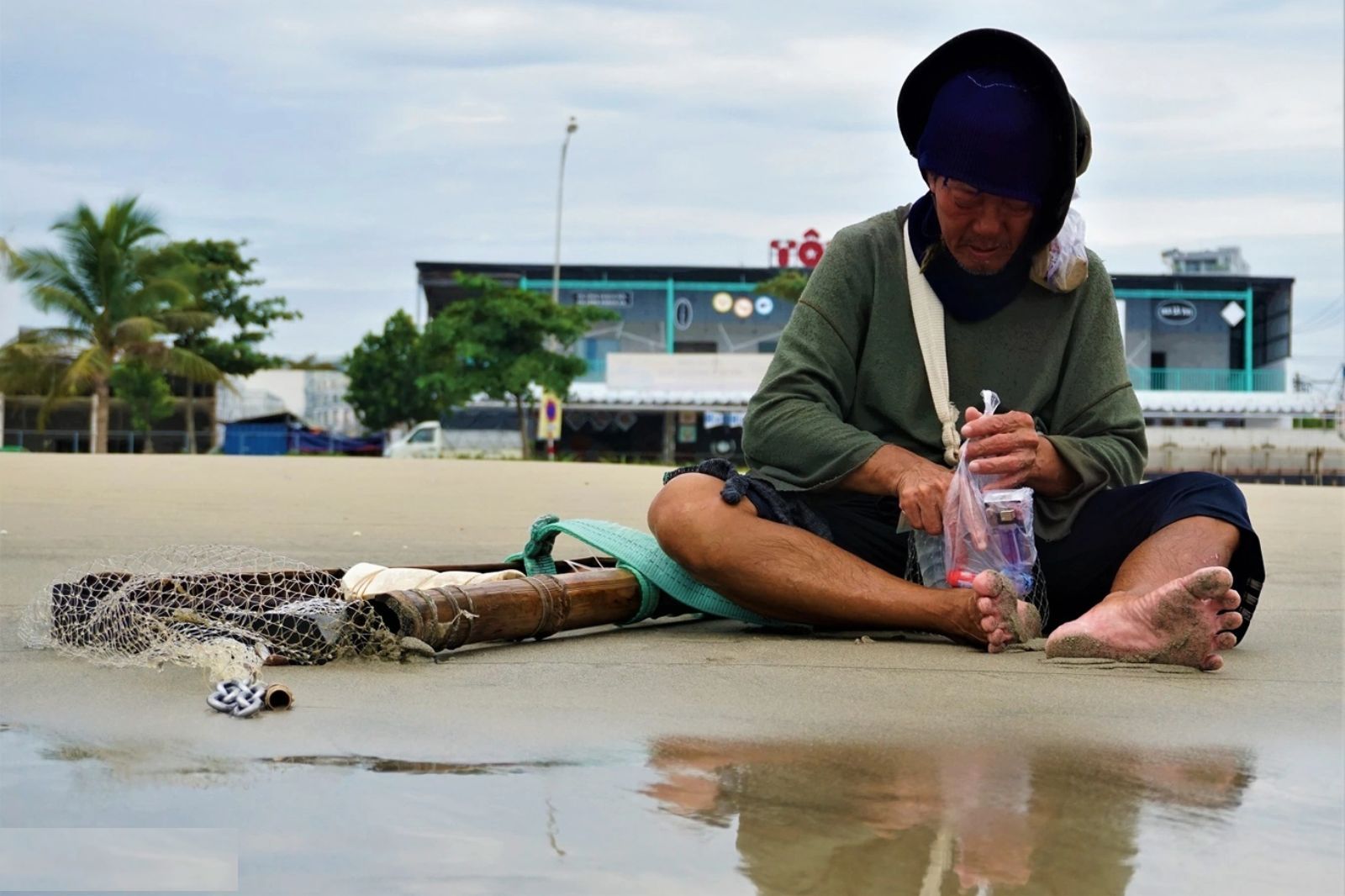
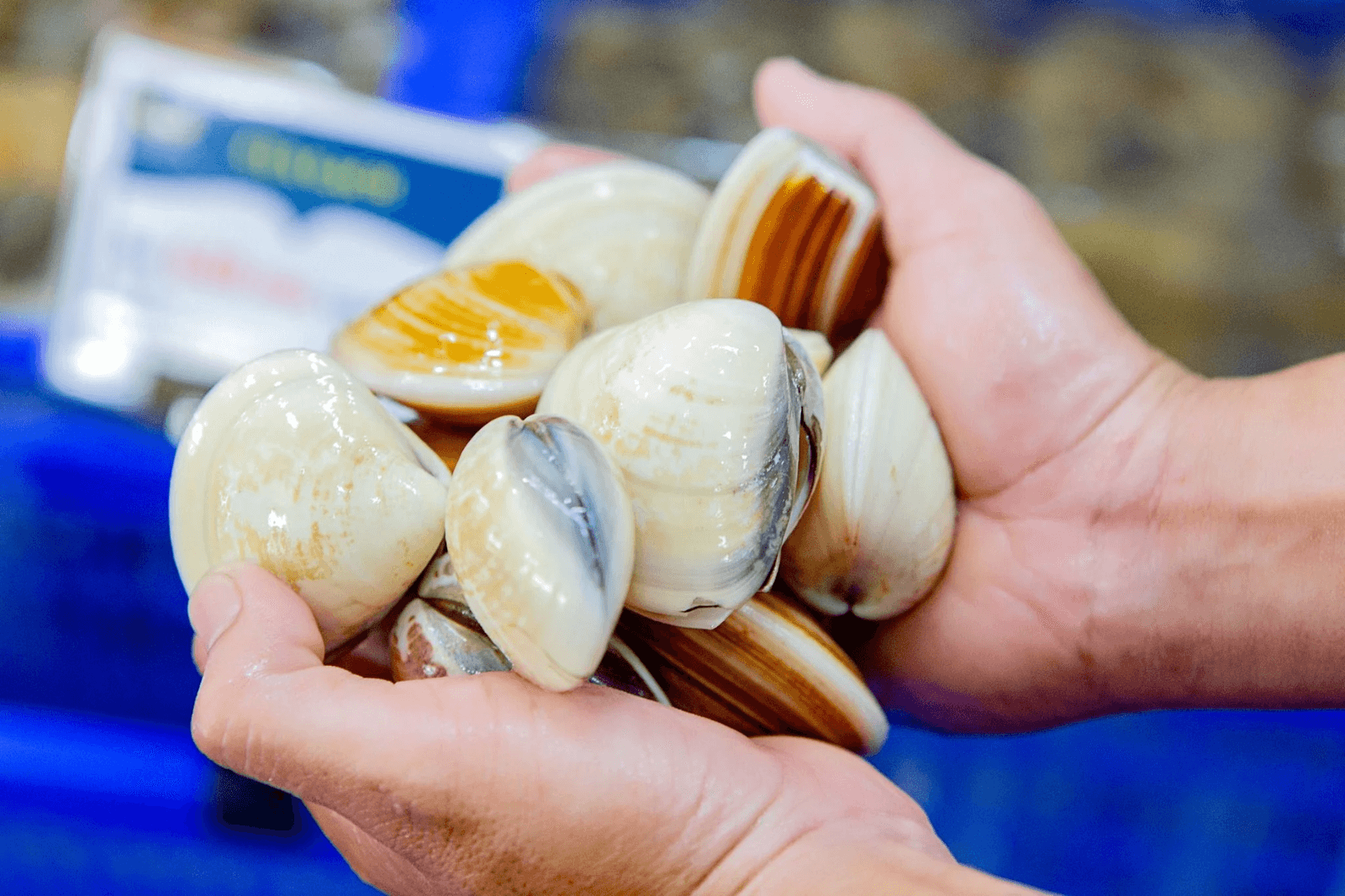
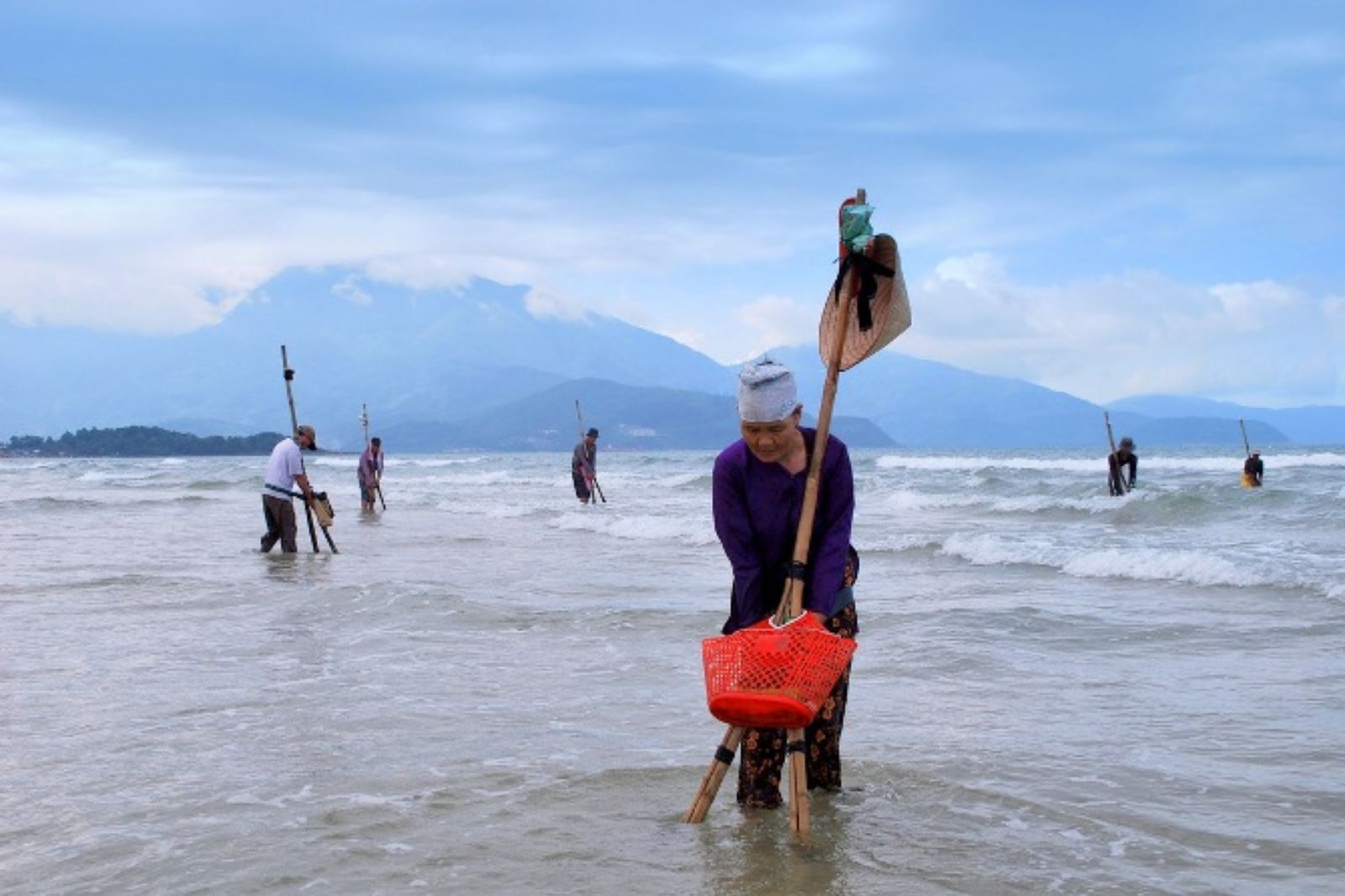
No one remembers exactly when this backward-walking trade began. Even the village elders can only vaguely recall following their parents to the sea since childhood, dividing areas among themselves and quietly immersing their bodies in the water, dragging rakes through the sand beneath the clear blue water. Each rake pull reveals small sea clams, baby crabs, sea snails, and even a few starfish—gifts of the ocean for the children of the salty sea.
This trade does not make them rich, but it provides extra income to stabilize their lives and pay for their children's education. Poor residents along the Gianh River, such as in Phu Hoa, Quang Tien, Quang Trung, or the coastal areas of Quang Phu, Quang Dong, and Bao Ninh, spend their days wading in the water, pacing back and forth amidst scorching sun or sudden rain showers.
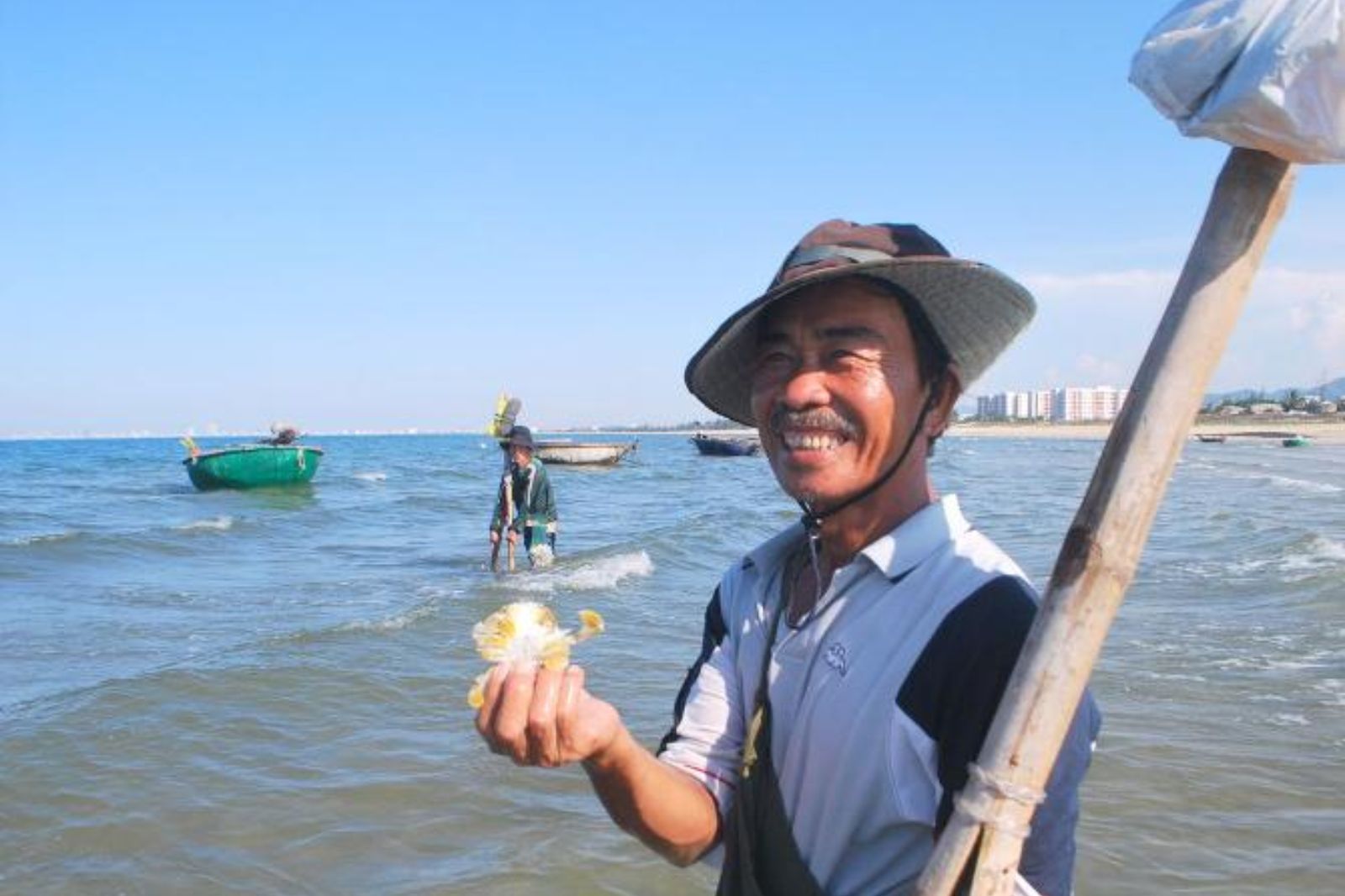
Under the intense mid-day heat, one can sometimes hear their laughter echoing, blending with the gentle sound of ocean waves. They avoid tourist bathing spots and head for quiet stretches of sand where, based on experience, they are likely to find "blessings of the sea". Sometimes it is pure luck, but to them, the sea remains a lifeline and a companion through generations.