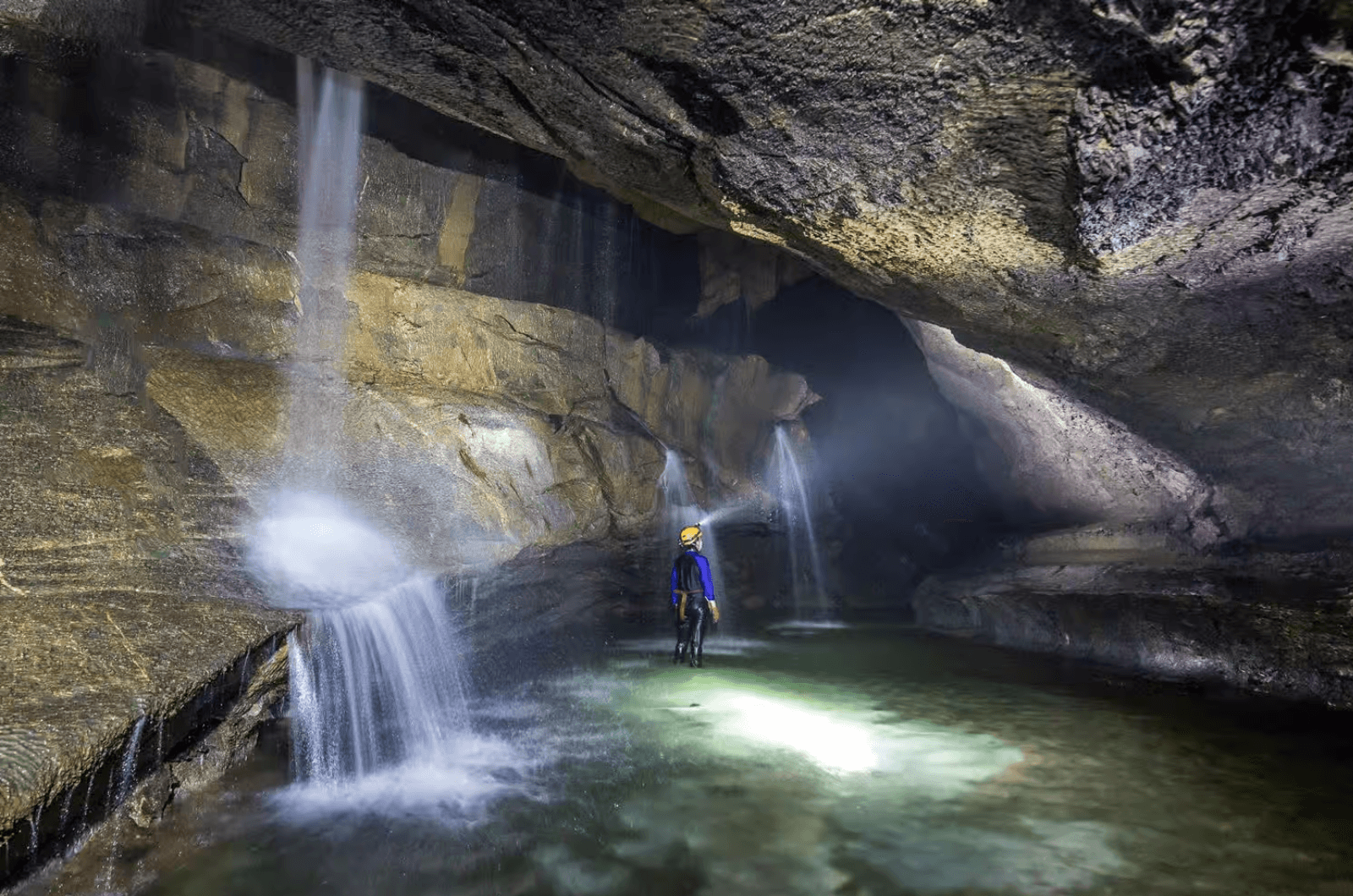
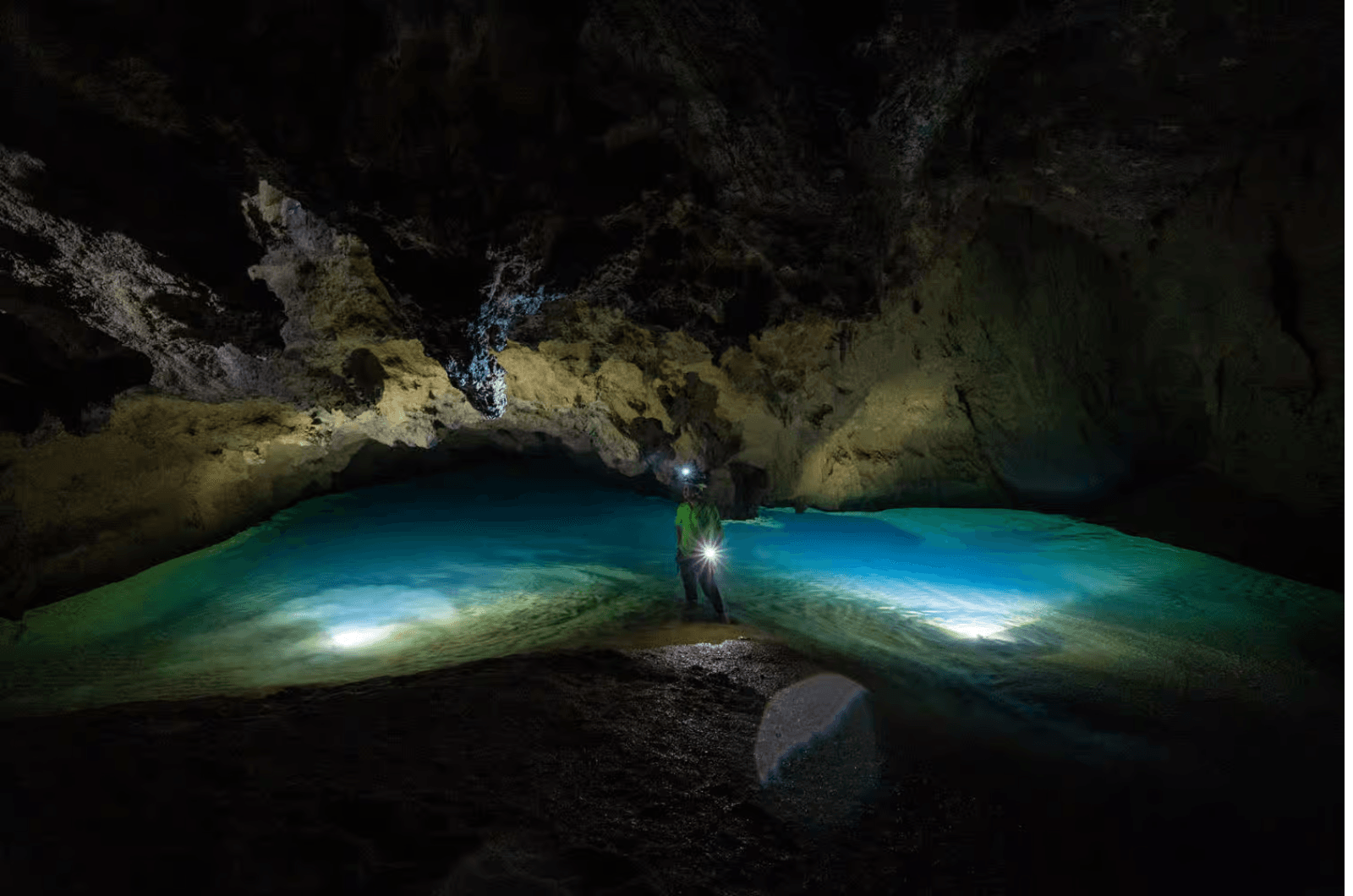
Va Cave is located in the limestone mountain region of Phong Nha - Ke Bang National Park, one of the oldest karst systems in Asia, dating back 400 - 450 million years ago. This process took place in a shallow marine environment, accumulating marine organisms with calcium carbonate shells, which were later compacted and cemented. Despite being located within an ancient limestone block, experts assess Va Cave itself to be relatively young, about 2 - 3 million years old.
This area has undergone multiple geological tectonic stages, creating systems of fissures and faults within the limestone mass. These fault lines served as primary conduits for water penetration and initiated the karstification process. The fact that Va Cave shares the same geological fault line with Son Doong Cave further confirms the crucial role of tectonic factors in their formation.
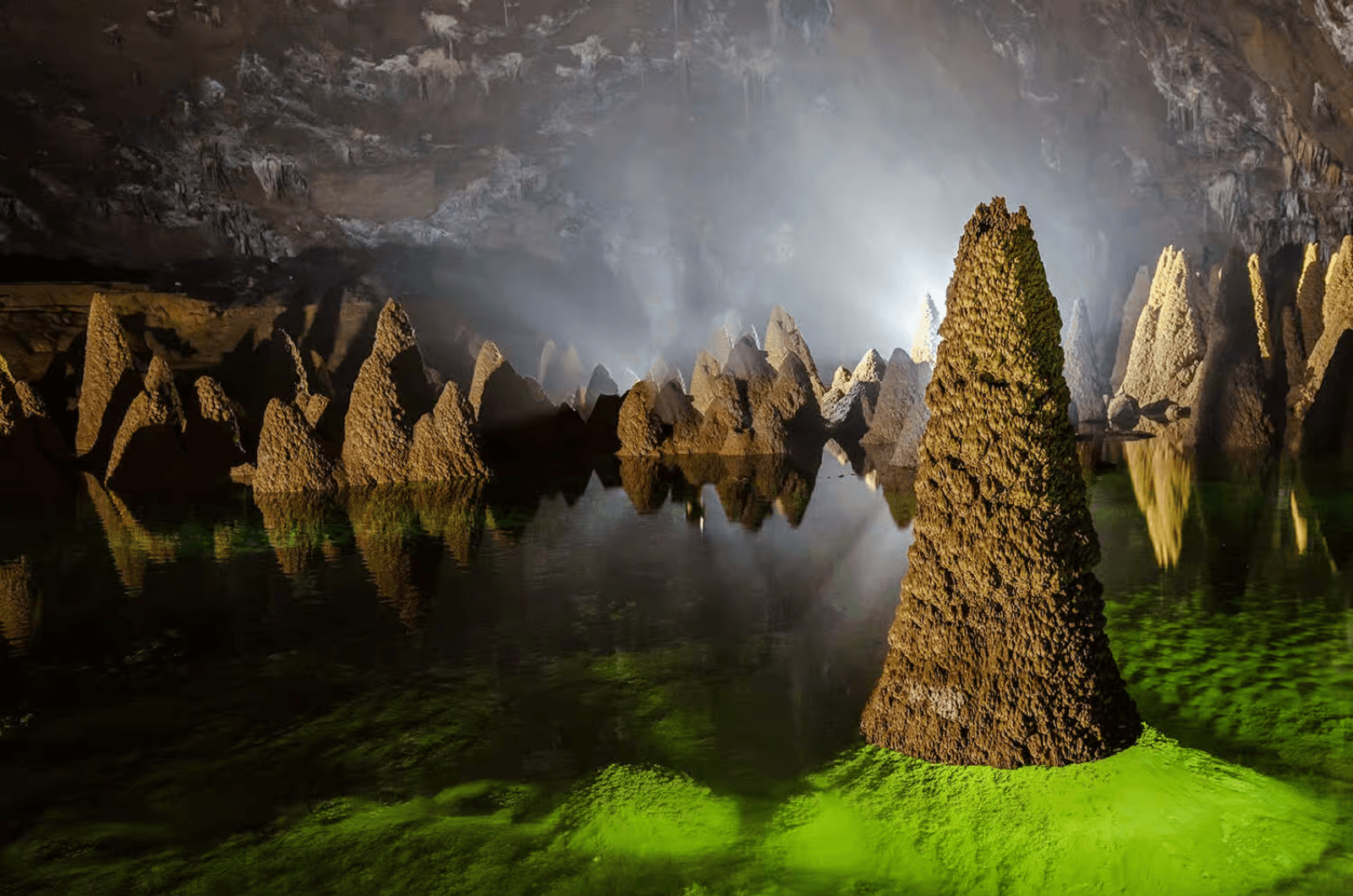
The exact formation mechanism of these conical tower stalagmites remains a mystery to scientists. The hypothesis put forward is a combination of features of tower cones and blunt-topped limestone towers. The soft mud layer covering the outside and the complex internal structure after flushing further add to their uniqueness.
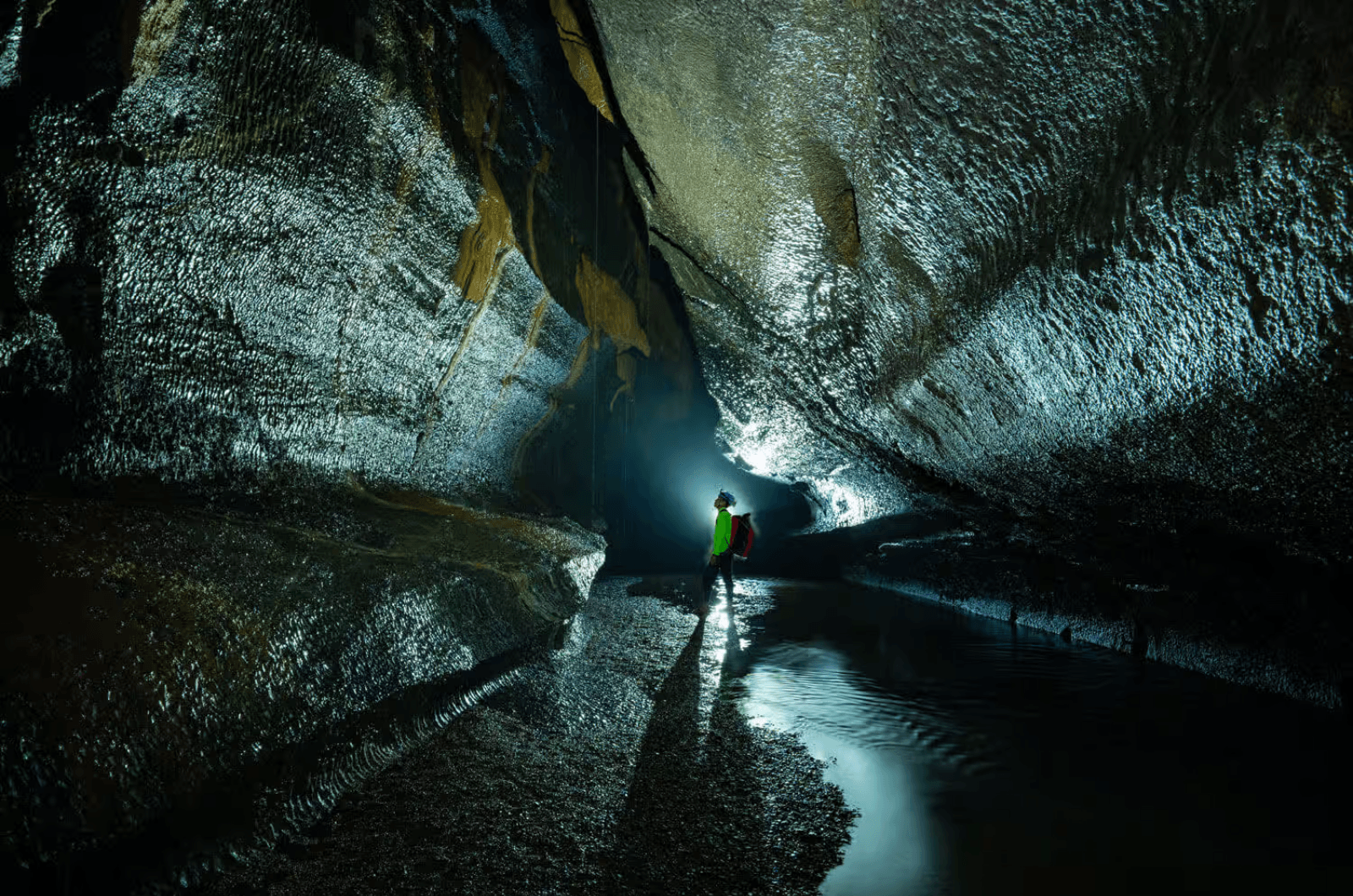
The uniqueness of Va Cave's geological system is not a random phenomenon but the result of a long and complex geological process spanning hundreds of millions of years. Understanding this history helps us better appreciate the natural and scientific value of this natural wonder.