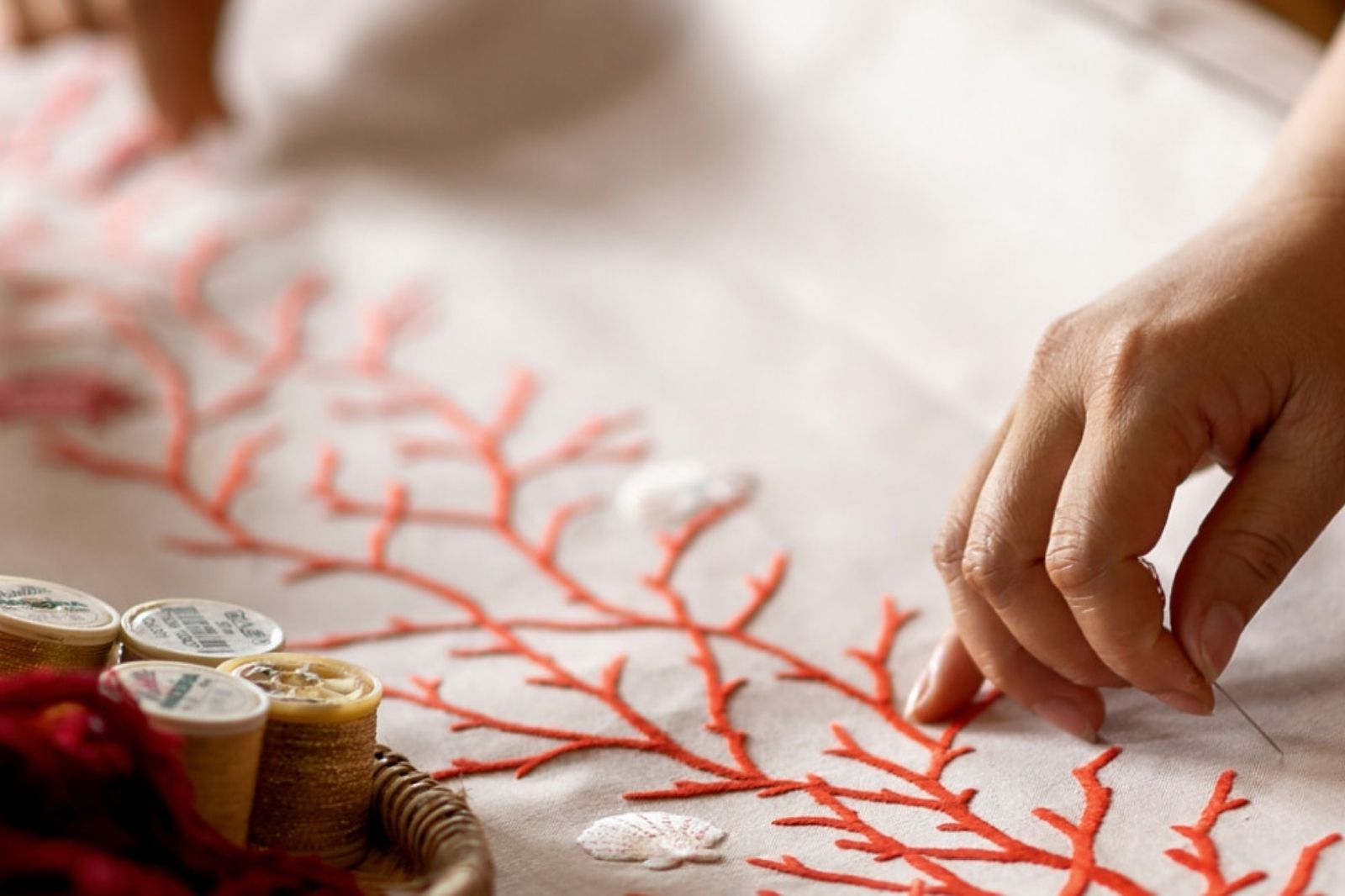
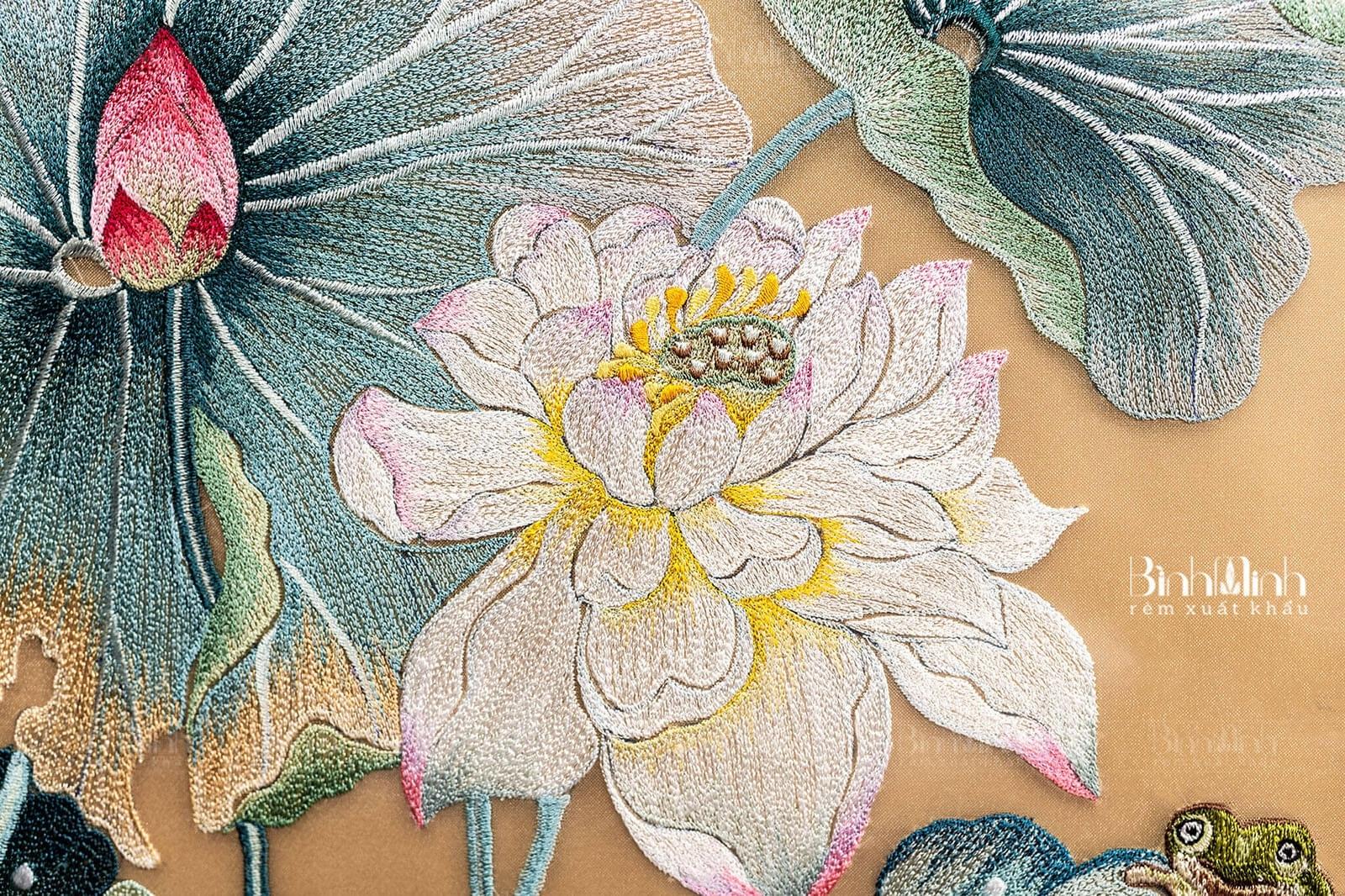
Van Lam lace embroidery craft village dates back to the Tran Dynasty (13th century), with a history of over 700 years. According to legend and historical documents, the craft originated from Lady Tran Thi Dung – wife of Imperial Grand Tutor Tran Thu Do. She instructed royal court maidens to teach royal court embroidery and lace techniques to the villagers of Van Lam. Initially, the products mainly served spiritual and cultural rituals, such as embroidering ceremonial robes, hats, parasols, and altar curtains in communal houses, temples, and shrines. This not only helped the craft village flourish but was also closely tied to the spiritual life of the community.
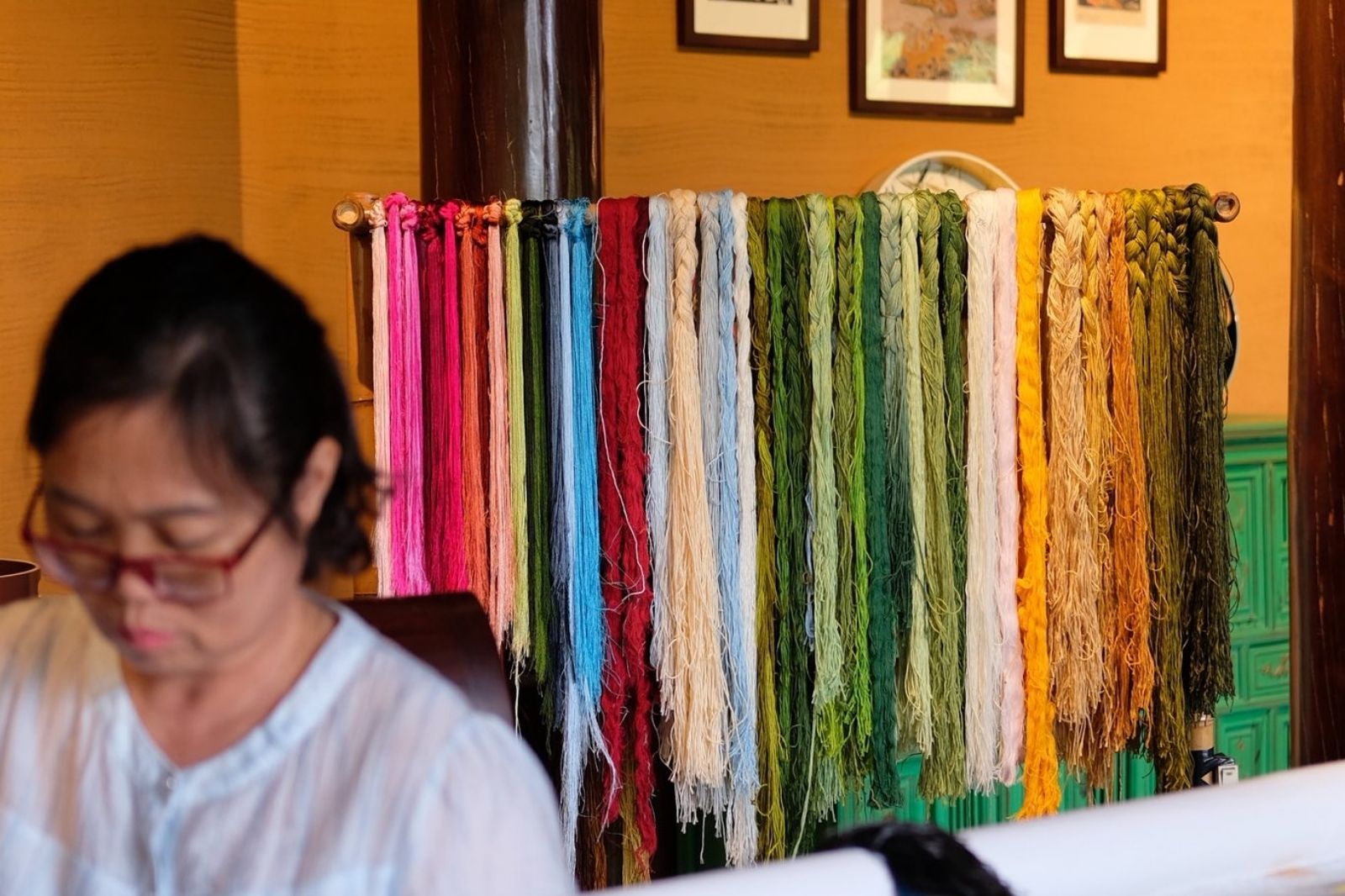
By the early 20th century, specifically in 1910 during the French colonial period, Van Lam lace embroidery entered a new chapter. Two villagers, Mr. Dinh Ngoc Henh and Mr. Dinh Ngoc Xoan, went to Hanoi to learn lace embroidery techniques (zen Jour – cutwork lace) from the French. After returning, they taught the villagers, combining traditional Vietnamese techniques with European methods, helping the craft village diversify its products and skills. Today, Van Lam is one of the only lace embroidery craft villages in Vietnam that still preserves the techniques of thread pulling and thread weaving, a unique secret that no machinery can replace.
The village also has a temple dedicated to the craft founders with a famous parallel sentence: “Fine artistic patterns passed down to posterity - Brilliant brocade talents admired by masters”, showing deep respect for ancestors. Through historical ups and downs, Van Lam lace embroidery craft has overcome the risk of fading away, becoming a recognized intangible cultural heritage, contributing to the richness of the ancient capital Hoa Lu's culture.