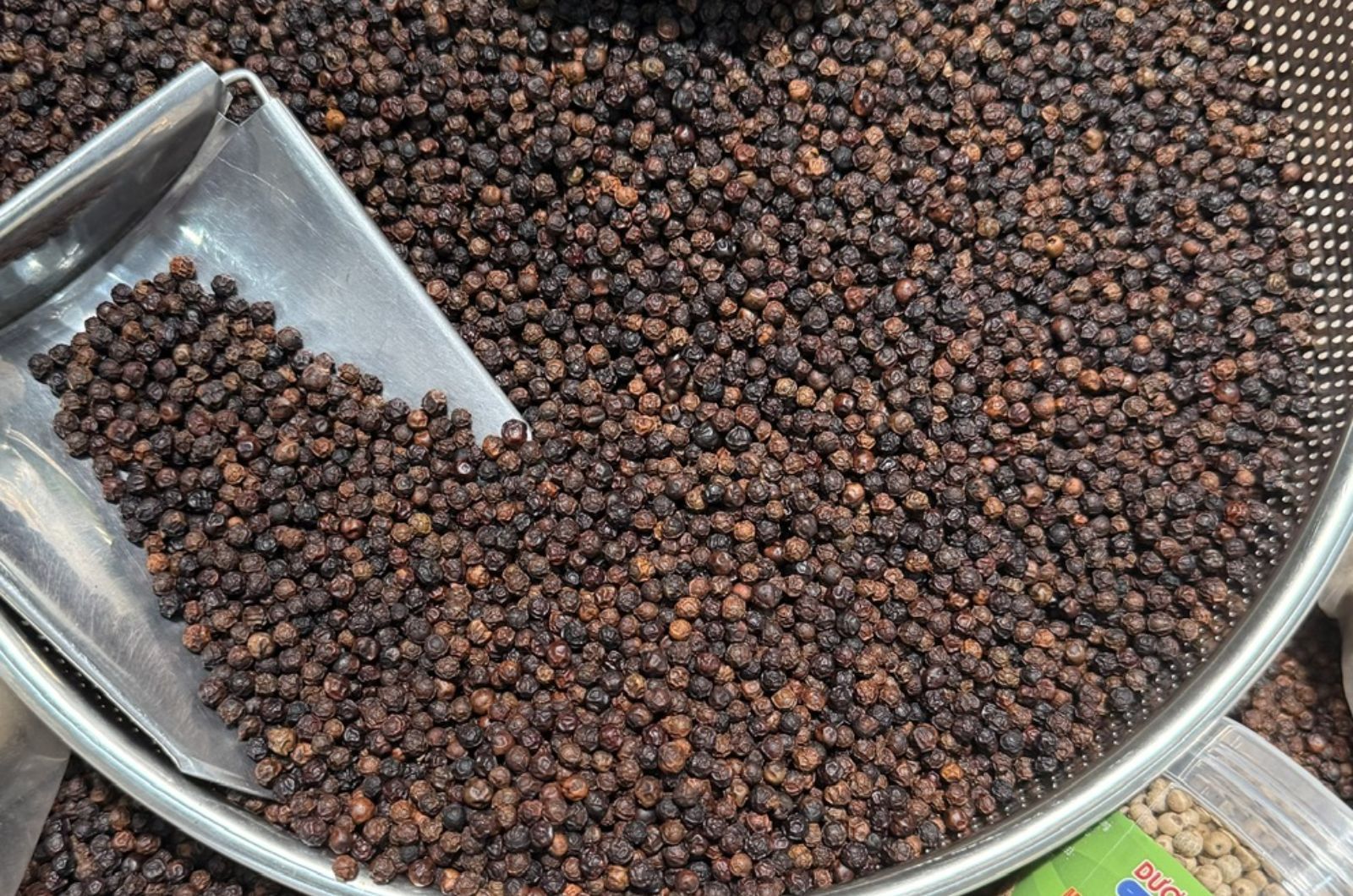
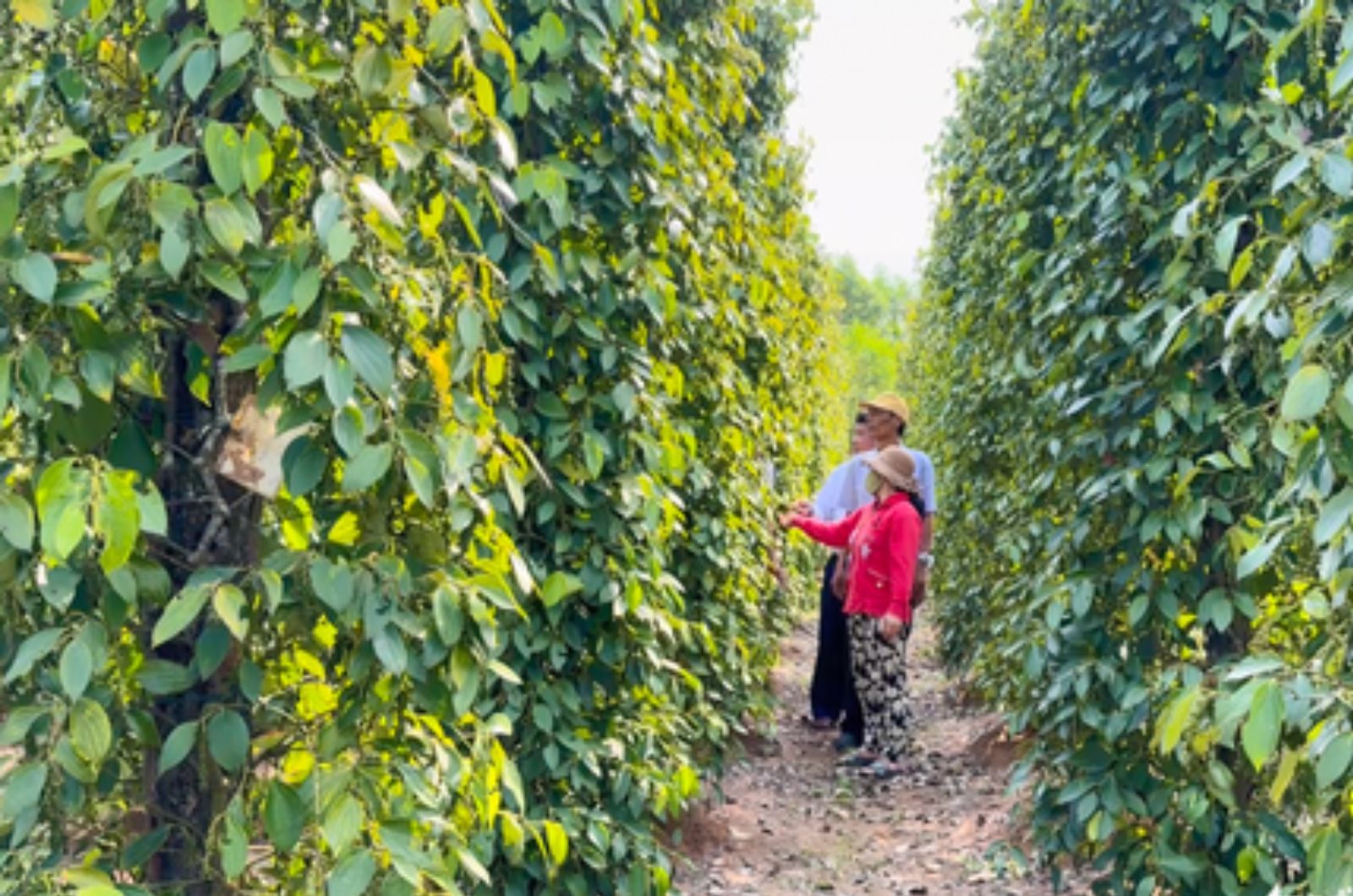
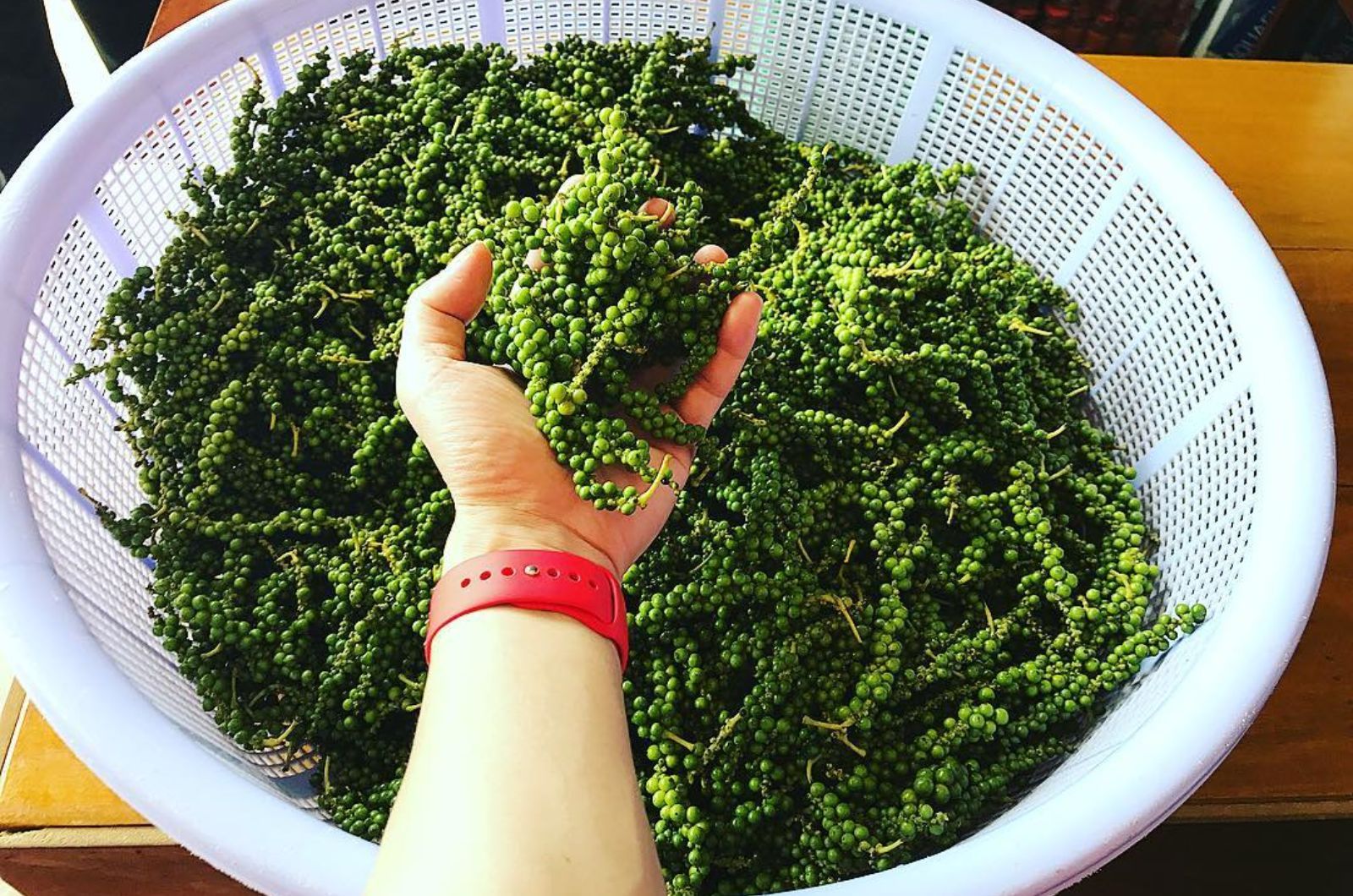
Phu Quoc has long been known as the “kingdom of pepper” in the Southwestern region, with a cultivation area of over 400 hectares, mainly concentrated in the Cua Duong and Cua Can areas (North Island). Pepper farming here dates back to the 19th century, when it was introduced by Chinese immigrants and gradually developed into one of the island's signature traditional agricultural sectors.
- Ideal natural conditions: Mineral-rich red basalt soil combined with a tropical monsoon climate and an average annual rainfall of 2,500 – 3,000 mm helps the pepper grains grow plump, thick-skinned, and rich in essential oils (4–6%), much higher than in many other growing regions.
- Traditional, sustainable cultivation methods: Locals use wooden pepper posts made from forest trees such as guava or kieng kieng, combined with organic fertilizers from composted fish, cow manure, etc., minimizing chemicals to ensure natural quality.
- Distinctive flavor: Phu Quoc pepper features an intense spiciness at the tip of the tongue, a subtle sweet aftertaste, and a lasting aroma, making it ideal for marinating seafood or using in gourmet dishes.
Thanks to these outstanding factors, Phu Quoc pepper is not only recognized as a national brand but is also widely exported to international markets, becoming a prominent symbol of agricultural and eco-tourism on the Pearl Island.