Visiting Trieu Viet Vuong Temple in Ninh Binh: Historical Imprints and Special Spiritual Values

Northern

Ninh Binh

Sovaba.travel

Updated at: 24/09/2026

1. Where is Trieu Viet Vuong Temple?

Trieu Viet Vuong Temple is located in Khu Dong Street, Yen Ninh Town, Yen Khanh District, Ninh Binh Province. The temple sits on a flat plot of land measuring approximately 1,775 m², about 10 km north of Ninh Binh City center. This location is quite convenient, situated near major transport routes such as National Route 10 and the Day River, making it easy for visitors to reach by motorbike, car, or bus from Hanoi (about a 2-hour drive).

Surrounding the temple is a peaceful setting with a pond in front, rice fields on both sides, and a access road at the back adjacent to the 27-7 Disabled Veterans Enterprise. This site is part of the Trieu Viet Vuong worship system in Ninh Binh, which features nearly 30 relics associated with this hero, mostly concentrated in Yen Khanh, Yen Mo, Kim Son, Gia Vien, and Hoa Lu districts. If you combine your visit with other sights, you can also drop by Duyen Phuc Temple (Khanh Hong Commune) or Tri Chinh Temple (Kim Chinh Commune) to gain a more comprehensive view of the cultural heritage of the ancient capital region. 
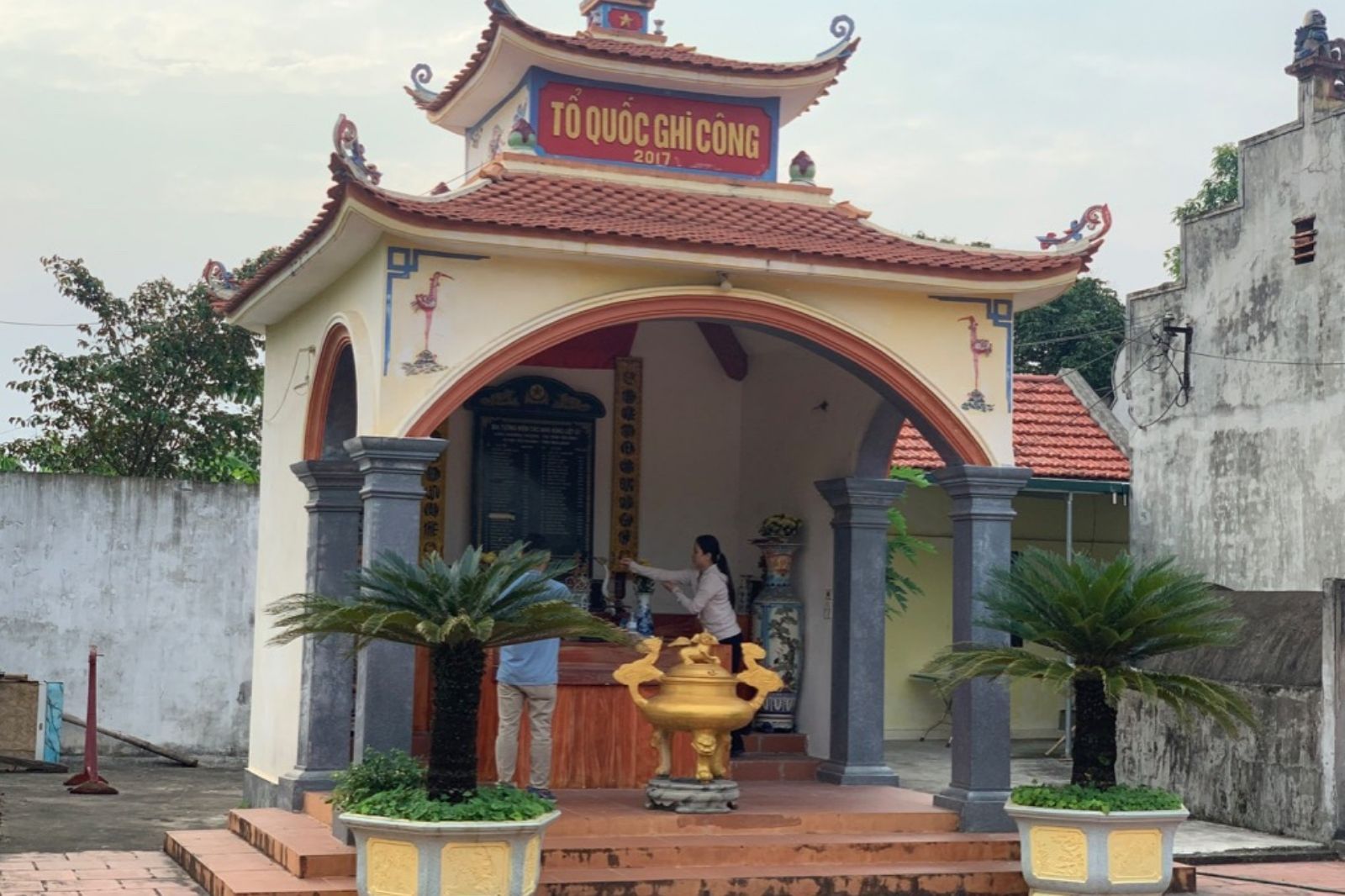
The temple has existed for a long time
Photo: The temple has existed for a long time 

2. History of Trieu Viet Vuong Temple

The establishment history of Trieu Viet Vuong Temple is closely tied to the Vietnamese tradition of honoring national heroes. The temple has existed for a long time, but over time it suffered damage due to natural disasters, human activities, and wars. Local residents have restored and repaired it numerous times for preservation, and to this day, the temple still retains the traditional architectural features of ancient Vietnamese temples and pagodas.

In 2008, the temple was recognized as a provincial-level historical and cultural relic, marking official state recognition of its historical and cultural value. The establishment of the temple serves not only to worship Trieu Viet Vuong but also to honor local figures from the Dinh, Le, Ly, Tran to Nguyen dynasties who contributed to building and defending the country. Set in the context of Ninh Binh as a region tied to the estuary of the Day River – where Trieu Viet Vuong committed suicide in 571 – the worship system here has become a symbol of loyalty and national spirit, with nearly 30 relics spread across districts along the river. This reflects the deep respect of the people for the king who contributed to safeguarding the independence of Van Xuan.

3. Who was Trieu Viet Vuong?

Trieu Viet Vuong, whose birth name was Trieu Quang Phuc (524–571), was a famous national hero in Vietnamese history during the Northern domination period. He was born in Chu Dien District (now part of Hai Duong Province and a portion of Hung Yen Province), the son of Grand Tutor Trieu Tuc – a patriotic local chieftain. From a young age, Trieu Quang Phuc was well known for his martial arts skills and unwavering loyalty to the monarch and nation.

In 542, he joined the uprising of Ly Bi against the Liang dynasty, playing a major role in gaining independence and founding the state of Van Xuan in 544. When Ly Nam De was surrounded by enemy troops, Trieu Quang Phuc was given command of the army and led the prolonged resistance war at Da Trach Marsh (Hung Yen), using guerrilla warfare tactics by night that left the Liang forces in dire straits for nearly 4 years. The people affectionately called him "Da Trach Vuong" (King of Da Trach) for his outstanding military talent.

Following the death of Ly Nam De in 548, Trieu Quang Phuc ascended the throne as Trieu Viet Vuong, reigning for 23 years (548–571) with his capital at Long Bien. He not only defeated foreign invaders but also focused on nation-building. However, in 571, ambushed by Ly Phat Tu, he committed suicide at the Dai Nha sea mouth (near the Day River, bordering Ninh Binh and Nam Dinh) to preserve his integrity. Trieu Viet Vuong is venerated by the people as a guardian deity, and Ninh Binh – the land linked to his martyrdom – has become the largest center of worship with a rich network of relics.

4. What makes the architecture of Trieu Viet Vuong Temple in Ninh Binh special?

The architecture of Trieu Viet Vuong Temple bears a strong imprint of Vietnamese traditions, built in the "tien nhat hau dinh" layout with three main sections: front hall (bai duong), middle hall (trung duong), and sanctuary (hau cung). The overall structure is harmonious, utilizing lim wood, blue limestone, and clay roof tiles, creating an ancient and solemn aesthetic.

  • Front Hall (Bai Duong): Comprises 5 bays, measuring 13.88m long and 5m wide, featuring wood-imitation cement columns, tile roof, and a 1.66m wide veranda. Highlights include dragon motifs bowing to the moon on the roof, a horizontal plaque reading "Da Trach uy phong", and ceremonial items such as palanquins and altars.
  • Middle Hall (Trung Duong): 3 bays, measuring 6.74m long and 6.22m wide, with lim wood beams and tile roofing. At the center is the main altar featuring a worship throne, twin dragon incense burner, and a plaque reading "Toi linh tu" (1.75m high, 0.65m wide, gilded and lacquered red). The two sides honor local notables from past dynasties, with a three-door gate leading to the sanctuary.
  • Sanctuary (Hau Cung): 2 bays, measuring 4.35m long and 3m wide, serving as the primary place of worship for Trieu Viet Vuong and Tran Hung Dao. Notable features include an intricately carved rectangular altar cabinet housing royal decrees, and a statue of Trieu Viet Vuong (about 1.34m tall, wearing a yellow royal robe and crown) inside a glass display.

What makes the temple special is its combined worship of Trieu Viet Vuong, Tran Hung Dao, and local historical figures, creating a multi-layered spiritual value. The dragon and phoenix motifs, couplets, and ancient worship artifacts reflect the sculptural art of the Nguyen Dynasty, turning the temple into a living museum of Ninh Binh's historical culture.

5. Trieu Viet Vuong Temple Festival and traditional rituals

The festival at Trieu Viet Vuong Temple offers an occasion for local people to commemorate the hero's contributions, with activities taking place throughout the year according to the lunar calendar. Key ceremonies include:

  • 6th day of the 1st lunar month: Trieu Viet Vuong's birthday anniversary, opened with drums and gongs sounded by local leaders, drawing residents to offer incense.
  • 10th day of the 2nd lunar month: Te Ky Phuc Ceremony, praying for peace and prosperity.
  • 14th day of the 8th lunar month: Main death anniversary of Trieu Quang Phuc, featuring solemn ritual ceremonies.
  • 20th day of the 8th lunar month: Tran Dynasty Commemoration, combining the worship of Tran Hung Dao.
  • 20th day of the 9th lunar month: New Rice Offering Ceremony, expressing gratitude to heaven and earth.
  • 25th day of the 12th lunar month: Year-end Ceremony to conclude the old year.

Traditional rituals include incense offerings, formal prayers in traditional attire, lion dances, and folk music performances. The festival is not only spiritual but also educates people on patriotic traditions, with the participation of local Party committees, People's Committees, and the Fatherland Front. If visiting during festival times, you will experience a vibrant atmosphere, but remember to avoid pushing and help maintain cleanliness.

6. Tips for visiting Trieu Viet Vuong Temple

To make your visit to Trieu Viet Vuong Temple meaningful and smooth, keep in mind the following practical tips:

  • Ideal time to visit: Spring (1st–3rd lunar months) when the weather is pleasant and festivals take place, or autumn to avoid heavy rains and floods. Opening hours are usually from 7:00 AM to 5:00 PM, with free admission.
  • Getting there: From Hanoi, follow the Phap Van - Cau Gie Expressway to Ninh Binh, then turn onto National Route 10 toward Yen Khanh. If taking a bus, get on a Hanoi - Ninh Binh route and transfer to a motorbike taxi or taxi (approx. 50,000–100,000 VND). Combine your trip with nearby attractions like Hoa Lu Ancient Capital or Trang An to optimize your itinerary.
  • Etiquette & guidelines: Dress respectfully (long sleeves, long pants), avoiding short or revealing clothing as this is a sacred place. Bring drinking water and sunscreen, and refrain from picking flowers or littering. If taking photos, ask the management board for permission to respect the spiritual space.
  • Dining & accommodation: Near the temple, local eateries serve famous Ninh Binh specialties such as mountain goat meat and crispy rice. If staying overnight, opt for homestays in Yen Ninh or hotels in Ninh Binh City (prices from 300,000 VND/night).

Visiting the temple not only gives you relaxation but also lets you learn about history and nurture national pride. If you have the opportunity, do drop by to feel the special spiritual value of this land!

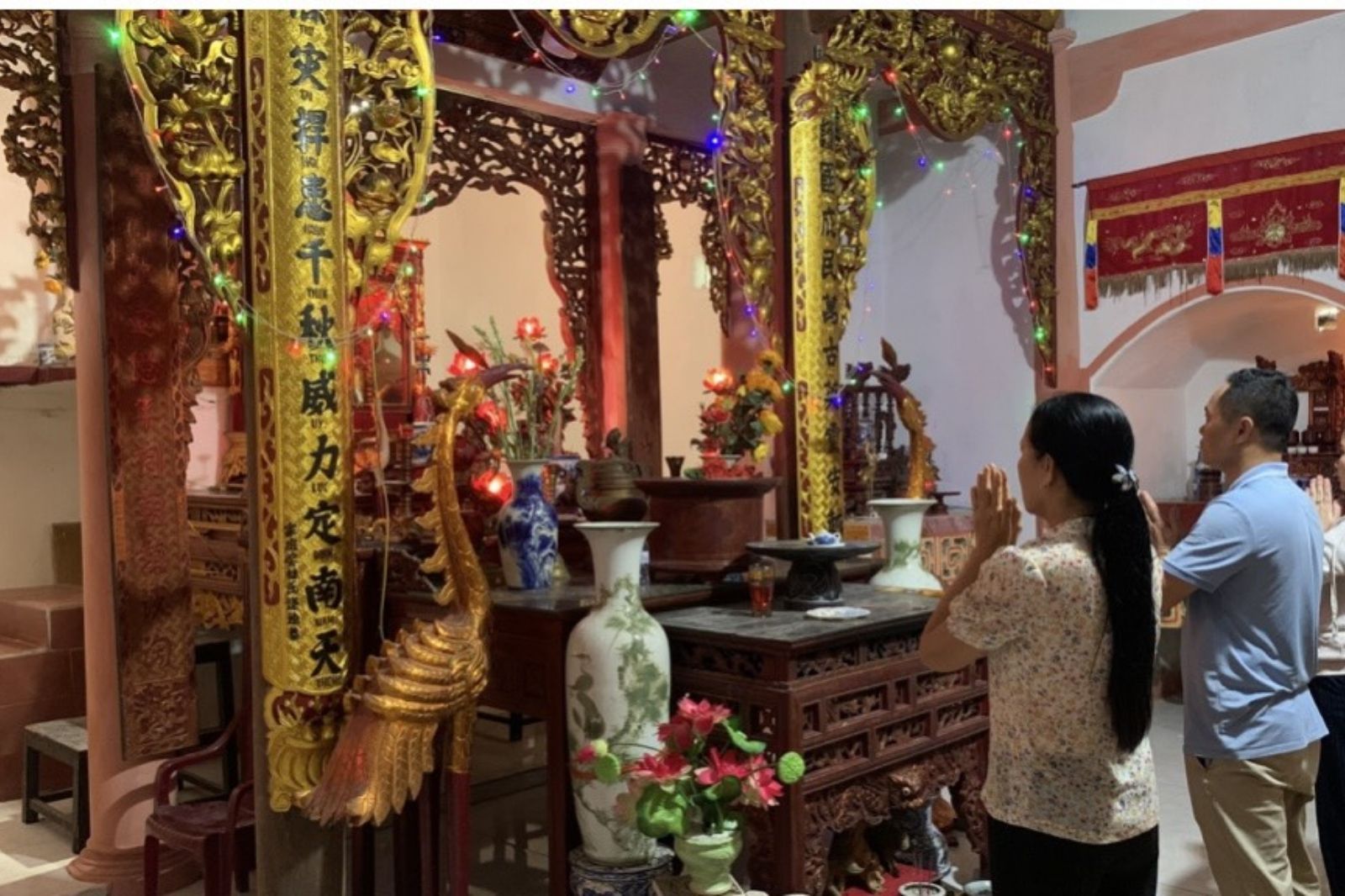
Tourists offering incense at the temple
Photo: Tourists offering incense at the temple 

Visiting Trieu Viet Vuong Temple, travelers carry home not only valuable historical knowledge but also deep emotions regarding the indomitable spirit and desire for independence of the Vietnamese nation. Amidst the sacred ambiance of Ninh Binh, the temple serves as a bridge connecting past and present, reminding every generation of their responsibility to preserve and cherish the historical values forged over time. If you have a chance to visit Ninh Binh, do not miss the opportunity to stop by Trieu Viet Vuong Temple to fully experience the cultural, historical, and spiritual depth of this destination. It is not just a sightseeing stop, but a journey back to the roots that makes your trip more meaningful and complete.

Loading......

Featured destinations