Why Was Tu Lan Cave Chosen as a Filming Location for "Kong: Skull Island"?
Central
Quang Binh
Sovaba.travel
Updated at: 24/09/2026
1. Introduction to Tu Lan Cave
Tu Lan is a majestic cave system formed by more than 20 large and small caves, hidden among dense forests and rolling karst hills of Tan Hoa Commune, Minh Hoa District, Quang Binh Province. Located about 70km northwest of Phong Nha – Ke Bang National Park, Tu Lan possesses a wild beauty isolated from modern life.
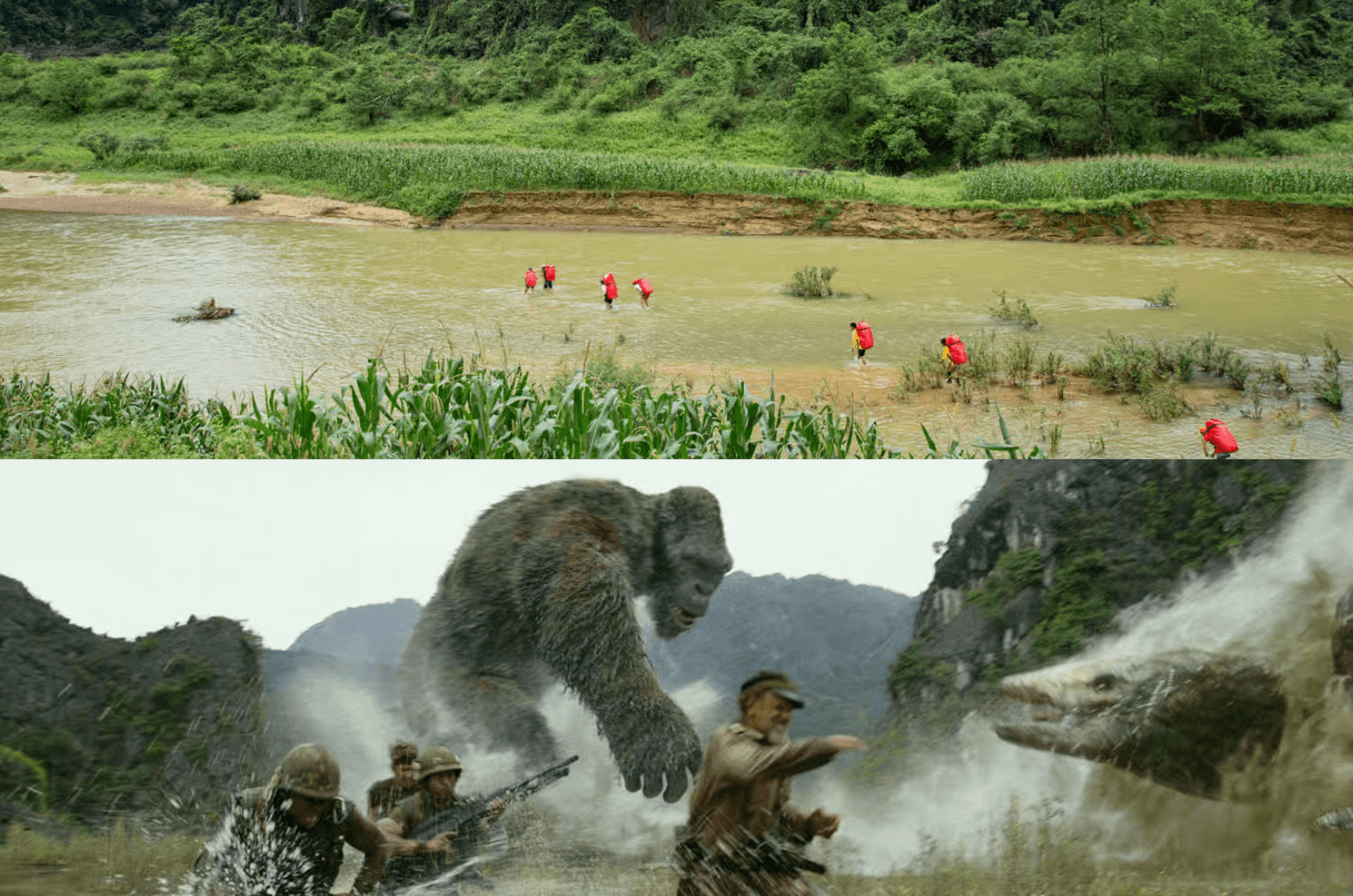
One of the highlights that tourists or audiences who watched the movie Kong: Skull Island might recognize is the Rao Nan River – a poetic, winding river flowing past lush green grasslands and stretching peanut fields, located right in front of Chuot Cave – one of the iconic caves of the Tu Lan system. This is also the unique backdrop contributing to the wild and mystery-filled world in the Hollywood blockbuster.
Photo: Tu Lan Cave System possesses a majestic and pristine beauty
2. Why was Tu Lan chosen as a filming location for Kong: Skull Island?
It was no coincidence that director Jordan Vogt-Roberts – the man behind the blockbuster Kong: Skull Island (2017) – chose Tu Lan as one of the main filming locations in Vietnam. Among hundreds of surveyed locations across Asia, Tu Lan left a strong impression due to many special factors, perfectly matching the director's artistic vision and the movie's set requirements.
Pristine and Majestic Natural Beauty
Tu Lan Cave lies deep within a vast primary forest, surrounded by rolling limestone mountain ranges. The landscape here retains its wild, magnificent charm with fast-flowing underground rivers, lush green valleys, and magnificent stalactite systems, barely touched by human presence. This beauty fits perfectly with the image of "Skull Island" - a mysterious, unexplored land full of surprises.
Diverse and Rugged Terrain
The Tu Lan cave system features complex terrain with limestone mountains, valleys, rivers, streams, and caves of varying difficulty levels. This diversity and ruggedness create an ideal setting for an island teeming with dangerous creatures and tough challenges faced by the expedition team in the movie.
Untouched Nature with Minimal Human Traces
One of the crucial elements to creating an authentic "Skull Island" is its untouched nature, free from traces of modern civilization. Tu Lan Cave, with its almost intact natural beauty, met this requirement, allowing the film crew to easily recreate a mysterious, unexplored land.
Natural Light and Colors
Natural light streaming into the caves, combined with the green of trees, the grey of rocks, and the clear blue water, creates impressive and emotionally rich cinematic frames. The diversity of natural light and colors at Tu Lan brought frames that are both majestic and mystical to "Kong: Skull Island".
Support and Cooperation from Local Authorities
The authorities of Quang Binh province provided favorable conditions and cooperated closely with the film crew during scouting and filming at Tu Lan Cave. This support was a crucial factor helping the crew execute scenes smoothly and effectively.
Photo: Tu Lan makes a strong impression with many special factors
Selecting Tu Lan Cave as a filming location for a blockbuster like "Kong: Skull Island" provided an opportunity to promote the stunning natural scenery of Quang Binh worldwide, attracting international travelers and contributing to boosting local tourism.
3. Impressive scenes at Tu Lan Cave in "Kong: Skull Island"
True to its magical appeal, Tu Lan Cave became a real "star" on the big screen in the blockbuster "Kong: Skull Island". The wild and unique beauty of this cave system created highly impressive scenes, contributing to portraying a "Skull Island" that is both mysterious and majestic.
Tu Lan Valley: Featuring lush green grasslands surrounded by limestone mountains, Tu Lan Valley appears as a peaceful prehistoric land, contrasting with the lurking dangers of "Skull Island". This is where the expedition team first set foot and began exploring the strange island.
Rao Nan River: The winding river flowing through Tu Lan Valley became a stunning setting in the movie. The scene of the helicopter flying along the river, flanked by towering limestone cliffs, left a powerful impression of Quang Binh's pristine and majestic beauty. Notably, this was also the location for a crucial scene featuring the character played by actor Samuel L. Jackson.
Chuot Cave: One of the caves in the Tu Lan system, Chuot Cave with its unique entrance and magnificent interior space also appeared in the film. The cave's pristine beauty and unusual stalactites contributed to the mystery and danger of "Skull Island".
Ken Cave: With its fast-flowing underground river and beautiful stalactites, Ken Cave delivered impressive underwater shots, showcasing the rugged yet mesmerizing allure of local nature.
Adventurous Shots: To heighten the sense of adventure and drama in the film, the crew capitalized on Tu Lan's rugged terrain—featuring sheer cliffs, jungle trails, and underground rivers—to create breathtaking action sequences.
The footage shot at Tu Lan Cave not only highlighted Vietnam's extraordinary natural beauty but also played a key role in building an authentic and vibrant "Skull Island", captivating millions of viewers worldwide.
Photo: Tu Lan Cave serving as a set for "Kong: Skull Island" leaves a strong mark on Quang Binh tourism
Choosing Tu Lan Cave as a backdrop for "Kong: Skull Island" was not just coincidental, but a clear testament to the untouched, majestic, and unique beauty that Vietnam's nature possesses. From lush green valleys and winding rivers to marvelous cave systems, Tu Lan delivered impressive cinematic moments, helping build a mysterious and captivating "Skull Island". The appearance of Tu Lan on the silver screen not only enhanced the artistic value of the film but also opened up strong tourism promotion opportunities for Quang Binh and Vietnam.