Chùa Khai Nguyên
TRAVEL GUIDEKhai Nguyen Pagoda

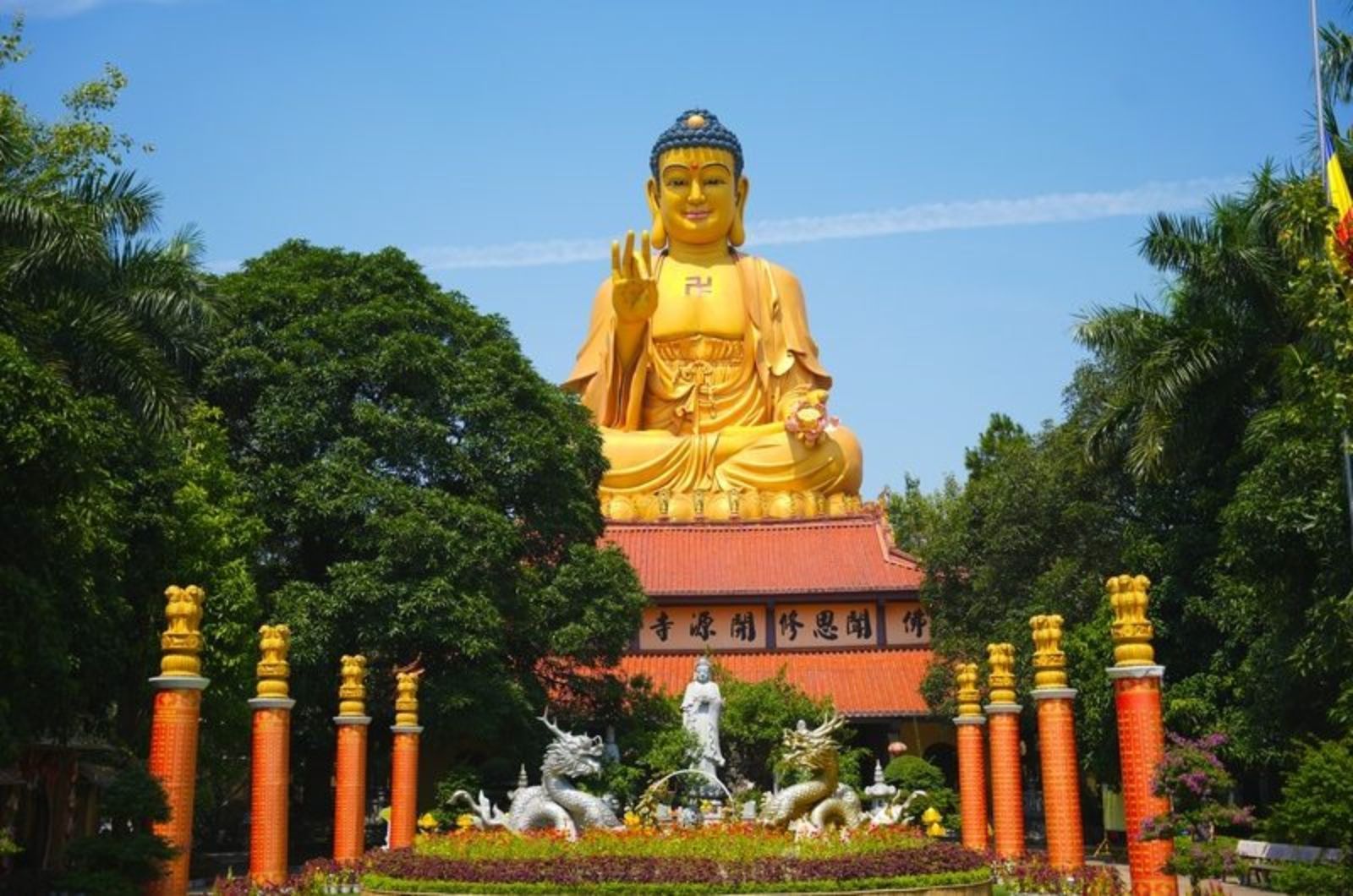
Khai Nguyen Pagoda is one of the prominent spiritual destinations in Hanoi, attracting a large number of Buddhists and tourists due to its peaceful atmosphere and the 72m-tall Great Amitabha Buddha Statue – one of the largest Buddha statues in Southeast Asia. Not only a place of worship and prayer for peace, Khai Nguyen Pagoda also boasts a unique Buddhist architectural complex, lush green landscapes, and many structures of great cultural and historical value.

If you are planning to visit this famous pagoda but do not know when to go, how to get there, or which spots to explore within the pagoda grounds, the detailed Khai Nguyen Pagoda travel guide from A to Z below will provide you with comprehensive information and useful experience. From history, architecture, opening hours, and transportation to crucial notes, everything is covered to help you have a complete and meaningful pilgrimage and exploration journey.
Where is Khai Nguyen Pagoda Located?

Khai Nguyen Pagoda is located in Tay Ninh Village, Son Dong Commune, Son Tay Town, Hanoi. Situated in the tranquil countryside of Xu Doai, the pagoda is approximately 40-46 km from Hanoi city center, taking around 1 hour to 1 hour 15 minutes by road. This location offers a great advantage: a serene atmosphere close to other historical and cultural heritage sites such as Dong Mo Lake, Duong Lam Ancient Village, Son Tay Ancient Citadel, and Mia Pagoda. It is an ideal destination for a one-day trip from Hanoi combining sightseeing and cultural discovery.

Opening Hours: Usually from 7:00 AM to 8:00 PM daily (including holidays and Tet). Entrance is free, but visitors are encouraged to bring sincere hearts and a small donation for merit.

Khai Nguyen Pagoda
Photo: Khai Nguyen Pagoda

History and Spiritual Significance of Khai Nguyen Pagoda

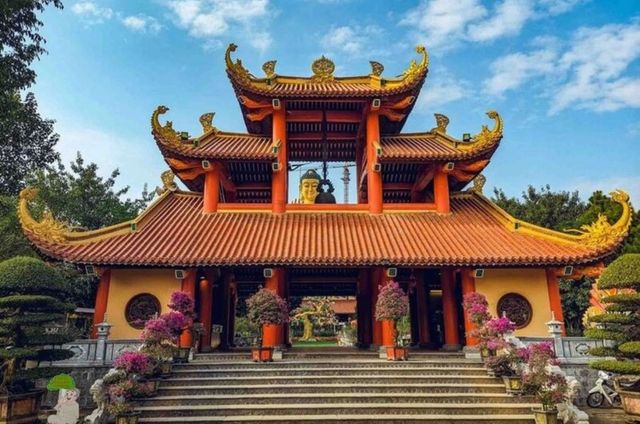
Spanning centuries of history, Khai Nguyen Pagoda is not only a sacred ancient temple but also a prominent cultural and Buddhist symbol of the Son Tay region. According to historical documents, the pagoda was founded in the first half of the 16th century during the Early Le Dynasty, originally named Co Lieu Tu or Cheo Pagoda. Over time, it underwent numerous restorations, notably in 1759, 1981, and especially a major reconstruction starting in 2006 under Venerable Thich Dao Thinh. As a result, Khai Nguyen Pagoda today boasts a spacious and majestic appearance while preserving its inherent architectural values and ancient charm.

Beyond its historical significance, Khai Nguyen Pagoda serves as a major Buddhist center in the region. It currently preserves valuable relics such as stele inscriptions from the Canh Hung (1759) and Gia Long (1816) eras, as well as a bronze bell from the Tu Duc era (1870), reflecting the pagoda's formation and development over centuries.

The most impressive highlight is the 72m-tall Giant Amitabha Buddha Statue – one of the largest Buddha statues in Southeast Asia, symbolizing compassion, wisdom, and the aspiration for peace and happiness. Furthermore, Khai Nguyen Pagoda hosts many Buddhist activities and traditional festivals such as Vesak (Buddha's Birthday), Ullambana (Vu Lan Festival), and Avalokiteshvara Festival, drawing many Buddhists and tourists to worship, pray for peace, and find spiritual tranquility. Today, Khai Nguyen Pagoda is not only a well-known pilgrimage destination but also a unique cultural and spiritual haven that helps preserve and spread the core values of Vietnamese Buddhism in modern life.

The pagoda, also known as Co Lieu Tu
Photo: The pagoda, also known as Co Lieu Tu

How to Get to Khai Nguyen Pagoda

Khai Nguyen Pagoda is located in Son Tay Town, about 40–46 km from downtown Hanoi, with a travel time of around 1 hour. Thanks to a convenient transportation network, visitors can easily reach the pagoda using various means of transport.

  • Motorbike / Private Car (Recommended): From central Hanoi, follow Thang Long Boulevard - Hoa Lac Overpass - National Highway 21A or National Highway 32 - Provincial Road 82. Use Google Maps for the most accurate route (approx. 40–46 km). Roads are spacious and easy to navigate.

  • Bus (Budget-friendly): Take bus route 74 from My Dinh Bus Station to Xuan Khanh (Son Tay). After getting off, walk or take a taxi/motorbike taxi (Xe ôm) for about 5 km to reach the pagoda. High frequency, around every 10 minutes.

  • Taxi / Grab / Shuttle Service: Ideal for families or elderly travelers. Services like Xanh GSM are convenient and safe.

Note: Avoid peak hours (early morning or late afternoon on weekends) to skip traffic jams. If visiting during major festivals, setting off early is recommended.

Must-Try Experiences at Khai Nguyen Pagoda

More than just a famous spiritual destination in Son Tay, Khai Nguyen Pagoda impresses visitors with its grand architectural scale and numerous works of cultural, artistic, and Buddhist value. Every spot within the complex offers visitors unique experiences, from worshipping and learning about history to enjoying a tranquil setting.

  • The Largest Amitabha Buddha Statue in Southeast Asia: Standing at 72m with a base area of 1,200 m², construction began in 2015. The Buddha statue sits majestically in the lotus position, with the right hand making the Vitarka Mudra (teaching gesture) and the left hand holding a lotus flower. Inside, there are 13 floors (12 floors dedicated to Bodhisattvas, and an underground floor replicating the Six Realms of Reincarnation with 18 levels of hell). This is the most impressive highlight, offering an appreciation of sculptural art and Buddhist philosophy.

  • System of Nearly 2,000 Buddha Statues: Inside the Main Sanctuary (Tam Bao), there are 1,975 statues of various sizes, combining traditional "Noi Cong Ngoai Quoc" architecture and "Tien Phat Hau To" arrangement. The dignified space helps visitors easily pray for peace.

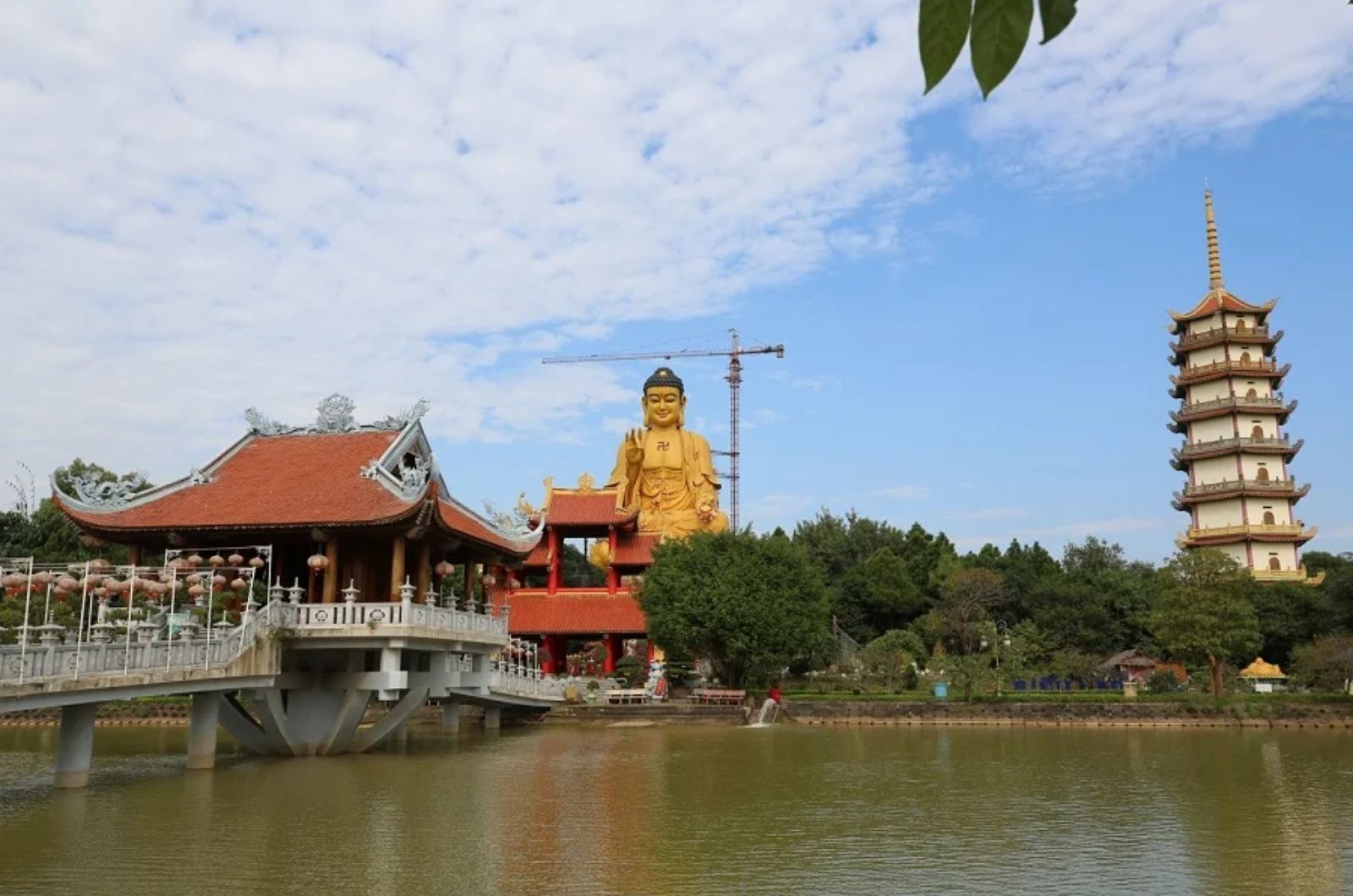
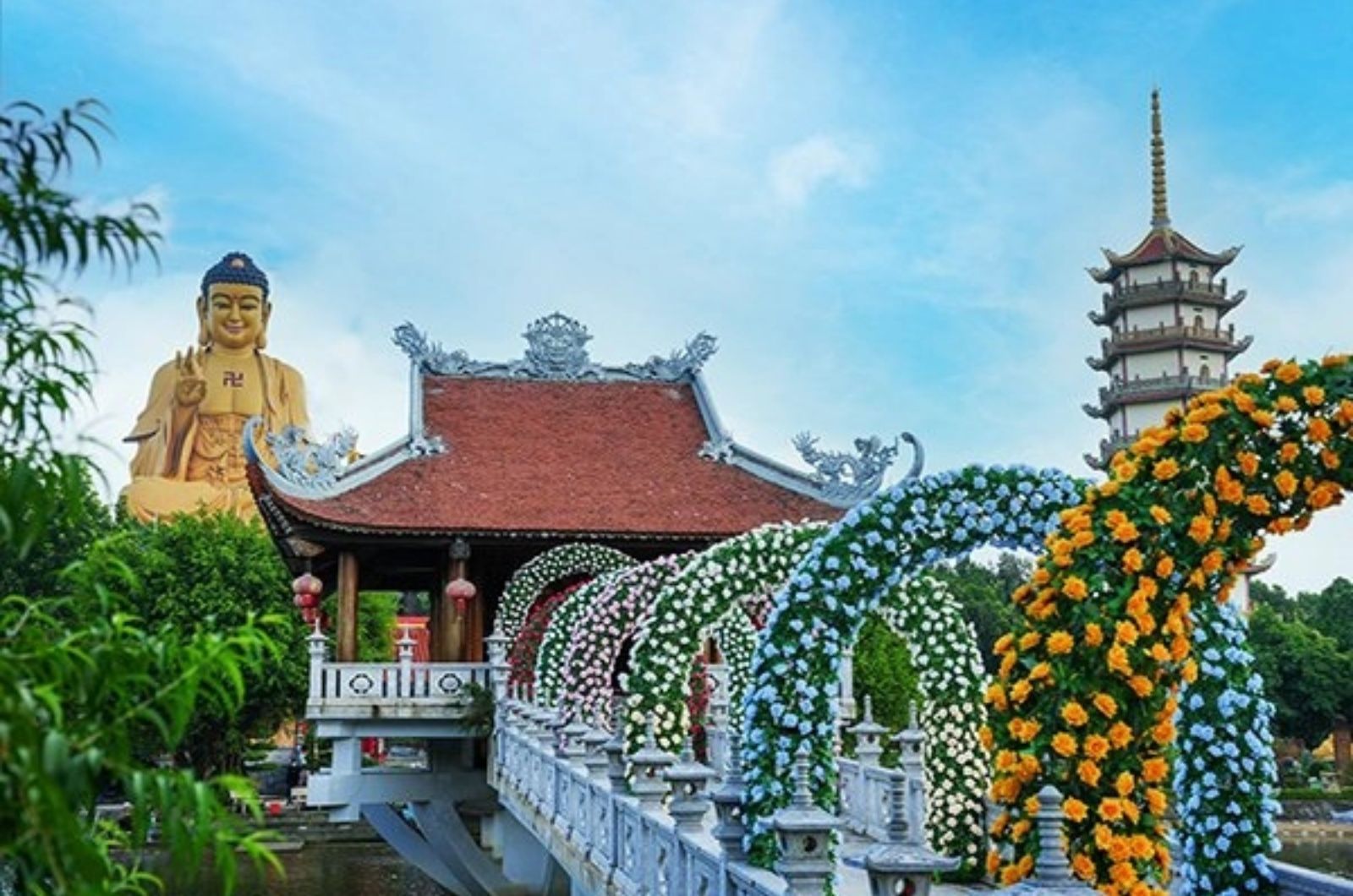
  • Bao An Tower and Auxiliary Works: The tower houses Buddha relics, a bell tower, a drum tower, a release pond, and a replica of the One Pillar Pagoda on a clear blue lake.

  • Serene Space and Festivals: Stroll around the lake and participate in traditional festivals (Spring Opening, Avalokiteshvara Festival on February 19th lunar calendar, Vu Lan, Vesak). Early in the year or on full moon and first days of the lunar month, the atmosphere is solemn and vibrant.

  • Combine with Nearby Sightseeing: Visit Duong Lam Ancient Village, Dong Mo Lake, and Son Tay Ancient Citadel to enrich your itinerary.

Amitabha Buddha Statue

Photo: Amitabha Buddha Statue

Khai Nguyen Pagoda is not only a well-known spiritual landmark in Hanoi but also a hub of unique historical, cultural, and Buddhist architectural values. We hope this detailed A–Z Khai Nguyen Pagoda travel guide provides helpful insights for planning a meaningful pilgrimage, covering transportation, visiting times, and top highlights. If you want to enjoy a smooth trip without planning it yourself, you can choose the All-Inclusive Khai Nguyen Pagoda Tour by Sovaba Travel. Thoughtfully designed with transportation, professional guides, and an itinerary combining top spots like Duong Lam Ancient Village, Mia Pagoda, and Son Tay Ancient Citadel, it promises a complete one-day cultural and spiritual journey.

Articles related to Khai Nguyen Pagoda