Discovering the Tomb of King Gia Long: The Great Legacy of the Founder of the Nguyen Dynasty
The Tomb of King Gia Long, nestled amidst the peaceful beauty of Hue, is not only a historical monument but also a vivid symbol of the Nguyen Dynasty. Built to honor King Gia Long, the founder of this dynasty, the tomb complex not only records historical imprints but also showcases the sophistication and grandeur of the architectural art of that era.
An Overview of the Tomb of Emperor Gia Long
To better understand what makes the Tomb of Emperor Gia Long so special, let us first explore its location and surrounding natural landscape.
Location and Nestled Setting in Nature
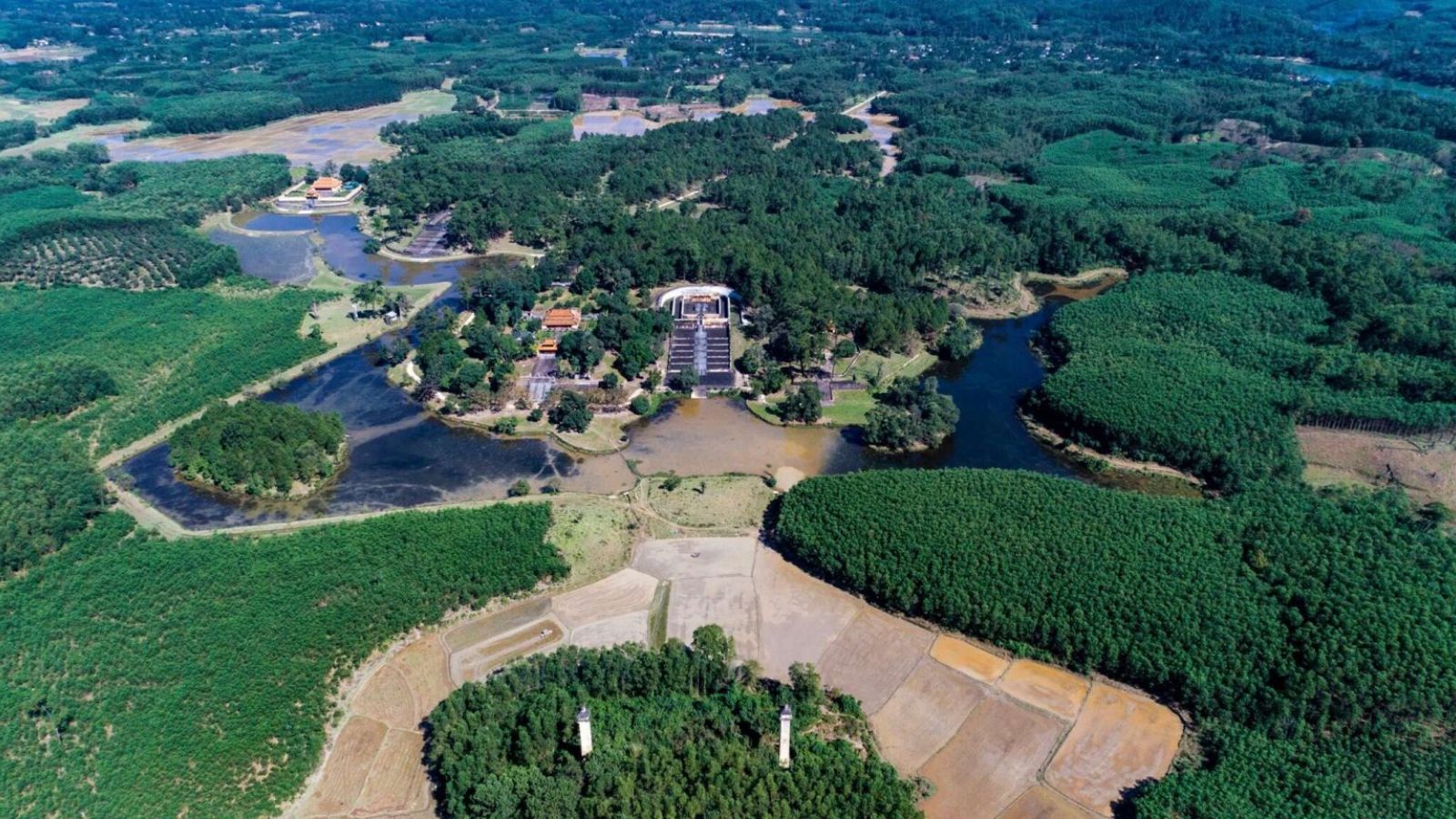
The Tomb of Emperor Gia Long is located on Thien Tho Mountain, approximately 20 km northwest of Hue city center. This location was chosen for its harmonious blend of geographical features and natural surroundings. Perched on elevated ground, the tomb complex is not only visible from afar but also exudes majesty and solemnity. Surrounded by lush green hills and near the Phu Xuan River, the tomb evokes a sense of tranquility and perfect harmony with nature. This strategic position not only shows respect for Emperor Gia Long but also honors the unity between architectural structure and the surrounding environment.
The location of the tomb complex within the natural landscape.
Construction History and Stories Behind the Tomb
The Tomb of Emperor Gia Long was built in 1804 and stands as an important part of the Nguyen Dynasty's historical heritage. Designed under the direction of Emperor Gia Long himself (born Nguyen Anh), this tomb complex serves not only as his final resting place but also as a symbol of the founding and stability of the Nguyen Dynasty. After unifying the country and ascending the throne in 1802, Emperor Gia Long chose Thien Tho Mountain for the construction of his tomb, a location that embodies both feng shui principles and aesthetic harmony.
The construction history of the tomb is closely linked with Emperor Gia Long's continuous efforts to consolidate and honor the new dynasty. The work spanned several years, involving numerous skilled architects and master artisans. The tomb complex includes various auxiliary structures such as main gates, temples, and stone steles, each carrying profound historical and cultural significance.
One of the notable stories is how Emperor Gia Long selected the tomb's location based on feng shui principles to ensure peace and longevity for the dynasty. The structures within the complex are intricately carved, reflecting the artistic and cultural refinement of the era. The tomb complex is not just the resting place of Emperor Gia Long, but also a testament to his greatness and foresight in establishing an enduring dynasty.
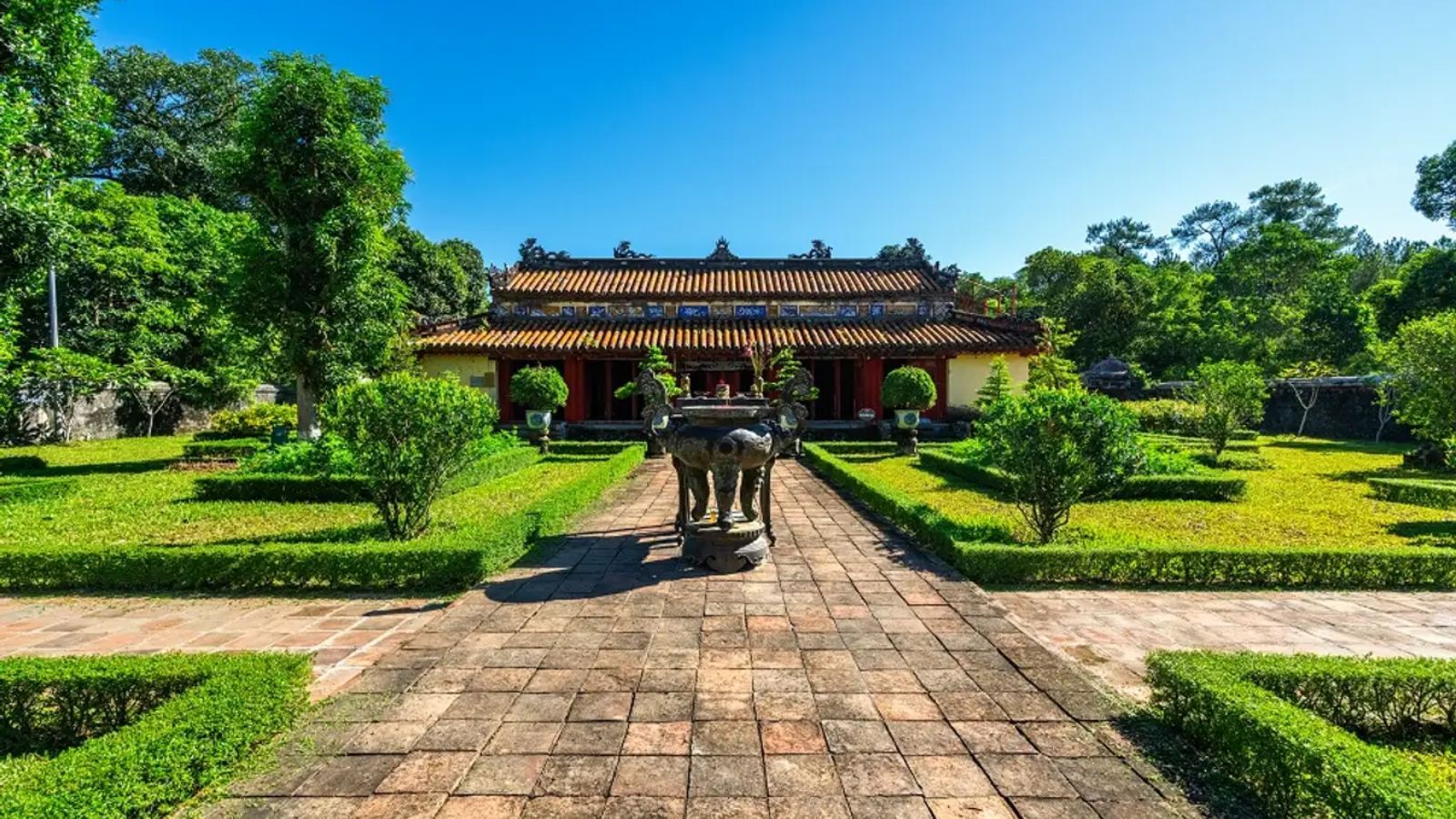
The inner grounds of Gia Long Tomb, built symmetrically and in harmony with nature.
Unique Architecture and Enduring Beauty of the Tomb of Emperor Gia Long
The Tomb of Emperor Gia Long stands out for its unique architecture and the flawless integration between structural design and natural surroundings. The main tomb structure is built in the shape of the character "T", featuring a grand and solemn layout. The central tomb sits within an expansive complex, supported by a solid foundation, stone pillars, and high vaulted roofs, all intricately carved and harmoniously arranged.
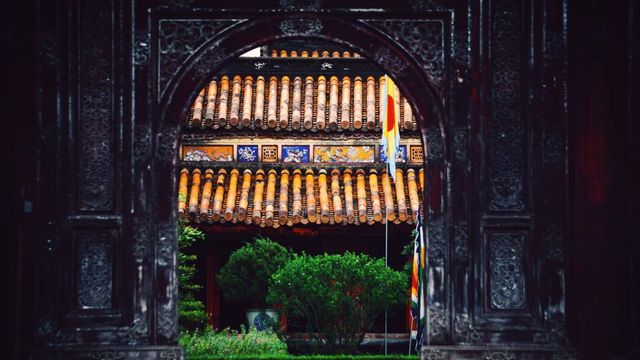
Surrounding the main tomb are auxiliary structures such as the main gates, worship temples, and stone steles. The main gate features large stone pillars reflecting the distinctive architecture of the Nguyen Dynasty, opening into a formal and majestic space. Located near the tomb, the temple serves as the place for commemorative rituals and ancestral worship, decorated with delicate woodcarvings and murals depicting key historical events.
The stone steles in the complex are engraved with poems and inscriptions detailing Emperor Gia Long's achievements, holding great historical value while also standing as exceptional works of art. Enclosed by stone walls and lush green gardens, the tomb complex creates a serene and solemn atmosphere. Overall, the architecture exhibits elegance, grandeur, and meticulous attention to detail, highlighting the majestic grandeur of this historic monument.
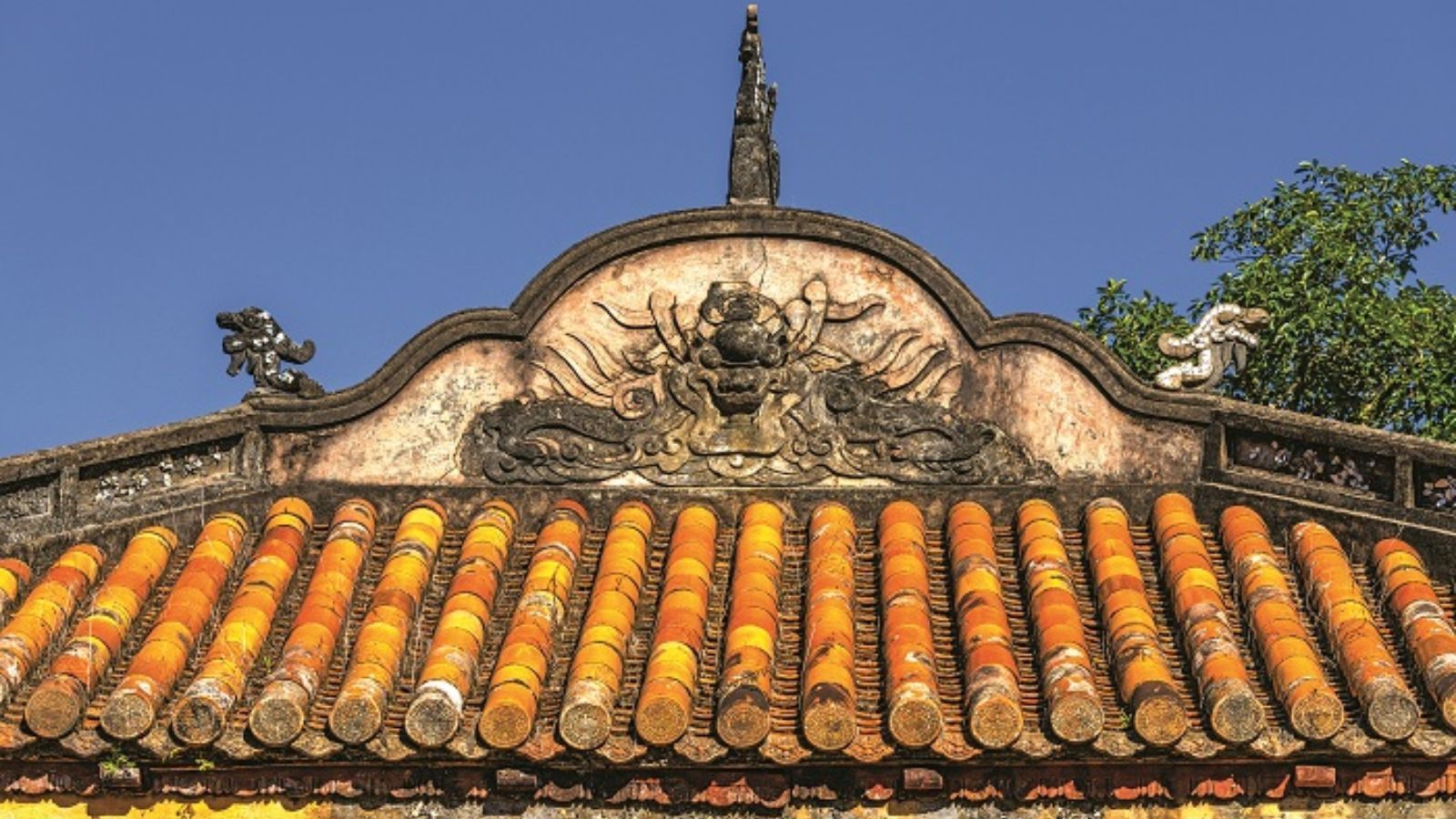
The decorative motifs on the vaulted roofs at Gia Long Tomb feature a highly refined and distinctive charm!
Tips for a Perfect Visit to the Tomb of Emperor Gia Long
For the best experience at the Tomb of Emperor Gia Long, plan your visit between November and April, when the weather is at its dryest and most pleasant. During the dry season, the landscape surrounding the tomb is at its most stunning, offering clear skies and fresh air.
Be sure to bring cash for entrance tickets, which typically range from 100,000 to 150,000 VND per person. It is also recommended to check the opening hours and monument regulations to plan your schedule accordingly. Bringing drinking water, wearing comfortable clothing, and putting on walking shoes are essential. To gain a deeper understanding of the tomb's history and architecture, consider hiring a local tour guide for more comprehensive insights.
The landscape at Gia Long Tomb changes with the seasons.
Hue Entrance Ticket Prices - Tomb of Emperor Gia Long: Latest Updates
Ticket prices to visit Gia Long Tomb are very reasonable and cater to all types of travelers. Specifically, for domestic visitors, the ticket price is 50,000 VND for adults, while children enjoy free admission. This makes it easy for Vietnamese families to explore and learn about local history and culture together. For international visitors, the fee is 100,000 VND for adults, also with free admission for children.
The Tomb of Emperor Gia Long is not only an important historical site but also a magnificent symbol of culture and architecture. For a complete and memorable trip, contact Sovaba Travel, where helpful services and travel information are provided to ensure you experience this heritage site to the fullest.