A Peaceful Journey at Tam Bao Pagoda Da Nang – Ancient Beauty Amidst Modern Life

Central

Da Nang

Sovaba.travel

Updated at: 24/09/2026

1. History of Tam Bao Pagoda Da Nang

Tam Bao Pagoda (also known as Tam Bao Theravada Pagoda) was founded by Most Venerable Gioi Nghiem in 1953 and completed after 10 years of construction, officially inaugurated in 1963. This is one of the first Theravada Buddhist temples in the Da Nang – Quang Nam region at that time, and is also considered the ancestral temple of Vietnamese Theravada Buddhism in Central Vietnam.

Most Venerable Gioi Nghiem (1921–1984), a native of Thua Thien Hue, initially took the Bhikkhu vows in the Mahayana Buddhist tradition at Pho Da Pagoda in 1940. In 1944, he went to Cambodia to study abroad and continued his research on Buddhist studies in Thailand and Myanmar, thereby specializing in the Theravada (Early Buddhism) tradition. With the desire to bring this lineage back to Vietnam, he founded Tam Bao Pagoda as a center for study, training, and propagation of Theravada Buddhism.
Chùa Tam Bảo theo hệ Phật giáo Nam Tông
Photo: Tam Bao Pagoda belonging to the Theravada Buddhist tradition  

During the period 1964–1974, Most Venerable Gioi Nghiem repeatedly served as the Patriarch of the Vietnamese Primitive Sangha Congregation. In 1981, when the Vietnam Buddhist Sangha was unitedly established, he was honored into the Central Dwelling-Place Council.

As the ancestral seat of Theravada Buddhism in Central Vietnam, Tam Bao Pagoda not only preserves the quintessence of the Theravada tradition but also becomes a gathering point for monks, nuns, and Buddhists from near and far to worship and study. Through more than 70 years of formation and development, the pagoda still retains its historical and spiritual values, becoming an important landmark in the Buddhist life amidst the modern city of Da Nang.
2. Unique Architecture of Tam Bao Pagoda

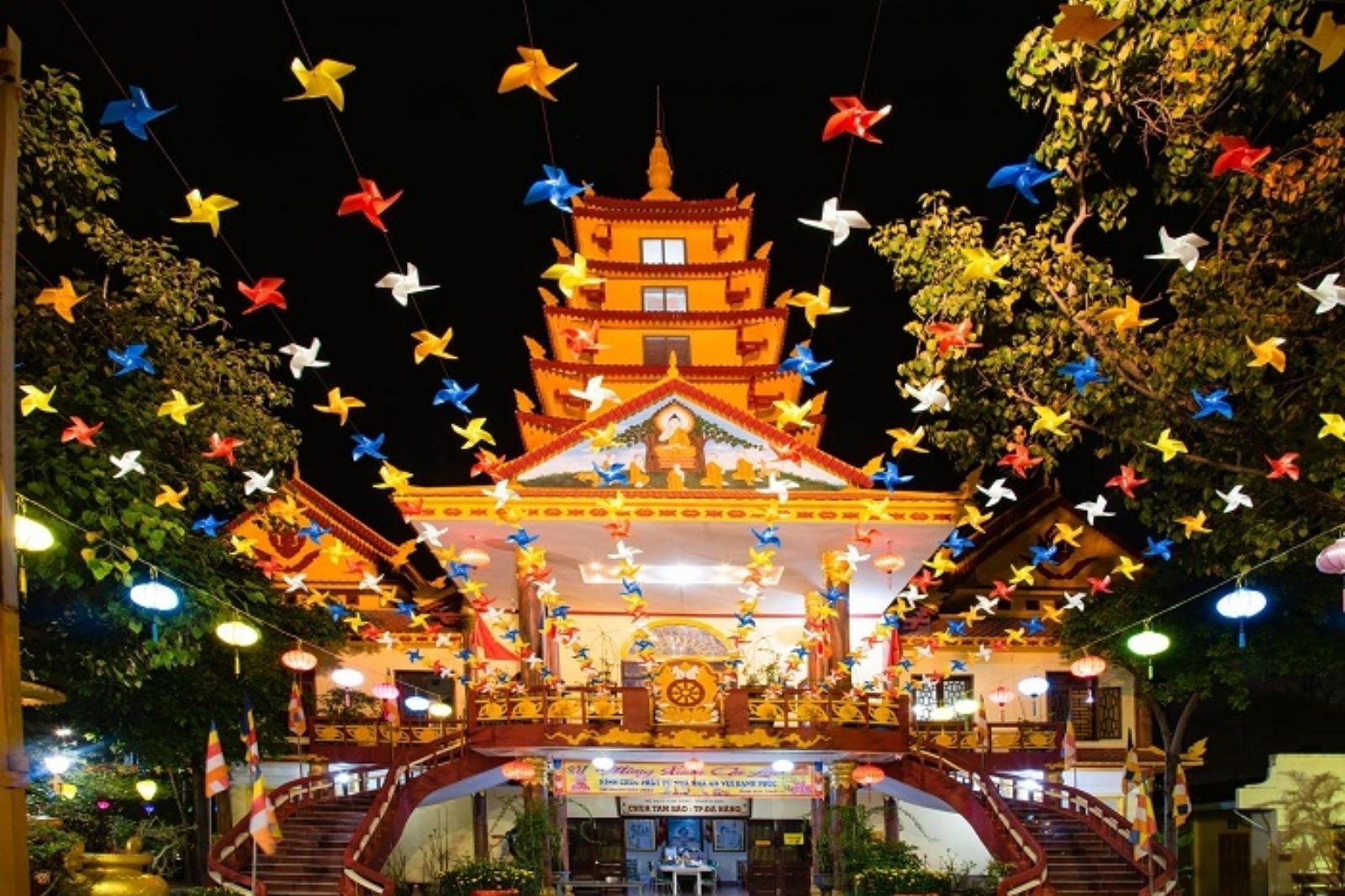
The architecture of Tam Bao Pagoda strongly bears the imprint of Theravada Buddhism with a characteristic Southeast Asian style, while harmoniously combining with the simple architectural features of Vietnamese culture. The pagoda's campus covers an area of about 1,200 m², highlighted by 5 towering stupas painted in the five symbolic colors of the Buddhist flag: blue, yellow, red, orange, and white. The paint of the stupas is specially formulated and treated before construction to increase durability, helping the structure retain its color and solemn beauty over time.

Within the architectural complex, the tallest stupa is where the Buddha's relics are enshrined, a sacred treasure of profound spiritual value to Buddhists. The front courtyard of the pagoda is planted with two boddhi trees propagated from the boddhi tree at Bodh Gaya – where the Buddha achieved enlightenment. Behind the pagoda are two sala trees originating from Lumbini, the landmark associated with the birth of the Buddha. These rows of trees not only create a green and cool space but also recall the Buddha's journey to enlightenment in Buddhist teachings.

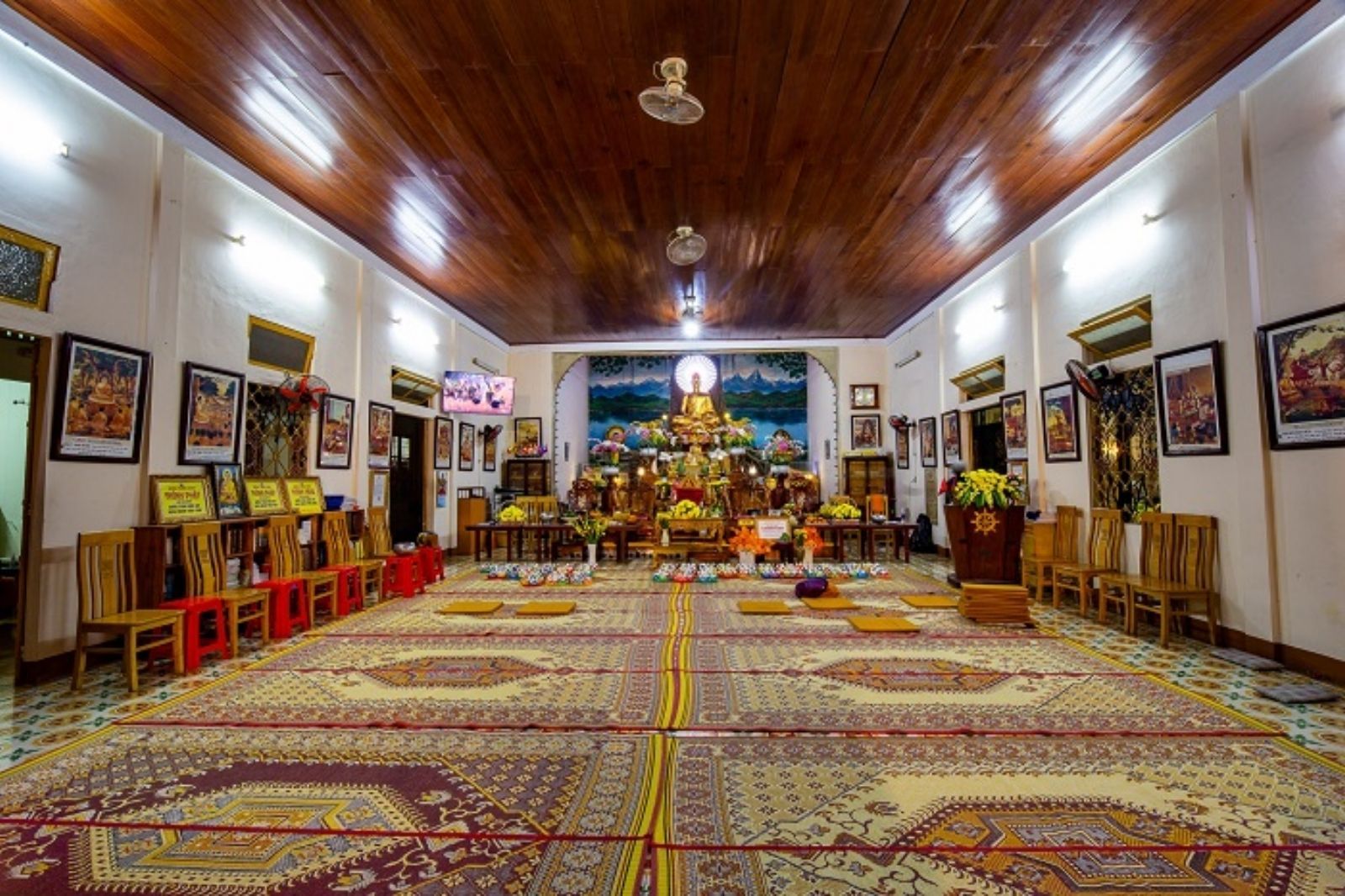
Inside the main hall, the statue of Shakyamuni Buddha is solemnly enthroned on a lotus pedestal, surrounded by statues depicting important stages in the Buddha's life such as alms-gathering, meditation, and entering Parinirvana. In particular, the altar set and dharma seat made of rare precious wood donated by the Thai Royal Family further enhance the solemnity and cultural value of the pagoda. The overall architecture creates a peaceful, harmonious space, bringing a sense of serenity to visitors and Buddhists when visiting to worship.

Chùa được thiết kế theo kiến trúc Miến Điện và Thái Lan
Photo: The pagoda is designed in Burmese and Thai architecture 

3. Location and Directions to Tam Bao Pagoda Da Nang

Located right in the city center, Tam Bao Pagoda Da Nang is situated at 323 Phan Chau Trinh Street, Hai Chau Ward, Hai Chau District – an ideal location to combine with Da Nang tour packages. From the iconic Dragon Bridge, it takes only about 10-15 minutes of travel (about 2km), easily accessible by motorbike, taxi, or Grab. Phan Chau Trinh Street is shaded by green trees, creating a feeling of straying into a tropical forest amidst the bustling metropolis.

  • From Da Nang Airport: About 5km, follow Nguyen Van Linh Street and turn into Phan Chau Trinh Street (20 minutes by taxi, cost is about 150,000 VND).
  • From My Khe Beach: 4km to the west, suitable for a relaxing "beach – pagoda" journey.
  • Public transport: Bus route 01 or 05 stops near the pagoda, ticket price is only 8,000 VND.

This location makes the pagoda a perfect stop on your journey to explore Da Nang, especially when you want to balance the hustle and bustle of the city with inner peace.

4. Notable Festivals and Events at Tam Bao Pagoda

As a pagoda belonging to the Theravada Buddhist sect, Tam Bao Pagoda regularly organizes traditional festivals and ceremonies in the true spirit of Early Buddhism, with a solemn atmosphere rich in spiritual significance.

Typical festivals at the pagoda include:

  • Vesak Grand Celebration: Taking place in the 4th lunar month, commemorating three major events in the life of Shakyamuni Buddha including Birth – Enlightenment – Parinirvana. The festival usually features rituals such as alms-giving ceremonies, floral meditation walks, and the Buddha bathing ceremony.
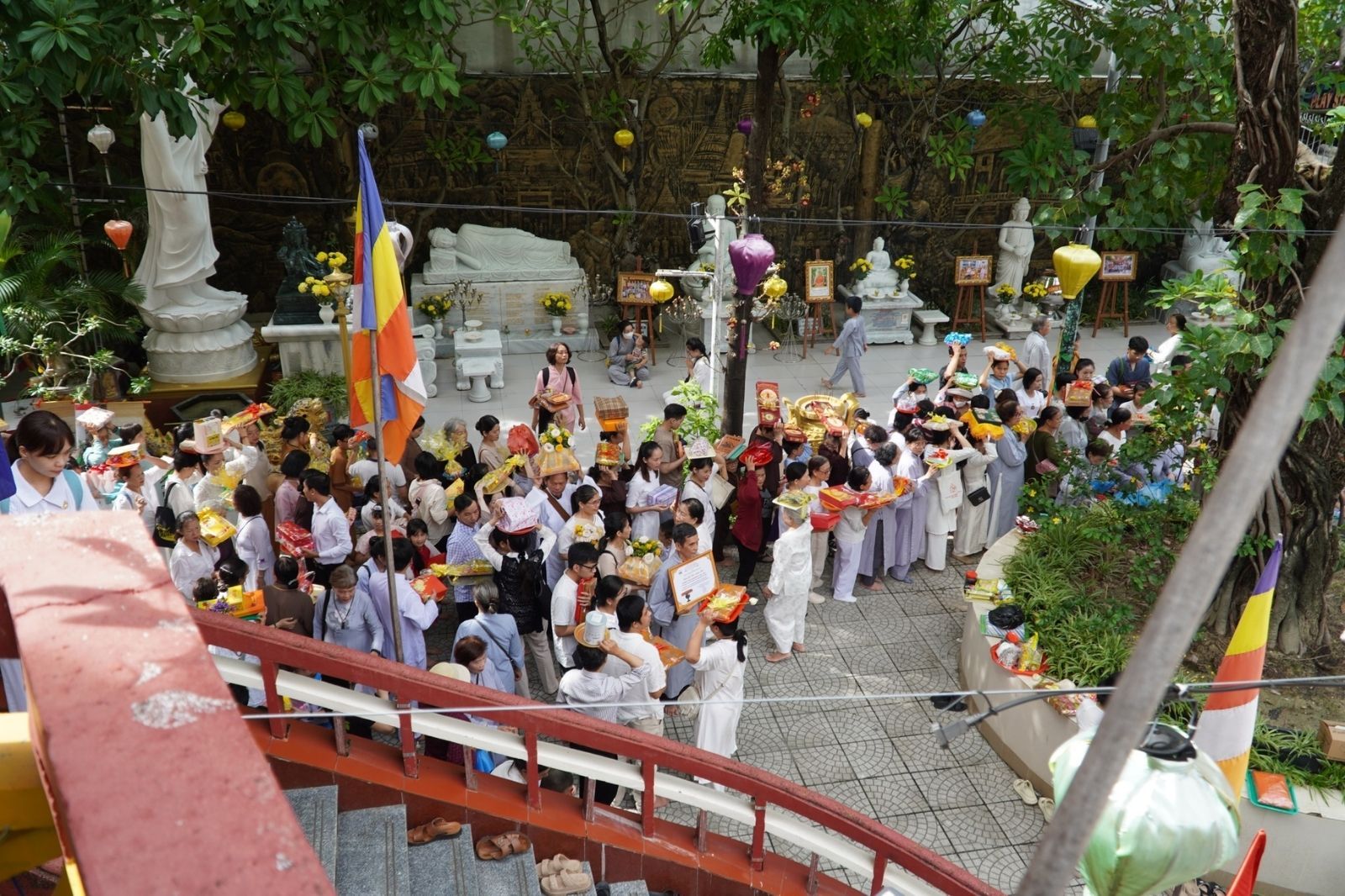
  • Vu Lan Festival (Ullambana): Held in the 7th lunar month, it is an occasion for Buddhists to remember the birth gratitude of their parents through activities such as alms-giving, meditation walks, charity work, and peace-prayer rituals.
  • Kathina Robe-Offering Ceremony: Taking place after the rains retreat (around October–November of the solar calendar). This is an important ritual in the Theravada tradition, where Buddhists offer new robes to the monks to express their reverence and the merit of supporting the Triple Gem.
  • First Full Moon Festival of the Lunar Year: One of the major festivals at the beginning of the year, attracting a large number of Buddhists and locals to attend peace-prayer rituals, chant sutras, and hold ceremonies.

In addition, the pagoda also hosts many annual community activities such as the Mid-Autumn Festival for children, blessing ceremonies for international students (especially the Lao community), along with meditation retreats and periodic Dhamma talks for Buddhists. These festivals and activities are not only spiritual pilgrimage occasions but also contribute to spreading the spirit of compassion, wisdom, and humanistic values of Buddhism in community life.

Chùa Tam Bảo dịp đầu xuân
Photo: Tam Bao Pagoda at the beginning of spring 

5. Spiritual Tourism Experience at Tam Bao Pagoda

Visiting Tam Bao Pagoda Da Nang is free year-round, with opening hours from 6 AM to 9 PM, but the dry season (March-September) is the ideal time thanks to sunny weather and gentle sea breezes. Your meditative journey can start from the front courtyard: sitting under the boddhi tree, taking deep breaths, and admiring the five sparkling stupas in the sunlight. Next, exploring the main hall, you can kneel before the Buddha statue, burn incense, and listen to the echoing temple bells.

For a deeper experience:

  • Meditation: Join short meditation guidance sessions (30-60 minutes) led by monks to help relieve anxiety.
  • Explore the Tipitaka bookcase: Read original scriptures, learn about the "Four Noble Truths" to apply in daily life.
  • Combine tours: After the pagoda, visit Linh Ung Pagoda Son Tra (10km away) or Non Nuoc Beach to balance your journey.

Many visitors share that after just a morning here, they feel lighter, as if shedding the burdens of modern life. This is the beauty of Tam Bao Pagoda: not an ordinary tourist spot, but a place to nourish the soul.

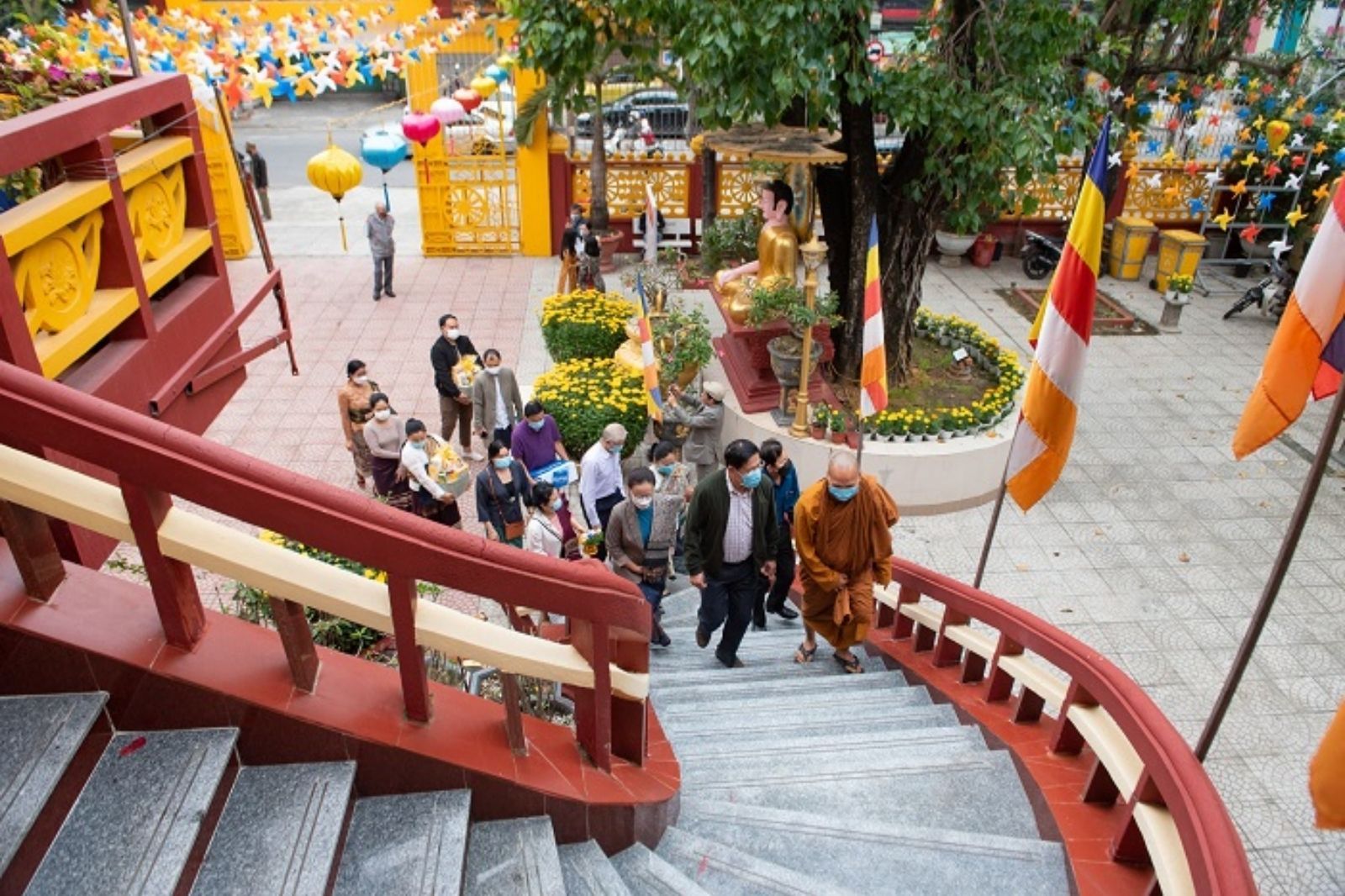
Người dân đi lễ chùa Tam Bảo
Photo: Locals visiting Tam Bao Pagoda 

This over-half-a-century-old ancient temple is not only a spiritual destination, but also a living cultural symbol of Da Nang city. Amidst the rhythm of modern life, the pagoda still retains its serene and tranquil beauty, becoming a place for people to pause, reflect, and rebalance their lives. For those who want to find a quiet space to rest, meditate, and connect internally, Tam Bao Pagoda is a destination well worth experiencing.

Loading......

Featured destinations