|

Back Home

An Dinh Palace Hue: An Asian-European Architectural Masterpiece in the Heart of the Ancient Capital

Central

Thua Thien Hue

An Dinh Palace

Sovaba.travel

Updated at: 28/08/2026

1. Where is An Dinh Palace in Hue?

An Dinh Palace is located at 179 Phan Dinh Phung, Phu Nhuan Ward, Hue City, beside the poetic An Cuu River, about 2–3 km from the city center. From the Imperial City of Hue or Trang Tien Bridge, visitors only need about 5–10 minutes by motorbike, taxi, or car to visit.

Thanks to its convenient location, An Dinh Palace is often included in itineraries exploring famous Hue destinations such as the Imperial City, Trang Tien Bridge, the Perfume River, and the royal tombs of the Nguyen Dynasty. Spanning an area of over 23,000 m², surrounded by ancient walls and quiet green space, this place offers a sense of detachment from the hustle and bustle of the city, allowing visitors to learn about history while enjoying the peaceful beauty of the ancient capital.

An Dinh Palace was originally the private residence of Crown Prince Nguyen Phuc Buu Dao

Photo: An Dinh Palace was originally the private residence of Crown Prince Nguyen Phuc Buu Dao

2. The history of An Dinh Palace in Hue

An Dinh Palace is a structure closely associated with the last two kings of the Nguyen Dynasty, Khai Dinh and Bao Dai. The predecessor of the structure was An Dinh Residence, built in 1902 when Nguyen Phuc Buu Dao (later King Khai Dinh) held the title of Phung Hoa Cong (Duke of Phung Hoa). This was his private residence, separate from the Imperial City of Hue. After ascending the throne, King Khai Dinh renovated the entire residence in the European Neoclassical architectural style. From 1917 to 1919, the old structures were replaced by a new, grand complex, officially named An Dinh Palace. Later, it became the home of Crown Prince Vinh Thuy (King Bao Dai), Empress Nam Phuong, and other members of the royal family.

After the August Revolution in 1945, King Bao Dai's family moved to An Dinh Palace to live for a period of time. Through many historical upheavals, the building was used for various purposes before being restored and preserved in the 1990s. In 1993, An Dinh Palace became part of the Complex of Hue Monuments recognized by UNESCO as a World Cultural Heritage site.

Existing for over a century, An Dinh Palace is not only a witness to the highs and lows of the late Nguyen Dynasty, but also one of the architectural works of exceptional historical, cultural, and artistic value in Hue.

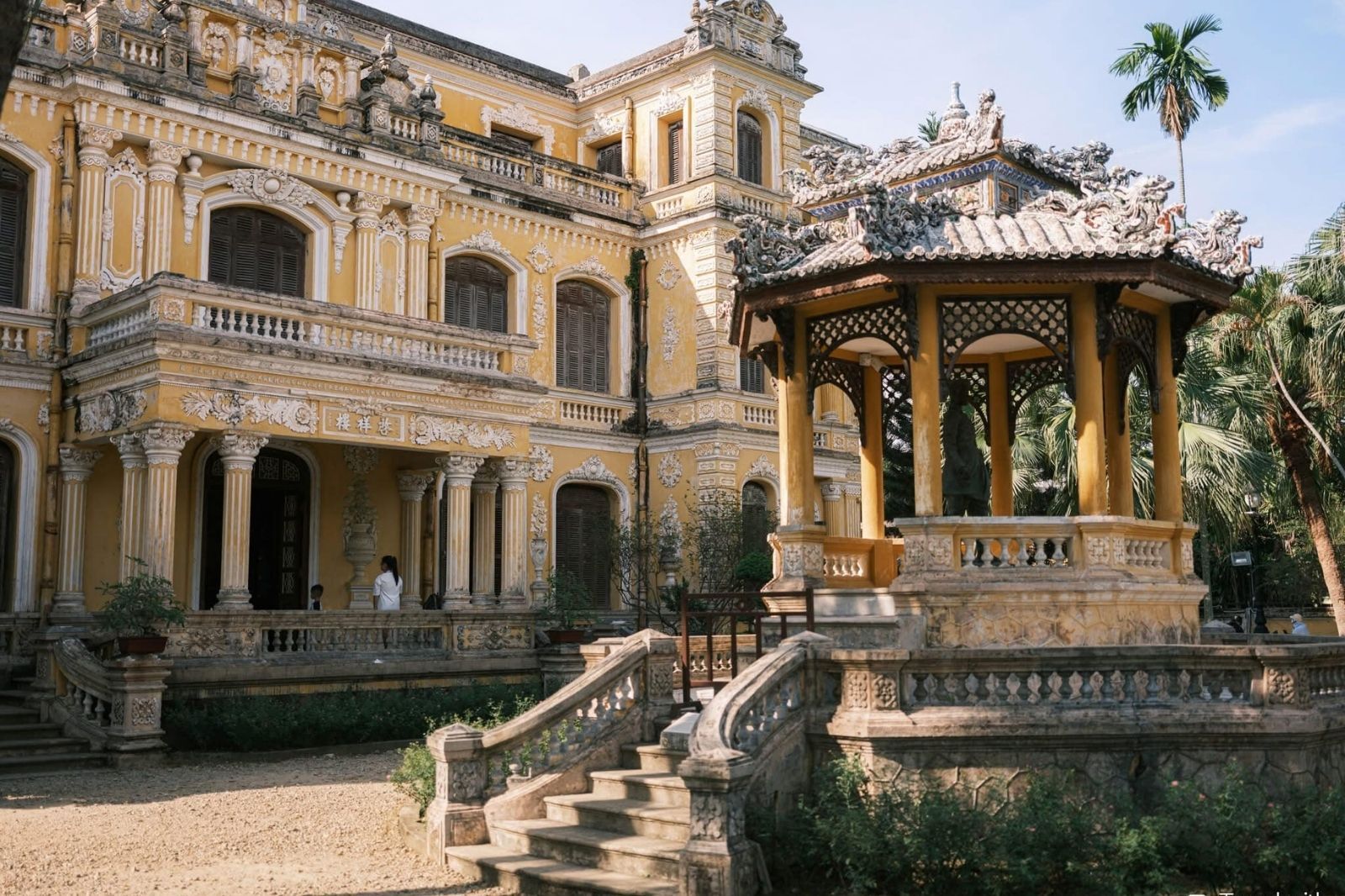
Khai Tuong Pavilion

Photo: Khai Tuong Pavilion  

3. What is special about the architecture of An Dinh Palace?

The most prominent feature of An Dinh Palace is the harmonious combination of European Neoclassical architecture and traditional Vietnamese decorative arts. The structure bears strong Western influences with symmetrical column systems, vaulted roofs, balconies, staircases, and elegant golden color tones. Interspersed within are signature motifs of royal court architecture such as dragons, phoenixes, eight precious objects, porcelain mosaics, and delicately decorated ceramic tiles, creating an ensemble that is both modern and deeply rooted in national identity.

The entire complex was scientifically planned facing South and enclosed by solid defensive walls. Originally, An Dinh Palace had about 10 architectural components, but today nearly three representative structures remain almost fully preserved: the Main Gate, Trung Lap Pavilion, and Khai Tuong Pavilion – key highlights reflecting innovation in royal court architecture at the beginning of the 20th century.

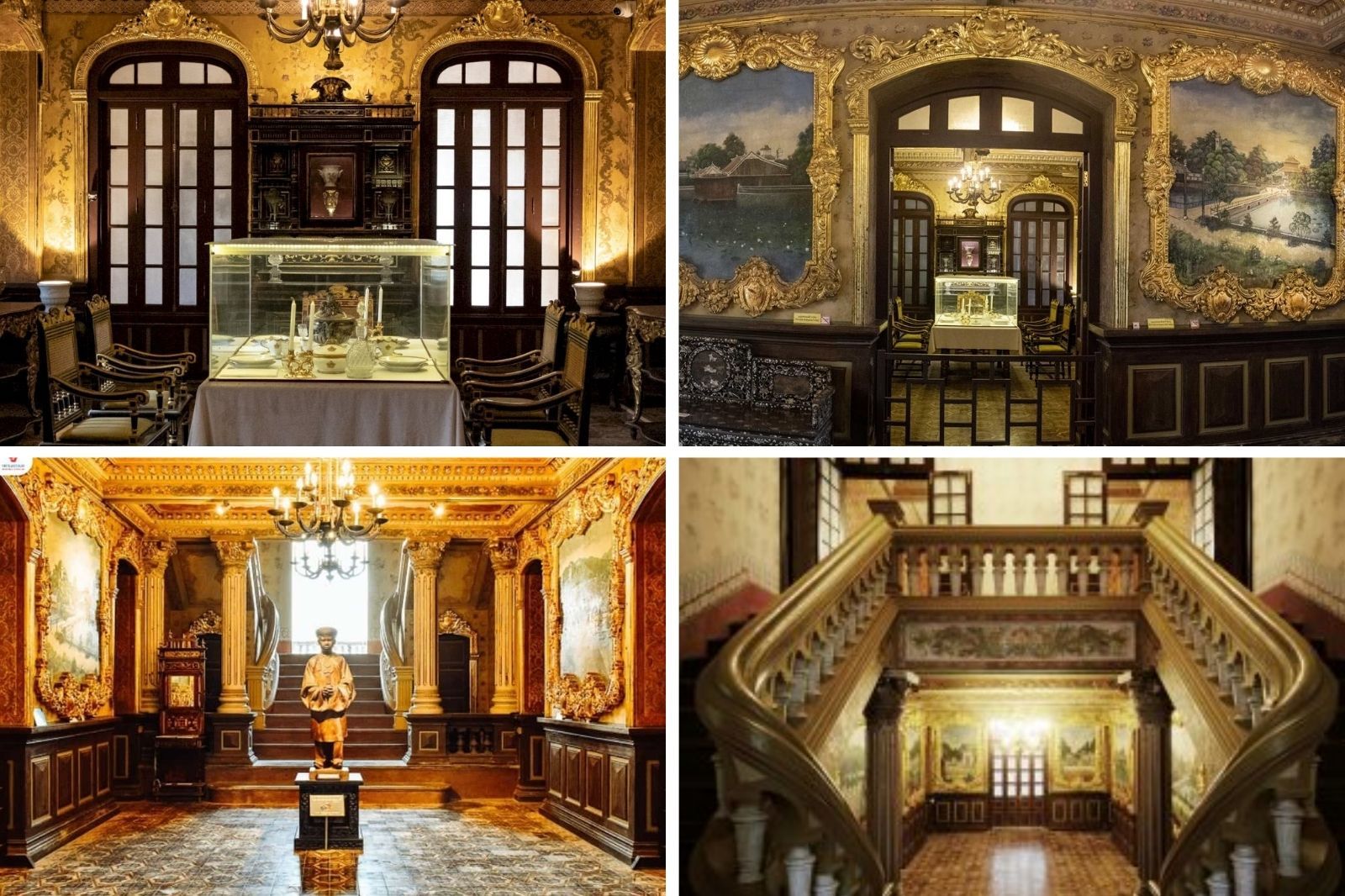
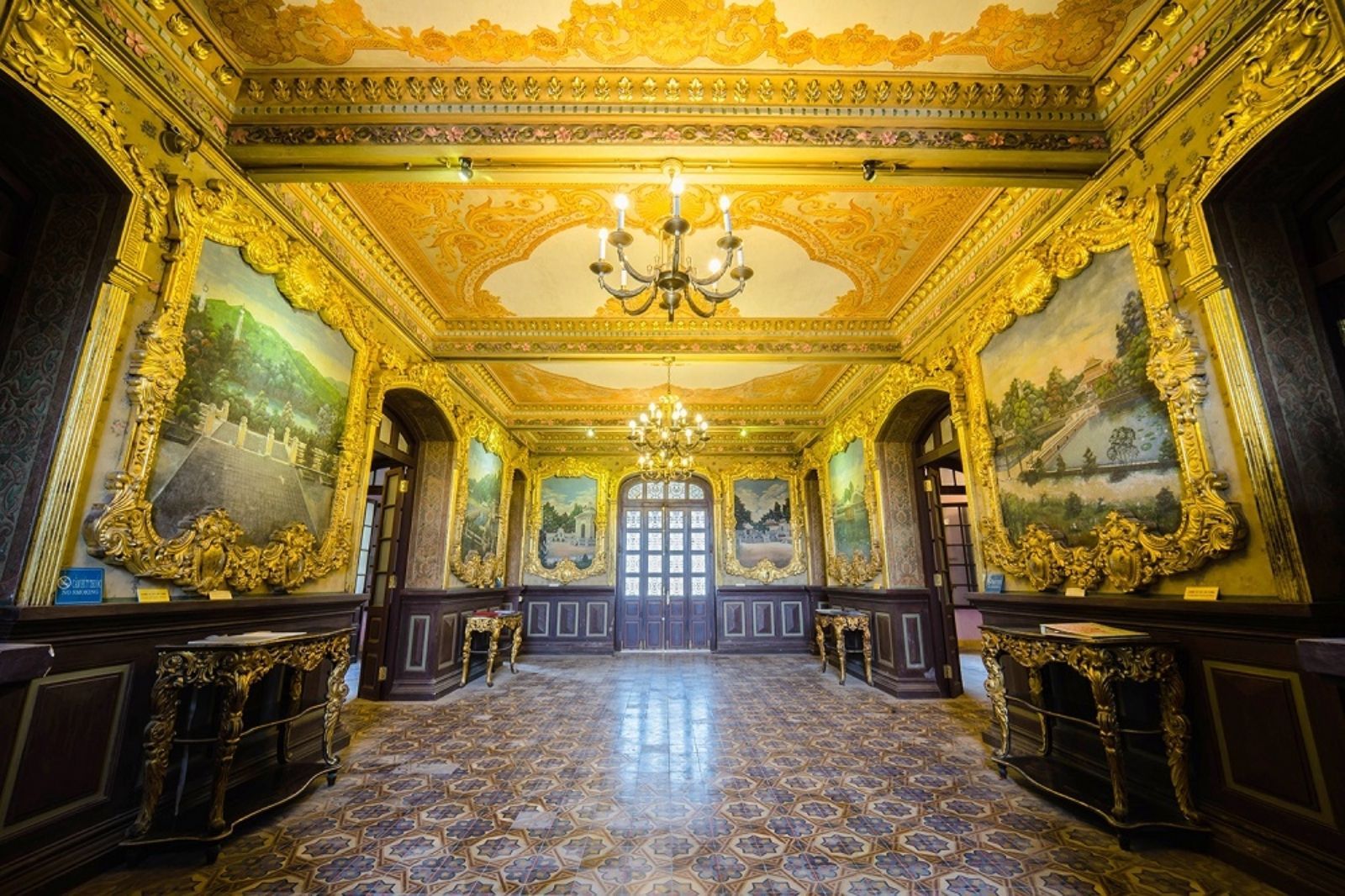
Not only impressive on the exterior, the interior of An Dinh Palace also clearly demonstrates East-West cultural interaction. Crystal chandeliers, door handles, and European-style decorative details are subtly combined with murals, traditional motifs, and landscapes of Hue. This unique blend has transformed An Dinh Palace into one of the most distinctive and extraordinary architectural works of the Nguyen Dynasty, as well as living proof of the Asian-European cultural exchange at the start of the 20th century.

Architecture inside An Dinh Palace

Photo: Architecture inside An Dinh Palace 

4. Outstanding structures inside An Dinh Palace, Hue

Stepping into An Dinh Palace, visitors can not only admire a unique architectural masterpiece but also have the opportunity to explore elements rich in historical and artistic heritage from the Nguyen Dynasty. Each structure possesses its own beauty, contributing to the exceptional value of this over 100-year-old palace.

Main Gate

The gate is designed in a sturdy two-story triple-arched gate style and intricately decorated. Embossed porcelain motifs featuring dragons, phoenixes, and traditional patterns create an impressive highlight right from first sight. This is the architectural "calling card" of the palace, both majestic and refined.

Trung Lap Pavilion

Located in the center of the grounds, Trung Lap Pavilion features a unique octagonal structure with a double-layered roof. Inside once stood a life-sized bronze statue of King Khai Dinh cast in 1920, meticulously sculpted. The pavilion carries strong marks of traditional Vietnamese architecture, creating an interesting contrast with the surrounding European-style buildings.

Khai Tuong Pavilion

This is the central and most impressive building. The three-story pavilion, with a floor area of about 745 m², is painted in a striking yellow color. The first floor serves as an exhibition space with lavish interior furnishings, crystal chandeliers, large wall murals depicting famous tombs of Hue (Gia Long, Minh Mang, Tu Duc, Thieu Tri, Dong Khanh…), and Asian-European fusion motifs. The second floor was once the living quarters of the royal family. The third floor was used for worship. Khai Tuong Pavilion has been restored with the support of international experts, helping it retain its nearly intact beauty.

In addition, the White Camellia Garden (Camellia Garden) behind the pavilion offers a lush, romantic green space that served as the setting for numerous movies and music videos. It is also a favorite check-in spot for visitors.
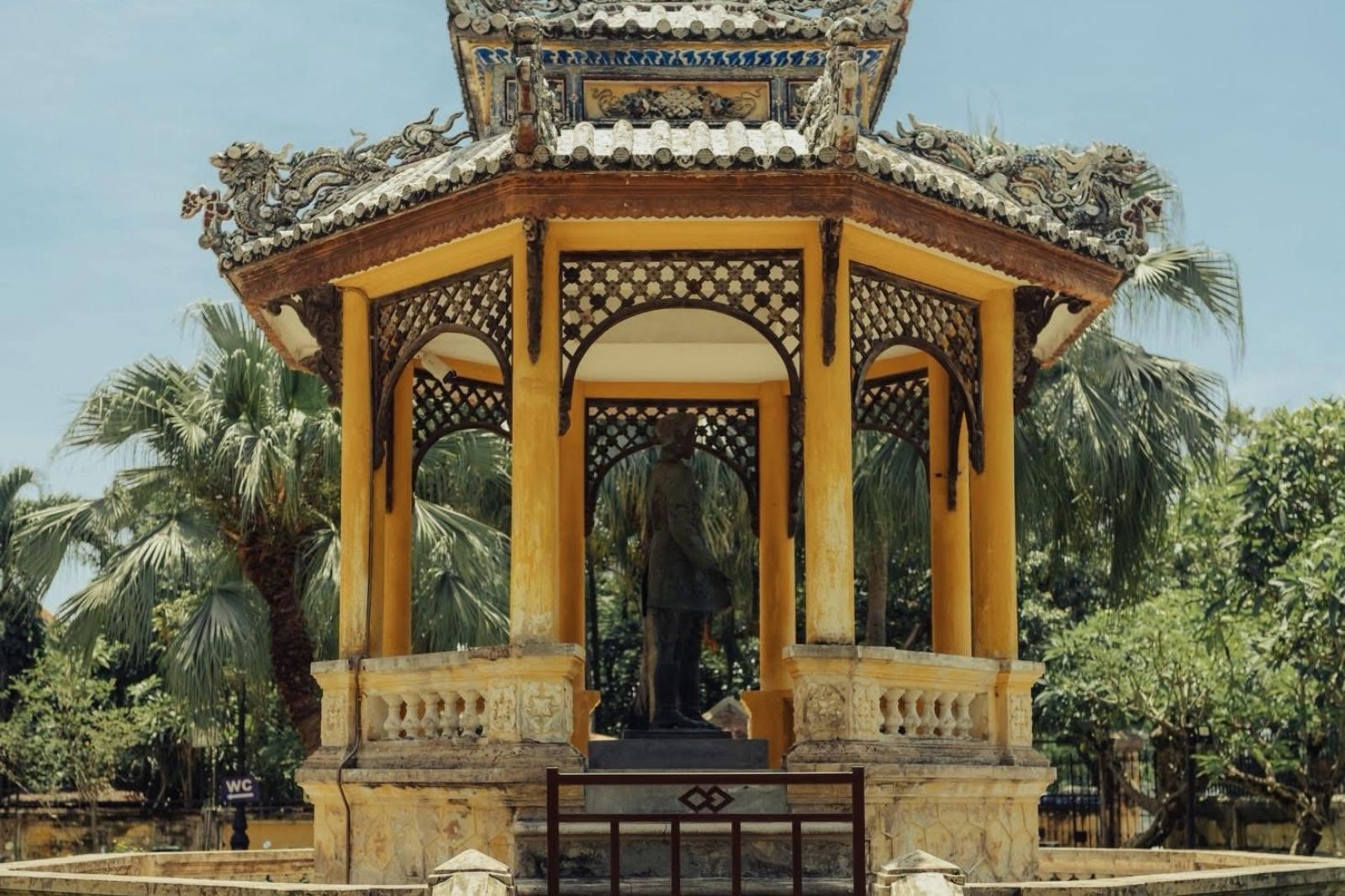
Trung Lap Pavilion located in front of Khai Tuong Pavilion

Photo: Trung Lap Pavilion located in front of Khai Tuong Pavilion  

An Dinh Palace in Hue is one of the most unique architectural works of the Nguyen Dynasty, where Asian and European styles blend to create a beauty that is both ancient and modern. Every relief and intricate pattern hides historical marks and royal stories, making it an ideal destination for those who love to explore ancient court culture. For a complete experience, you can join the An Dinh Palace tour organized by Sovaba Travel – a journey that not only lets you admire rare architectural beauty but also offers the chance to listen to fascinating stories about the ancient capital. This will certainly be a memorable highlight of your trip to Hue.
Loading......

Featured destinations