Da Nang Cuisine – The Gathering of Central Vietnam's Culinary Essence
Central
Da Nang
Sovaba.travel
Updated at: 24/09/2026
1. Characteristics of Da Nang Cuisine: From Tradition to Innovation
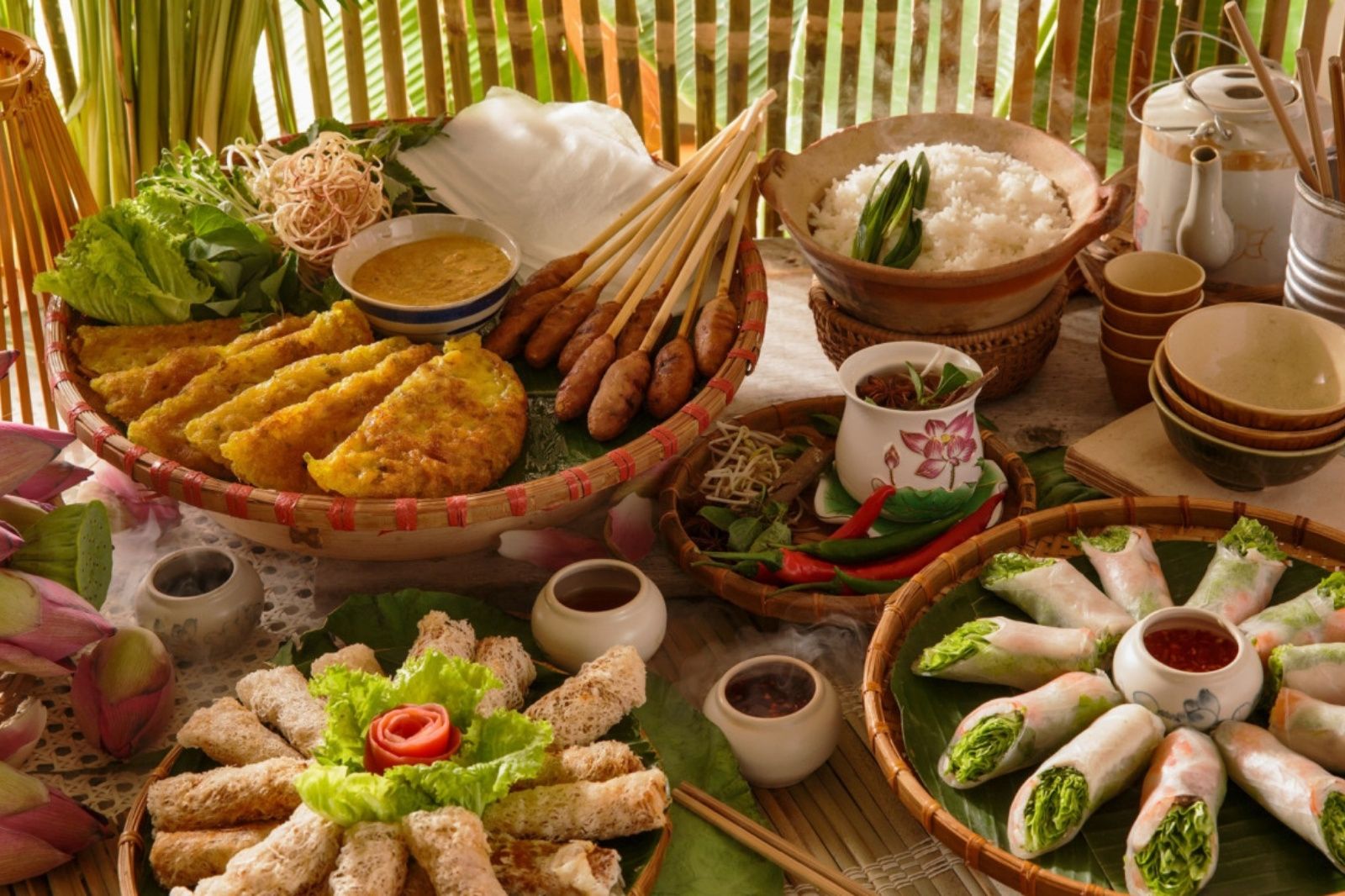
Da Nang cuisine possesses a simple, rustic charm yet remains delicate in seasoning and presentation. Culinary experts note that a prominent feature is the concept of "just enough": not overly elaborate in preparation, but subtle in seasoning, ensuring freshness, cleanliness, and balanced taste.
Photo: Subtlety in seasoning creates the unique flavor of Da Nang cuisine
The local cuisine is a harmonious blend of:
The subtlety of Hue royal cuisine: Expressed through subtle sophistication and thoughtful food arrangement.
The rustic nature of Quang Nam countryside: Embodied in simple, rich local dishes.
The liberal spirit of a young city: Reflected in the variety of ingredients and seafood preparation styles.
In particular, the soul of many dishes lies in signature dipping sauces such as rich fermented fish sauce (mắm nêm) or creamy peanut dipping sauce, creating an unmistakable depth of flavor.
2. Renowned specialties that define the brand
Visiting Da Nang, tourists will experience a diverse culinary journey, from local dishes rich in regional identity to fresh seafood. Must-try famous specialties that define the Da Nang culinary brand include:
Quang Noodles (Mi Quang) - The Soul of Quang Land
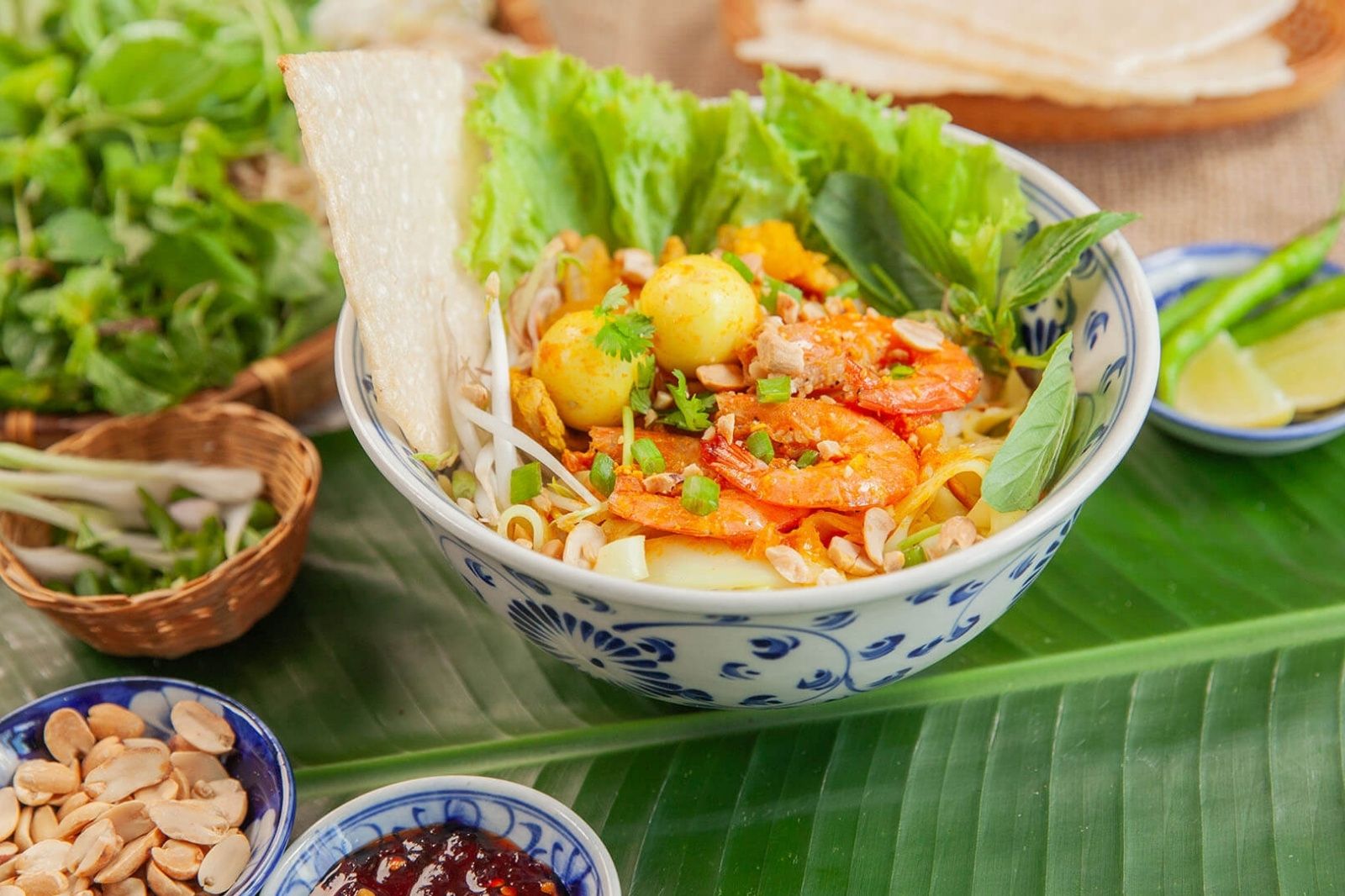
Mi Quang is not just a dish, but the "soul" of Quang cuisine. The soft, chewy golden noodles, hand-steamed by artisans, harmonize with a rich, slightly thickened broth (simmered from pork bones, shrimp, quail eggs, pork, or variations with chicken, snakehead fish, pork ribs), topped with roasted peanuts, crispy rice crackers, and fresh greens.
Pork Rice Paper Rolls with Two-End Skin Pork
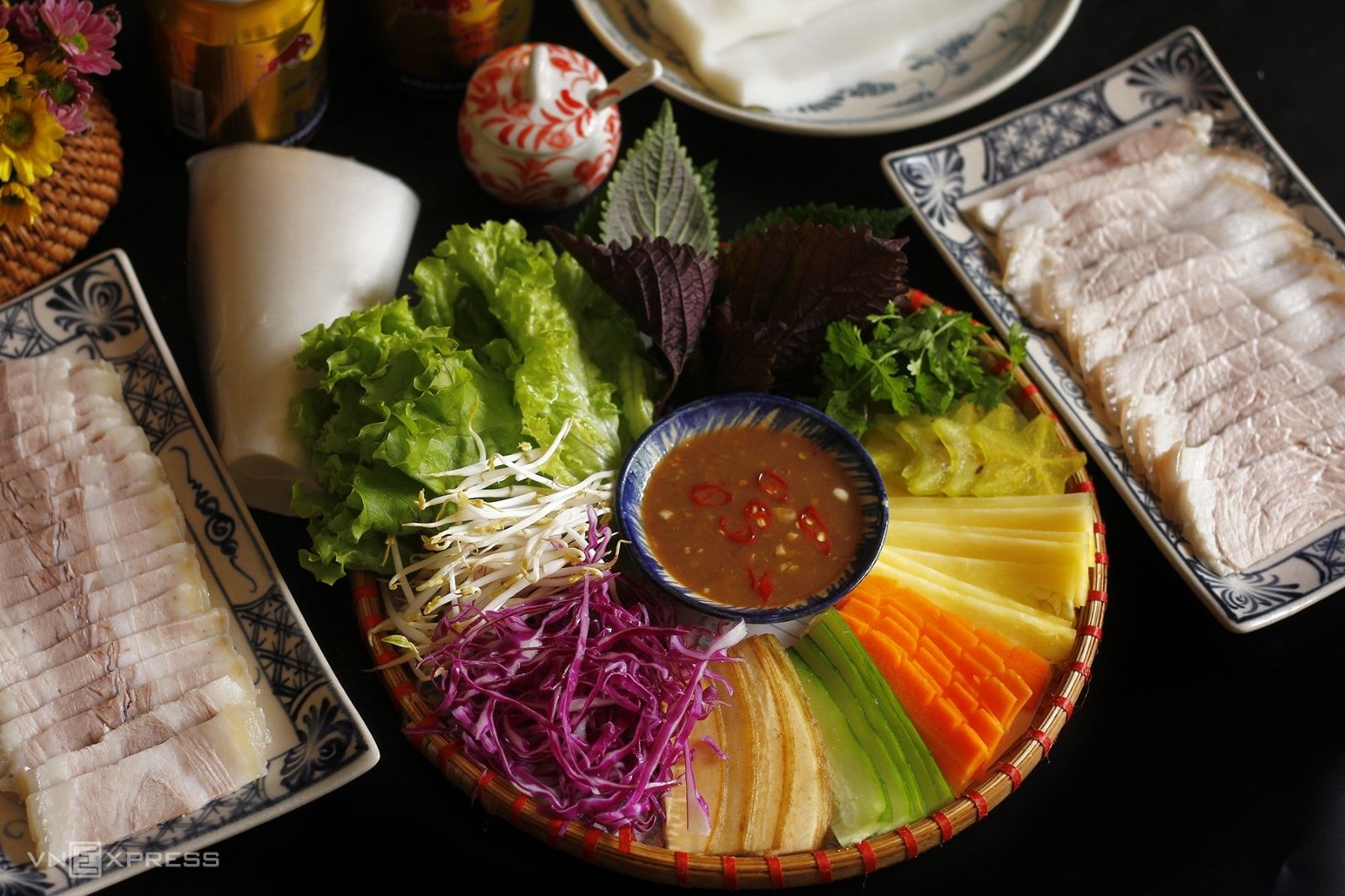
Considered the "national dish" of Da Nang, this specialty wins over diners with its refreshing and balanced taste. Skilfully boiled pork belly, preserving crisp skin on both ends, is rolled with chewy rice paper, fresh herbs, cucumber, green banana, and dipped in aromatic, spicy specialized anchovy sauce (mắm nêm) – the true soul of the dish.
Photo: Da Nang's famous pork rice paper rolls with two-end skin pork
Fish Cake Noodle Soup and Anchovy Sauce Noodles
Fish Cake Noodle Soup (Bun cha ca): Clearly showcases the natural sweet taste of the sea. The broth is simmered from fresh fish bones, served with chewy fried and steamed fish cakes.
Anchovy Sauce Noodles (Bun mam nem): An enticing "taste challenge". This dish is a bold combination of rice vermicelli, boiled pork, fermented pork roll, fresh greens, and peanuts, complemented by the distinct aroma of fermented fish sauce, creating an impressive culinary experience.
Fresh Seafood from the Sea
As a coastal city, Da Nang's seafood is always diverse (lobster, flower crab, squid, grouper, sweet snail...) and prepared in simple styles to preserve its natural sweetness: plain grilled, steamed with lemongrass, or grilled with chili salt.
Snack Heaven
Da Nang's street food is also remarkably rich:
Crispy Pancakes (Bánh xèo) – Grilled Pork Skewers (Nem lụi): Crispy golden pancakes with generous filling, served with grilled pork skewers and creamy peanut dipping sauce.
Other dishes: Sucking snails (ốc hút), deep-fried spring rolls wrapped in mustard greens (ram cuốn cải), grilled rice paper (bánh tráng kẹp), and famous sweet soups like Che Lien (herbal sweet soup, corn sweet soup...).
Indeed, the richness and delicacy of these dishes create a colorful culinary map of Da Nang, ready to conquer every palate and satisfy any visitor setting foot in this liveable city.
3. Elevating the culinary scene and global positioning
Da Nang does not stop at serving tourists; it is actively striving to elevate and standardize local dishes to retain visitors and reach out to the world.
Quality standardization: The Department of Tourism, in collaboration with Da Nang Tourism College and Da Nang Culinary Culture Association, has organized training courses on preparing "authentic" regional dishes (Quang Nam and Hue cuisine) for chefs. The goal is for visitors to enjoy delicious and unique dishes from all three regions right in Da Nang.
Distinctive Culinary Development Strategy (2023 - 2030): The City People's Committee issued a plan to develop cuisine into a signature tourism product, with a vision to transform Da Nang into a unique, high-quality international culinary tourism center. The city directs development into 3 main groups (Local Cuisine, Regional Cuisine, International Cuisine) across 3 segments (Fine Dining, Mid-range, Street Food).
Distinctive experience and engagement: The current trend is that tourists favor dishes associated with stories and preparation methods, creating a unique experience. Da Nang is encouraging experiential service models, such as demonstrating cooking stages, telling stories behind dishes, and developing a "Food Passport" for street exploration.
Standing on the international map: Da Nang's first-time inclusion in the list of cities featured in the MICHELIN Guide 2025 marks an important milestone, confirming its class and development potential, extending from street food to international-standard restaurants and fusion concepts.
Photo: Da Nang food map featuring must-try delicacies
In summary, with a clear development strategy, multi-party collaboration for quality standardization, leveraging unique experiential advantages, and a significant milestone on the MICHELIN map, Da Nang is firmly cementing its position—not only as a leading beach tourism destination but also as an exquisite, high-quality international culinary tourism hub.
Da Nang cuisine is a skillful crystallization of regional identity and coastal openness, creating a unique taste heritage. Going beyond the intrinsic charm of simple yet refined dishes, backed by a steadfast development strategy, rigorous quality standardization, and especially the prestigious milestone in the MICHELIN Guide 2025, Da Nang is not only enriching tourist experiences but also firmly transforming its cuisine into an international language. The city is solidly positioning itself as a premier center of exquisite, high-quality culinary tourism, worthy of a city that is truly liveable and worth exploring.