|

Back Home

Detailed Travel Guide to Tra Que Vegetable Village Hoi An

Central

Da Nang

Sovaba.travel

Updated at: 28/08/2026

1. Where is Tra Que Vegetable Village?

Tra Que Vegetable Village is located in Tra Que hamlet, Cam Ha commune, Hoi An city, former Quang Nam province (now Da Nang city).

  • Distance from Hoi An Ancient Town center: about 2.5–3 km to the Northeast.
  • Distance from Da Nang: about 20 km.
  • Special location: Situated on an islet surrounded by the Co Co River (De Vong River) and Tra Que Lagoon, creating a peaceful and fresh atmosphere.

You can easily travel by motorbike, bicycle, or bus tour from Hoi An. If traveling by car, park at the village entrance and walk in.

Tra Que Village famous for its vegetable growing tradition
Photo: Tra Que Village is famous for its vegetable growing tradition 

2. History and cultural value of Tra Que Vegetable Village

Tra Que Vegetable Village was established in the 16th century, over 400 years ago, when the first settlers migrated from other regions and developed vegetable farming. Initially, the village was just a small area along the Co Co River, but thanks to unique cultivation techniques using river algae as natural fertilizer, vegetables here became famous for their fragrance and delicious flavor, supplying the entire Hoi An Ancient Town and even expanding to Da Nang. In the 18th century, legend has it that a Nguyen Dynasty king tasted Tra Que vegetables and praised them, contributing to elevating the village's status.

In terms of cultural value, Tra Que Vegetable Village was recognized as a National Intangible Cultural Heritage in 2022 by the Ministry of Culture, Sports and Tourism. It not only preserves traditional vegetable cultivation but also reflects the Vietnamese rural lifestyle: simple and close to nature. Tra Que vegetables use no chemicals, relying instead on organic fertilizer from river algae and natural insects for pest control, creating clean and safe produce. The village is also a symbol of sustainable tourism, honored by the World Tourism Organization (UN Tourism) as 'Best Tourism Village' in 2024. This highlights the village's role in combining culture, agriculture, and tourism, bringing economic benefits to more than 200 local households.
3. Best time to visit Tra Que Vegetable Village Hoi An

The weather in Tra Que Vegetable Village Hoi An is quite mild, with a warm dry season from May to August and a rainy season from September to December. The maximum temperature is only around 33°C, making it very suitable for outdoor activities. 

  • Climate: mild, dry season from May to August, rainy season from September to December, highest temperature around 33°C.
  • Ideal time: February to April and September to November, with cool weather and little rain.
  • Best time of day: 7:00–10:00 AM or 3:00–5:00 PM, avoiding harsh sun and ideal for photography.

If you visit during the peak tourist season (June–August), the village may be more crowded, but experiential activities still run smoothly.

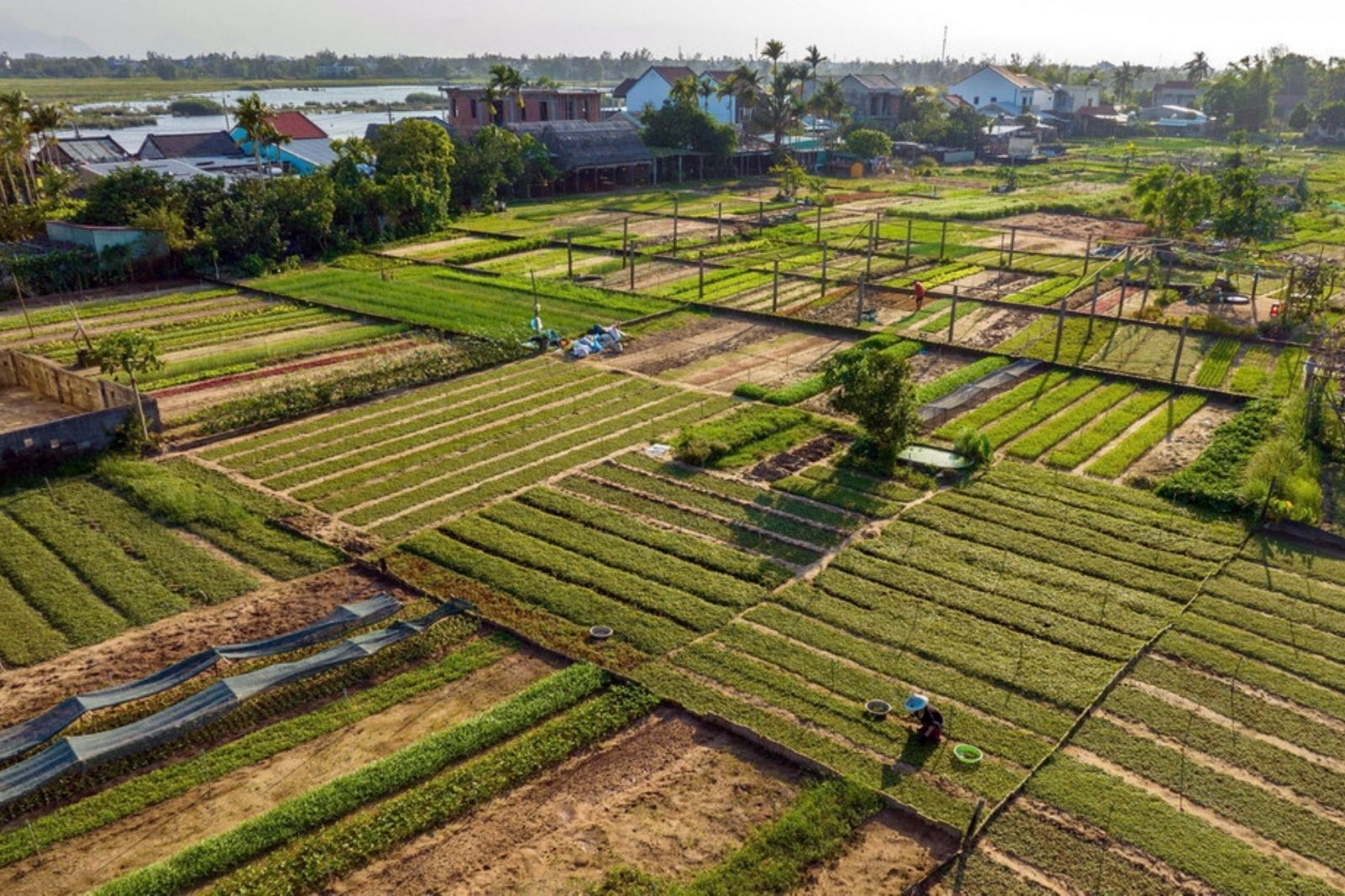
Tra Que vegetable village seen from above
Photo: Tra Que vegetable village seen from above 

4. Exciting experiences when visiting Tra Que Vegetable Village Hoi An

Visiting Tra Que Vegetable Village, tourists will have the opportunity to experience activities close to nature and the distinctive rustic lifestyle of Hoi An. The lush green space along with the slow pace of life here brings a sense of relaxation, making many visitors easily fall in love with it on their first visit.

Some highlighted experiences at Tra Que Vegetable Village:

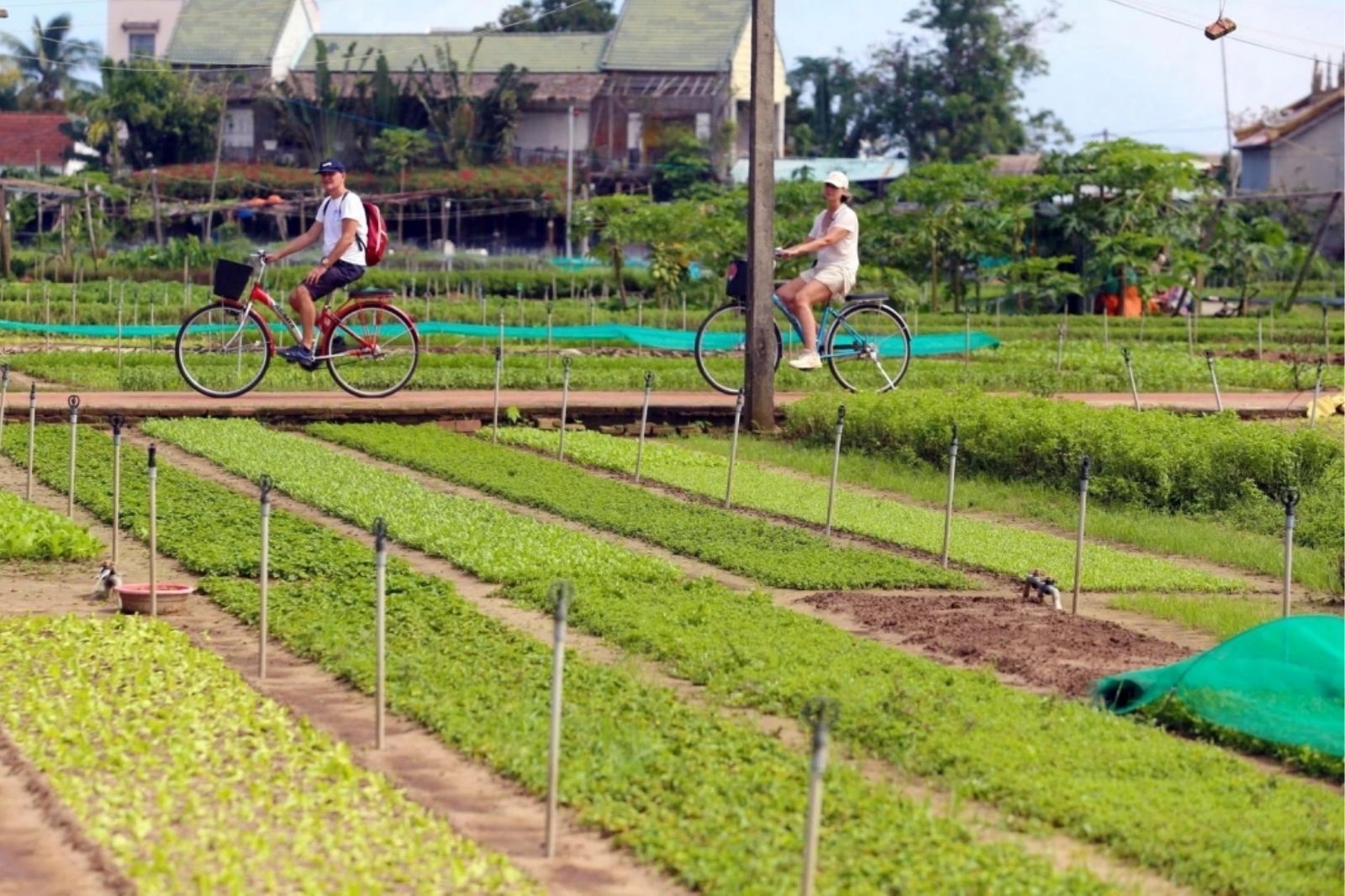
  • Cycling or strolling along peaceful village roads, winding through lush green vegetable beds, and enjoying the fresh air of the Hoi An countryside.
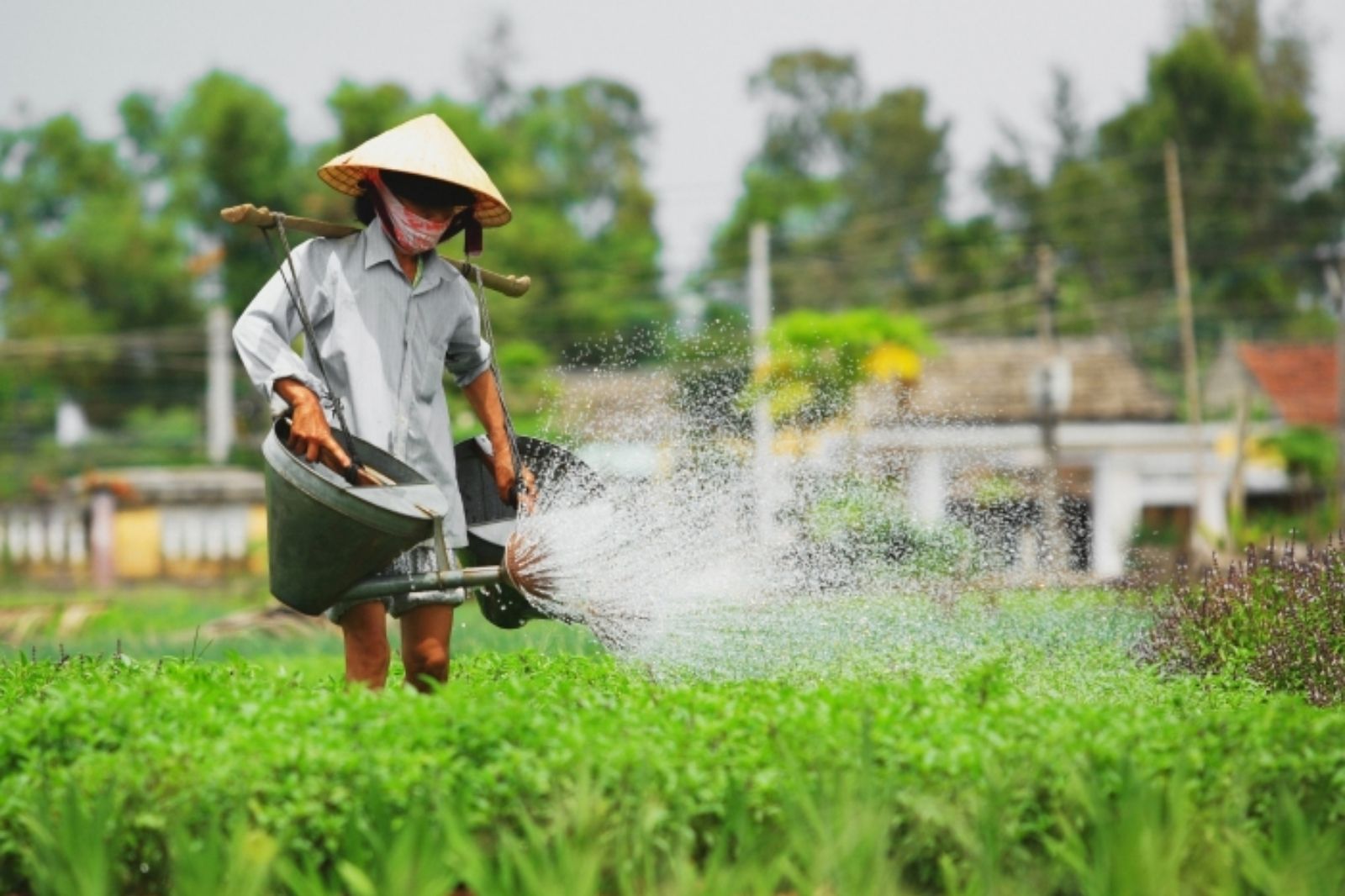
  • Checking in and taking photos amidst poetic rural scenery, featuring familiar images such as conical hats, carrying poles, or stretching vegetable fields creating a very distinctive background.
  • Visiting cultural sites in the village, typically the Ancient Cham Well, Tho Than Shrine, and Ngu Hanh Shrine, places closely linked to the local history and beliefs.
  • Listening to stories about the traditional vegetable farming craft, shared by tour guides or long-standing local farmers themselves.

These simple yet authentic experiences are what create the unique charm of Tra Que Vegetable Village, offering visitors a feeling of peace and closeness to nature.

Cycling around the vegetable village
Photo: Cycling around the vegetable village 

5. Experience being a farmer at Tra Que Vegetable Village Hoi An

One of the most favorite activities for tourists visiting Tra Que Vegetable Village is experiencing being a "real farmer" for a day. This activity is not only interesting but also helps visitors better understand the long-standing traditional vegetable farming profession of local people.

When participating in the experience, you will:

  • Dress in traditional farming attire like brown clothes (Ao Ba Ba) and conical hats, creating a strong connection with the rural setting.
  • Directly participate in vegetable farming steps, from tilling the soil, sowing seeds, fertilizing with seaweed, watering with shoulder poles, to harvesting vegetables.
  • Learn about the traditional organic farming process, a signature cultivation method of Tra Que village, famous for using natural seaweed fertilizer and clean water sources.

This activity usually lasts about 1–2 hours, making it very suitable for families, students, groups of friends, or team-building programs. Many tourists share that this was their first time experiencing farmer's work, giving them a deeper appreciation for the value of labor and clean agricultural produce.

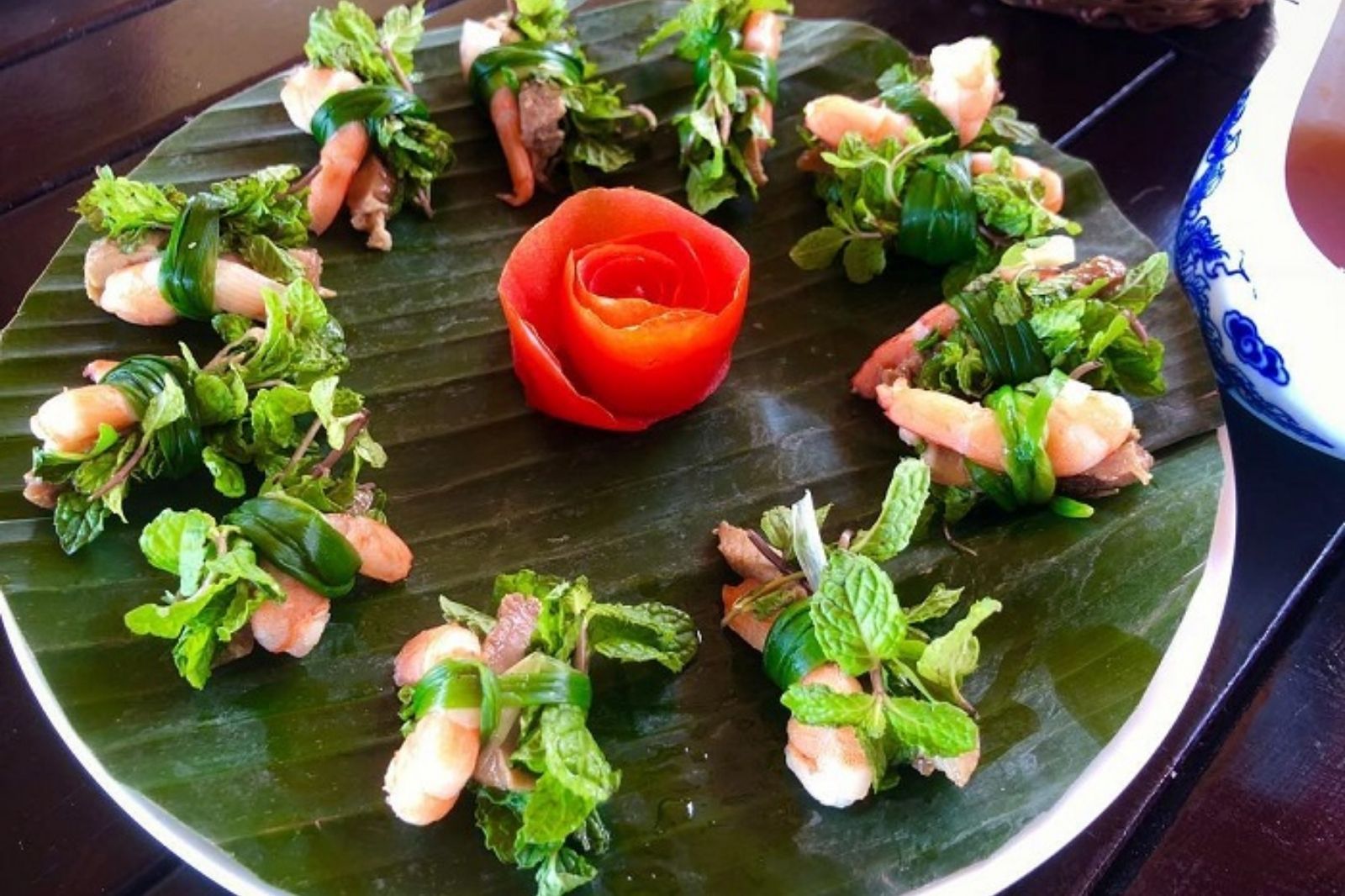
Cooking experience at Tra Que vegetable village
Photo: Cooking experience at Tra Que vegetable village 

6. Entrance fees and activity costs at Tra Que Vegetable Village

The current entrance fee for Tra Que Vegetable Village is 35,000 VND/person. This ticket includes self-guided sightseeing around the village and vegetable gardens. 

Regarding experience costs:

  • Farmer experience tour: 200,000–500,000 VND/person, depending on the package (includes guide, tools, and light meal).
  • Cooking class: 300,000–400,000 VND/person.
  • Bicycle rental: 50,000–100,000 VND/hour.
  • Massage: 150,000–250,000 VND/session.

Total cost for a day can range from 500,000 to 1,000,000 VND/person, depending on your participation level. The village welcomes thousands of visitors daily, so you should buy tickets directly at the gate or through a tour to avoid crowds.

7. Tips for visiting Tra Que Vegetable Village

To ensure your visit to Tra Que Vegetable Village goes smoothly and delivers a complete experience, visitors should keep in mind some practical tips regarding visiting times, behavior during farming experiences, as well as necessary notes on travel and exploring the craft village space.

  • Clothing preparation: Wear comfortable, breathable clothes and sports shoes as you will be walking a lot. Don't forget hats, sunscreen, and drinking water to avoid the sun.
  • Ideal timing: Go early in the morning or late in the afternoon to avoid harsh midday heat. Combine with nearby spots such as Bay Mau Coconut Forest (5 km away) or An Bang Beach to optimize your itinerary.
  • Cost-saving tips: Book group tours to reduce costs. Try free fresh herbs at the garden, but respect the rules and do not pick them arbitrarily.
  • Cultural notes: Respect local residents, do not litter. If taking photos of locals, ask for permission beforehand.
  • Combine tours: If staying in Hoi An for 2–3 days, dedicate half a day to Tra Que, combined with ancient town street food.
International tourists enjoying their experience at Tra Que vegetable village
Photo: International tourists enjoying their experience at Tra Que vegetable village 

With its lush green farming space, traditional organic vegetable growing methods, and a lifestyle closely tied to nature, Tra Que Vegetable Village Hoi An offers visitors a different perspective on local life and culture. The experiences here enrich your journey to explore Hoi An, harmoniously combining sightseeing, learning about traditional crafts, and discovering sustainable agricultural values. To make your trip even more complete, you can combine a visit to Tra Que Vegetable Village in Hoi An Ancient Town tours, where itineraries are scientifically designed, easy to navigate, and rich in cultural experiences. Booking a tour helps you save time, gain deeper insights into heritage, and feel Hoi An not only through its architecture, but also through its native way of life.

Loading......

Featured destinations