Discover the Beauty of Buu Dai Son Pagoda – A Tranquil Pilgrimage Site in Son Tra, Da Nang

Central

Da Nang

Sovaba.travel

Updated at: 24/09/2026

1. History of Buu Dai Son Pagoda

Peacefully situated on the slopes of the Son Tra Peninsula, Buu Dai Son Pagoda is one of the ancient pagodas with rich history and representative cultural value in Da Nang City. Established in the 19th century, the pagoda originally served as a place of religious activity for the residents of Son Tra coastal fishing villages. For fishermen who venture out to sea every day, the pagoda was not only a place to worship the Buddha and pray for peace, but also a spiritual pillar, entrusting faith before every seafaring voyage.

Spanning over 150 years alongside historical changes, Buu Dai Son Pagoda continues to play an important role in the cultural and spiritual life of the local people. Beyond being a place of worship, the pagoda is closely tied to the formation and development of the Tho Quang community, becoming an indispensable part of the spiritual life of coastal residents. A special feature that creates the unique hallmark of Buu Dai Son Pagoda is the harmonious combination of traditional Vietnamese Buddhism and folk beliefs. It is the only pagoda in Da Nang with a Mother Goddess Shrine (Phu Mau), where Hau Dong rituals under Mother Goddess worship are solemnly performed, contributing to the unique intersection of spiritual cultural values across Vietnam's three regions.
Buu Dai Son Pagoda is a pagoda with a Mother Goddess Shrine

Photo: Buu Dai Son Pagoda is a pagoda with a Mother Goddess Shrine 

2. Location and how to get to Buu Dai Son Pagoda

Located at 31 Hoang Sa Street, Tho Quang Ward, Son Tra District, Da Nang, Buu Dai Son Pagoda is only about 7km from the city center, right at the foot of Son Tra Mountain and adjacent to the East Sea shore. This location offers stunning views of the blue ocean, accompanied by fresh air from the surrounding primary forest. 

Detailed Transportation Guide

  • From central Da Nang (Dragon Bridge or Han Market): Go straight on Vo Van Kiet Street (about 3km), turn left onto Vo Nguyen Giap, then continue to Hoang Sa Street. The pagoda is located right at the beginning of the road, easily recognizable by its ancient triple-arched gate. Travel time: 15-20 minutes by motorbike or car.
  • Recommended transportation:
    • Motorbike or self-drive car: Flexible and low-cost (around 50,000-100,000 VND to rent a motorbike per day). The road is wide with free parking available at the pagoda.
    • Taxi/Grab: Suitable for families or large groups, costing around 150,000-200,000 VND per trip from the center. Call Mai Linh or Vinasun for safety.
    • Bus: Route No. 1 from the central bus station to Son Tra station, then a 5-minute walk.

Note: The road to Son Tra can be crowded on weekends, so it is recommended to depart early to avoid traffic jams and enjoy the cool morning air.

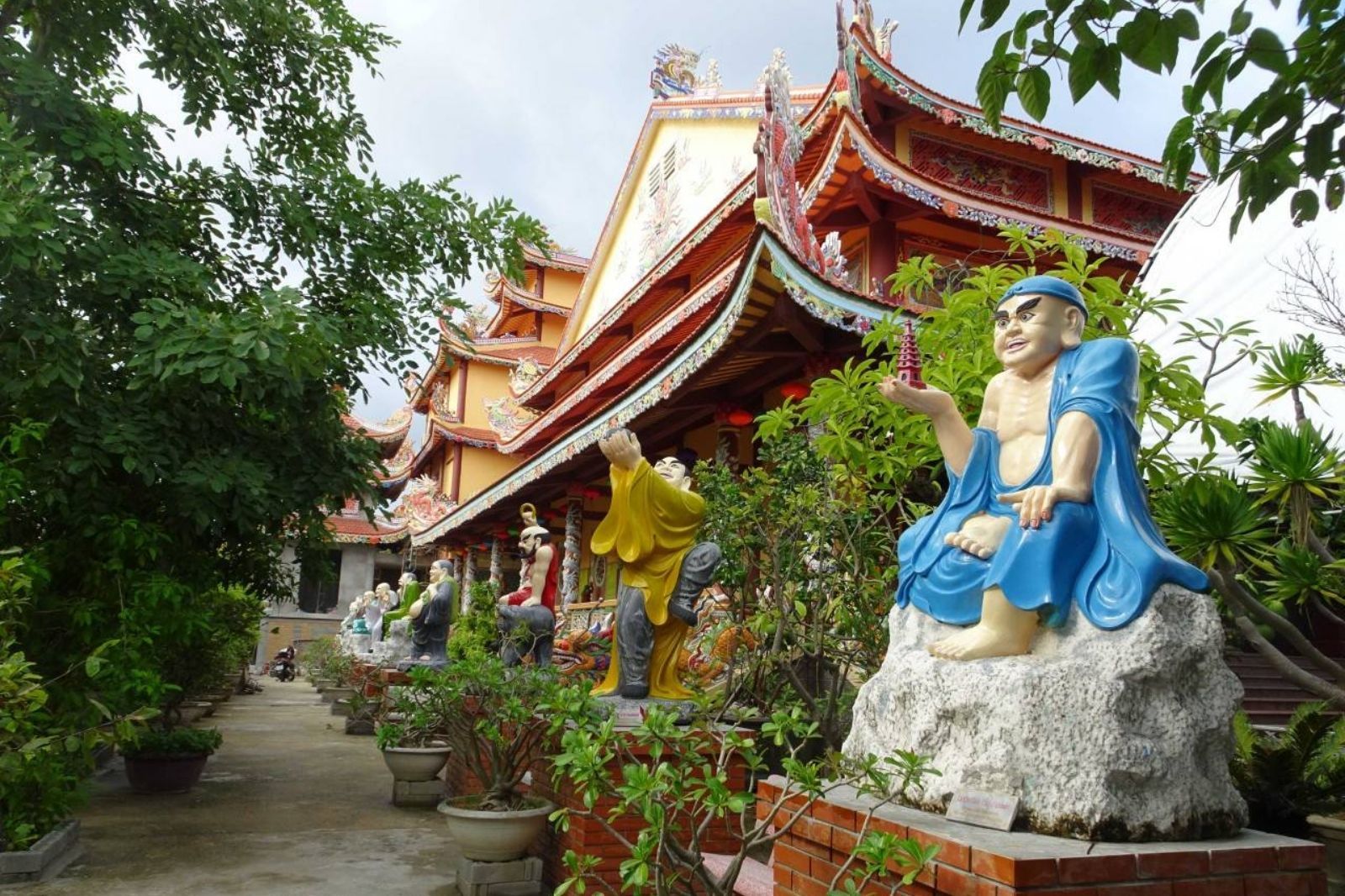
The pagoda carries traditional Vietnamese beauty
Photo: The pagoda carries traditional Vietnamese beauty 

3. Architecture and striking beauty of Buu Dai Son Pagoda

Deeply imbued with traditional Vietnamese Buddhist marks, Buu Dai Son Pagoda impresses visitors with an architectural style that is both ancient and solemn, while blending into the green space of the Son Tra Peninsula. From the entrance, visitors seem to step into another world, where the sound of temple bells echoes amidst the forest, and the sea breeze gently sways, creating a feeling of purity and tranquility. The triple-arched gate and main hall are the most prominent features. Curved tile roofs, detailed carvings of lotus flowers, dragons, and phoenixes—symbols of purity and prosperity—evoke the architectural flavor of ancient Buddhism.

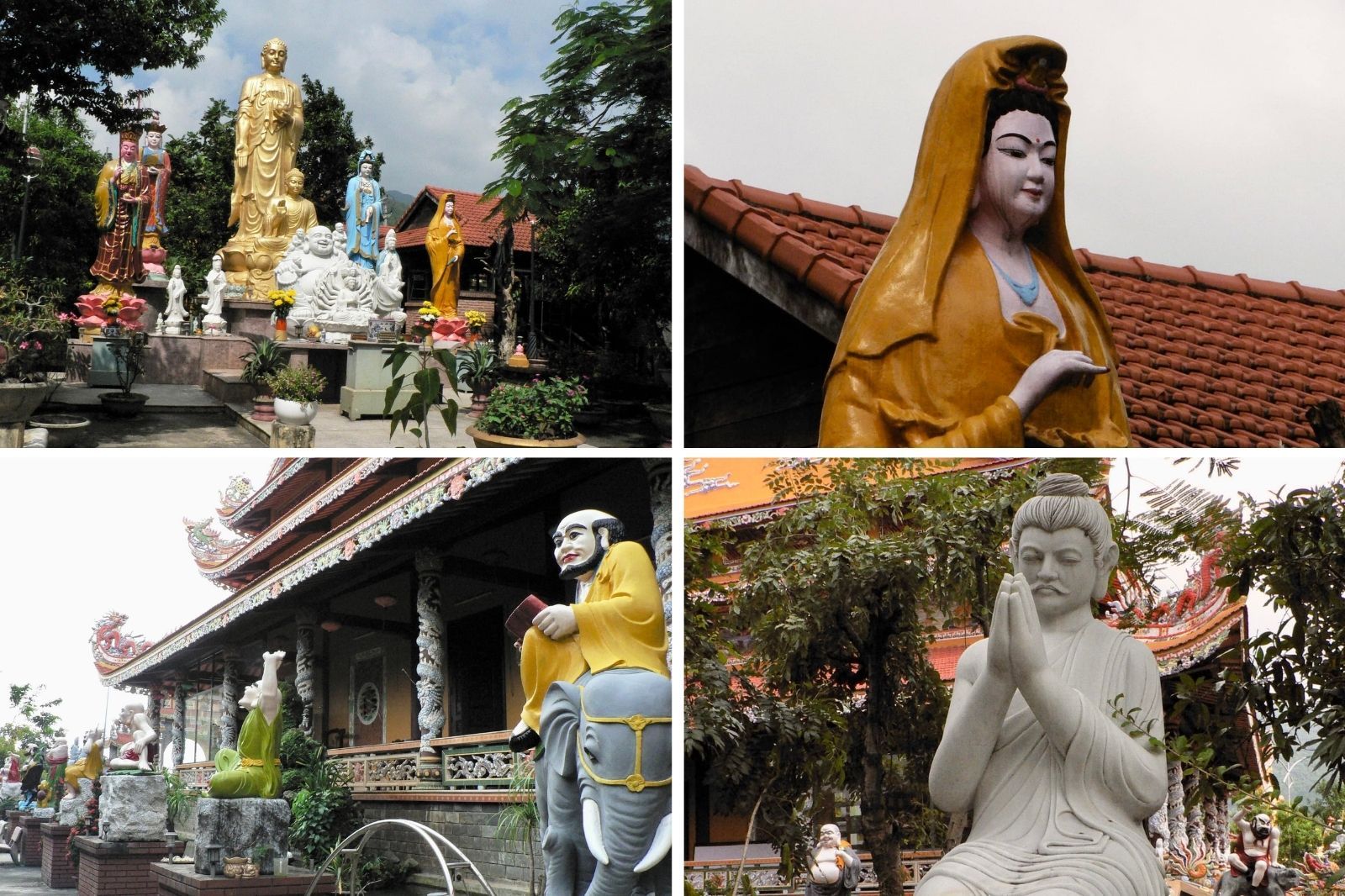
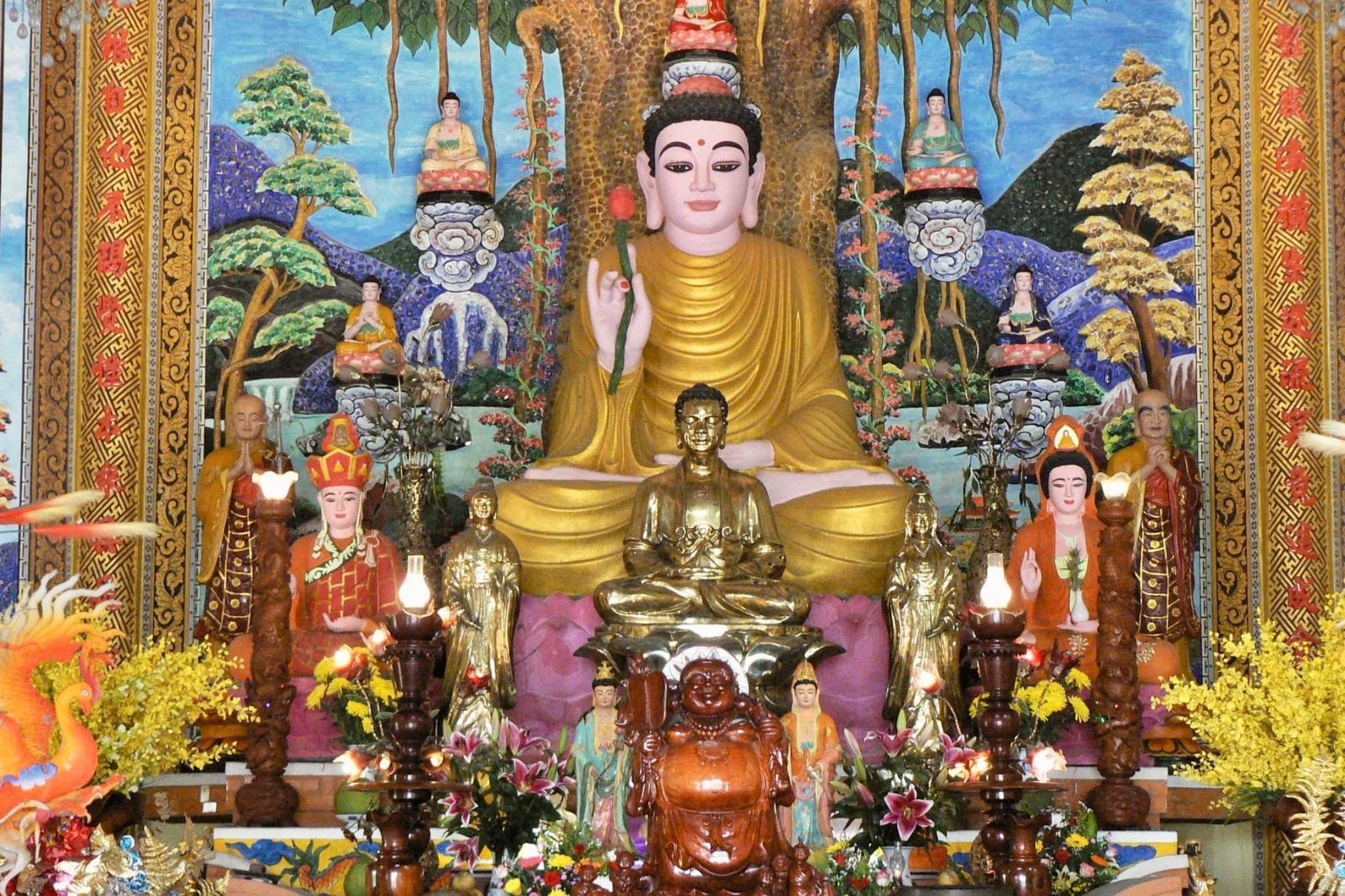
Inside, hundreds of statues of Buddha and folk deities are solemnly arranged: from Amitabha Buddha, Shakyamuni Buddha, Guan Yin Bodhisattva to deities such as Guan Yu, the Five Elements Goddesses, and the Twelve Maidens. Standing out in the courtyard is the statue of Maitreya Buddha with a gentle smile – a symbol of happiness and good luck, considered a spiritual check-in point for many visitors.

In particular, the Mother Goddess shrine and the meditation area are spaces that clearly demonstrate cultural intersection. Here, there are statues of Tang Monk and his disciples, bronze drums, and Vietnamese folk symbols, all blending in a setting facing the East Sea – where visitors can calm their minds, meditate, and listen to the sound of waves like prayers in daily life. From the large Buddha statue placed on the high hill, looking far out, the panoramic view of Da Nang appears vibrant, especially beautiful as sunset falls, when golden-orange hues cover the ancient pagoda roof.

Statues of Buddha and folk deities
Photo: Statues of Buddha and folk deities 

4. Pilgrimage experience at Buu Dai Son Pagoda

Coming to Buu Dai Son Pagoda, visitors do not just stop at worshipping or sightseeing, but also have the opportunity to experience a complete spiritual journey, where people rediscover balance between modern life and their inner world.

  • Worship and pray for peace: Every early morning, temple bells ring through the morning mist of Son Tra, opening the incense-offering ritual for peace. The ideal time to visit the pagoda is on the 1st day, the 15th day of the lunar month, or during the Lunar New Year (Tet), when a solemn and peaceful atmosphere fills the campus.
  • Participate in Buddhist assemblies: On special occasions such as the Medicine Buddha Assembly, thousands of Buddhists from all over gather here to pray for health and disaster elimination. Repentance rituals, offerings to monks, or rituals for departed souls carry not only religious significance but also serve as reminders of orientation toward goodness, gratitude, and sharing.
  • Meditation and peaceful walks: Amidst the shaded canopy of trees, visitors can sit in meditation, listen to birds singing, or quietly watch the sea from the high position of the large Buddha statue – often described as the "spiritual balcony" of Da Nang. This is also an ideal stop before visiting nearby attractions like Linh Ung Pagoda, Bai Do, or Son Tra Peak.
  • Combine with nature exploration: After visiting the pagoda, you can take a light trek around the slopes of Son Tra Mountain to admire the red-shanked douc langur, the "queen of primates" in Vietnam and an iconic ecological symbol of the peninsula.

The pagoda is open daily from 5:00 AM to 6:00 PM, completely free of charge, making it an ideal destination for those seeking a bit of peace amidst the fast-paced life of the coastal city of Da Nang.

Inside the main hall of Buu Dai Son Pagoda
Photo: Inside the main hall of Buu Dai Son Pagoda 

What sets Buu Dai Son apart does not lie in its scale or grandeur, but in its serene spirit and the harmony between faith and life. Amidst the sound of temple bells echoing in the sea breeze, visitors can clearly feel life slowing down to listen to their inner voice and find rare peace in modern life. Not only a sacred pilgrimage destination, Buu Dai Son is also a part of Son Tra's memory and identity – a convergence of nature's beauty, belief, and human devotion. Visiting here, you do not just "visit" a pagoda, but also "touch" the cultural depth of Da Nang, a city that always knows how to preserve ancient values amidst new life rhythms.

Loading......

Featured destinations