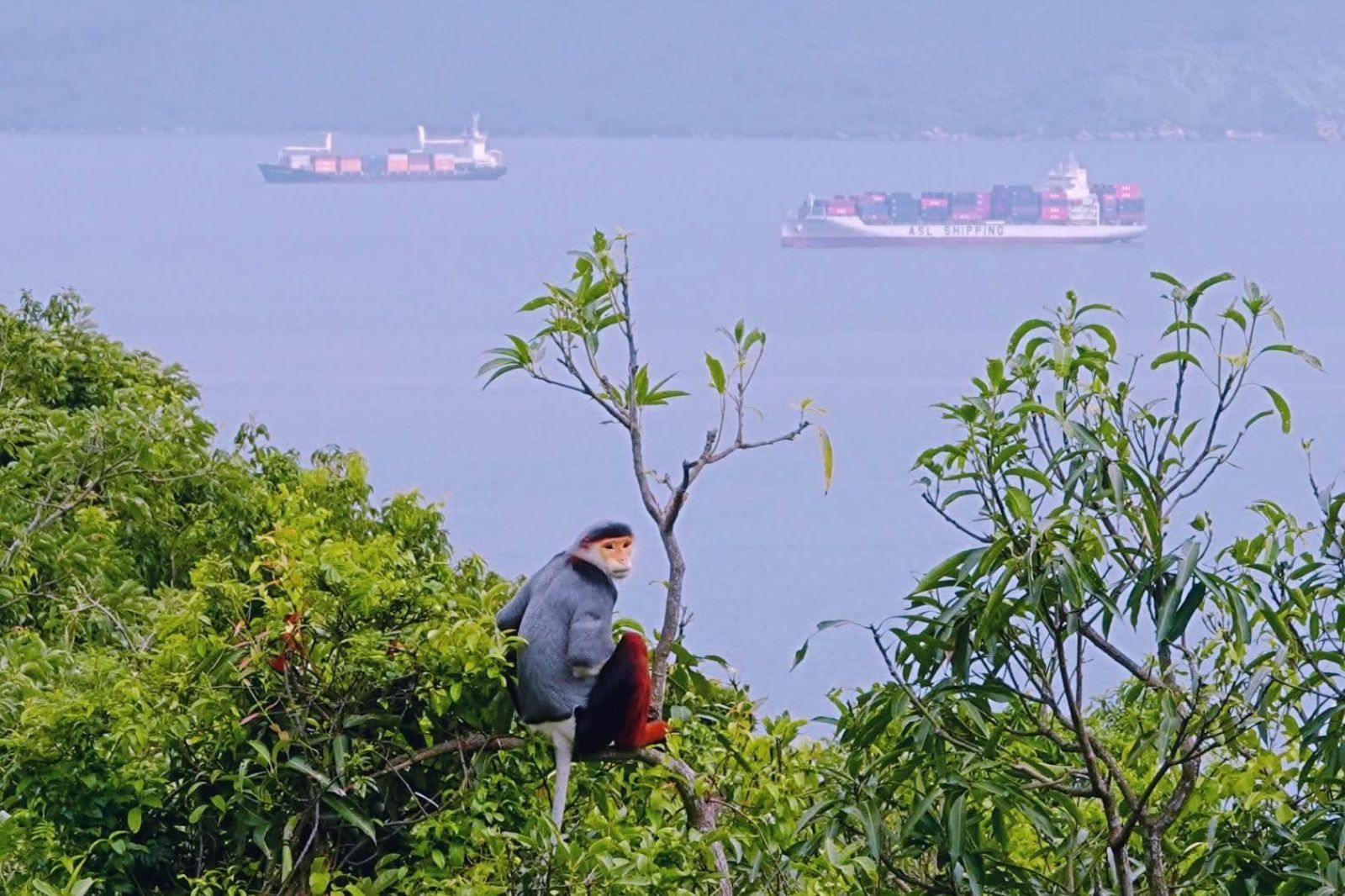
The red-shanked douc langur, also known as the five-colored langur or red-shanked douc, is a primate endemic to the Indochina region (mainly Vietnam, Laos, and Cambodia). This species is listed as Endangered in the Vietnam Red Data Book and the IUCN Red List, featuring striking "five-colored" fur:
- Black crown, jet-black shoulders and arms.
- Vibrant orange-yellow face, with orange trim on the chest and groin.
- Ash-gray body, characteristic reddish-brown lower legs (giving rise to the name "red-shanked").
- White fur on the rump and tail.
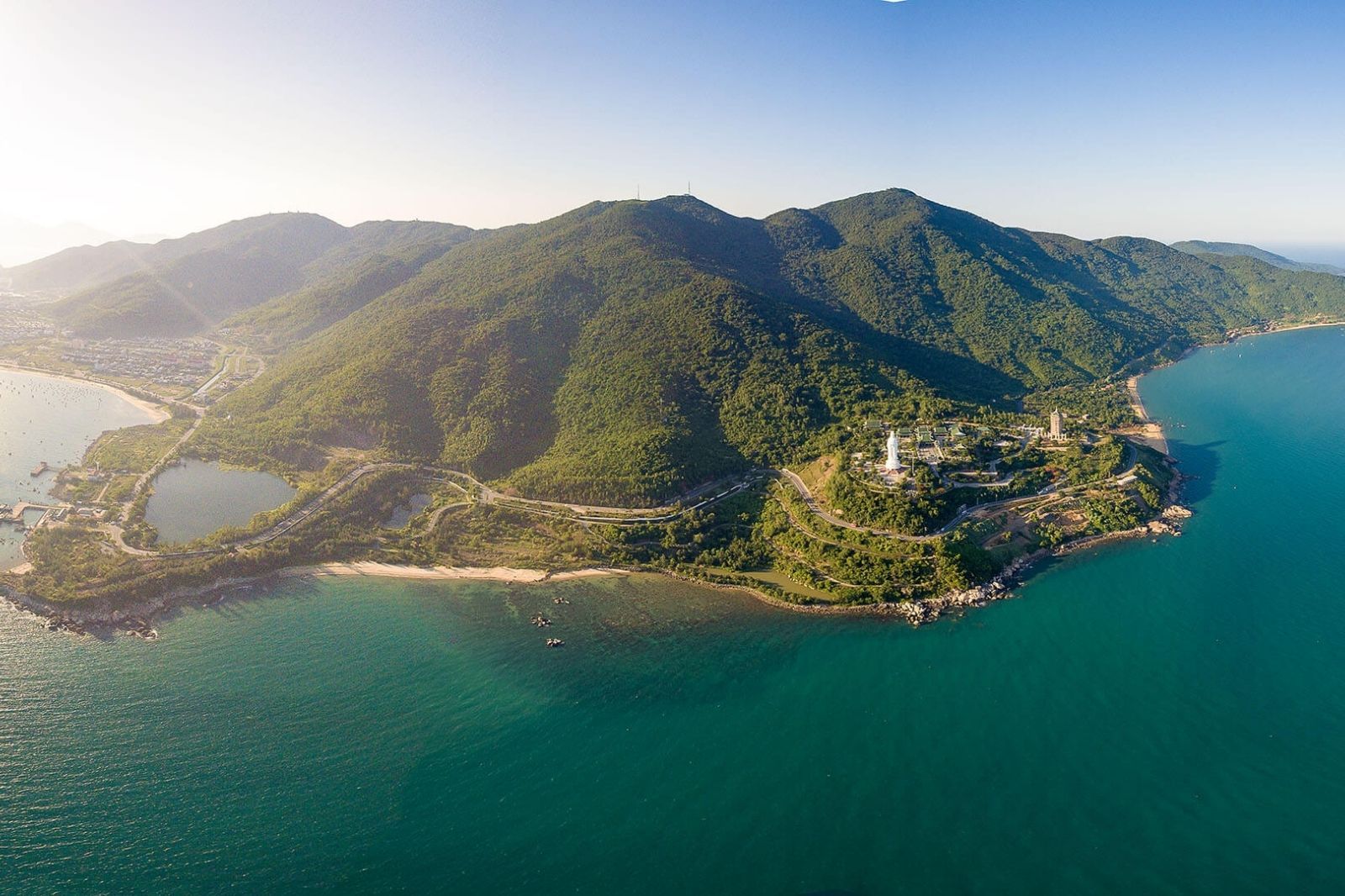
They live in small troops (4–20 individuals), active during the day, mainly high in the canopy (arboreal). Their diet consists of young leaves, buds, fruits, and flowers – a typical folivore that helps maintain the forest ecosystem's balance through indirect seed dispersal. In Son Tra, the red-shanked douc langur has been documented since 1969. According to the latest research by GreenViet Biodiversity Conservation Center, the peninsula is currently home to more than 1,300 individuals, representing the largest population in the world. They are widely distributed across 4,439 hectares of forest, from mountain peaks to the coast, demonstrating vibrant vitality in a near-pristine environment.