|

Back Home

Discovering precious treasures at the Museum of Hue Royal Antiquities that everyone wants to admire at least once

Central

Thua Thien Hue

Hue Royal Antiquities Museum

Sovaba.travel

Updated at: 28/08/2026

1. Nguyen Dynasty commissioned porcelain collection

The collection of commissioned porcelain is one of the most impressive highlights of the Museum of Hue Royal Antiquities, gathering porcelain items custom-ordered by the Nguyen court in China. Each artifact was crafted with masterly sophistication, coated with high-grade glazes such as cobalt blue, emerald green, or unique crackle glaze, along with motifs of dragons, phoenixes, lotuses, and reign mark inscriptions such as “Tu Duc nien che” or “Khai Dinh nien che”. The harmony of colors and the intricacy of every carving have elevated bowls, plates, vases, and incense burners into artworks steeped in royal character. Prominent among them is a cobalt blue porcelain vase featuring a five-clawed dragon from the Tu Duc era, standing about 50 cm high, depicting a dragon winding through clouds—a symbol of the king's supreme power. Not only possessing aesthetic value, this collection is also vivid evidence of peak porcelain crafting techniques and 19th-century Sino-Vietnamese trade relations.
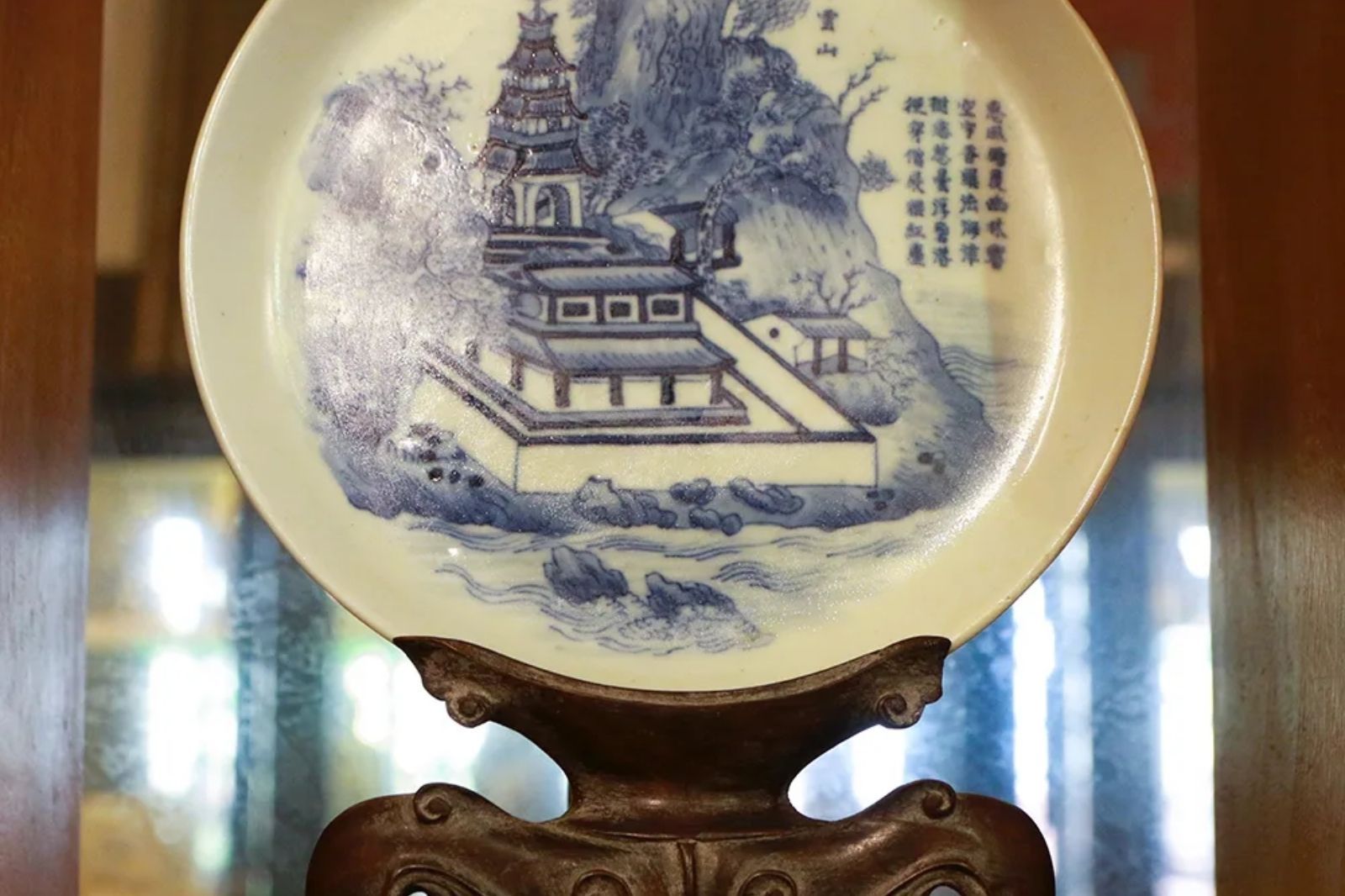
One of the Nguyen Dynasty porcelain items on display
Photo: One of the Nguyen Dynasty porcelain items on display 

2. Nguyen Dynasty Throne

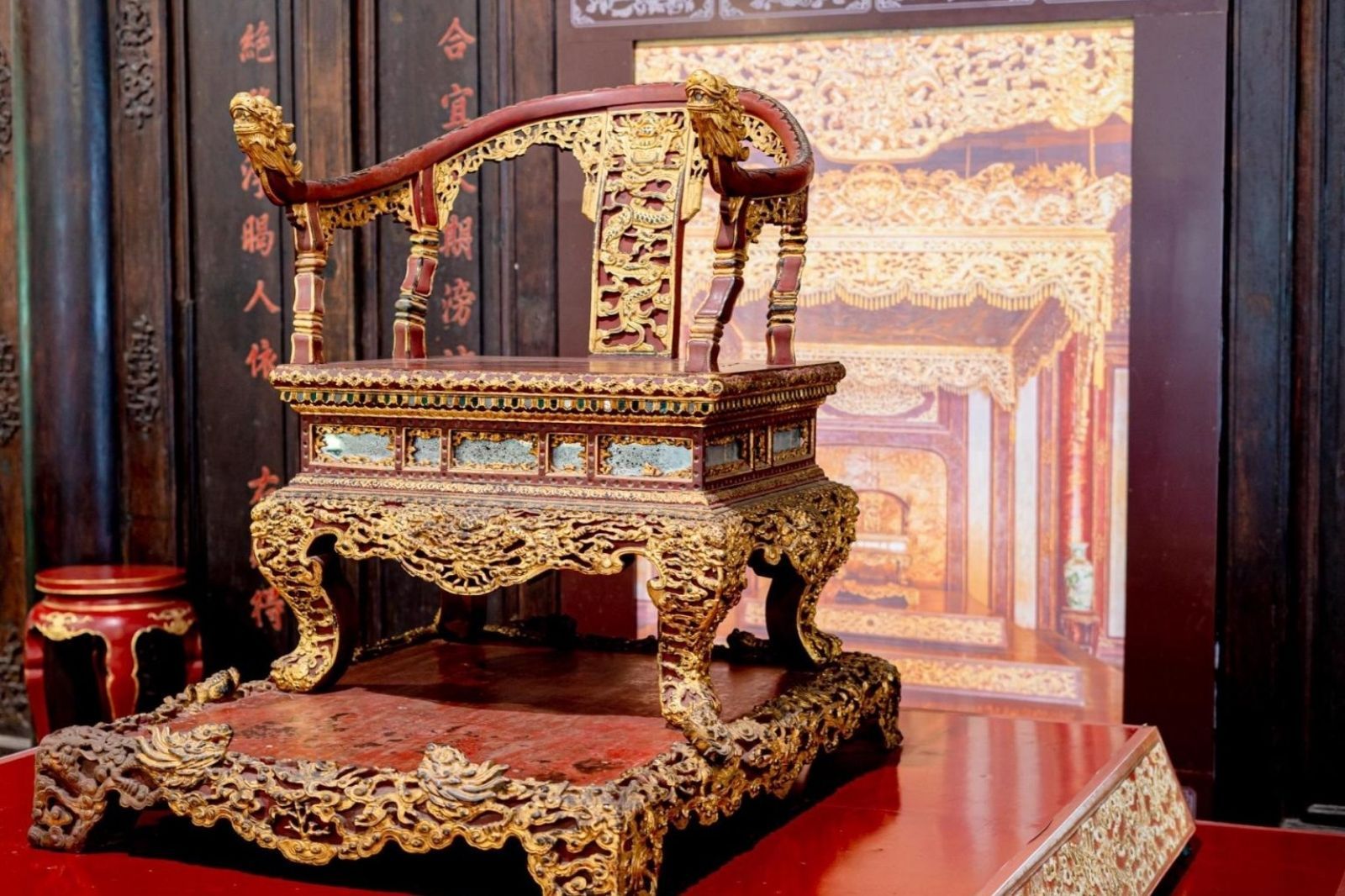
The golden throne – the ultimate symbol of power of the Nguyen kings, is displayed in the most prominent position in the museum, capturing attention from the very first moment. Crafted from precious wood, covered in splendid red paint and gold leaf, and weighing up to about 200 kg, the throne stands out with intricately carved motifs of dragons worshipping the sun on its back, symbolizing the absolute authority of the dynasty. With a height of about 1.8 m and a width of 1.5 m, set on a high platform, this artifact exudes a rare grandeur. Among the treasures, the throne of King Khai Dinh is the clearest testament to luxury and sophistication, having once been present in major rituals at the Imperial City. Not only carrying historical value, the throne is also an artistic masterpiece, portraying the masterly talent of Nguyen Dynasty artisans.

Nguyen Dynasty golden throne at the museum
Photo: Nguyen Dynasty golden throne at the museum 

3. Royal enamelware collection

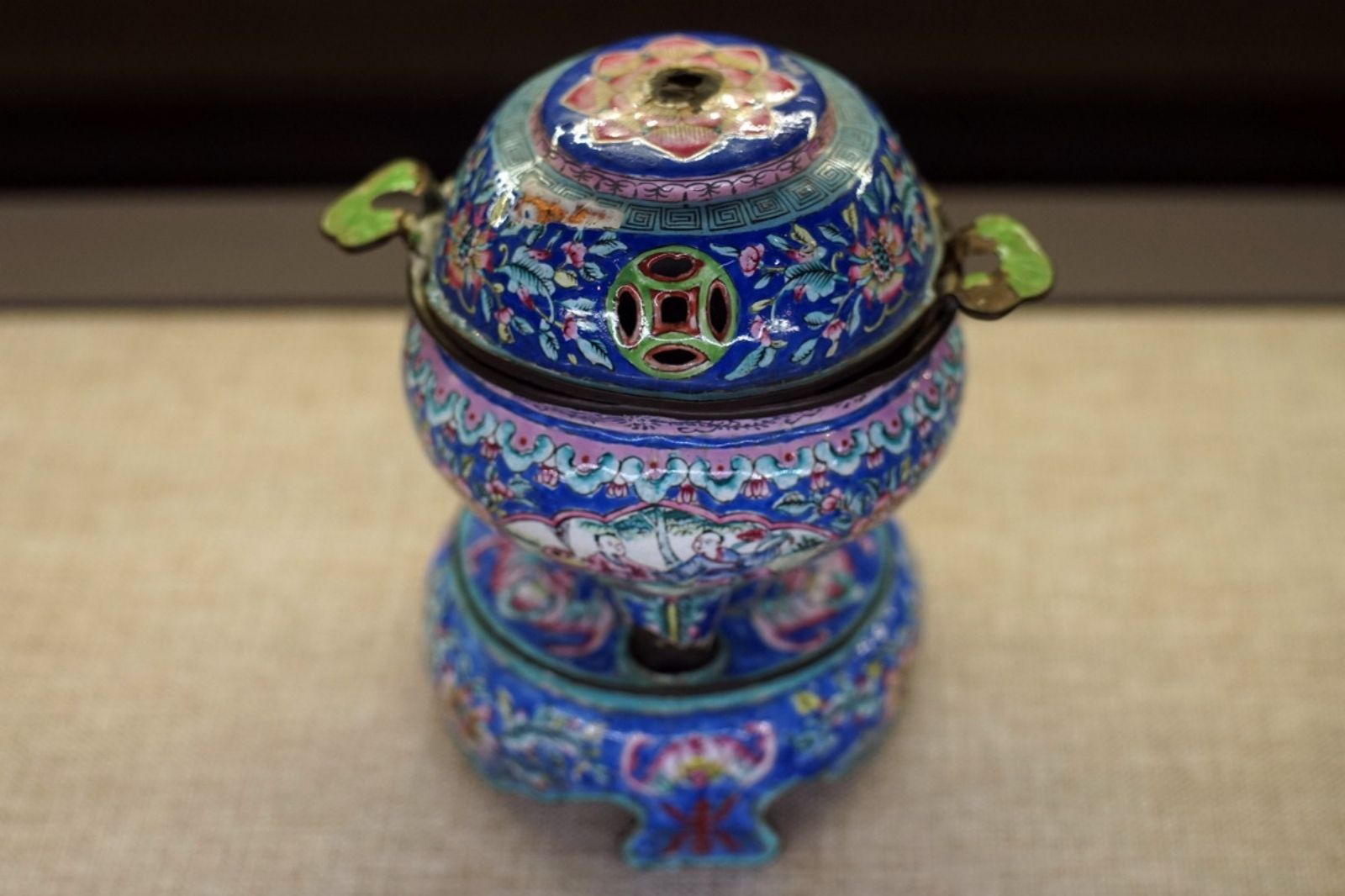
Phap lam items – exquisite enamel-coated metal artworks are one of the impressive highlights of the Museum of Hue Royal Antiquities. Crafted from copper or silver, each piece is coated with a vibrant layer of enamel in shades of blue, deep red, or lustrous yellow, creating a luxurious beauty that remains colorfast over time. The smooth surface is created thanks to complex enameling techniques, combined with motifs of flowers, birds, or royal palace scenes, all meticulously hand-carved or hand-painted. Artifacts such as incense burners, flower vases, tea trays... originally used in royal ceremonies, carry both artistic value and the imprint of royal court culture. 

Exquisite Phap Lam art of the Nguyen Dynasty
Photo: Exquisite Phap Lam art of the Nguyen Dynasty 

Prominent among them is a Phap lam incense burner from the Gia Long period, standing 40 cm tall, featuring chrysanthemum patterns intertwined with sky and clouds on a dominant cobalt blue background, exuding elegance and nobility. This is not only proof of supreme metalworking skills but also reflects the refined aesthetic taste of the Nguyen Dynasty.

4. Royal costumes and jewelry

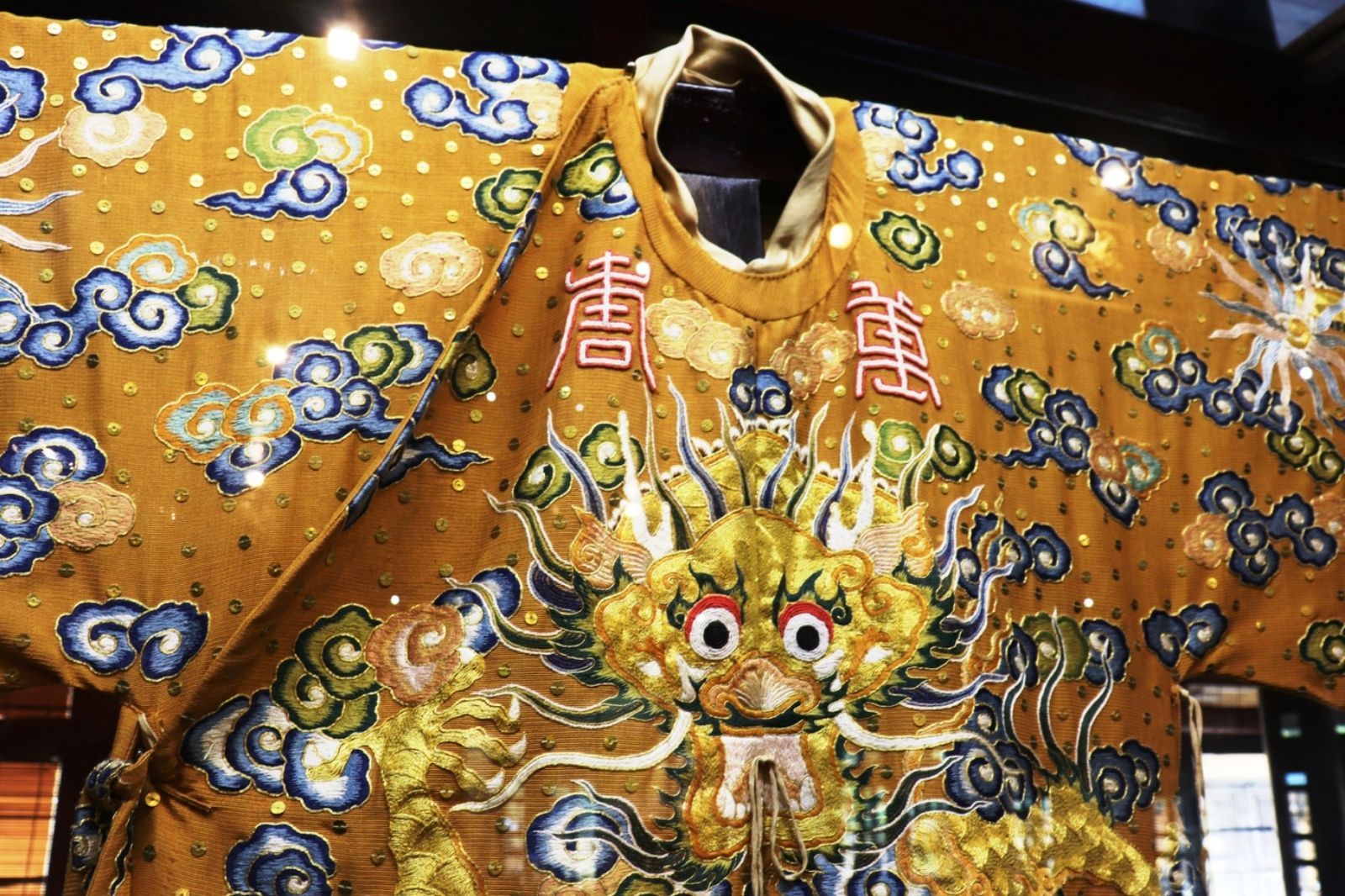
Royal costumes and jewelry at the Museum of Hue Royal Antiquities form a vivid picture of luxury, nobility, and strict order in Nguyen Dynasty feudal society. The robes and headwear were tailored from high-grade silk, meticulously hand-embroidered with dragon and phoenix motifs using gold or silver threads, which are not only magnificently beautiful but also carry powerful symbolic meaning. Accompanying jewelry such as hairpins, necklaces, earrings... were all crafted from gold, pearls, or precious stones, enhancing the wearer's elegance. 

Costumes densely embroidered with patterns of dragons, clouds, and water waves
Photo: Costumes densely embroidered with patterns of dragons, clouds, and water waves 

Each costume was individually designed according to status, with distinctive colors and patterns: yellow for the king, red or blue for the queen, creating clear distinctions. Among them, the dragon robe of King Bao Dai is particularly prominent: tailored from Song silk, embroidered with five-clawed dragons in gold thread on a 1.4 m long robe background, with every detail executed by master artisans over many consecutive months. Not only a testament to peak textile and embroidery craftsmanship, this collection also clearly reflects the hierarchical system and refined aesthetic taste of the ancient royal court.

5. Imperial calligraphy and parallel couplets

The calligraphic works and couplets displayed at the Museum of Hue Royal Antiquities are precious heritage items, carrying artistic value while deeply reflecting Confucian thought and the literary talent of the Nguyen Dynasty kings, especially King Tu Duc. These Chinese-character writings created on wood or paper, coated with magnificent red lacquer and gold leaf, contain rich content ranging from poetry and celebratory couplets to philosophical admonitions. Many works are large in size, such as horizontal wooden plaques up to 2 meters long that once hung solemnly in royal palaces. One of the representative treasures is the couplet “Van minh thinh tri” from the Tu Duc period, carved on ironwood, gilded with gold, 1.8 m long, with brushstrokes that are both powerful and fluid. Not only beautiful in form, this collection is also a valuable source of documentation helping researchers and visitors better understand the culture, thought, and academic achievements of the Nguyen royal court.

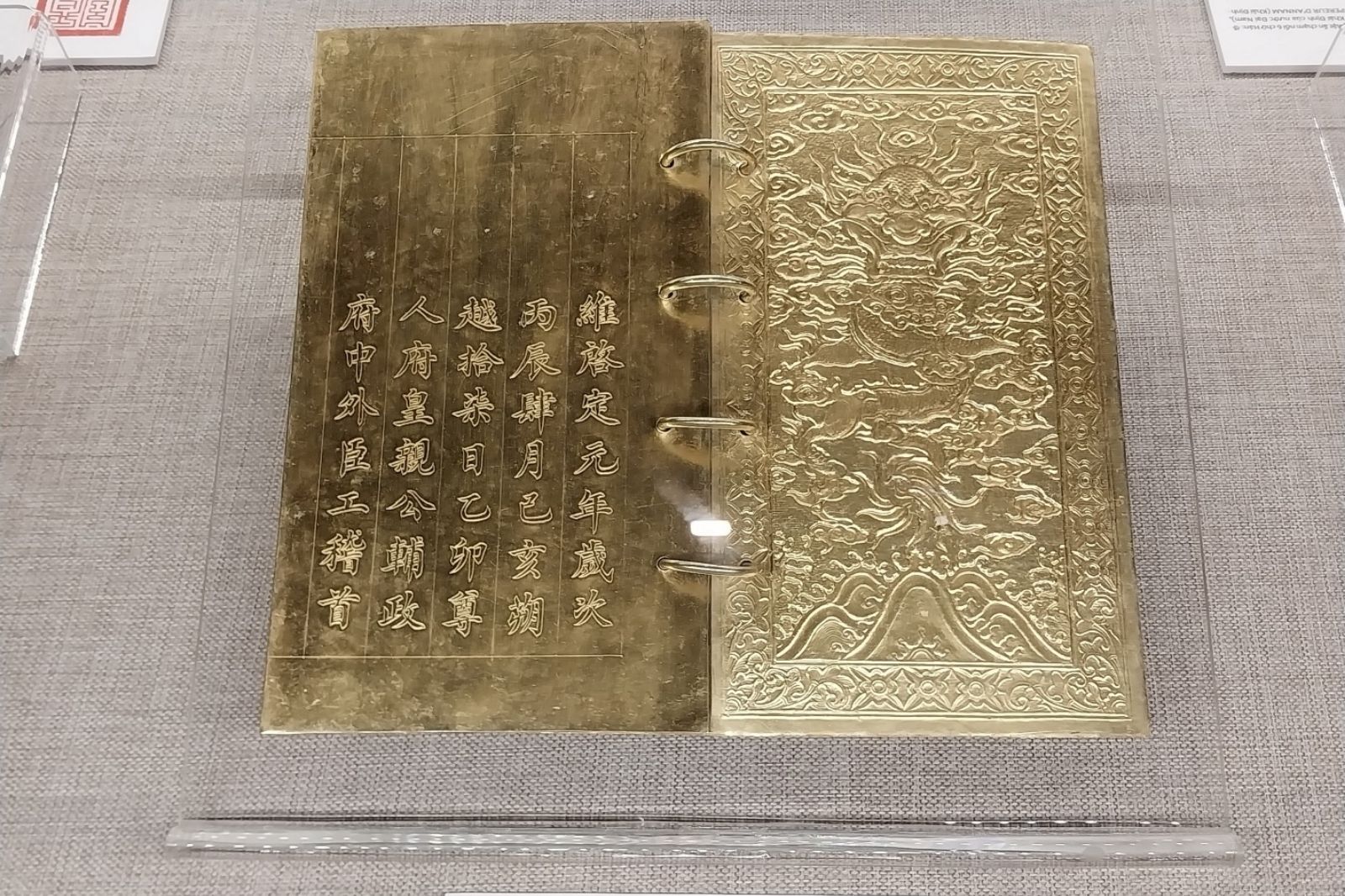
Gold-plated silver royal book
Photo: Gold-plated silver royal book 

Exploring the precious treasures at the Museum of Hue Royal Antiquities is not only a journey to admire century-old masterpieces of art and antiquities, but also an opportunity to relive the majestic and magnificent atmosphere of the Nguyen Dynasty. Each artifact here carries within it a story of history, culture, and handcrafted craftsmanship from a golden age. If you want to see with your own eyes the splendid golden throne, exquisite dragon robes, or rare commissioned porcelain, plan a complete tour. A Museum of Hue Royal Antiquities tour combined with the Imperial City, royal tombs, and pagodas will help you fully appreciate the beauty and depth of the ancient capital. This will surely be the most memorable experience in your journey to discover Hue.

Loading......

Featured destinations