|

Back Home

Hue Phap Lam Art: The Golden Touch in Nguyen Dynasty Court Crafts

Central

Thua Thien Hue

Sovaba.travel

Updated at: 28/08/2026

1. What is Phap Lam art?

Hue Phap Lam art, also known as enamelled copperware of the Nguyen Dynasty, is the technique of crafting items from copper or copper alloy with a color-enameled surface to enhance aesthetic value. This is a unique art form combining specialized materials, commonly used in royal court decoration, featuring strong local characteristics and flourishing exclusively under the Nguyen Dynasty (1802–1945). Hue Phap Lam belongs to the "Hoa phap lang" technique (painted enamel on a base coat, similar to oil painting), differing from techniques such as "Khap ti phap lang" (cloisonné enamel).

Not limited to decorative items, Phap Lam can withstand external forces and harsh weather, making it suitable for both interior and exterior applications. For instance, large flat Phap Lam panels were used for architectural adornments, while smaller items like vases and censer burners served ceremonial purposes. According to historical records, Hue Phap Lam is regarded as a "golden touch" due to its vibrant colors and exquisite technique, contributing to the majestic grandeur of Hue's royal structures.
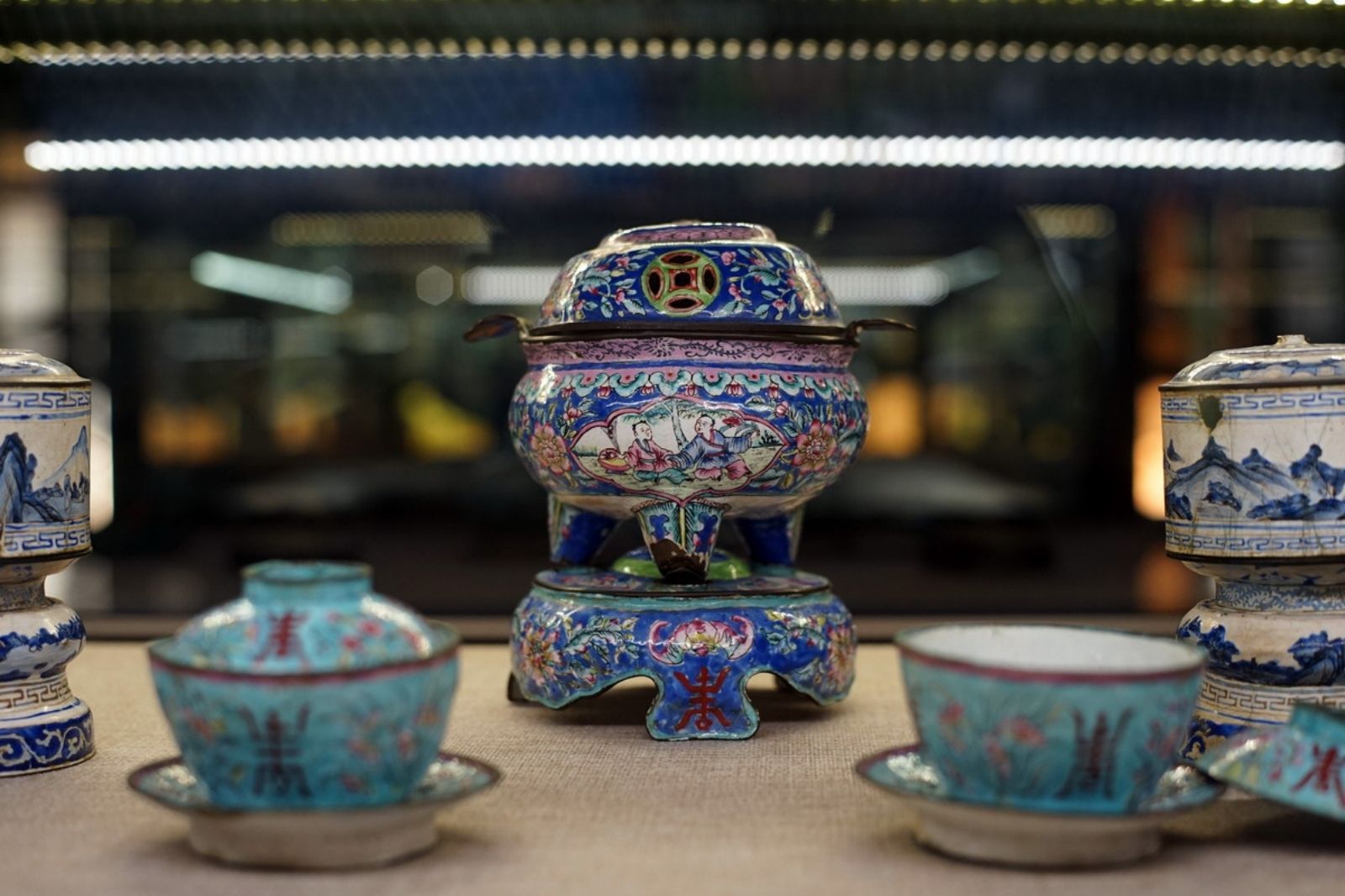
Nghệ thuật Pháp Lam là một di sản văn hóa đặc sắc của Triều Nguyễn
Photo: Phap Lam art is a unique cultural heritage of the Nguyen Dynasty 

2. The origin and development of Hue Phap Lam during the Nguyen Dynasty

Phap Lam (also known as Phap Lang) originated in Central Asia, was introduced to China during the Song Dynasty, and developed significantly during the Ming and Qing Dynasties. In Vietnam, this technique was brought in during the reign of Emperor Minh Mang in 1827, when master artisan Vu Van Mai—a renowned painter of the Royal Workshop (Noi Tao)—was sent to Guangdong (China) to learn the craft. Upon his return, he established the Phap Lam Tuong Cuc (Phap Lam Bureau), a dedicated workshop producing enamelware for the royal court. In addition to the main workshop located in the Canh Nong area within the Imperial City (Hue), the Nguyen court also established branch workshops in Ai Tu (Quang Tri) and Dong Hoi (Quang Binh) to meet court decorative demands.

The technique of Hue Phap Lam was influenced by Guangdong's Hoa phap lang (painted enamel) craft, yet Vietnamese artisans creatively adapted and "Vietnamized" it to form a distinct style separate from Chinese enamelware. While Chinese Phap Lam frequently utilized the Khap ty phap lang (cloisonné) technique with copper wire borders to separate enamel colors, Hue Phap Lam favored the Hoa phap lam technique, painting motifs directly onto the base enamel layer, resulting in creations imbued with personal artistic expression, warmth, and rustic elegance. 

The term "Phap Lam" has sparked considerable debate among researchers. Some suggest that "Phap Lam" derives from "phap lang", but was altered to "lam" to avoid a naming taboo regarding Lord Nguyen Phuc Lan or Queen Tong Thi Lan (wife of Emperor Gia Long). Another explanation proposes that "phap" means standards or rules, while "lam" denotes the traditional blue enamel color. Thus, "Phap Lam" can be interpreted as the art of enameling following specific rules, carrying a noble significance like precious jade.

3. The role of Phap Lam art in Hue imperial court arts

Phap Lam played a vital role in court crafts, serving not only as decorative material but also as a symbol of royal power and aesthetic taste. It was widely applied across three domains: architectural decoration (exteriors such as roof ridges and friezes), interior furnishings (horizontal panels, couplets), and ceremonial and daily utensils (incense burners, flower vases, tea trays).

Within the court, Phap Lam heightened the solemnity and majesty of royal rituals such as the Nam Giao and Temple sacrifices. It differed from Chinese Phap Lam by being applied to large architectural spaces, contributing to intangible cultural heritage. The Hue Museum of Royal Antiquities currently preserves 98 artifacts, proving its essential role in royal life. Phap Lam also demonstrated the selective absorption of foreign culture, enriching Nguyen-era Vietnamese handicrafts.

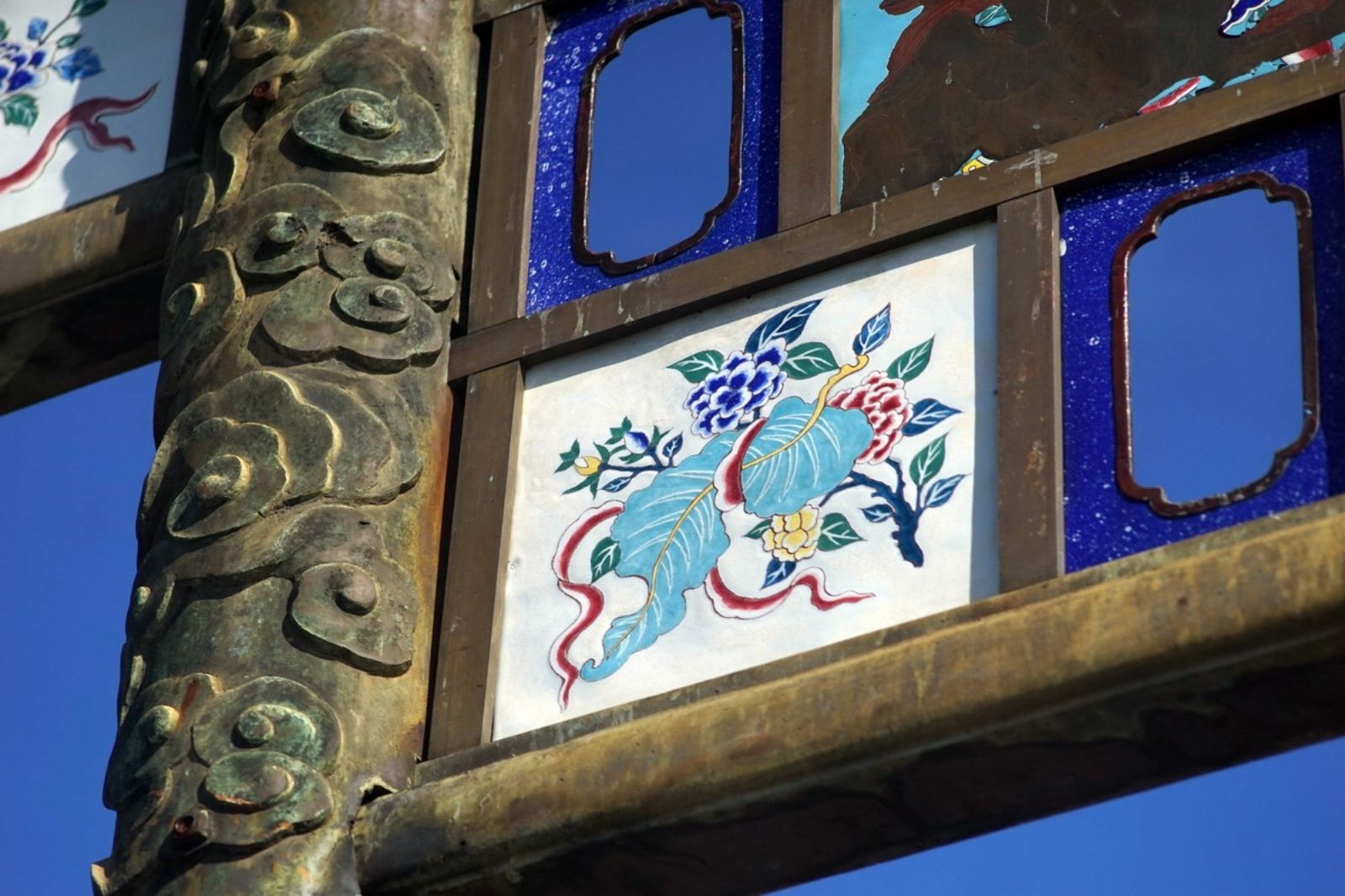
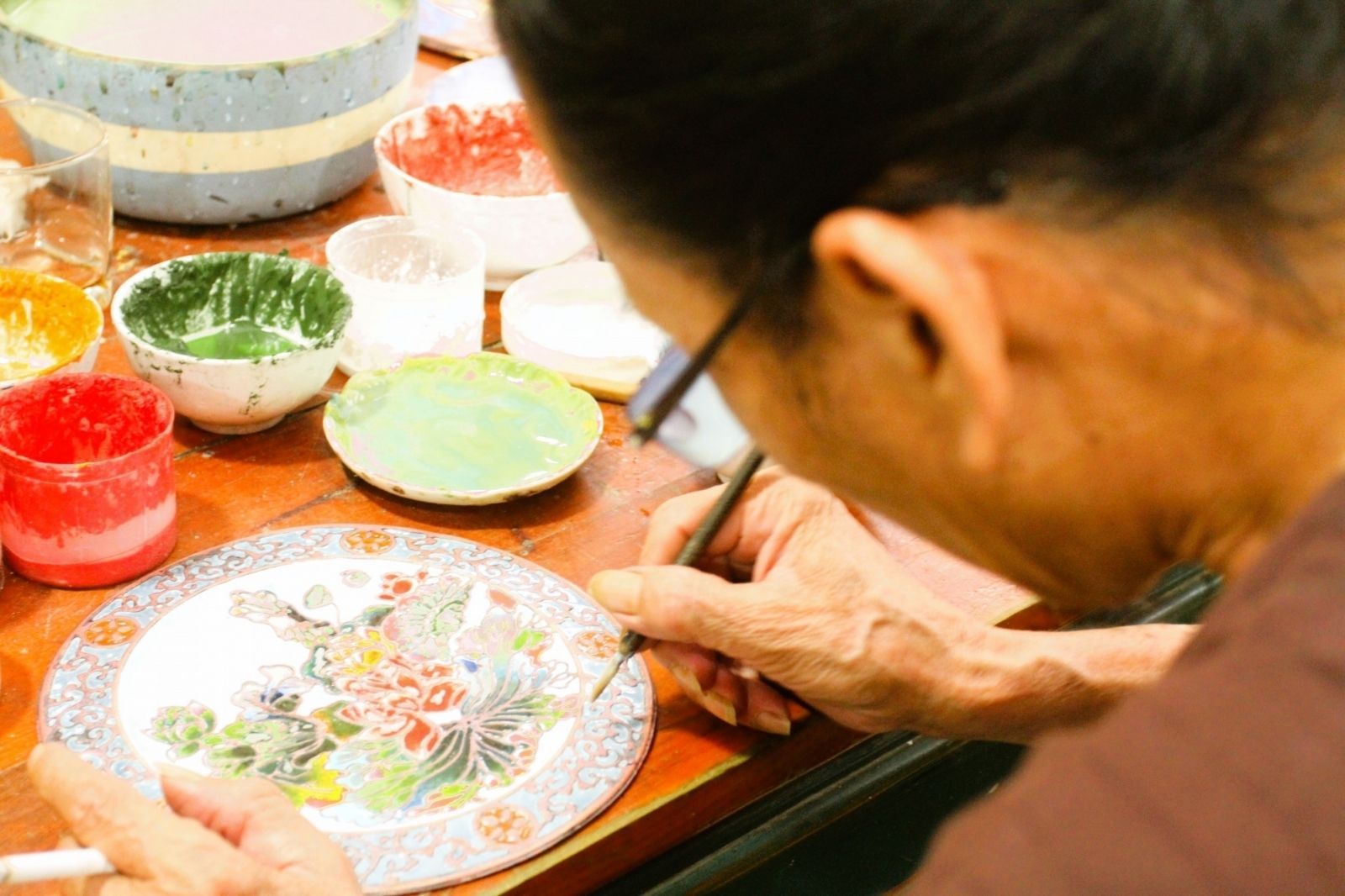
Pháp lam Huế là kỹ thuật vẽ nhiều lớp lên gốm
Photo: Hue Phap Lam is a multi-layer painting technique on copper bases 

4. Traditional making techniques of Hue Phap Lam

The traditional crafting technique of Hue Phap Lam belongs to the "Hoa phap lang" style: first shaping the metal core (thai cot) from copper, then applying a base enamel coating, using fine brushes to paint intricate motifs, and firing at high temperatures. The complex process includes:

  • Preparing the metal core: Casting or hammering copper into the desired shape.
  • Enameling: Coating with white enamel as a base, then painting fine details with colored enamels (blue, yellow, red).
  • Firing: Repeatedly firing at 800-900°C to allow the enamel to melt and fuse securely.
  • Finishing: Polishing and adding extra engravings if necessary.

Hue artisans showed great innovation by combining this with "Khap ti phap lang" for certain custom-ordered items from China. The technique faded after 1889, but has recently been revived through research, although it has yet to fully replicate the historic level of refinement. The crafting process demands exceptional skill and patience, utilizing enamel components derived from natural minerals.

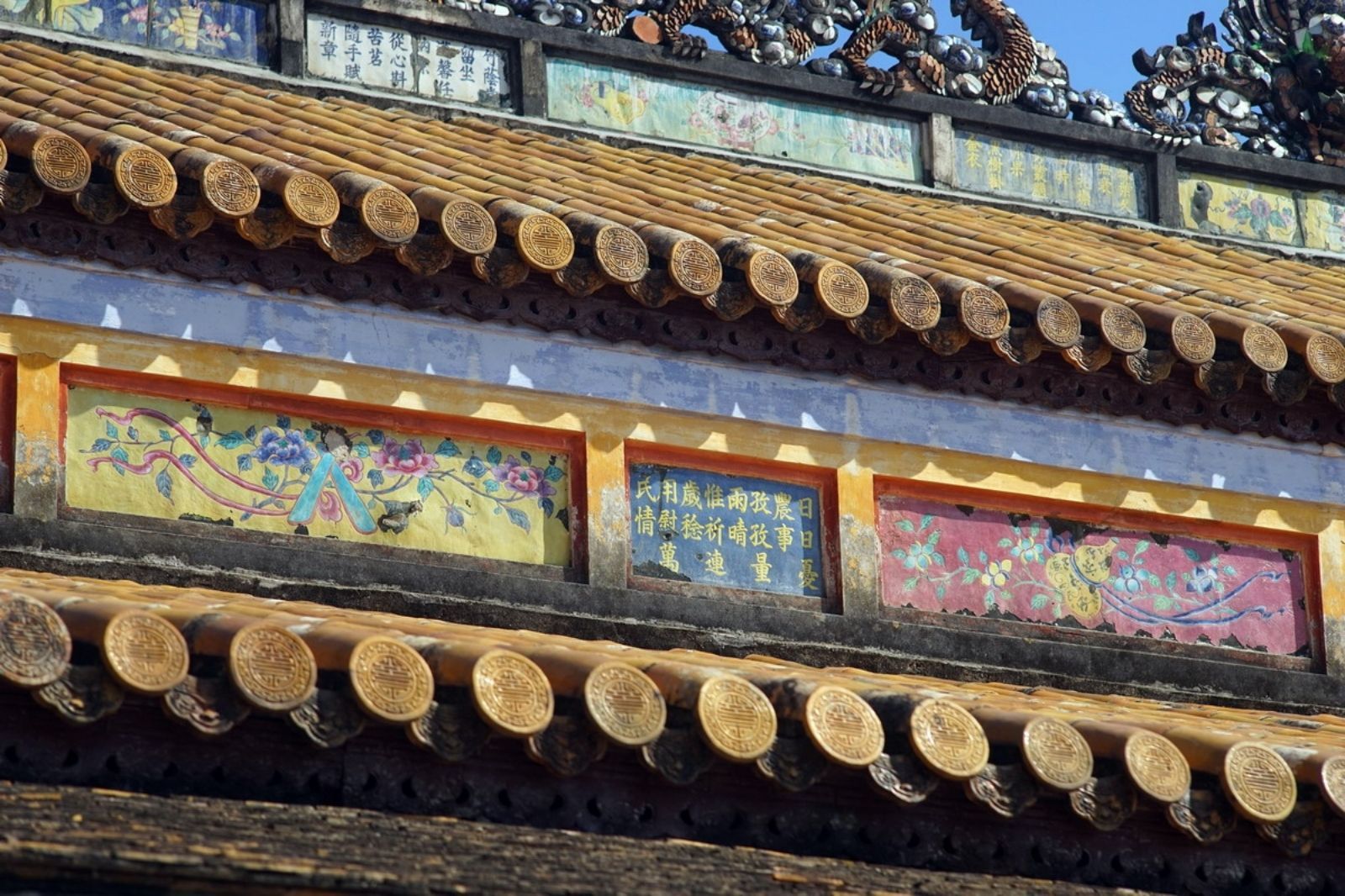
 Ô pháp lam trên dải cổ diêm của điện Thái Hòa
Photo:  Phap Lam panels on the roof frieze of Thai Hoa Palace

5. Signature colors and motifs in Hue Phap Lam art

Colors in Hue Phap Lam are vibrant yet elegant, featuring a traditional palette: cobalt blue (dominant), lemon yellow, red, purple, soft pink, and deep green. Color enamels derived from natural minerals possess high weather resistance, creating a shimmering effect described as a "golden touch".

Characteristic motifs include:

  • The Four Sacred Beasts: Dragon, Phoenix, Qilin, and Turtle – symbols of royal power.
  • Flora and Birds: Peonies, songbirds, and leafy vines.
  • Landscapes: Mountains and rivers, human figures (occasionally in European style under Emperor Minh Mang).
  • Poetry and Calligraphy: Han-Nom characters, couplets, classical patterns.

The patterns are rich and lively, harmoniously blended with localized Vietnamese elements, such as large flat panels featuring a yellow background painted with flowers amidst green tendrils.

Pháp lam Huế có những đặc trưng riêng
Photo: Hue Phap Lam possesses its own distinct characteristics 

6. Prominent remaining Phap Lam architectural works in Hue

Today, the art of Hue Phap Lam is still preserved across many key architectural monuments representative of Nguyen Dynasty court craftmanship, including:

  • Thai Hoa Palace (Hue Imperial City): Highlighted by the ceremonial gate plaque bearing the motto “Trung hoa vi duc” along with Phap Lam decorative panels on the roof friezes, embodying royal symbolism and authority.
  • Minh Mang Tomb: Sung An Temple still retains large flat Phap Lam decorative panels, reflecting the exquisite craftmanship during its golden era.
  • Tu Duc Tomb: Hoa Khiem Temple and the ceremonial gate area bear traces of Phap Lam with harmonious, elegant compositions.
  • Thieu Tri Tomb: Bieu Duc Temple records the presence of Phap Lam in commemorative architectural spaces.
  • Dong Khanh Tomb: Ngung Hy Temple is a prime example of combining Phap Lam with other forms of royal court decoration.
  • Thien Mu Pagoda: Gourd-shaped details and exterior decorative motifs show that Phap Lam was present not only in royal palaces but also extended to religious architecture.

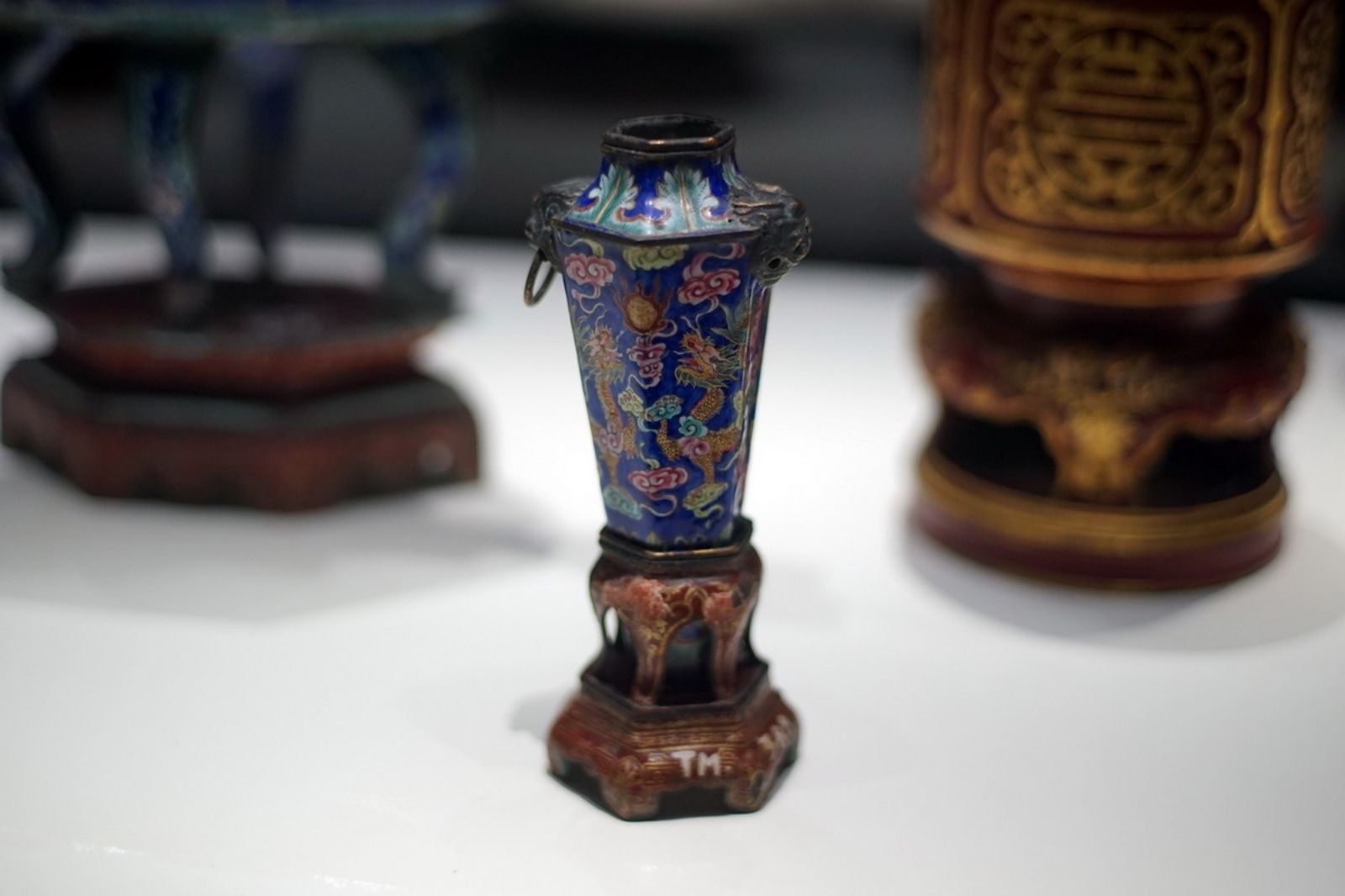
In addition, the Hue Museum of Royal Antiquities currently displays 98 Phap Lam artifacts, including incense burners, jars, and numerous precious court utensils. Alongside museum exhibitions, many historical monuments in Hue are undergoing restoration and conservation, contributing to preserving and restoring the unique value of Phap Lam art for future generations.

Nghệ thuật Pháp lam trong trang trí đồ dùng
Photo: Phap Lam art in utensil decoration 

7. Characteristics and artistic value of Hue Phap Lam

Compared to Chinese enamelware, Hue Phap Lam possesses unique features rather than strictly imitating Ming-Qing styles:

  • Hoa Phap Lam technique: Painted directly onto the enamel base, creating unique one-of-a-kind artworks carrying the artisan's personal signature.
  • Distinctly Vietnamese motifs: Motifs such as two dragons facing the moon, floral dragons, or turtles carrying the Eight Trigrams are stylized in a traditional Vietnamese aesthetic, differing from Chinese dragons with distinct horns and scales.
  • Vibrant and durable colors: Shades of red, blue, yellow, and purple are not only radiant but also highly resistant to harsh weather, maintaining their beauty over centuries.

Hue Phap Lam is not merely a decorative art form, but also a symbol of cultural exchange between Vietnam and the world. Phap Lam creations display the ingenuity and artistic talent of Vietnamese craftsmen while reflecting Confucian philosophy, cosmic concepts, and royal aesthetic senses. With its presence across iconic monuments and royal items, Phap Lam has contributed to elevating the Complex of Hue Monuments into a UNESCO World Cultural Heritage site.

The Hue Museum of Royal Antiquities currently houses many precious Phap Lam artifacts, including incense burners, flower vases, and decorative plates, serving as proof of the richness and enduring value of this art form.

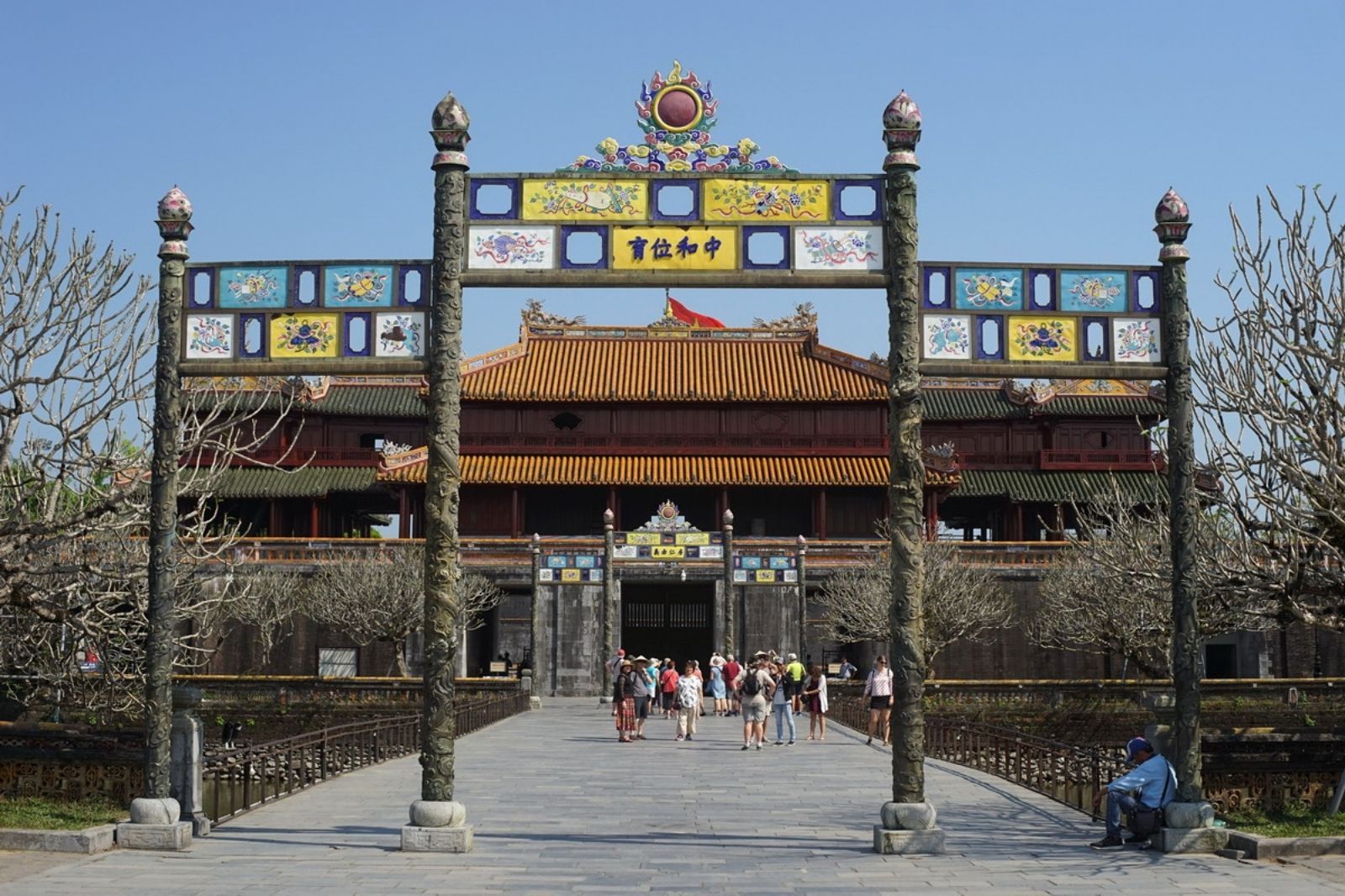
Cầu Trung Đạo được trang trí bằng các ô Pháp lam
Photo: Trung Dao Bridge decorated with Phap Lam panels

Hue Phap Lam art is not only a priceless cultural heritage but also a living testament to the skill and creative genius of Vietnamese artisans under the Nguyen Dynasty. With sophisticated crafting techniques, vivid colors, and deeply Vietnamese motifs, Phap Lam helped shape the golden beauty of the Ancient Capital of Hue. Though once overlooked, recent restoration efforts have injected fresh vitality into the craft, opening up opportunities to bring Phap Lam to the world. If you wish to admire and learn more about this unique royal court craft firsthand, the Hue tour by Sovaba Travel will take you to exhibition spaces and craft villages to fully experience the essence of Phap Lam in the heart of Hue's heritage.

Loading......

Featured destinations