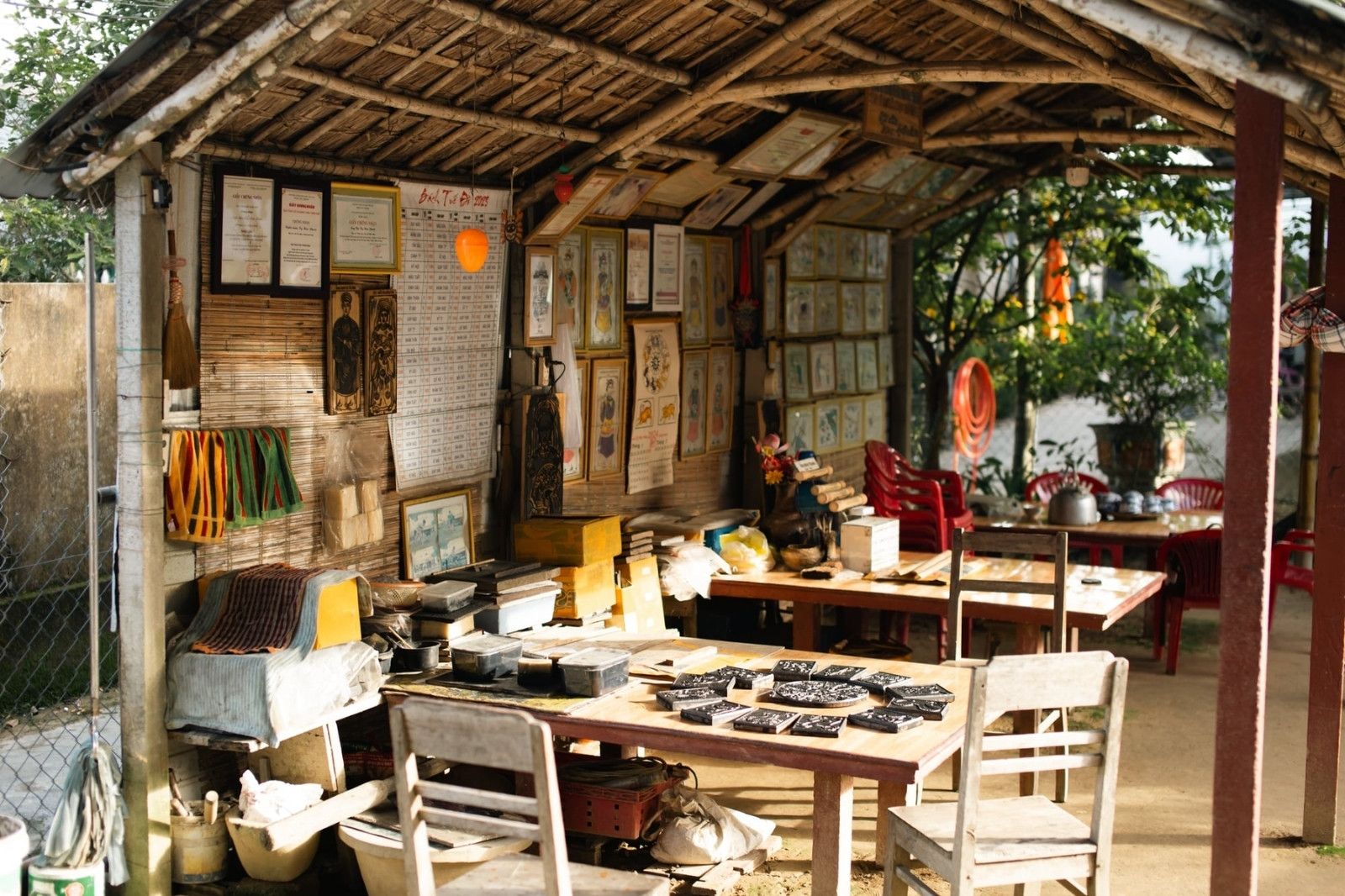
Experience Sinh Village Folk Painting in Hue: Learn to Paint & Explore Ancient Culture
Central
Thua Thien Hue
Sinh Village Hue
Sovaba.travel
Updated at: 24/09/2026
1. Sinh Village: Preserving the Soul of the Ancient Capital
Sinh Village (Lai An) is one of the oldest ancient villages in Inner Realm (Dang Trong), formed very early on. Located opposite Thanh Ha port and close to the bustling Pho Lo and Bao Vinh Ancient Town, Sinh village was once a vibrant trading center.
Photo: Sinh Village - Preserving the Soul of the Ancient Capital
Beyond its economic significance, the village was also a major cultural center with the renowned Sung Hoa Pagoda and a famous wrestling festival held annually on the 10th day of the first lunar month. The Nom name "Sinh" has various explanations, but the most interesting is the story of an abundant fish and shrimp market that got spoiled from unsold stock, or a phonetic variation of "Hinh" - a martial arts stance of the village. These rich traditions laid a solid foundation for woodblock printmaking in Sinh, which served not only elegant leisure but primarily the spiritual beliefs of the local people.
2. Painting-Making Experience: Touching the Cultural Essence
In Sinh village, artisan Ky Huu Phuoc is considered the last master holding the traditional secrets of the craft. Visiting his home, you will listen to stories about the ups and downs of the craft village, from its heyday to its decline due to war and outdated perceptions, and its revival thanks to his dedication and government policies to restore traditional craft villages.
Participating in the painting-making experience, you will personally perform 7 meticulous steps to create a complete artwork:
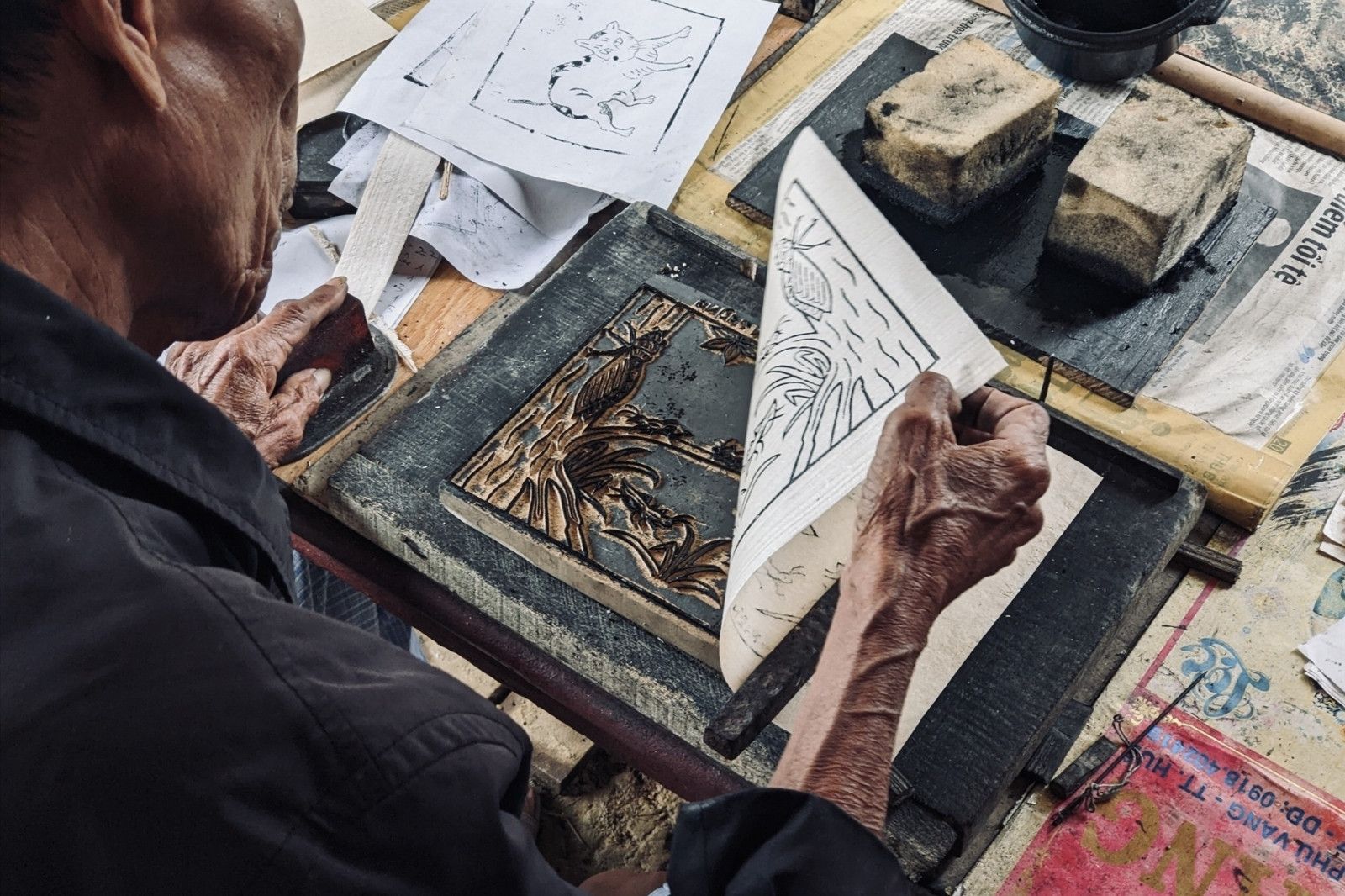
Photo: Woodblock printing stage
Trimming paper: Purchased Do paper (poonah paper) is trimmed into various sizes, depending on the dimensions of the painting.
Coating with shell powder (Quét điệp): This step gives Sinh paintings their distinct character. Scallop shells scraped from Tam Giang Lagoon are ground into powder, mixed with rice paste, and brushed onto the Do paper. This layer of glittery shell powder not only makes the paper tougher and better at retaining color, but also creates a sparkling, charmingly rustic background.
Woodblock printing: The artisan applies black ink (made from kitchen straw ash) onto the wooden block, then places the shell-coated Do paper on top and rubs it evenly with a loofah brush. As a result, intricate carved lines from the woodblock appear clearly on the paper surface.
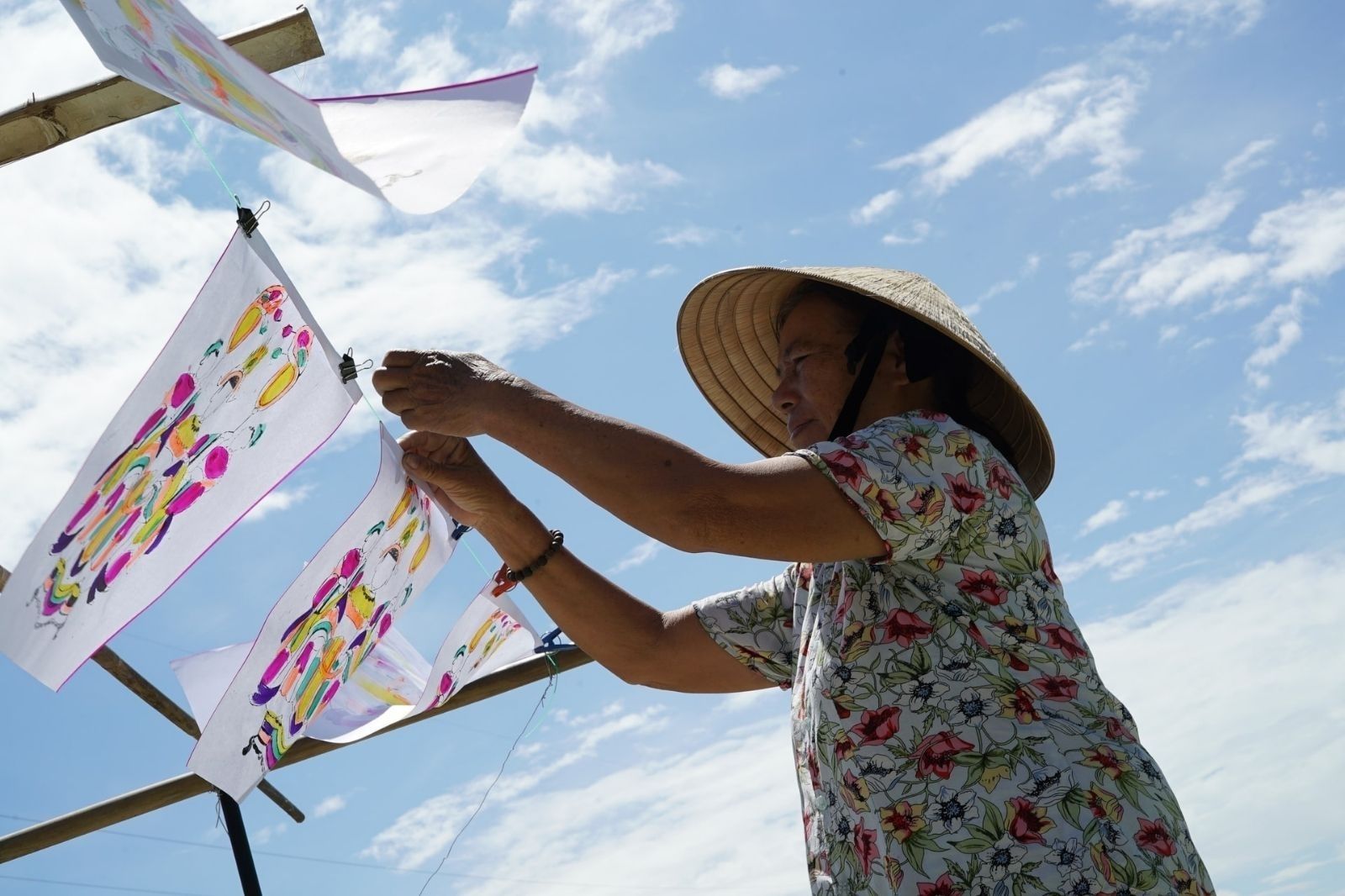
Drying the print: After printing, the paintings are dried so the ink adheres firmly to the paper.
Mixing colors: This step showcases the skill of the artisan. Colors in Sinh paintings are crafted entirely from natural ingredients: red from sappanwood roots, yellow from pagoda tree flowers and dung leaves, green from crabapple leaves and gardenia flowers, orange from soft brick powder, and purple from Malabar spinach seeds. Even the coloring brushes are made from wild pineapple roots, which retain color well without smudging the ink.
Coloring: Once all colors are prepared, you will be guided on coloring according to the theme of each painting. Although there are color layout conventions, you can still unleash your creativity to make a unique mark on your artwork.
Dotting the eyes (Điểm nhãn): This final step is reserved for certain registered painting themes, giving the artwork a complete finish and full spiritual meaning.
Photo: Experiencing folk printmaking at Sinh Village
Through each stage, you will not only learn the technique but also feel the meticulous care and dedication of the craft custodians.
3. Other Exciting Experiential Activities
Besides creating your own Sinh painting, visitors to this ancient village can immerse themselves in many other unique cultural activities:
Join the vibrant wrestling festival
If you visit Sinh village on the 10th day of the first lunar month each year, you will have the opportunity to immerse yourself in the lively atmosphere of the Sinh Village Wrestling Festival. Existing for over 400 years, this festival has become a unique cultural feature, showcasing the martial spirit and resourcefulness of local Hue youths.
Explore the craft village and scenery
You can spend time strolling around the village, admiring ancient houses, and soaking in the peaceful, quiet atmosphere of a rural village by the Perfume River. Located opposite Thanh Ha port and near ancient Pho Lo and Bao Vinh street, you can imagine a bustling past
Learn about other traditional crafts
Besides painting, Sinh village is also famous for other traditional crafts like incense making and popped rice cakes for offerings. Though less widespread than printmaking, you can still learn about these crafts to discover a complete picture of local working life and faith
Interact and chat with local residents
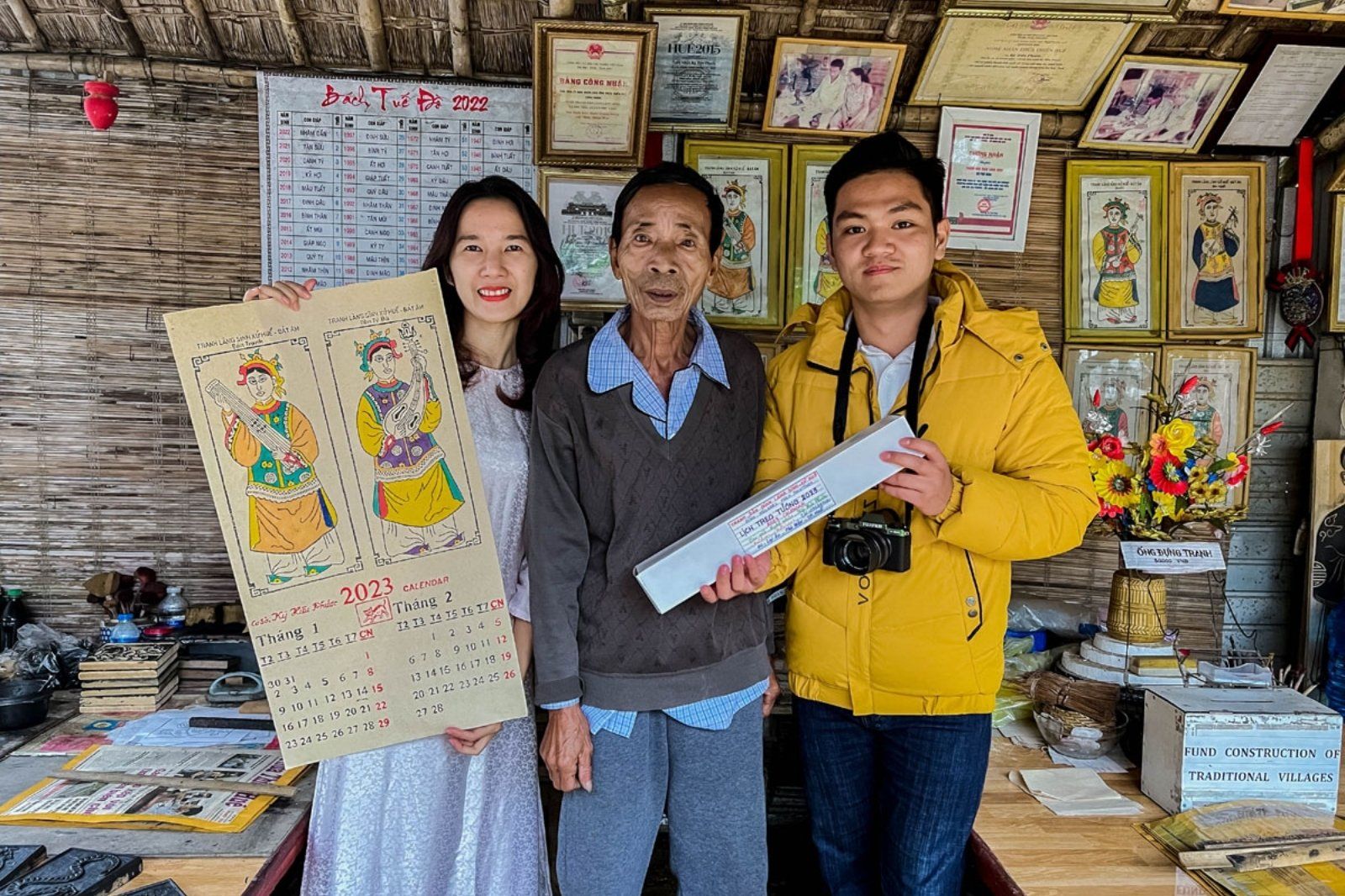
One of the most rewarding experiences is conversing with the hospitable villagers of Sinh village, especially artisan Ky Huu Phuoc. The stories they share about history, culture, and daily life will help you deeply appreciate the value of traditional craft villages and the passion of local artisans.
Photo: Chatting and learning about Sinh village culture
These activities not only help you understand more about a traditional craft village, but also offer an opportunity to touch the cultural essence, making every trip not just an exploration but a genuine connection with the land and people of Hue.
4. From Worship to Decoration: Diverse Themes
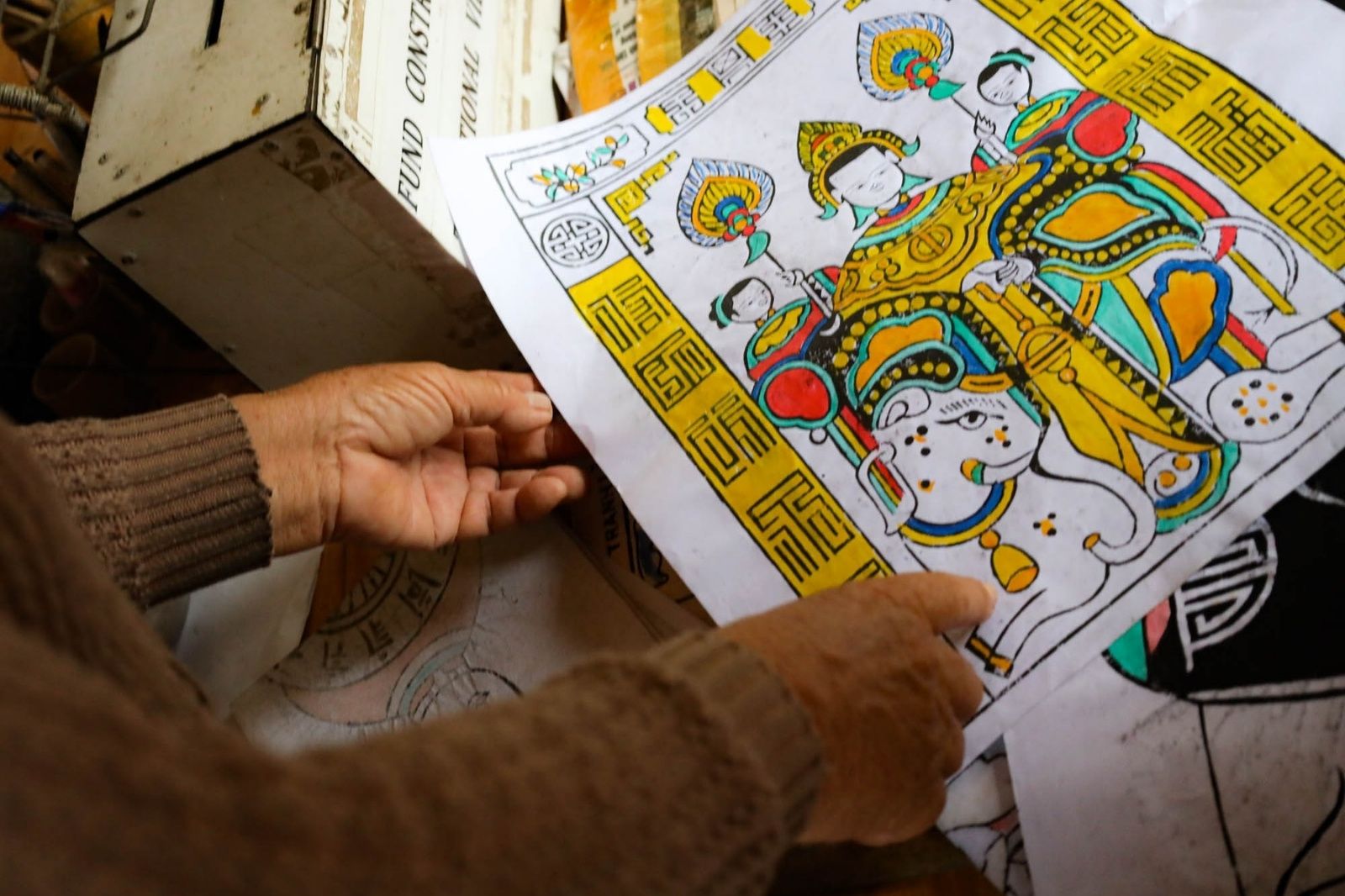
Originally, Sinh village folk paintings were created primarily to serve religious beliefs and worship needs. The subjects are rich and varied, including:
Human figure paintings: Tuong Ba (guardian deity), Tuong Bep (Kitchen/Earth gods), Con Anh (substitute effigies), along with paintings of other deities.
Animal paintings: Depicting the 12 zodiac animals, livestock, or sacred beasts for worship and prayers for peace.
Object paintings: Depicting clothes, tools, sacrificial offerings... to burn as offerings for ancestors.
Today, to meet tourist demands, Sinh village paintings have expanded to include decorative art lines. Folk themes associated with daily life and festivals of Hue locals such as wrestling, tug-of-war, or the Bat Am (Eight Traditional Musical Instruments) set have further enriched this art form.
Despite being handmade with such elaborate effort, a Sinh painting is very reasonably priced, ranging from 15,000 to 90,000 VND per piece, making it a unique souvenir steeped in cultural identity.
Sinh village painting is not only an artistic product but also a mirror reflecting the spiritual and cultural life of Hue people across generations. Although changes have been made to adapt to modern life, the soul of this painting style is still carefully preserved by artisans like Mr. Ky Huu Phuoc.
Photo: Sinh Village, a 400-year-old folk painting craft village
Participating in painting here is not merely a tourist activity, but a direct way for you to contribute to preserving and promoting the value of a precious cultural heritage. Join Sovaba Travel for a visit, pick up a brush, and create your own artwork to better understand the rustic, sacred beauty of Sinh village paintings, and see that traditional values live on amidst today's hectic life.