Hue Sinh Village Paintings: Delicate Folk Art of Hue

Central

Thua Thien Hue

Sovaba.travel

Updated at: 24/09/2026

1. Sinh Village: The Cradle of Folk Art

Sinh Village, also known as Lai An village, is located in Phu Mau commune, Phu Vang district, Thua Thien Hue province, about 9-10km northeast of Hue city center. Situated along the poetic Perfume River, near the confluence with the Bo River, Sinh Village has been a bustling trade center since the 16th century, a place where unique cultural and religious values converge. The woodblock printing craft here originated during the Trinh - Nguyen period, when Mr. Ky Huu Hoa, an emigrant from the North, brought paper painting techniques to make a living, thereby laying the foundation for this unique folk painting line.
Sinh Village paintings have a history of over 400 years
Photo: Sinh Village paintings have a history of over 400 years 

Sinh Village paintings were born over 450 years ago, initially serving religious needs, especially in worship ceremonies, praying for peace, and relieving bad luck. Unlike Dong Ho or Hang Trong paintings created for decoration or Tet celebrations, Sinh Village paintings are deeply spiritual, often used in worship rituals and then burned as votive paper to send to ancestors. Over time, despite undergoing many ups and downs, especially the decline after 1945 and being banned in the 1970s, Sinh Village paintings have been revived thanks to the efforts of artisans, particularly artisan Ky Huu Phuoc – the 9th generation heir of the craft. 
2. Unique characteristics of Sinh Village paintings

Sinh Village paintings are divided into three main groups, each with its own meaning and purpose:

  • Figure paintings: Include icons such as Tuong Ba (the guardian goddess riding an elephant, protecting the homeowner), Tuong Bep (Kitchen deities: Lady Tho Ky, Lord Tho Cong, Lord Tho Dia), Ong Dieu, Ong Doc, or Con Anh (substitute paper figures praying for peace for adults and children). These paintings are commonly used in spiritual rituals.
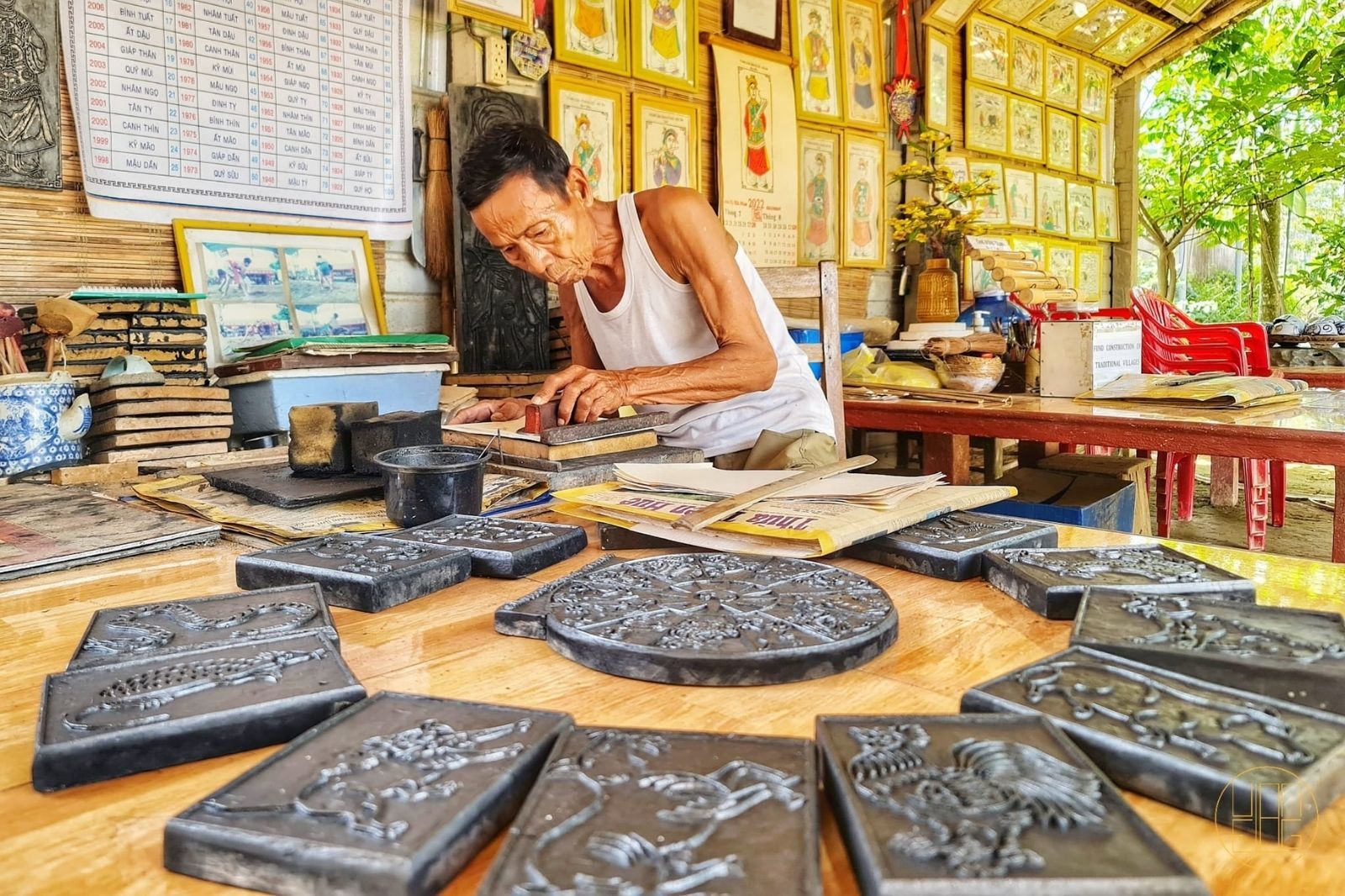
  • Animal paintings: Depict images of the 12 zodiac animals, livestock (buffaloes, horses, pigs), or sacred beasts (elephants, tigers) to pray for healthy animals and ward off misfortunes.
  • Object paintings: Consist of drawings of clothing, bows and arrows, household utensils, often used as offerings for worship or decoration.

In addition, to meet modern needs, Sinh Village paintings have developed decorative lines such as Bat Am paintings (8 girls playing musical instruments) or paintings depicting the Sinh Village wrestling festival, which are very popular among tourists.

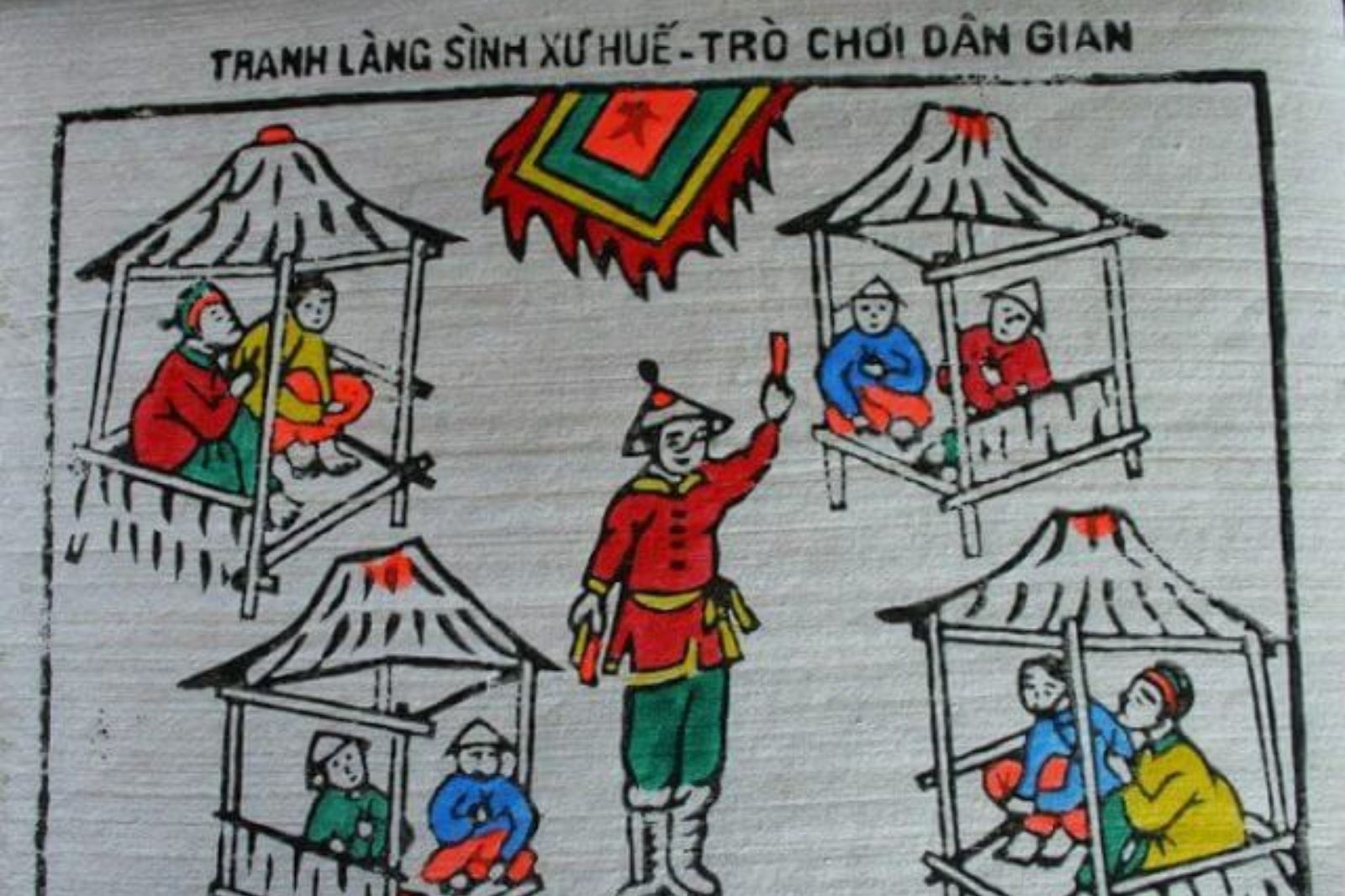
Folk game paintings of Sinh Village
Photo: Folk game paintings of Sinh Village 

Sinh Village paintings are completely handcrafted through 7 meticulous steps:

  • Cutting paper: Using do paper, a traditional durable, thin, and absorbent paper, cut into appropriate sizes.
  • Coating with seashell powder: Scallop shells from Tam Giang Lagoon are crushed into powder, mixed with rice paste, and brushed onto do paper to create a signature shimmer. This stage makes Sinh Village paintings unique, giving them a rough, rustic yet pearl-like glistening beauty.
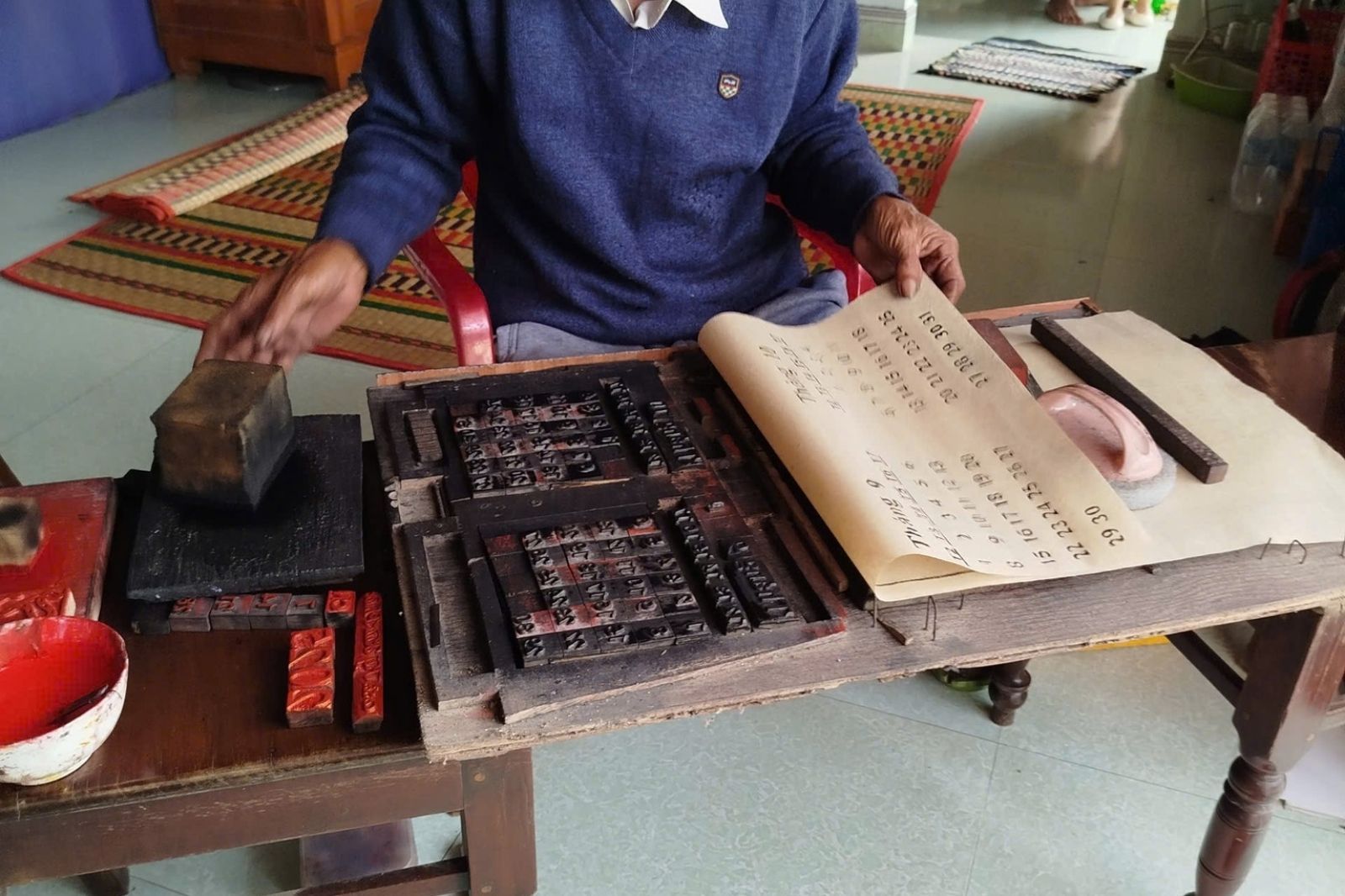
  • Printing on woodblocks: Wooden blocks (usually made from jackfruit, kien, or persimmon wood) are carved with patterns, brushed with black ink (made from sticky rice straw ash), then covered with do paper and rubbed evenly with a loofah brush to print the outlines.
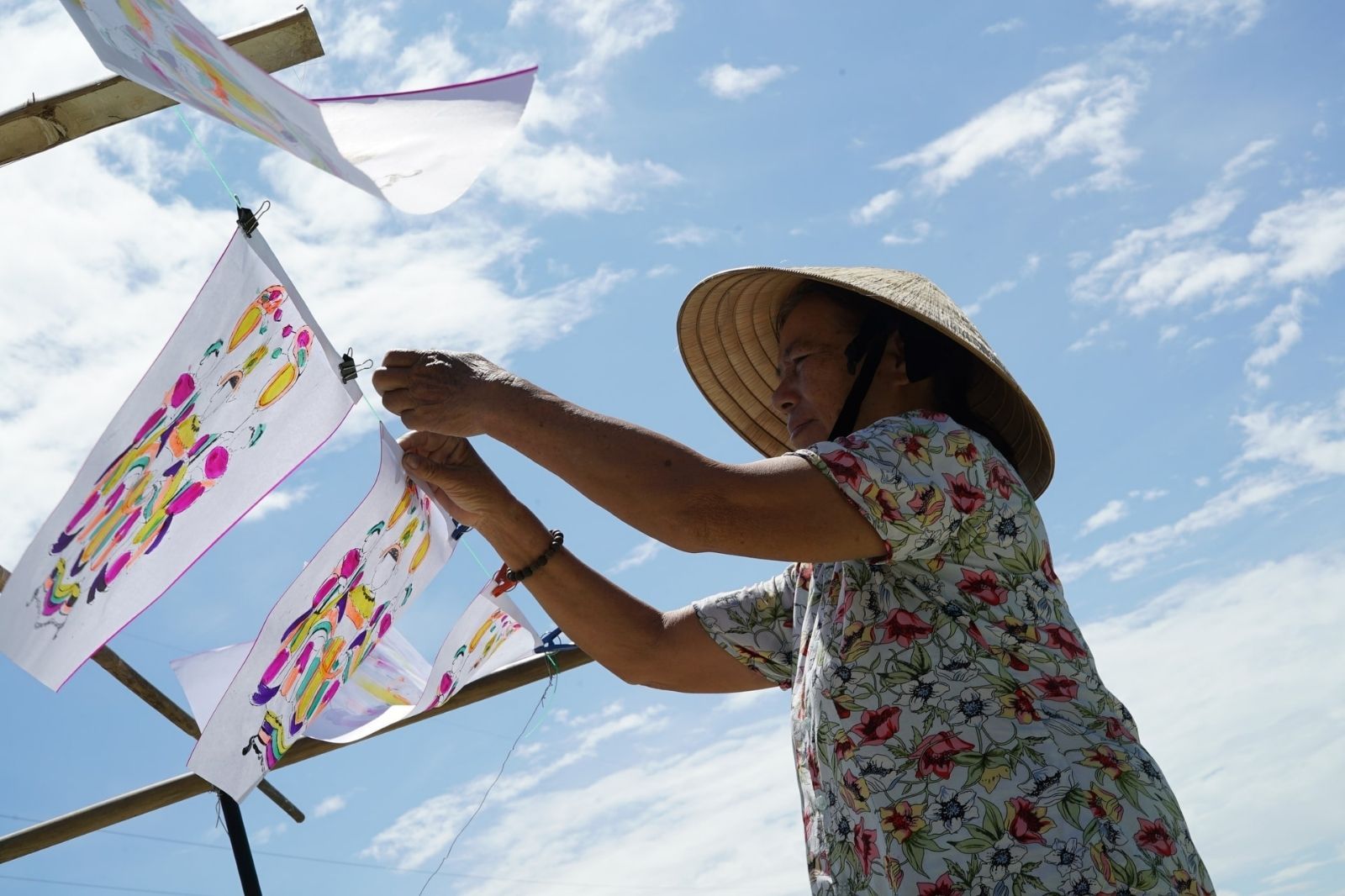
  • Drying paintings: The raw printed sheets are dried in a cool, ventilated place.
  • Mixing colors: Colors are prepared from natural ingredients such as Indian almond leaves (red), Malabar spinach seeds (purple), pagoda tree flowers and dung leaves (yellow), or moi leaves and sweet cotton flowers (green). Each color has its own secret recipe, requiring deep knowledge and skill.
  • Coloring: Artisans use brushes made from wild pineapple roots to paint colors, creating vibrant and lively pictures.
  • Dotted eyes (final touches): Some paintings require eye-dotting to be completed, especially works registered with cultural authorities.

The colors of Sinh Village paintings stand out with natural tones, blending harmoniously with a tight layout and rustic lines, creating a unique appeal distinct from other folk painting genres.

3. Cultural and spiritual values of Sinh Village paintings

Sinh Village paintings are not just folk drawings, but also a spiritual thread connecting humans with ancestors and deities. Each painting used in rituals—from ancestor worship, praying for peace, relieving bad luck, to grave visiting—carries sacredness, conveying sincerity and aspirations for a peaceful and prosperous life. When the ritual ends, the paintings are usually burned as votive offerings, acting as a message to the afterlife, continuing the connection between the two worlds.

In the cultural flow of the ancient capital, Sinh Village paintings have become an indispensable piece. They reflect the rich spiritual life, strong beliefs, and rustic yet profound creativity of the people of Hue. Despite undergoing historical changes, these paintings retain their simple yet enduring vitality, contributing to enriching Vietnam's folk cultural heritage.

Paintings are not only a cultural beauty but also a spiritual bridge
Photo: Paintings are not only a cultural beauty but also a spiritual bridge

4. Sinh Village paintings in tourism and cultural preservation

Today, Sinh Village has become an attractive cultural tourism destination in Hue. Visitors can not only admire unique paintings but also have the opportunity to:

  • Witness artisans at work: Observe the manual painting-making process, from woodblock carving to coloring.
  • Try printing paintings by hand: Take part in the woodblock printing experience under the guidance of artisans to create personalized souvenir products.
  • Join the Sinh Village wrestling festival: Held on the 6th or 10th day of the first lunar month, this festival is an occasion to feel the vibrant atmosphere and solidarity spirit of the local people.
  • Enjoy Hue cuisine: Rustic dishes such as clam rice, tapioca dumplings, and Hue beef noodle soup will complete your exploration journey.
Witness artisans making paintings firsthand
Photo: Witness artisans making paintings firsthand 

Hue Sinh Village paintings do not stop at being a folk painting genre, but are also a symbol deeply tied to the culture and spiritual life of the people of Hue. Spanning over 450 years, the rustic paintings with natural colors have endured through time, overcoming many changes to assert their lasting value. Each painting not only carries aesthetic meaning, but also contains the faith, beliefs, and soul of the Ancient Capital. If you set foot in Hue one day, make your way back to Sinh Village, where every line and every shade carries the delicacy and enduring vitality of Vietnamese folk art.

Loading......

Featured destinations