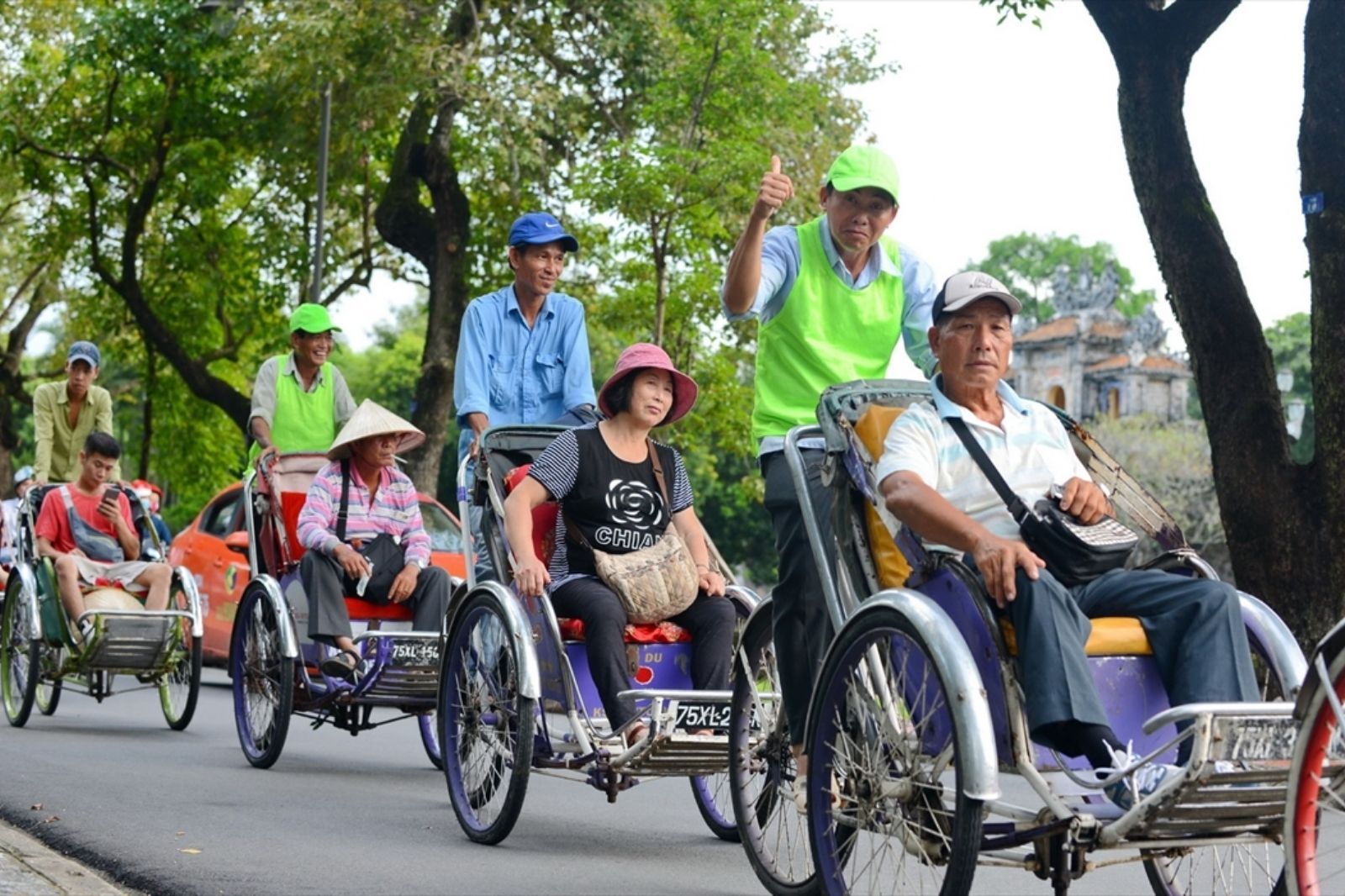
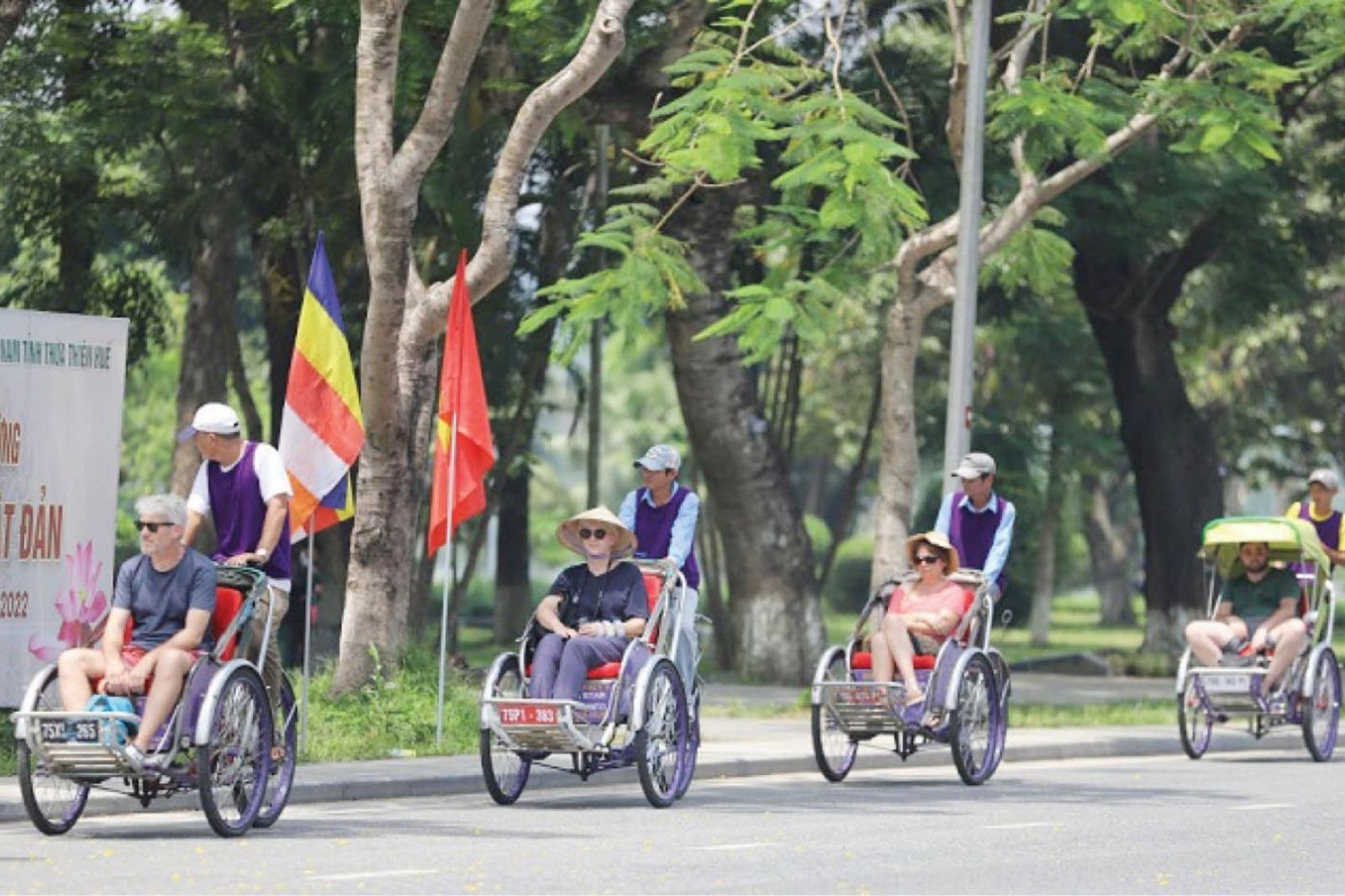
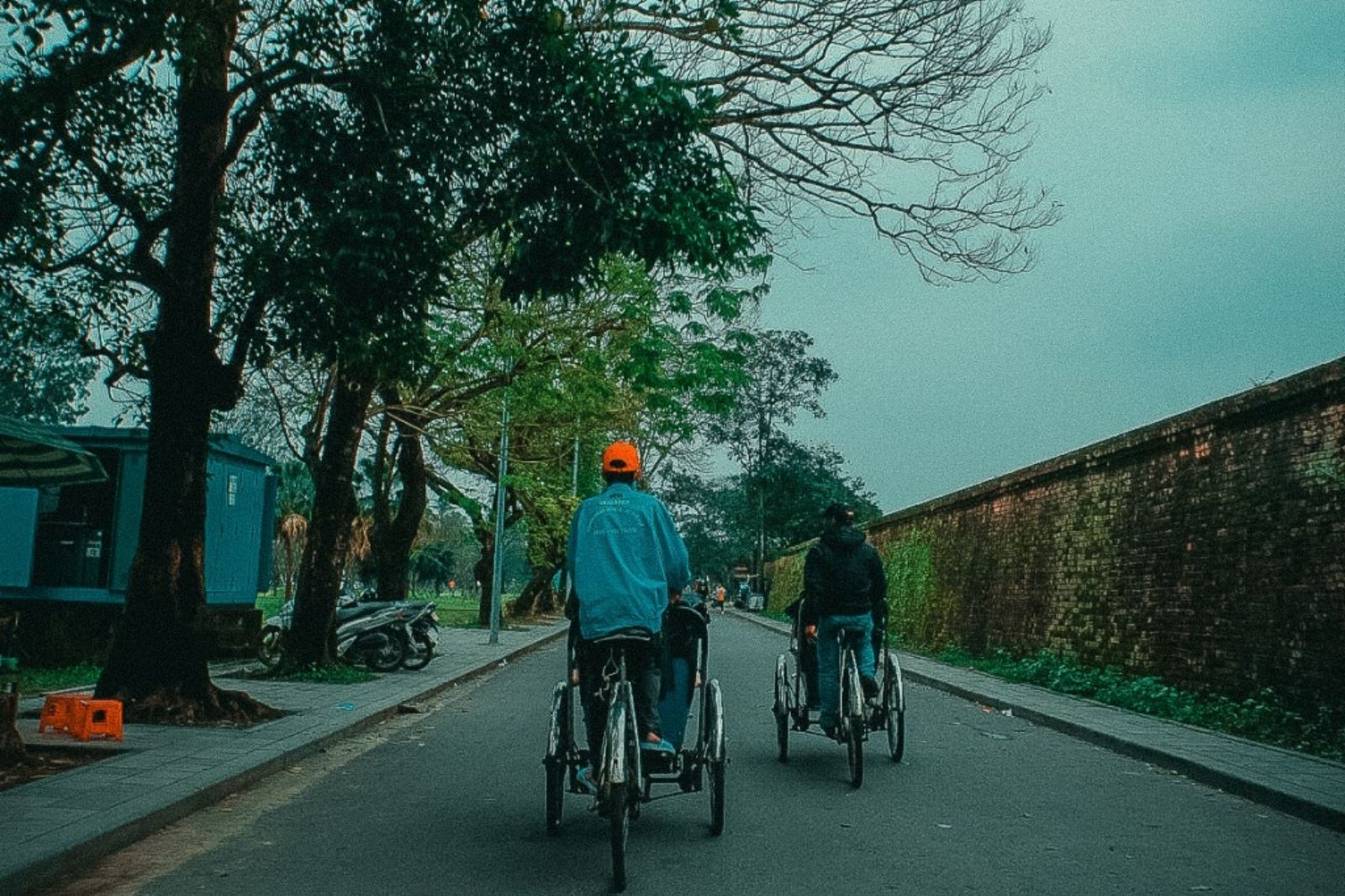
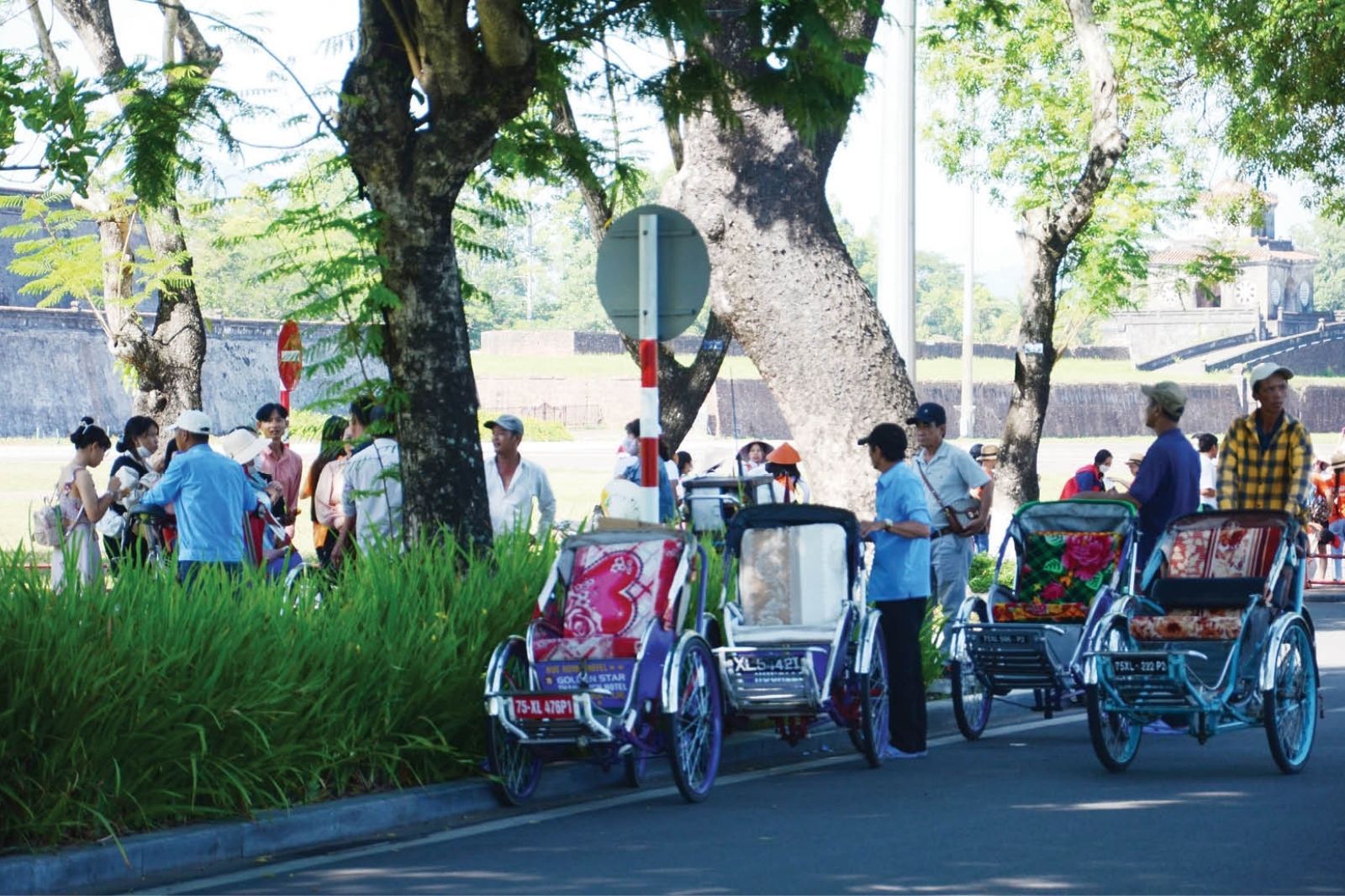
Appearing in Vietnam in the late 1930s, the cyclo gradually became a familiar sight across many cities, including Hue. Over several decades, this three-wheeled conveyance not only served transportation needs but also became intertwined with the livelihoods of generations of locals, preserving a slice of urban memory through the shifting tides of history.
In Hue, the cyclo transcends the role of an ordinary vehicle. It represents gentle rides weaving through old neighborhoods, crossing Truong Tien Bridge, or tracing the banks of the Perfume River, bringing residents and travelers closer to the rhythm of the ancient capital. Behind the handlebars are hardworking drivers, many of whom know every street by heart, possess a deep knowledge of history, and share fascinating stories about the Imperial City, Dong Ba Market, and familiar neighborhood corners.
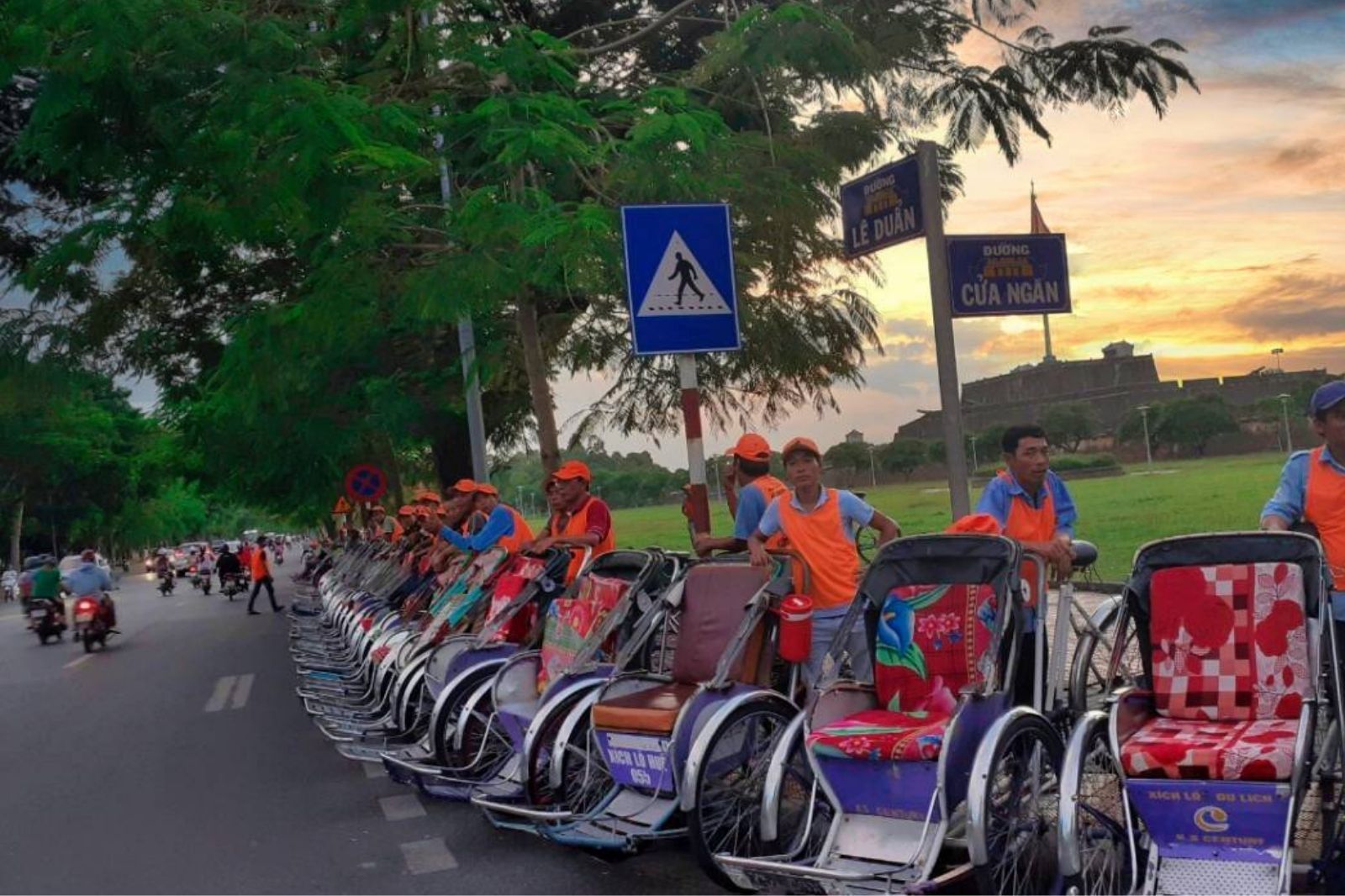
Sitting in the passenger seat, travelers can leisurely take in the views, feel the cool breeze from the Perfume River, and observe everyday life across each street. The space of the ancient capital thus feels more intimate, revealed not only through heritage monuments but also through the simple moments present in daily life. Amid the rise of modern transportation, the cyclo remains an enduring symbol evoking a refined, reflective, and character-rich Hue. Maintaining tourism cyclo services, elevating service quality, and preserving the traditions of the trade not only cultivate distinctive experiences for visitors, but also help ensure this urban cultural hallmark continues to thrive in contemporary Hue.