Exploring Quang Tri Museum - A Journey through the History and Culture of a Heroic Land
Central
Quang Tri
Sovaba.travel
Updated at: 24/09/2026
1. Introduction to Quang Tri Museum
Quang Tri Museum commenced construction in 2000 and officially opened its doors to visitors in May 2008. This is an important cultural institution, state-owned, aimed at researching, preserving, and educating about the history and culture of the Quang Tri region – a land that was once a fierce battlefield during the two resistance wars against the French and the Americans.
The museum currently preserves over 10,000 documents and artifacts scientifically arranged across 16 thematic displays. These artifacts not only recreate the social history of Quang Tri from prehistoric times to the present, but also vividly depict the indomitable spirit of its people.
Address: No. 08, Nguyen Hue Street, Dong Ha City, Quang Tri Province.
Opening hours: 7:00 - 11:30 and 13:30 - 17:00 (all days of the week, subject to flexible change).
Ticket price: Free or subject to change depending on museum policy (it is recommended to contact in advance for confirmation).
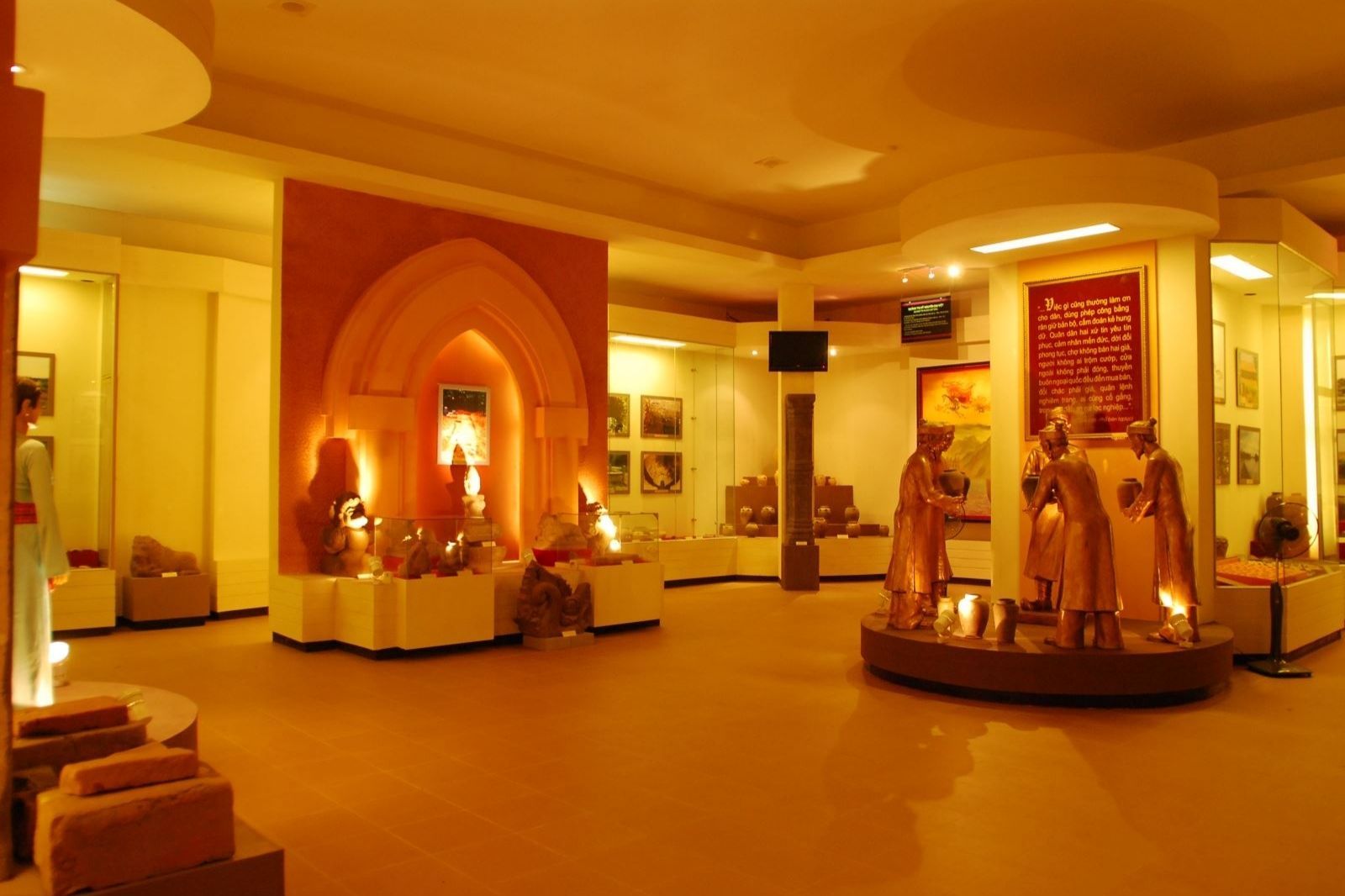
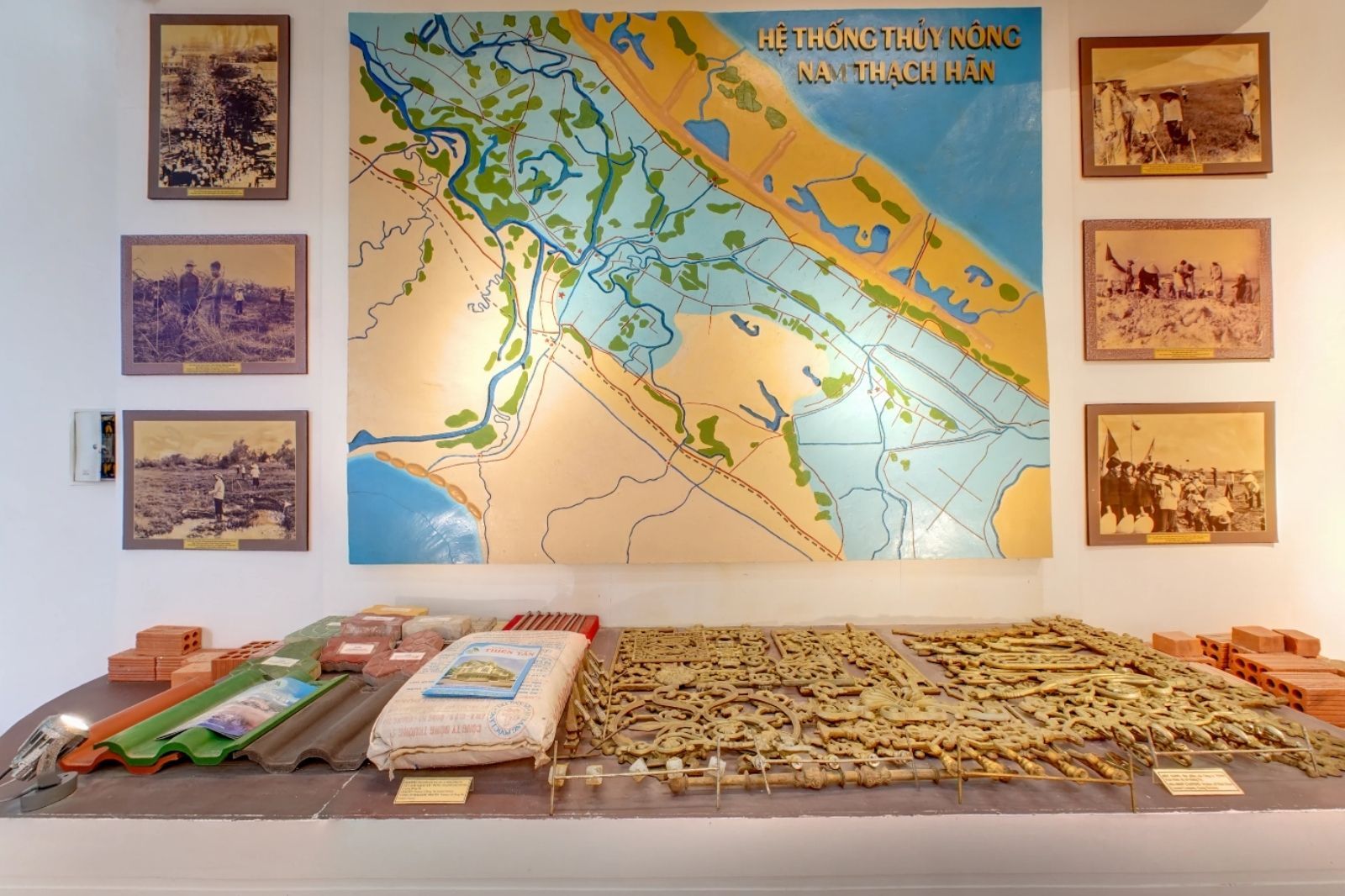
Photo: The museum preserves many valuable artifacts
2. Exhibitions at Quang Tri Museum
Quang Tri Museum is designed with two main areas: outdoor display and indoor display, offering visitors an emotional journey of discovery.
Outdoor Display Area
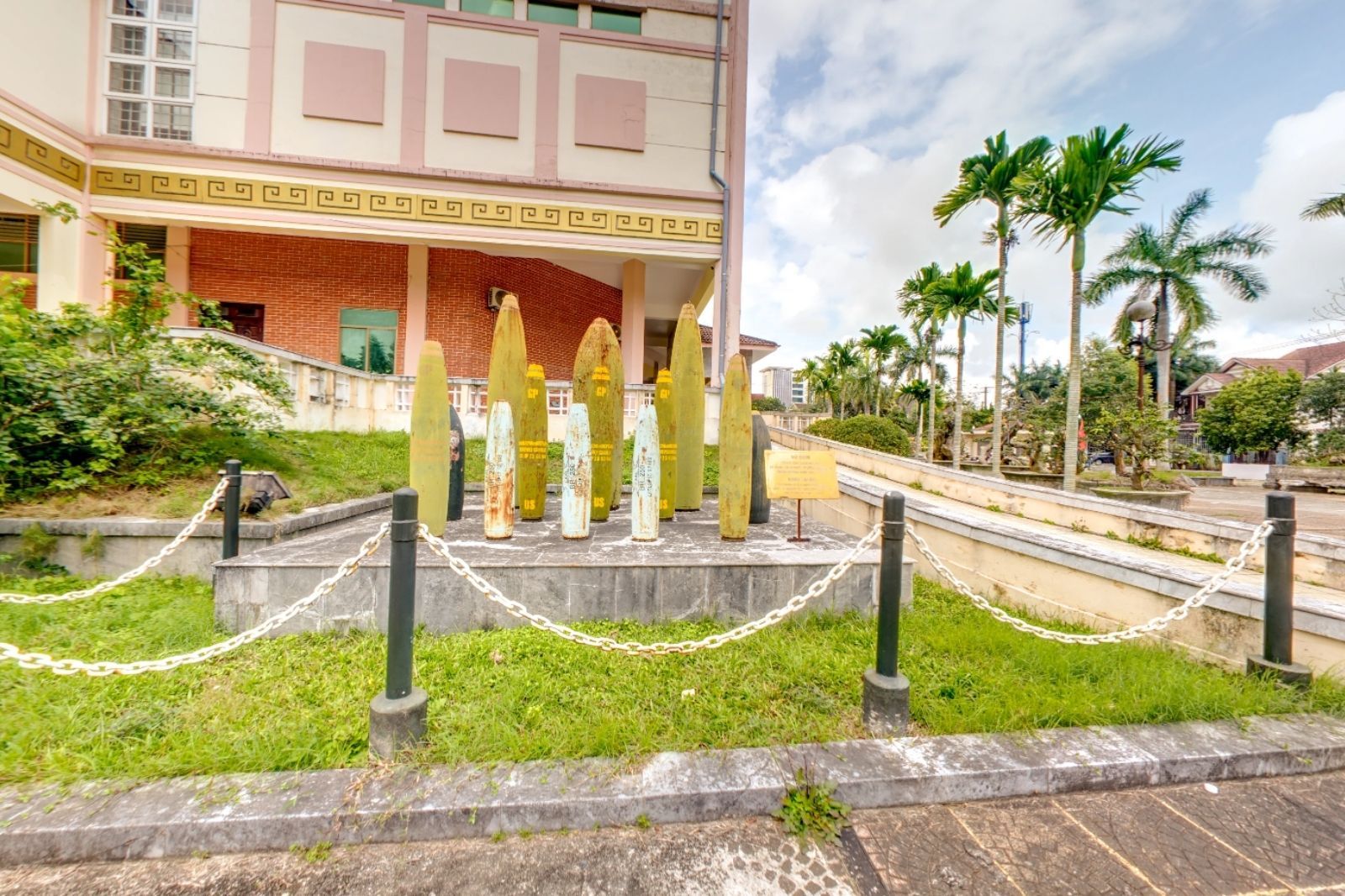
The outdoor area displays large-scale artifacts, vividly recreating historical and cultural footprints. Visitors will get to admire:
War artifacts: Aircraft, tanks, missiles, artillery guns, and bomb complexes from the resistance wars against the French and Americans. These artifacts stand as vivid evidence of the years of fierce warfare.
Cham Pa cultural artifacts: Stone blocks from altars, bases, steles, tympanums, yoni, linga… These artifacts reflect the richness and uniqueness of the Cham Pa culture that existed in Quang Tri for nearly a millennium.
The outdoor area is not only a place to tour, but also a space for visitors to take photos and feel the harmony between history and nature.
Photo: Outdoor display area at Quang Tri Museum
Indoor Display Area
The indoor display system is arranged across two floors with a total area of over 2,000 m², divided into thematic display spaces, providing a comprehensive overview of Quang Tri's history and culture.
Floor 1: Reception Hall and Ethnic Culture
Reception Hall: Highlighted by the image of the “Tree of Life” – a symbol of the hard-working spirit, aspiration to rise, and resilient willpower of the people of Quang Tri. Behind it is the relief carving “Mai Mountain – Han River”, recreating the majestic natural beauty of this land.
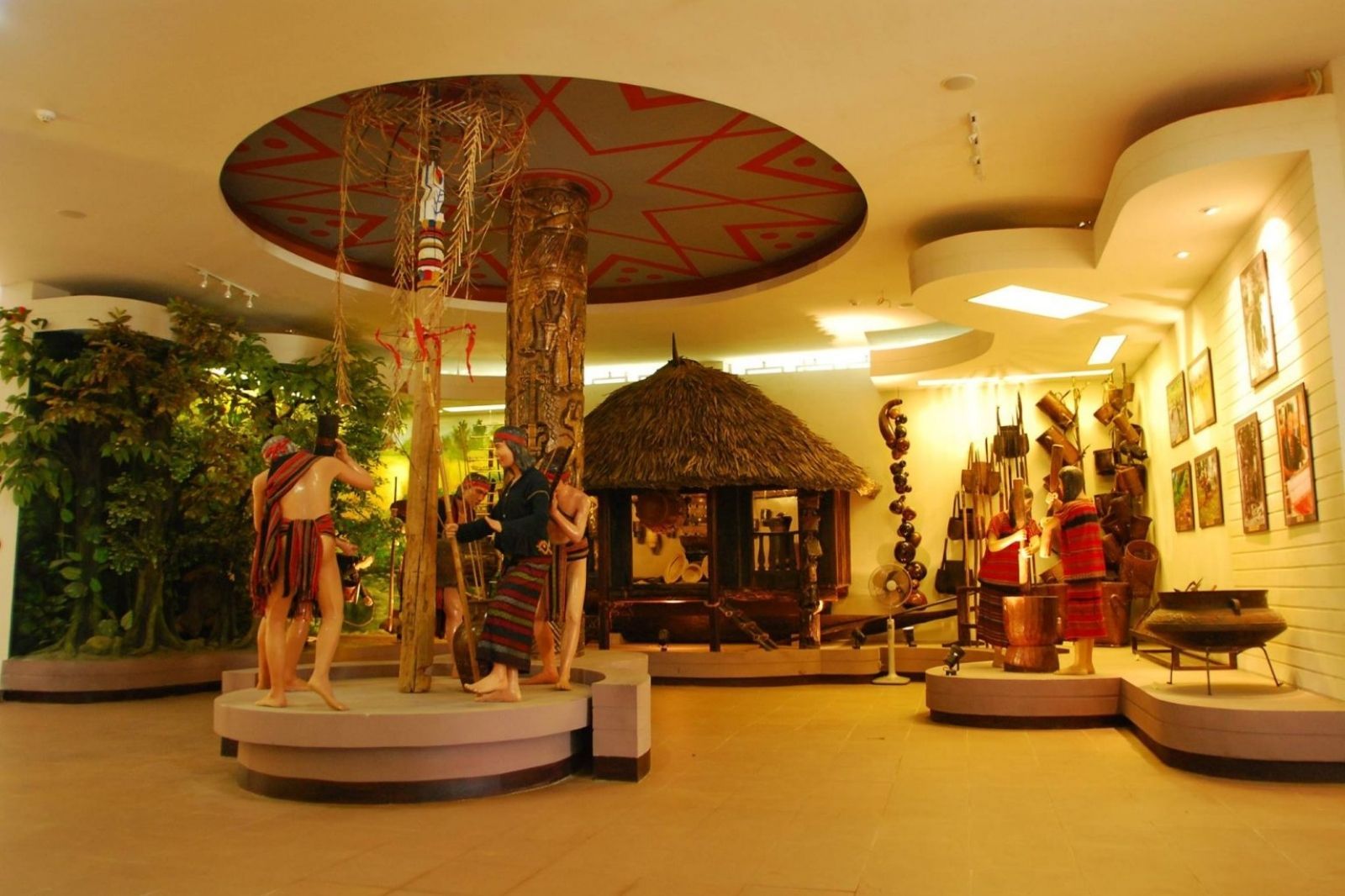
Ethnic Culture: This area introduces the natural resources and culture of ethnic groups living in Quang Tri, such as the Kinh, Ta Oi, Pa Co, and Van Kieu. Visitors will admire artifacts related to daily life, customs, and traditional crafts.
Photo: Learning about ethnic culture at Quang Tri Museum
Floor 2: Social History from Prehistory to Modern Times
The 2nd floor of the museum is a journey through time, recreating Quang Tri's social history from prehistoric times to the present day. Some prominent highlights include:
Prehistoric Period: The display area recreates the Hang Doi (Bat Cave) archaeological site – where humans lived around 20,000 years ago. This is one of the most important archaeological sites of the Hoa Binh culture, featuring artifacts such as stone tools, coarse ceramic fragments, stream snails, and ancient hearths.
Cham Pa Culture: Artifacts such as citadel walls, temples, towers, and tombs recreate a golden age of the Cham Pa kingdom on Quang Tri land.
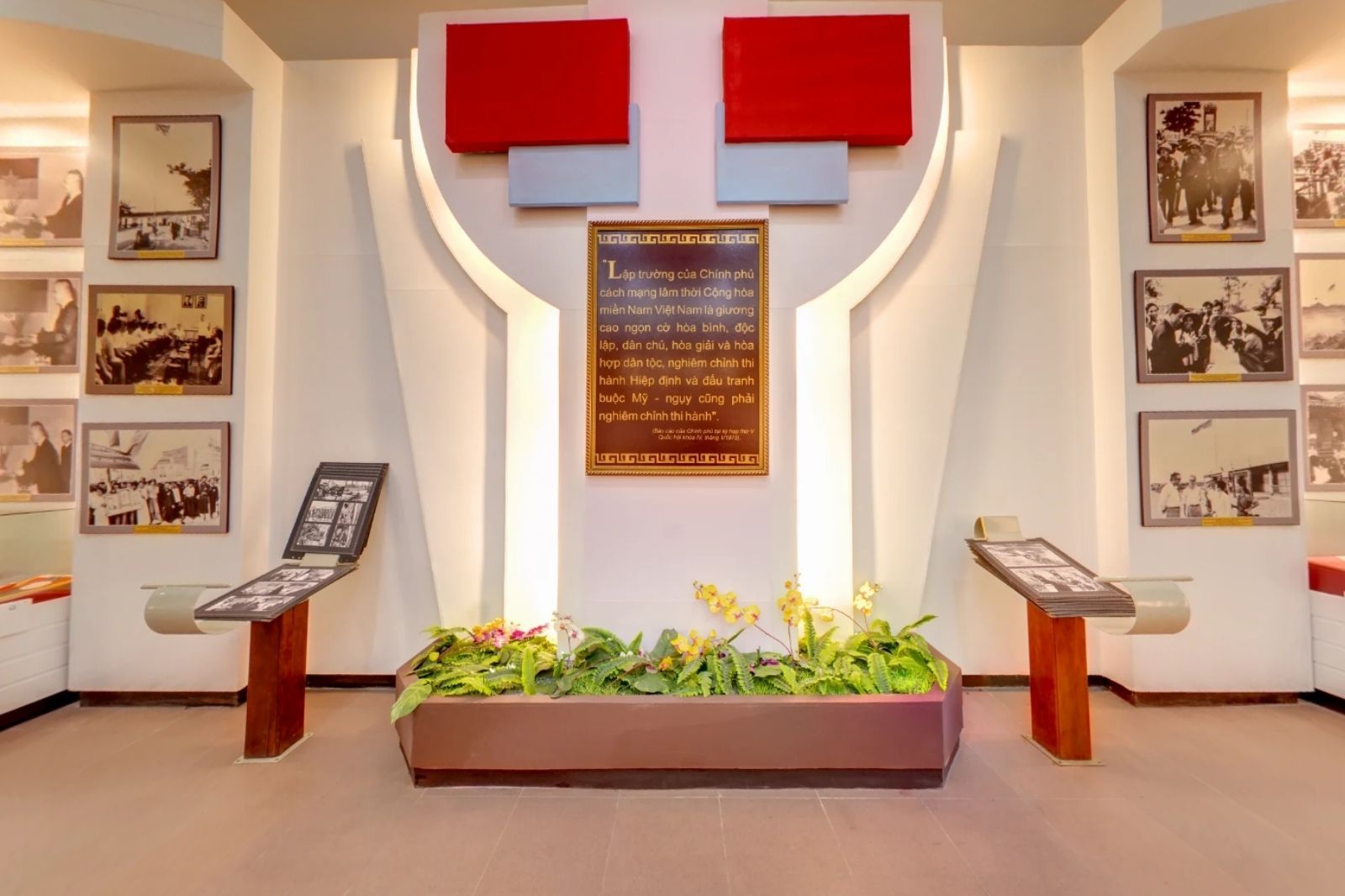
Resistance Period: This area displays artifacts and documents related to major historical events, such as:
The anti-French resistance (1858-1945) and Lao Bao Prison – where revolutionary soldiers were detained.
The 1972 Quang Tri Liberation Campaign, a brilliant landmark in national history.
The display space is scientifically designed, combined with lighting and visual effects, providing a vivid and profound experience for visitors.
Photo: Quang Tri Museum is a place to learn about history and culture
3. Tips for Visiting Quang Tri Museum
For a complete visit, here are some useful tips:
Ideal time: You should visit in the morning (7:00 - 11:30) or afternoon (13:30 - 17:00) to enjoy cool weather and natural light, making it easier to admire the artifacts.
Hire a tour guide: The museum has a team of professional tour guides who can present in Vietnamese and English.
Regulations to comply with:
Do not touch the artifacts.
No smoking or littering.
Do not run, jump, or talk loudly in the display areas.
Combine with nearby attractions: After visiting the museum, you can visit other famous historical monuments such as Quang Tri Ancient Citadel (14 km away), Vinh Moc Tunnels (38 km away), or Truong Son Martyrs Cemetery, destinations deeply imbued with the tragic and heroic marks of the nation, often included in historical – spiritual Quang Tri tours.
Transportation: From the center of Dong Ha city, you can take a motorbike, car, or taxi to the museum. If you are unfamiliar with the routes, consider using tourist transport services for safety.
Photo: Comply with regulations when visiting Quang Tri Museum
In an era where pages of history can be easily forgotten amid the modern pace of life, Quang Tri Museum quietly carries out the task of preserving, retelling, and awakening the values that today's generation needs to know—not just for nostalgia, but to understand and carry forward. Walking out of the museum, every visitor takes with them not only visual impressions, but reflection, pride, and a deep appreciation of a resilient yet profoundly human Quang Tri. This is not only a destination for history lovers, but also a place for every Vietnamese citizen to properly understand war, deeply cherish peace, and honor the sacrifices that created today.