Fan-making craft in Bao Vinh ancient town: A traditional breath in the heart of Hue

Central

Thua Thien Hue

Sovaba.travel

Updated at: 24/09/2026

1. The history of the fan-making craft in Bao Vinh ancient town

The paper fan-making craft in Bao Vinh ancient town originated during the Nguyen Dynasty, when this area was a bustling commercial port, a hub of goods exchange between the North and the South. Amidst the busy stream of merchants, the paper fan was not only a tool to ward off heat, but gradually became a souvenir imbued with local identity, closely linked to the daily life of Hue people.

Through hundreds of years of ups and downs, from royal courts to rustic market sessions, paper fans have always been present in festivals, daily activities, and performing arts. Today, although electric fans and air conditioners have partially replaced their original function, the fan-making craft is still preserved by local artisans as a living cultural heritage. Among the many handicrafts once famous in Bao Vinh such as artistic woodwork, mother-of-pearl inlaying..., paper fan-making is one of the rare crafts that still survives, continuing to contribute to preserving the soul of the ancient town and the identity of the Ancient Capital land.
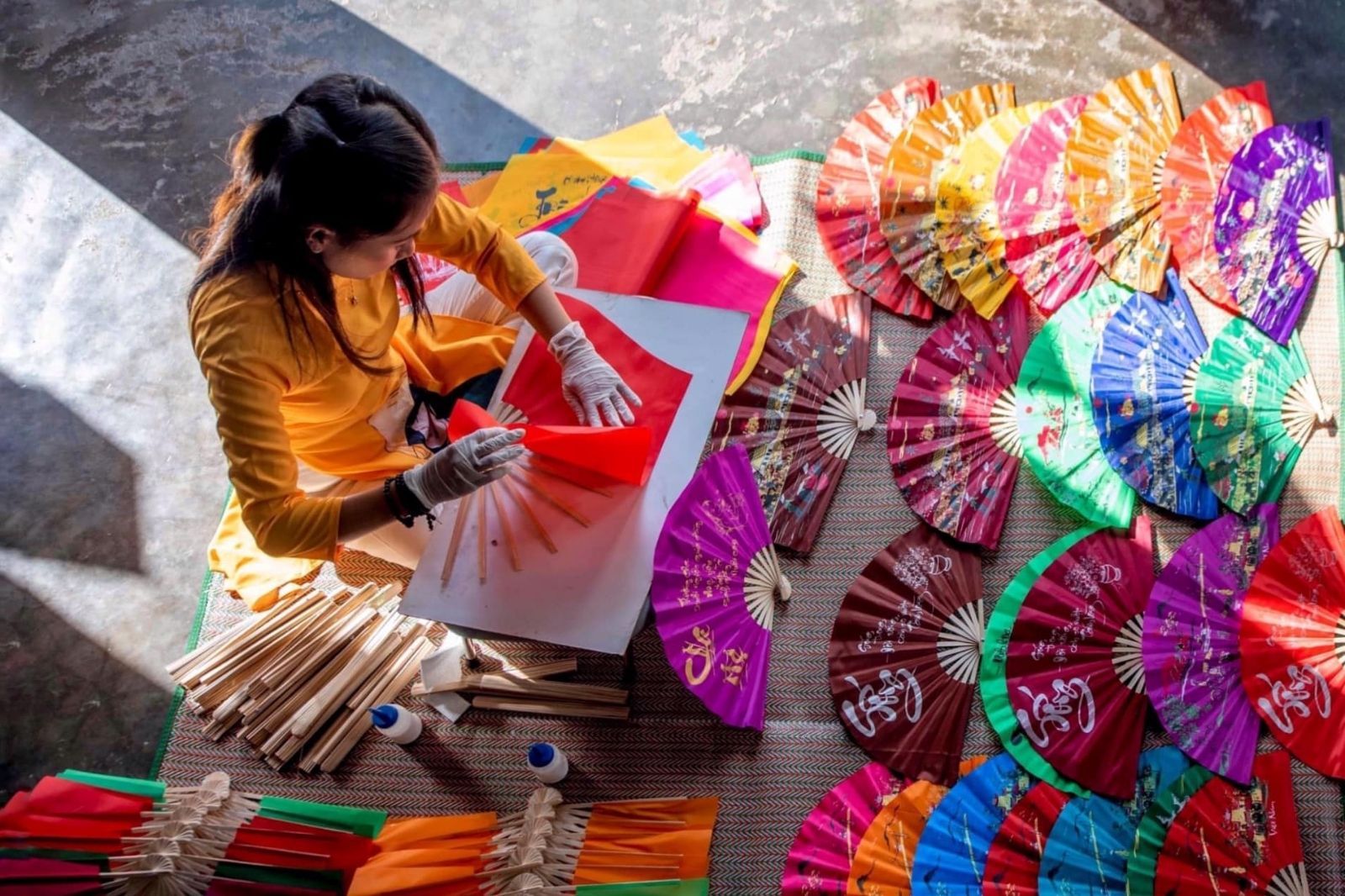
Bao Vinh paper fans become souvenirs imbued with local identity
Photo: Bao Vinh paper fans become souvenirs imbued with local identity

2. The process of making traditional paper fans in Bao Vinh

The traditional fan-making craft in Hue is the crystallization of patience, skillfulness, and artisanal essence, preserved through generations in Bao Vinh ancient town. Each fan is not merely a utility item, but also a piece of art, born from a meticulous process under the talented hands of the craftsman.

Steps of traditional paper fan making

  • Preparing the fan ribs

The selected bamboo must be mature and sturdy, soaked in Perfume River water or salt water for 3–6 months to prevent termites and increase flexibility. Afterwards, artisans carefully shave the bamboo into thin ribs of just 1–2mm, uniform and symmetrical. The ribs are connected with small nails or natural glue, creating a frame that is both sturdy and graceful.

  • Gluing the fan cover

The fan cover layer is usually Dó paper or thin fabric, meticulously cut and glued onto the rib frame. This stage requires absolute dexterity, because just a small wrinkle can ruin the entire product. This is the step that demonstrates the craftsman's experience and keen eye.

  • Decoration and finishing

This is the step that “breathes soul” into the fan. With intricate hand-drawn strokes, the artisan paints images of the Perfume River, Ngu Binh Mountain, lotus flowers, calligraphy, or landscapes of the Ancient Capital. The colors are usually warm and muted, carrying the distinct spirit of Hue: both elegant and profound. After decoration, the fan is naturally dried and thoroughly checked to ensure smooth and balanced opening and folding.

Typically, a simple fan takes 1–3 days to complete, while high-end models with intricate patterns may require more time. What is special is that each fan bears the artisan's personal mark, so no two are completely identical – that is the unique value that handcrafted fans bring.

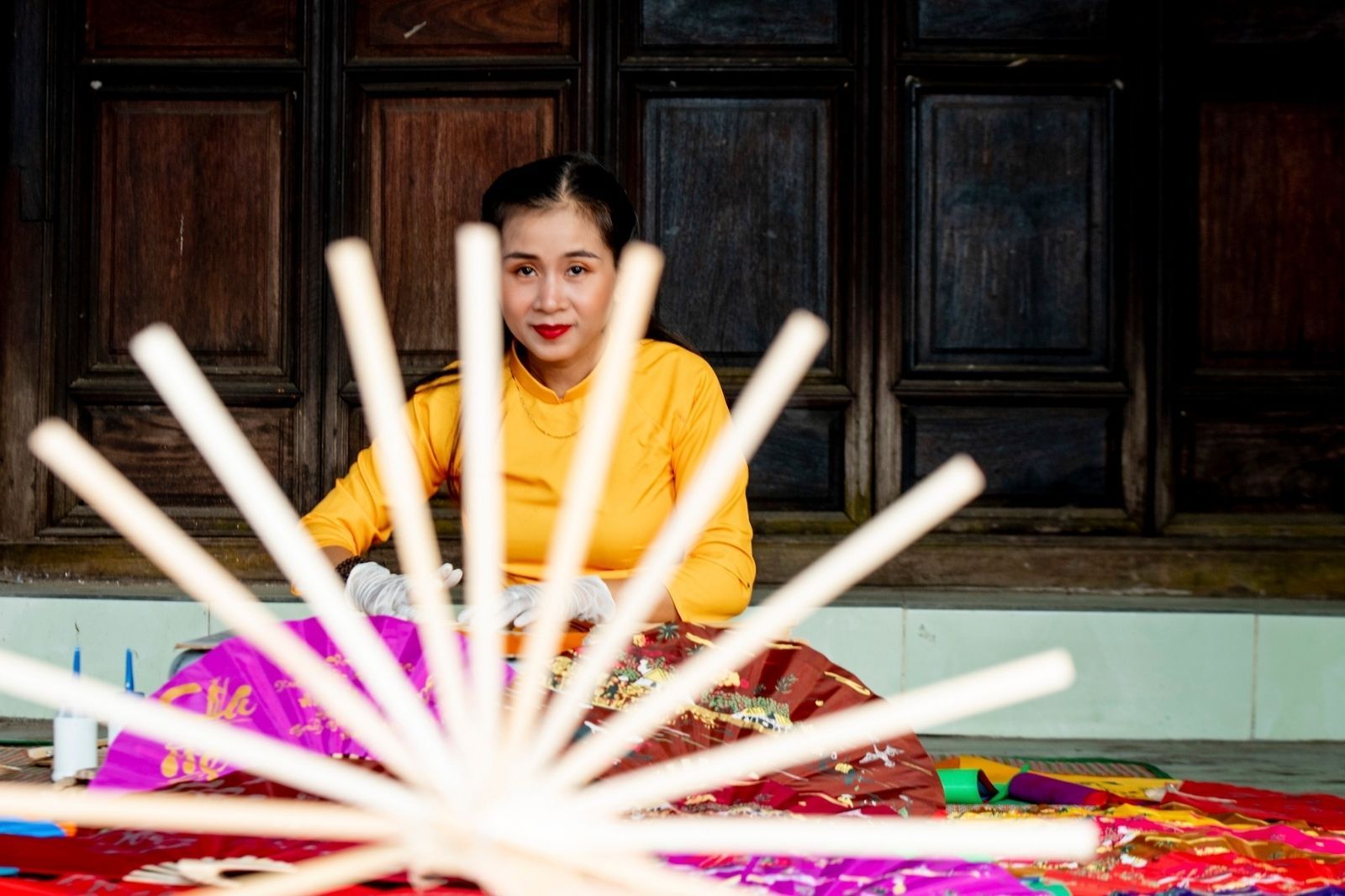
The fan-making craft has been preserved through generations in Bao Vinh
Photo: The fan-making craft has been preserved through generations in Bao Vinh 

3. Materials and artisanal secrets of the fan-making craft

The main raw materials for fan-making in Bao Vinh ancient town seem simple, consisting only of bamboo and paper, but the true value lies in the processing and combination techniques passed down through generations. Local bamboo is always prioritized for its flexibility and good moisture resistance, highly suitable for the rainy and humid climate of Hue. In the past, Dó paper (made from the bark of the Dó tree) or handmade paper was a popular choice, deeply traditional. Today, to increase durability and variety, artisans may also use imported or specialized papers, while still preserving traditional handcrafted methods to avoid fading cultural value.

Distinctive handcrafted secrets:

  • Bamboo processing: Bamboo is soaked for months to prevent warping and termites, ensuring durability over the years.
  • Natural glue: Instead of industrial chemicals, artisans use tree resin or rice paste, which is both safe and environmentally friendly.
  • Unique motifs: Each artisan has their own “secret” in mixing colors and drawing patterns, usually learned from their ancestors, turning the fan into a unique work of art.

Thanks to these secrets, a Bao Vinh fan can remain durable and beautiful for decades, serving not only as a familiar object but also becoming a meaningful souvenir, bringing the essence of Hue to visitors from all over.

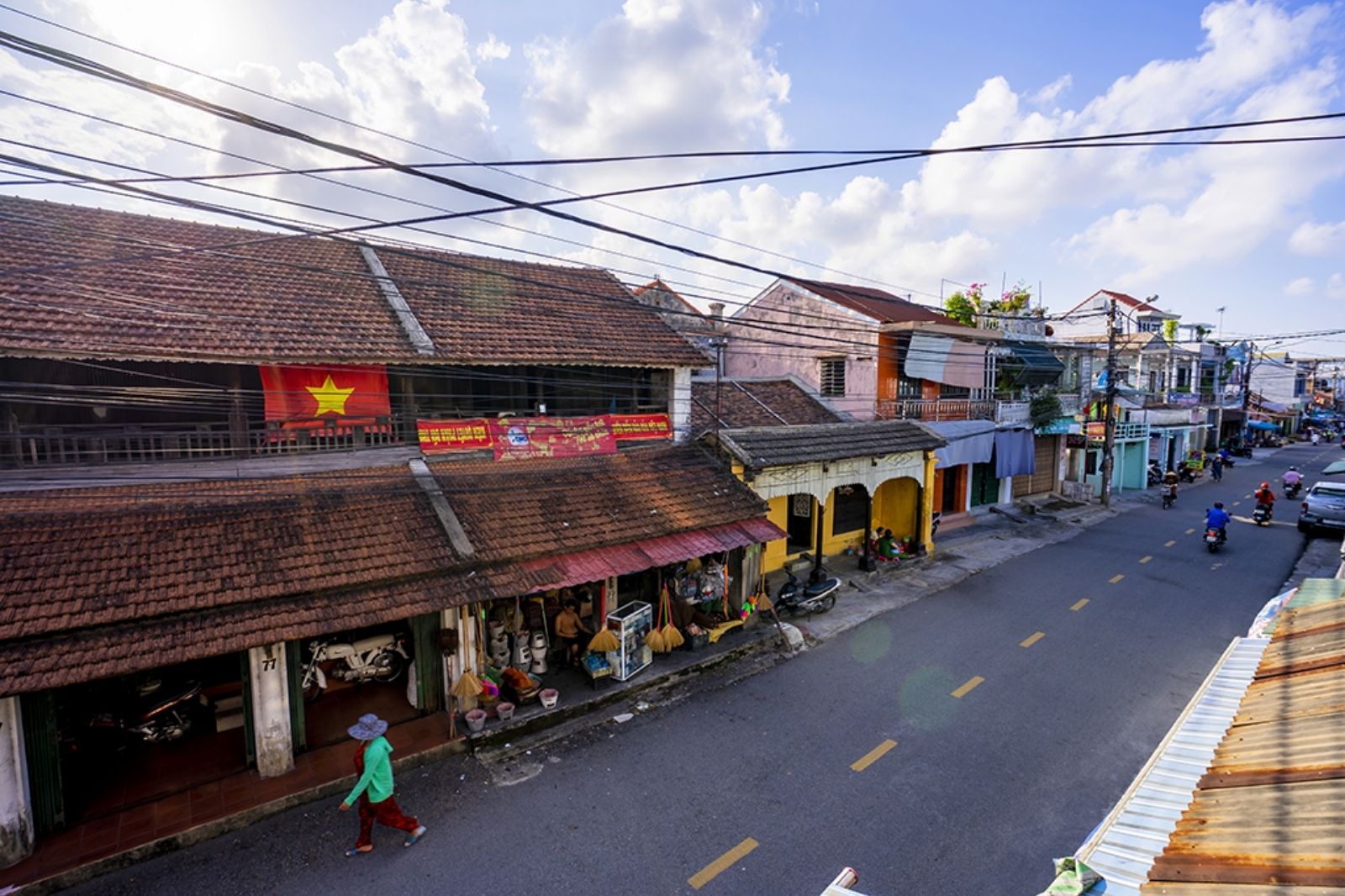
Bao Vinh ancient town today
Photo: Bao Vinh ancient town today 

The paper fan from Bao Vinh ancient town is not only a daily item but also a deep cultural symbol of Hue. In Vietnamese culture in general and Hue in particular, the fan represents elegance and gentleness, much like the character of Hue people: graceful yet resilient. They frequently appear in royal court dances, Ao Dai festivals, or Hue Court Music performances, contributing to the charm of UNESCO heritage.

Furthermore, Bao Vinh fans serve as a bridge between the past and the present, helping tourists better understand the history of the ancient commercial port. Many fans are designed with calligraphic motifs such as "Prosperity – Longevity – Happiness" or Hue landscapes, carrying good feng shui meanings. For local residents, this craft is also a way to preserve identity and pass down the value of manual labor to younger generations. With its long history, exquisite craftsmanship, and deep cultural significance, this craft deserves to be cherished and protected.

Loading......

Featured destinations