Forest Worshipping Ceremony of the Ma Lieng People - Quang Binh
Central
Quang Binh
Sovaba.travel
Updated at: 24/09/2026
1. The Forest God – The Supreme Deity in the Spiritual Beliefs of the Ma Lieng People
If the Ma Lieng forest is likened to a deep green citadel, the forest god is the monarch seated on a throne of emerald leaves, majestic yet benevolent, protecting all flora and the children of the mountains. In the mystical spiritual world of the Ma Lieng people, the forest god is not only an invisible shadow of nature but also the ruling spirit, holding the magic of favorable weather, bountiful forest harvests, and tranquility in every village sleep. The ritual of worshipping the deity, like a red thread weaving through the flow of time, has become a deeply rooted belief. At Chut Dac Mo rock—the legendary origin where the Ma Lieng tribe cleared the mountains—the god resides as an ancient witness, more sacred than ten thousand tales. Therefore, every step into the forest is a quiet act of worship, every gentle blow of the axe a respectful plea for permission. The worshipping ceremony, thus, is a song of gratitude echoing back to the deep mountains, a heart of incense offered to the supreme being, praying for a peaceful life under the shade of the guardian tree god.
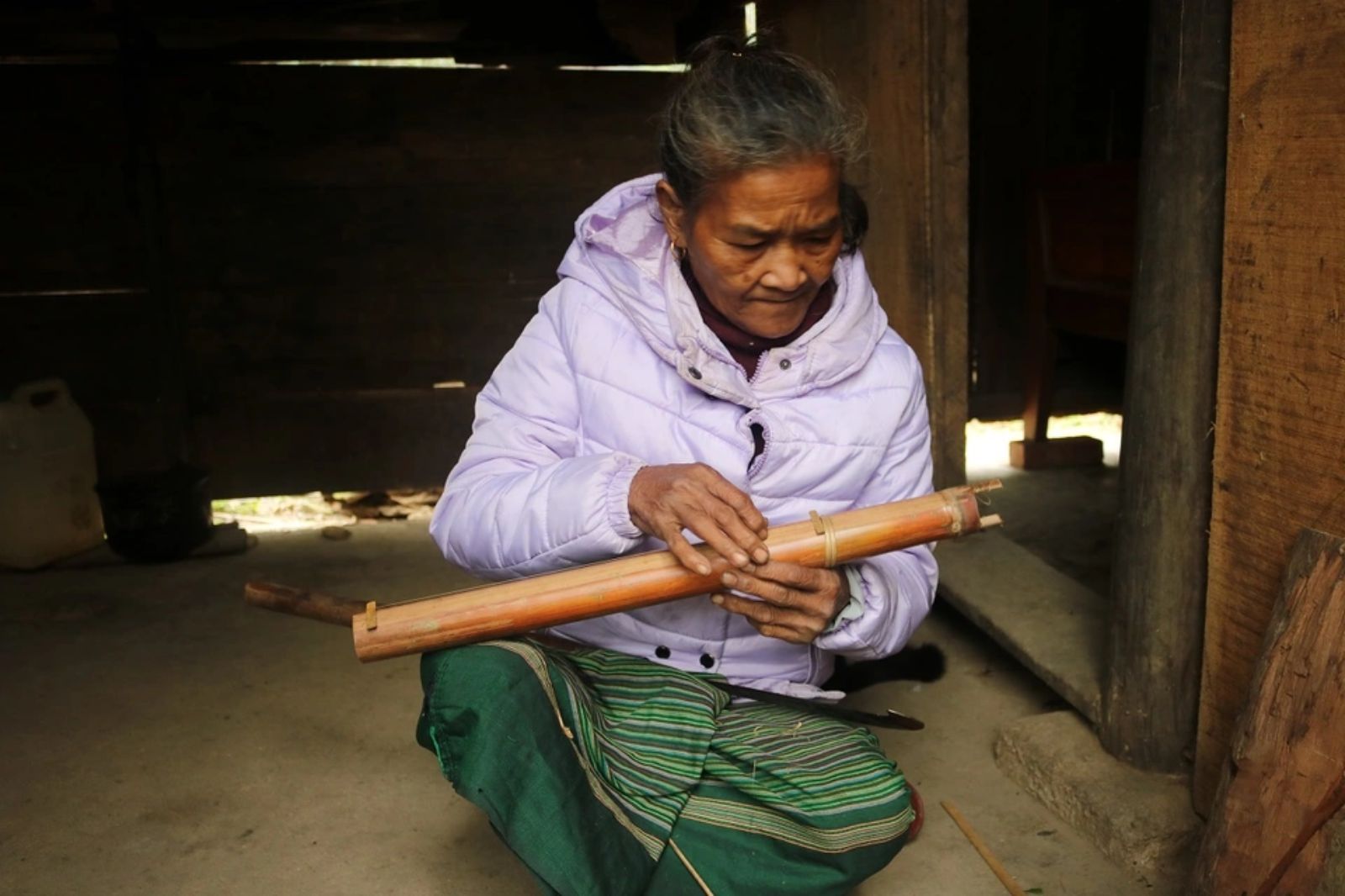
Photo: The Ma Lieng people
2. The Forest God Ritual – A Vibrant Cultural Tapestry
In the past, when slash-and-burn farming was still the lifeline, the Ma Lieng people's prayers to the forest god echoed on the double seventh day of drizzle (July 7th lunar month), when the mountain rice had just sprouted, and on the double tenth day of the autumn moon (October 10th lunar month), when the harvest was safely gathered. Today, as the rhythm of life changes and wet rice arrives in the fields, the Ma Lieng people choose two harmonious moments of heaven and earth: the first day of the Lunar New Year, when spring just touches the threshold, and National Day on September 2nd, when the unified nation rejoices. These serve as temporal anchors, like the steady heartbeat of the entire village.
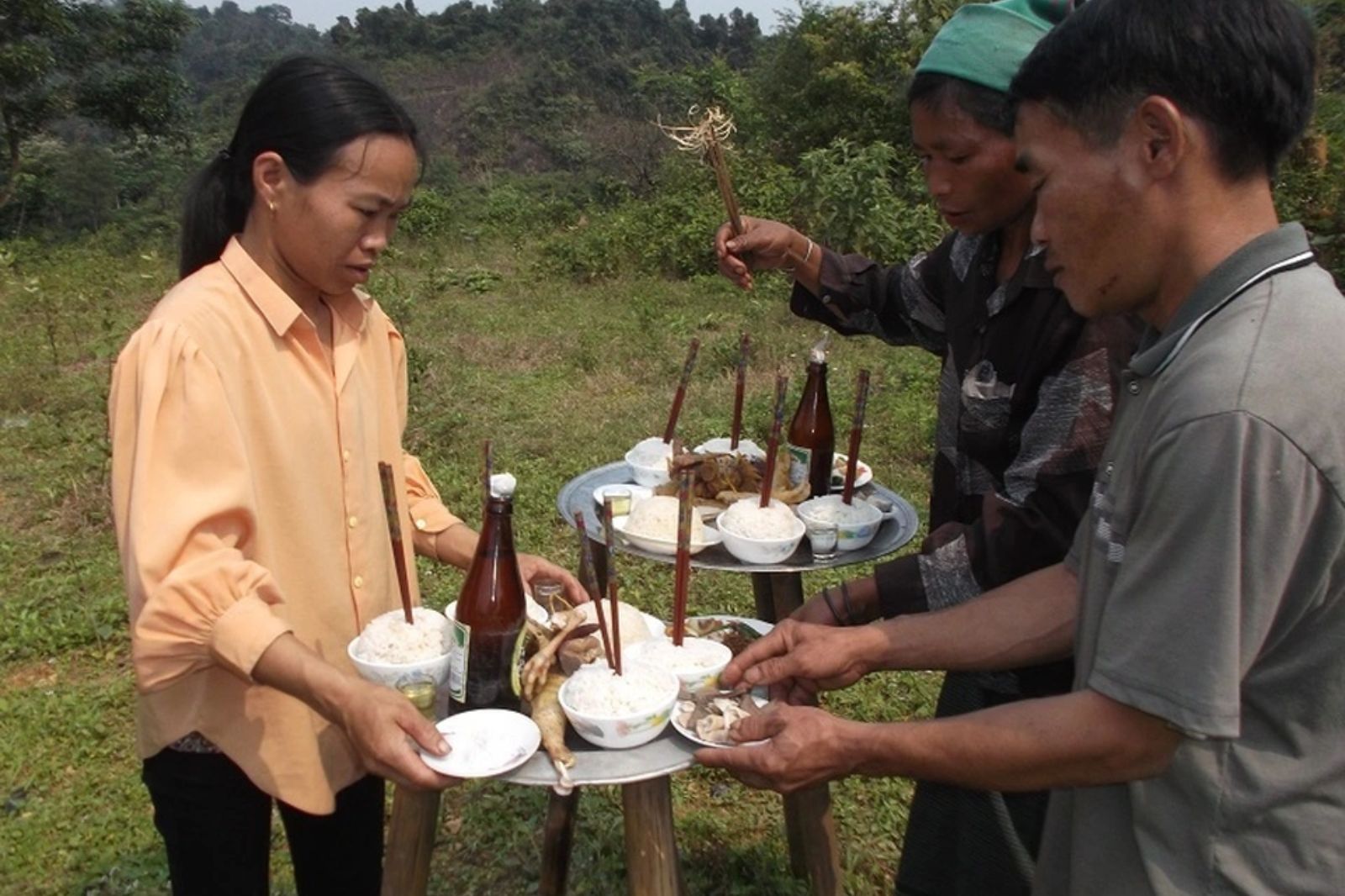
The ceremony takes place at the edge of the forest, where ancient trees stand tall like loyal guards. Each offering tray is placed on three wooden stakes about 1m high. The shaman stands facing the forest, as if conversing directly with the forest god, while the villagers gather around, their sincerity blending with the rustling forest breeze.
Without noisy joss paper or billowing incense smoke, the offerings consist of the finest produce of the mountains and fields: sticky rice, fragrant rice, strong wine, tender meat, fresh fish, golden boiled chicken, and seasonal fruits. In place of incense sticks, the Ma Lieng light beeswax candles like threads of light connecting mortal souls with the divine realm. The shaman also uses two wooden or bamboo pieces, casting them onto a knife blade to divine fortune, asking the forest god to confirm their consent. Each time the divining tokens land favorably, the villagers cheer, as if the forest god has nodded in agreement.
3. A Ceremony at the Edge of the Endless Green Forest
As sunlight filters through the leaves, casting golden rays on the edge of the forest, the shaman solemnly drapes a scarf over his shoulders, folds his hands respectfully, and bows three times toward the deep wilderness. The chants reverberate—not with extravagant words, but as a simple poem of the heart, praying for favorable weather, abundant health, and a peaceful life for the entire village.
After the whispered prayers, the boundary between the sacred ritual and everyday life seems to dissolve. Villagers gather around the banquet, sharing the flavors of the mountains and the sincerity of their hearts. Laughter and conversation blend with the sweet chirping of birds, creating a symphony of unity. The ceremony, therefore, is not only a bond connecting humans with the gods, but also an opportunity for hearts to draw closer, like strong roots embracing Mother Earth.
4. The Bond Connecting Humanity and Nature
The forest worshipping ceremony of the Ma Lieng people is not only a spiritual ritual, but also a lesson in respect for nature. To them, the forest is not merely a place to earn a living or gather wealth, but a sanctuary protecting the soul, the source that nurtures life. Especially when granted the right to manage community forests, this ritual further reinforces the consciousness of cherishing and protecting the sacred forest, just as they would protect the very breath and lifeline of the community.
Compared to the noise and bustle of modern festivals, the forest worshipping ceremony is quiet yet profound, like an ancient poem echoing through the mountains. It gently reminds us that amid the hectic whirlwind of life, pristine and pure values remain that must be cherished and preserved.
Photo: The ceremony is like a sacred flame burning in an ancient culture
Amidst modern life, Lam Hoa and Tuyen Hoa are harboring the wish to preserve the forest worshipping ceremony, like keeping alive the sacred flame of an ancient culture. Along with unique costumes, profound music, and identity-rich festivals, this ritual is being cherished and passed down. Periodically organizing it on the first day of the Lunar New Year and National Day on September 2nd is not only about preserving tradition, but also a cultural highlight inviting visitors to return to Quang Binh and discover the deep beauty of the land. However, so that the echo of the sacred forest does not become just a memory, the unanimous effort of both the community and local authorities is deeply needed. That means planting seeds of cultural pride in the hearts of the younger generation, encouraging them to treasure their roots, and skillfully combining sustainable tourism so that this spiritual beauty spreads to the world.
The forest worshipping ceremony of the Ma Lieng people is like a vivid painting where humans and nature harmonize in reverence and gratitude. It is the whisper of the mountains, the echoing breath of nature, and the thread connecting the past with the present. If you have the opportunity to visit Quang Binh, please drop by the villages at least once, listen to the mystical stories about the forest god, learn about many unique rituals of ethnic minorities in Quang Binh, and feel the magnificent pulse of the wilderness through this sacred ceremony.