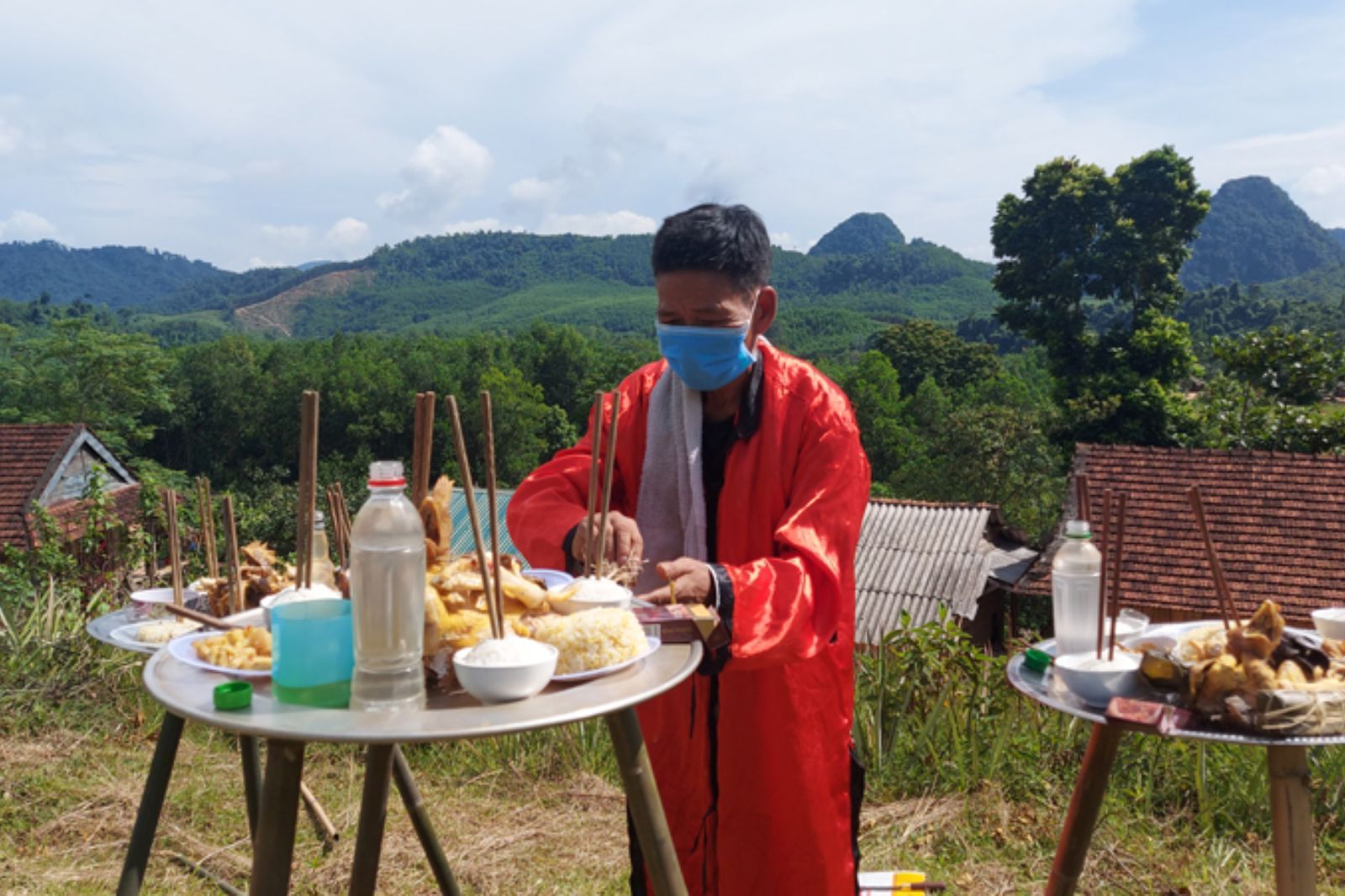
Rituals and Worship Ceremonies of Ethnic Minorities in Quang Binh: Discovering Unique Cultural Identity

Central

Quang Binh

Sovaba.travel

Updated at: 24/09/2026

1. Drum Beating Festival

Amidst the primeval old-growth forest of Thượng Trạch Commune, Bố Trạch District, where the Ma Coong people live in isolation amidst pristine nature, every year on the full moon night of the first lunar month, the Drum-beating festival echoes like an awakening of the mountains and forests, a sacred call resounding from the past. Far from being just a community event, this festival is the very cultural breath of the Ma Coong people, recognized as a National Intangible Cultural Heritage by the Ministry of Culture, Sports, and Tourism.

To prepare for this grand festival, the Ma Coong people are busy for months. They weave chicken cages, make drums, select auspicious days, and prepare offerings. The drum is made from the trunk of the chi-cúp tree—a precious wood from the deep forest—and then covered with cow or buffalo skin, creating a resonant, powerful sound. Drumsticks are handcrafted from flexible wild rattan. Offerings to Giàng, the supreme deity, include jar wine (rượu cần), chicken, fish, sticky rice, rattan shoots, and pieces of the đoác palm trunk.
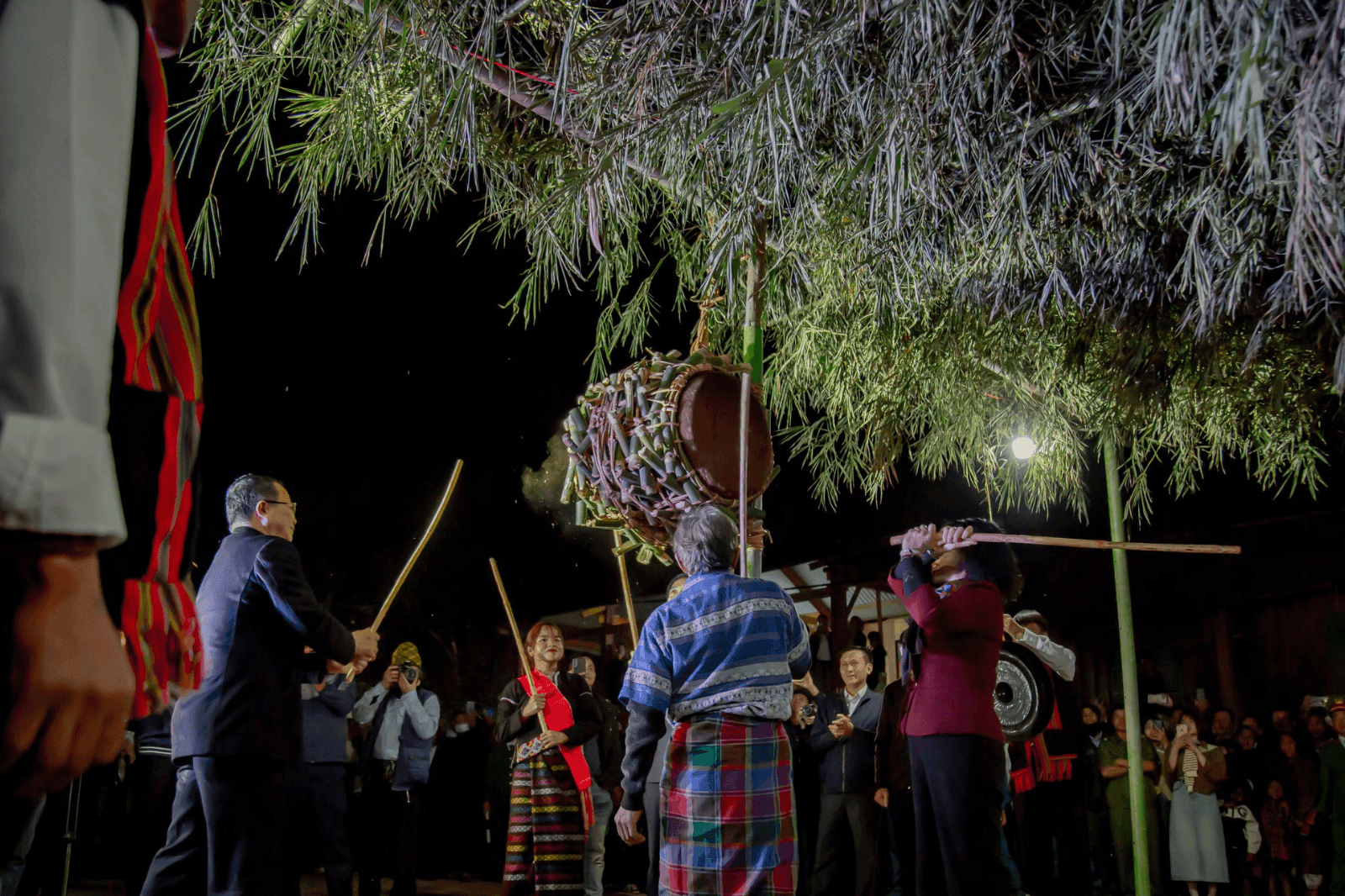
Drum-beating ritual of the Ma Coong people
Photo: Drum-beating ritual of the Ma Coong people 

As night falls, flickering firelight illuminates the sturdy village youths taking turns beating the drum. The roaring drumbeats harmonize with cheers and traditional dances like a sacred epic sent to heaven and earth. To the Ma Coong, the drumbeat is the sound of life, a prayer to ward off evil spirits and bring bountiful harvests and peace to the community.

The festival space becomes magical and vibrant, where indigenous culture flourishes amidst sacred drumbeats, songs, and dances recounting life, love, and ancestors. The aroma of jar wine spreads, sticky rice is soft and fragrant, and savory grilled meat mingles with stories around the hearth, making every visitor feel as if they have stepped into another world where ritual and festival intertwine—both real and dreamlike. The Drum-beating Festival is not only the pride of the Ma Coong people but also a vivid testament to the enduring vitality of a lesser-known culture quietly shining amidst the majestic Trường Sơn mountains.
2. Rice Sowing Festival

When the seventh lunar month arrives, amidst the cloud-covered Trường Sơn mountains, the Bru–Vân Kiều and Mộc communities in Trường Sơn Commune, Quảng Ninh District, gather to organize the Rice Sowing Festival, also known by the simple, affectionate name "lấp lỗ" (hole-filling). This is not merely an annual agricultural ritual, but a unique intangible cultural heritage reflecting deep layers of memory about nomadic life, the harmony between humans and nature, between seeds and faith.

In the minds of the locals, the Rice Goddess is the deity of life, the mother who nurtures the entire village through each blooming rice season. On the festival day, each family sends a representative carrying seed rice in a bamboo basket to assemble at the community center for the ceremony. The strong young men of the village carry a white pig to be sacrificed live, a sacred offering presented to the deities with all sincerity and aspirations for prosperity.

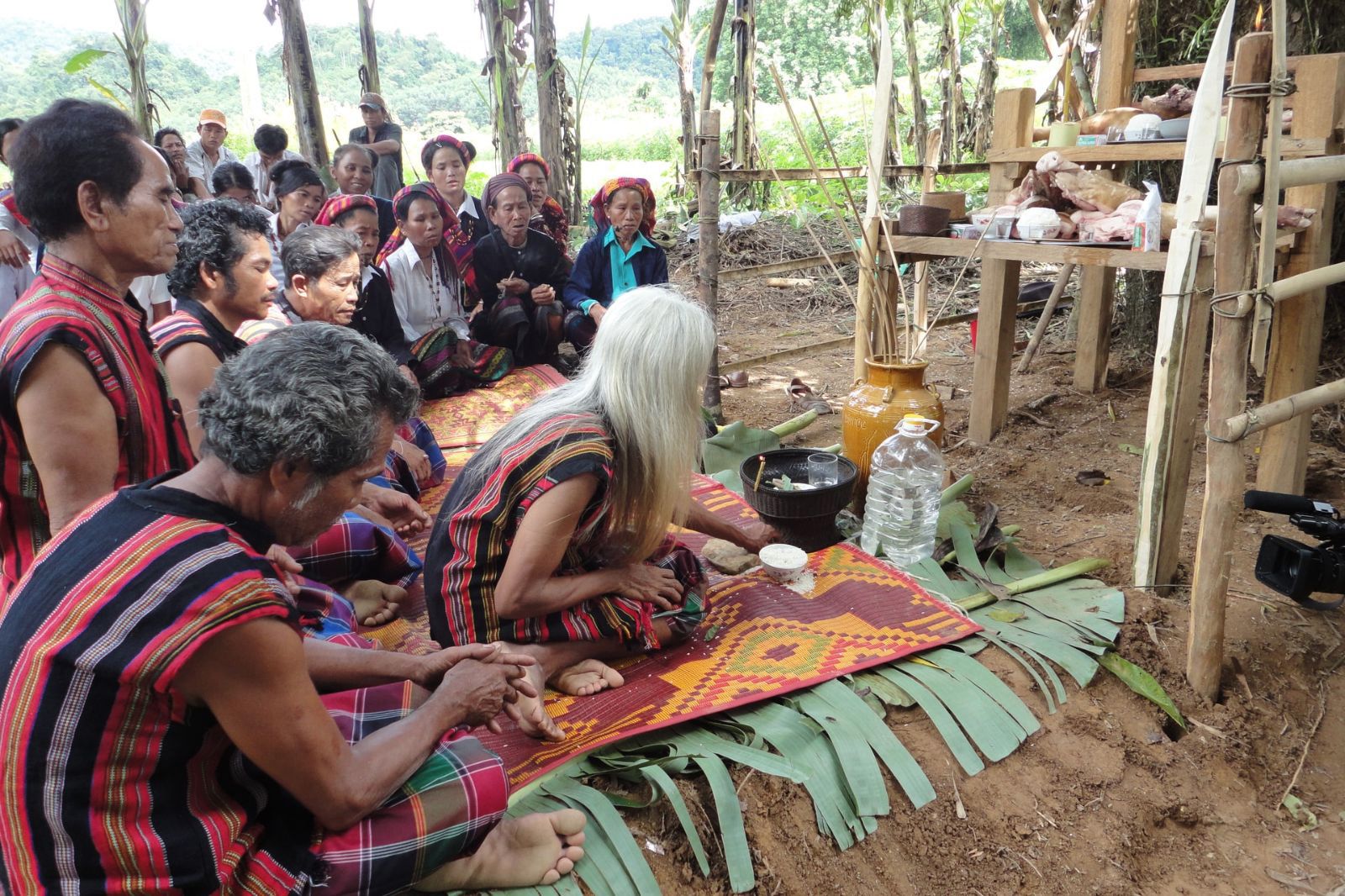
The worship ritual is conducted in a solemn atmosphere: the shaman wears traditional attire, scatters seeds with his hands, and chants prayers for favorable weather, protection from birds and rodents, and healthy seed germination for the coming harvest. But when the prayers end, the festival part opens up filled with laughter: cheers erupt in push-stick games, tug-of-war, and "ném còn" (throwing cloth balls)—folk games that not only demonstrate strength but also symbolize community connection.

Rice Sowing Festival of the Bru-Vân Kiều people
Photo: Rice Sowing Festival of the Bru-Vân Kiều people 

The food fair preserves the flavors of the mountain forests, featuring wild-leaf green sticky rice cakes (bánh chưng), golden roasted native pork, crispy and sweet forest bamboo shoots, and jar wine blending in conversations around the hearth. All of this creates a rich, vibrant, and warm cultural picture. The Rice Sowing Festival is not only a prayer for a good harvest, but also an enduring promise that the Bru–Vân Kiều people will always remain attached to the land, the forest, and the rice grains as to their own flesh and blood. And in every ritual, every festive step, lies the continuation of cultural vitality from the past to the present, remaining as durable and green as the very crops they pray for.

3. Praying for Peace and Rain Ritual of the Ruc People

Hidden amidst the rugged limestone mountains of Thượng Hóa Commune, Minh Hóa District, the Rục people, one of the few remaining pre-Việt-Mường ethnic groups in Vietnam, still preserve sacred peace and rain praying rituals closely linked to spirituality and community life. Interrupted for decades due to a nomadic lifestyle and harsh survival conditions, this ancient ritual was only restored about a decade ago, yet it retains its inherent mystery and sacredness.

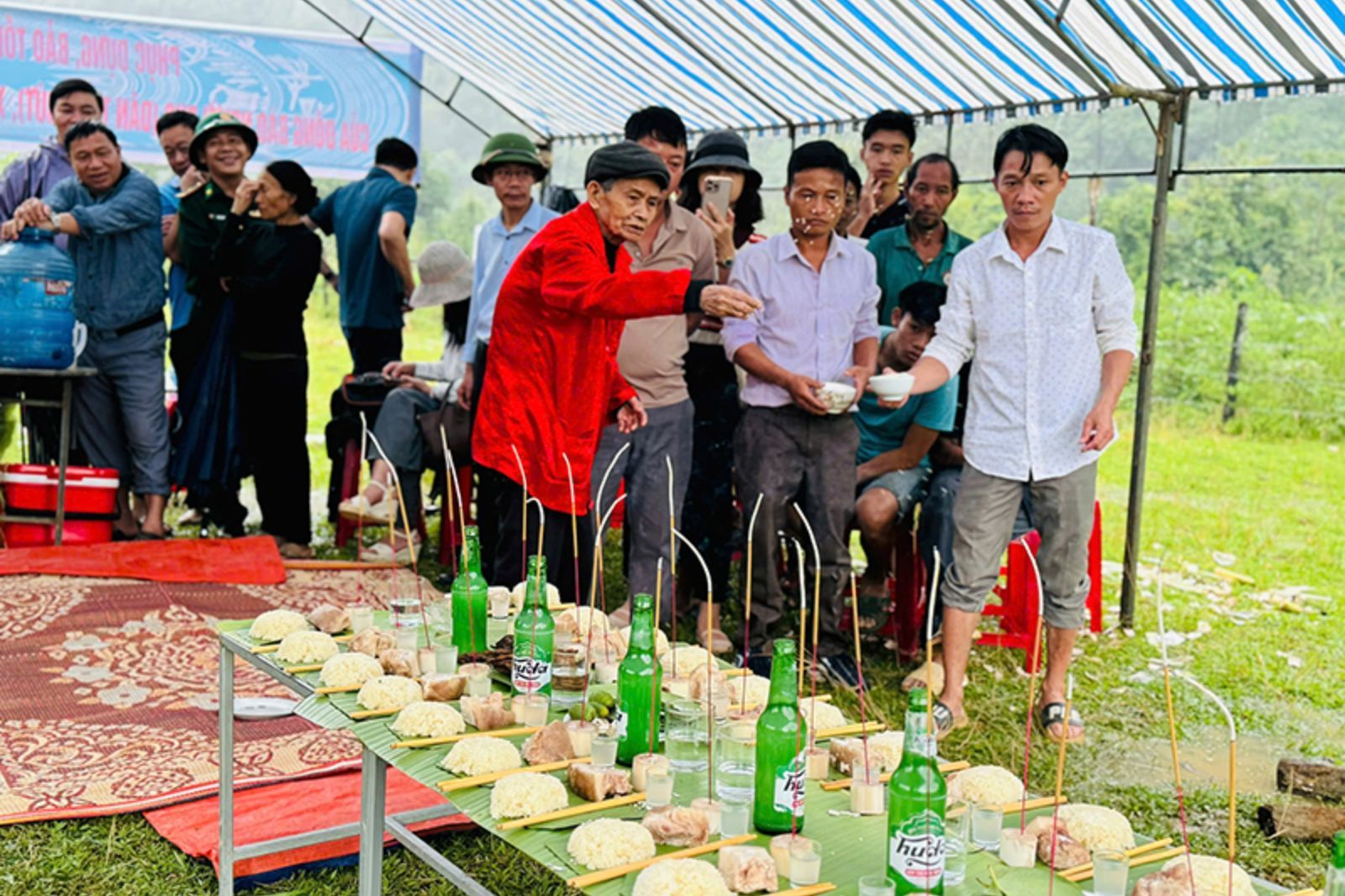
Today, the peace-praying ceremony is solemnly held at the community cultural house in Ón, Yên Hợp, or Mò O Ồ Ồ villages, presided over by village elders—respected individuals knowledgeable in traditional customs. Villagers contribute offerings including a pig and characteristic local products such as đoác wine, glutinous rice, and non-glutinous rice, symbolizing sincerity and joint efforts for community peace. The ritual begins with a special journey: experienced elders venture deep into the forest to find 7 limestone rocks and a bundle of sacred forest leaves called "tri ang cà panh" or "xà là"—indispensable items to purify and connect with the deities.

Peace and Rain Praying Ceremony of the Rục people
Photo: Peace and Rain Praying Ceremony of the Rục people

After being cleaned and heated until red-hot, the 7 limestone rocks are dropped into a basin of water containing tri ang cà panh leaves—the sacred water used by the Rục people to cleanse their bodies before performing the ritual. Only when purified in both body and spirit does the community enter the main part of the ritual: prayers sent to the mountain gods and rain gods, asking for health, favorable weather, and protection for the villagers through dry seasons, diseases, or calamities.

The Rục people's peace-praying ceremony is not just a spiritual ritual, but also a profound symbol of faith, cohesion, and cultural identity preserved deep in the forest, where every prayer and glowing rock is imbued with the spirit of living in harmony with nature of an extraordinary ethnic group.

4. Forest God Worshiping Ceremony of the Ma Lieng People

For the Mã Liềng people, a branch of the Chứt ethnic group residing mainly in Tuyên Hóa District, Quảng Bình Province, the Forest God is not only a sacred symbol but also the supreme deity who protects all aspects of life: from health and harvests to hunting, gathering, village establishment, and land preservation. Thus, at key milestones throughout the year, the forest god worship ritual is held with utmost reverence as a deep prayer and expression of gratitude sent to the sacred entity residing amidst the primary forests.

There are two main times for this ritual: the 7th day of the 7th lunar month after completing the highland rice sowing (called the hole-filling sowing ritual), and the 10th day of the 10th lunar month after the harvest is complete and rice is stored in granaries. The worship takes place at the forest edge behind the village, considered the boundary between the human and spiritual worlds. There, each offering tray is placed on three wooden stakes about one meter high, driven straight into the ground like a simple sacrificial table amidst nature.

The master of ceremonies is the shaman, a person of high status who is fully respected by the villagers. In Mã Liềng rituals, there are no incense sticks or joss paper like in Kinh culture. Instead, beeswax candles are used, serving as conductors between humans and deities. Offerings are also remarkably rustic: sticky rice, cooked rice, fish, meat, boiled chicken, cakes, fruits, and wine—familiar everyday foods reflecting the mindset of "offering what is closest and most practical".

A special ceremony within the ritual is "xin keo" (divination): the shaman uses two short pieces of bamboo or wood, clearly having an outer bark side and an inner core side, and throws them onto a horizontally placed knife. The heads-or-tails pattern is interpreted as the answer from the deity: having witnessed, accepted the offerings, and granted the village's prayers.

The Forest God most revered by the Mã Liềng people is the deity of Lèn Chứt Đác Mỏ, residing at Lèn Hà (Thanh Hóa Commune), a sacred land considered the first dwelling place of the Mã Liềng ancestors. Each worship ceremony is an occasion for the Mã Liềng people to reconnect with their sacred roots, keeping their ethnic identity not only alive but echoing through the deep forest like a song of gratitude and hope.

Forest God Worship Ritual of the Mã Liềng people
Photo: Forest God Worship Ritual of the Mã Liềng people

To have a complete experience when participating in the worship rituals of ethnic minorities in Quảng Bình, travelers should prepare thoroughly in both mindset and knowledge. First, look up information regarding time, location, and specific regulations of the ritual in advance by contacting reputable travel agencies or local authorities to avoid being unprepared. During participation, respecting local culture is paramount: you should dress politely, maintain a friendly attitude, respect cultural taboos, and always ask for permission before taking photos of locals or sacred spaces. After immersing yourself in the ritual atmosphere, you can combine your visit with famous destinations in Quảng Bình such as Phong Nha Cave, Moọc Spring, or Nhật Lệ Beach to complete your journey of discovery.

The rituals of ethnic minority groups in Quảng Bình are like rare wild blossoms, quietly emitting their fragrance amidst the vast forest of Vietnamese culture. From the lively Ma Coong drumbeats that shake the mountains to the solemn rice sowing ritual conveying faith in a prosperous harvest among the Bru - Vân Kiều, and the shimmering colors in the rain-praying ceremony, each festival is a quiet song telling stories of roots and aspirations, waiting for kindred souls to come, feel, and share.

Loading......

Featured destinations