Hue Bai Choi: The Folk Beauty in the Ancient Capital's Culture
Central
Thua Thien Hue
Sovaba.travel
Updated at: 24/09/2026
1. Origin and history of Hue Bai Choi
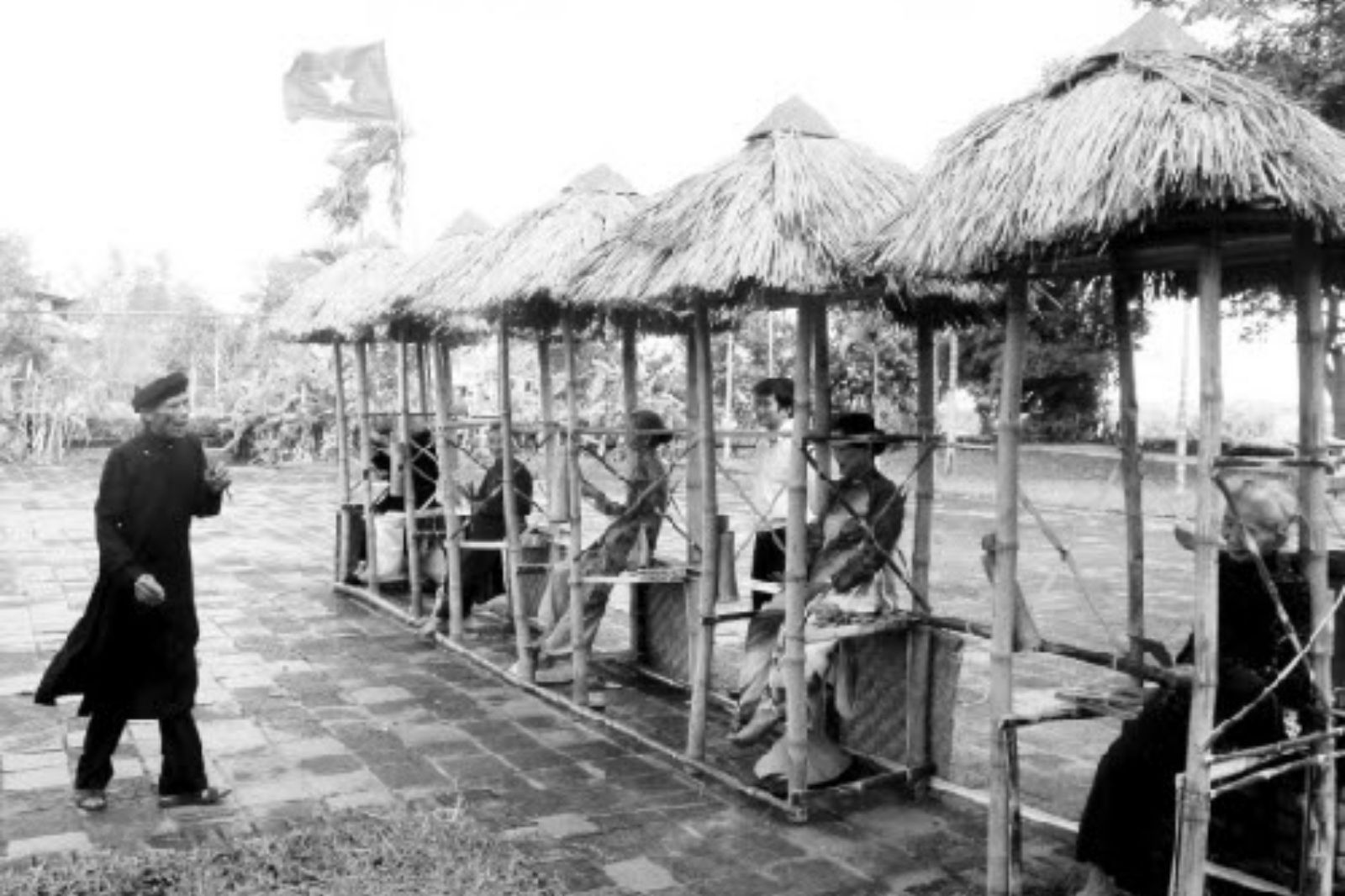
Hue Bai Choi is not an impromptu game; its roots date back to the late 16th and early 17th centuries, closely associated with the reclamation of land and defense against wild animals by the inhabitants of Central Vietnam. At that time, people built high huts along the forest edge to guard their crops and drive away wild beasts. During long nights of watching, to relieve sadness and fatigue, they sang antiphonal songs from one hut to another. Gradually, a card game combined with folk melodies was born, laying the foundation for today's Bai Choi.
According to many historical documents, Dao Duy Tu – a national hero – was the one who created and shaped the Bai Choi festival, transforming mountain watchtowers into a cultural playground that unites the community. From simple playing cards (similar to Tu Sac or Tam Cuc), Bai Choi gradually developed into a unique folk festival, spreading across Central Vietnam from Quang Binh to Binh Thuan, with Hue being one of its key cradles.
Photo: Bai Choi appeared a long time ago during land reclamation
2. How to play Hue Bai Choi
Hue Bai Choi captivates through its blend of a game of chance, folk songs, and rustic theatrical elements. To hold a Bai Choi festival, people usually set up 9 to 11 V-shaped bamboo huts, about 2 to 3 meters high. The huts are divided into two facing rows, with the main hut in the middle reserved for dignitaries. This space resembles a miniature outdoor stage, where everyone gathers and bonds over singing and laughter.
A Bai Choi deck consists of 33 bamboo cards pasted with paper, each featuring three different card faces. The cards are divided into three suits: the Van suit associated with symbolic images like "Ong Am" or "Chin Cu"; the Van suit evoking rural life through rustic names like "Nhi Bi" or "Tam Quang"; and the Sach suit reflecting ancient society with meaningful cards like "Nhi Ngheo" or "Thai Tu".
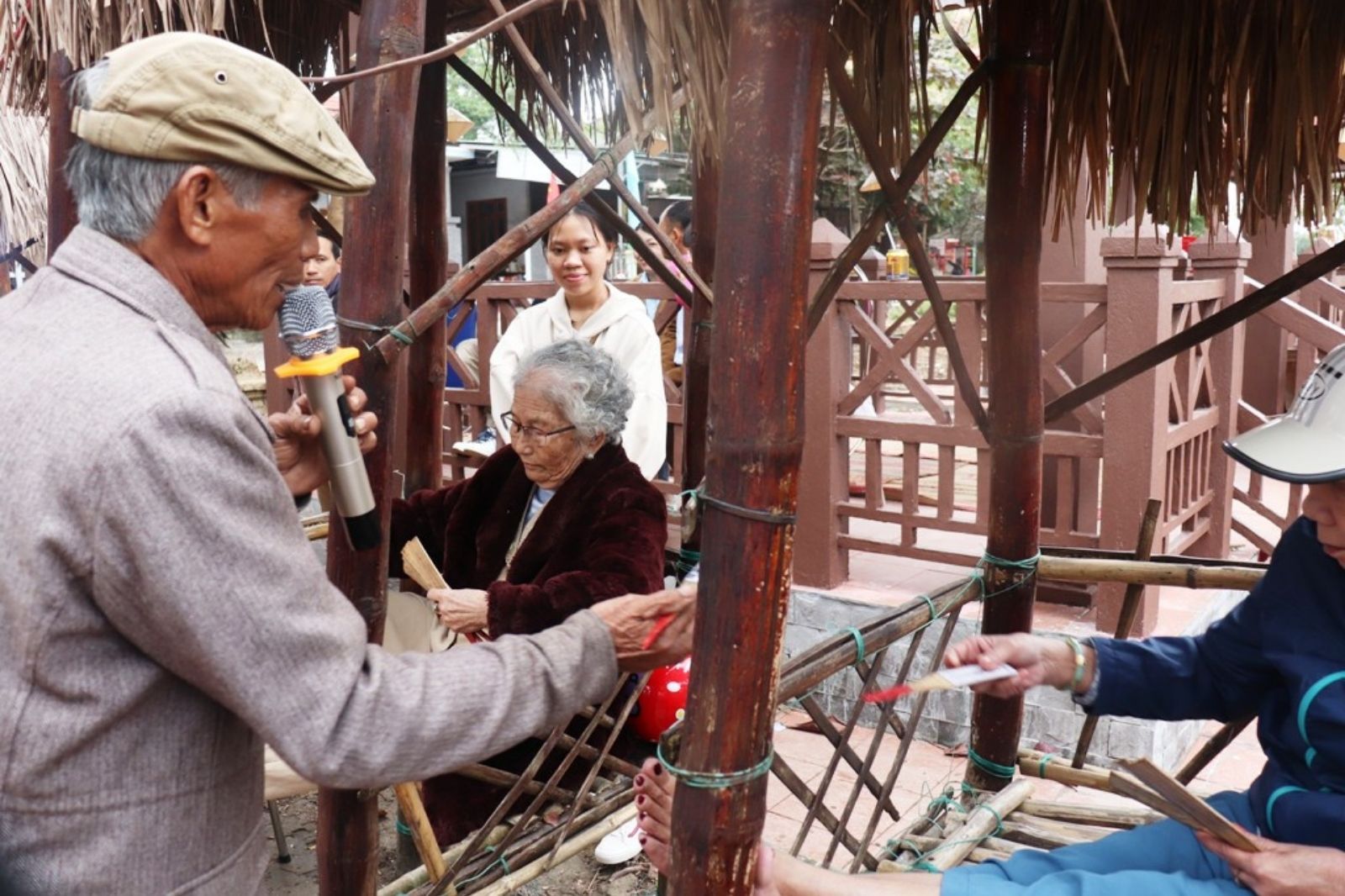
When the game begins, the card caller sits in the hut, waiting for the game master to draw a card randomly. The game master does not read the card name directly, but announces it through witty riddles and chants, both singing and reciting. For example:
“At midnight when the rooster crows / Sneaking softly, knocking into 'Am'” – referring to the Ong Am card.
“Wading streams and climbing hills to find a small bird / Bringing it home to hang at the gate, it calls cu-cu” – corresponding to the Chin Cu card.
Whichever hut has the matching card strikes a wooden clapper to signal, and the game master delivers the card. The player who matches three cards wins, receives rewards of meat and wine, and places a pennant flag on their hut. Each time someone wins, a traditional folk band with two-stringed fiddles, horns, drums, and clappers strikes up lively music, making the festival atmosphere even more exciting.
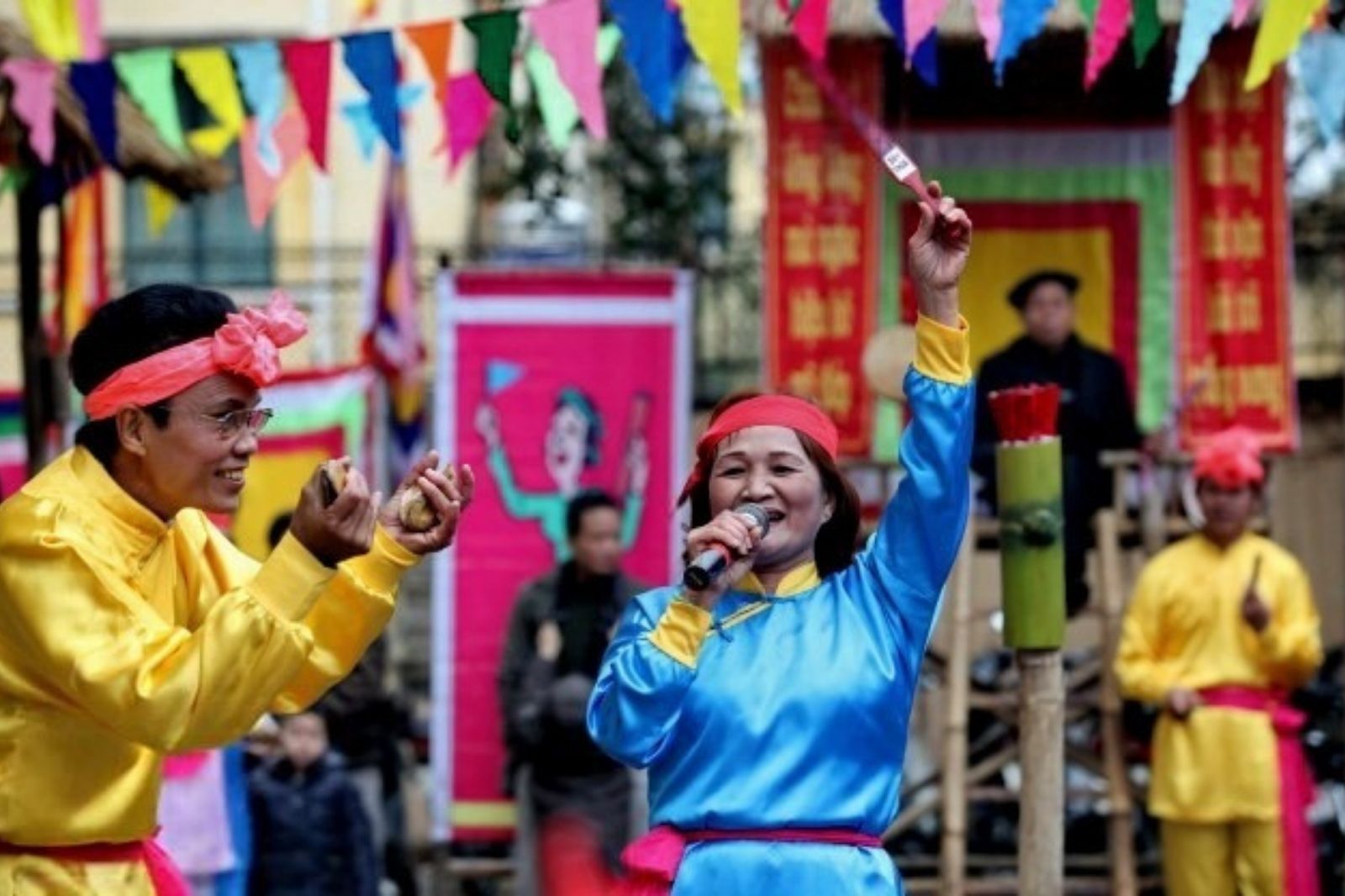
In Hue, the style of playing Bai Choi also carries a distinct character. The chants are modulated and melismatic following the nuances of Hue folk singing and royal court music, creating a grace and subtlety quite different from many other regions across Central Vietnam.
Photo: Bai Choi is combined and chanted according to Ca Hue folk melodies
3. Cultural significance of Bai Choi in Hue life
Hue Bai Choi is not merely a folk game, but also a spiritual treasure preserving the soul of the ancient capital across generations. In every Bai Choi festival, winning or losing is not prioritized; instead, the joy of sharing, community connection, and neighborly bonding are celebrated. This very simplicity highlights a very unique beauty of Hue people: sincere, hospitable, and deeply affectionate.
From an artistic perspective, Bai Choi is an intersection between games and folk theater. Hundreds of witty, imagery-rich verse chants reflecting labor life, romance, and human philosophies are sung in lyrical folk tunes. In Hue, these melodies both maintain the musical identity of Central Vietnam, contribute to preserving the local dialect, and nurture a love for traditional culture among the younger generation in modern life.
4. Guide to experiencing Hue Bai Choi
To fully enjoy the unique charm of Hue Bai Choi, visitors can consider some of the experience tips below.
Ideal time: Lunar New Year (from the 1st to the 10th day) or Hue Festival
How to participate: Watch for free or make a small contribution to sit in a hut and play. Try chanting along to the lyrics to immerse yourself in the atmosphere!
Note: Bring a joyful spirit, respect the artisans, and take souvenir photos to share your cultural discovery journey.
Photo: Bai Choi at Thanh Toan Tile-Roofed Bridge
Hue Bai Choi is not only a folk game but also a cultural symbol, a place where community spirit, vocal art, and countryside memories of Hue converge. In modern life, every Bai Choi festival echoes as a reminder of roots, helping visitors love and understand the identity of the ancient capital even more. And to make your journey exploring Hue go beyond Bai Choi to encompass iconic heritage, landscapes, and unique local experiences, don't forget to follow Sovaba Travel. Here, you will find useful Hue travel tips, captivating itinerary suggestions, and many valuable secrets for a complete trip.