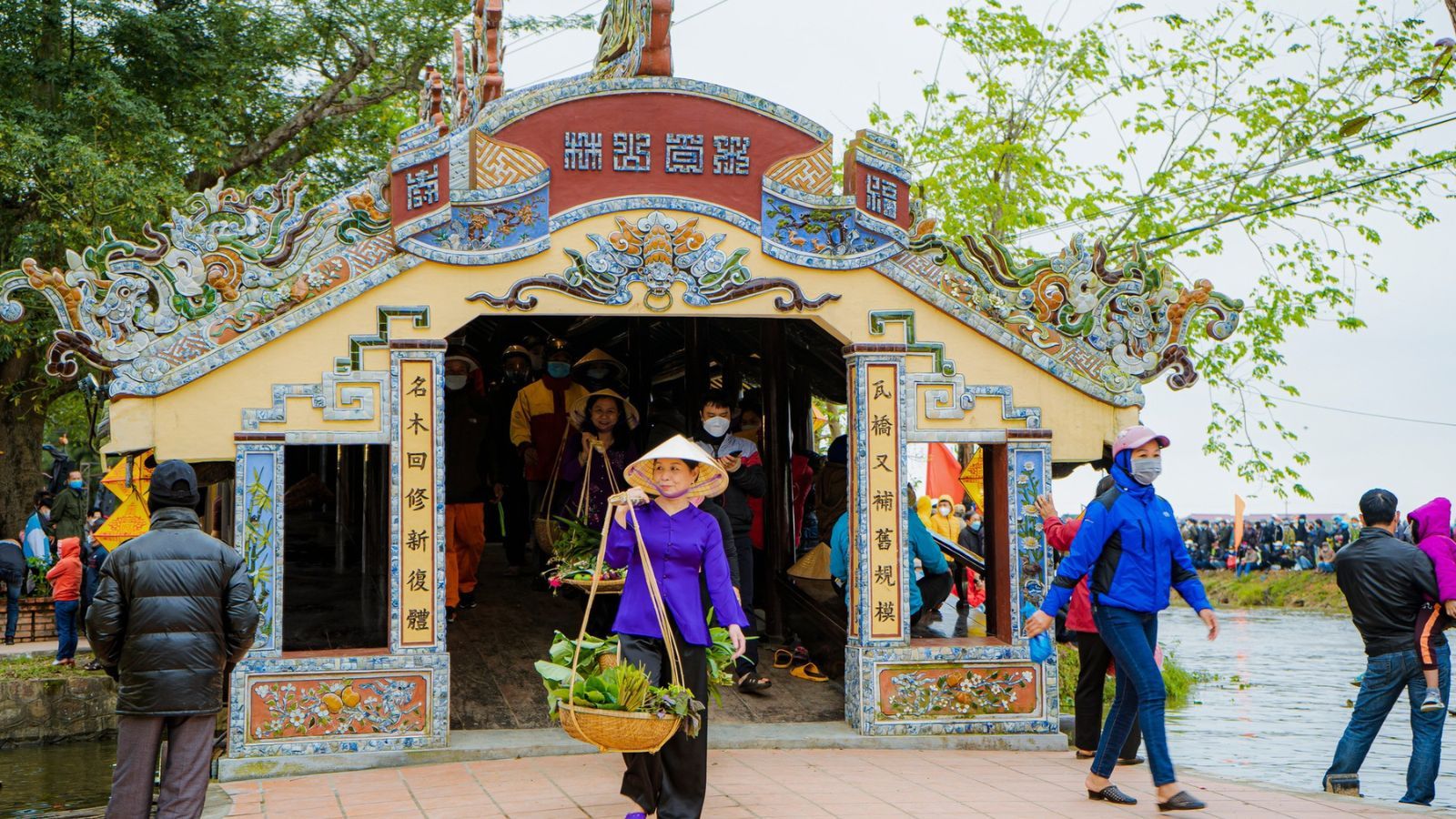
Thanh Toan Tile-Roofed Bridge Hue: An over 250-year-old architectural masterpiece in a peaceful countryside
Central
Thua Thien Hue
Thanh Toan Tile-Roofed Bridge
Sovaba.travel
Updated at: 28/08/2026
1. History of Thanh Toan Tile-roofed Bridge
Thanh Toan Tile-Roofed Bridge is one of the rare ancient structures that has preserved almost intact its historical, cultural, and spiritual values throughout more than two centuries of existence. Here are the typical milestones and values of Thanh Toan tile-roofed bridge:
Construction time: In 1776, under the reign of King Le Hien Tong
Founder: Mrs. Tran Thi Dao, a daughter of a wealthy family in the village
Meaning of contribution: Donated her entire fortune to build the bridge, helping local people travel conveniently without having to wade across the river
Symbolic value: Represents compassion, sharing, and deep love for the homeland
Spiritual significance: Believed to bring peace, associated with rituals praying for favorable weather
Cultural value: A community connection space, preserving traditions and neighborly affection
Over more than 250 years, Thanh Toan tile-roofed bridge is not only an ancient architectural work, but also a historical witness and a spiritual symbol enduringly attached to the lives of Hue people.
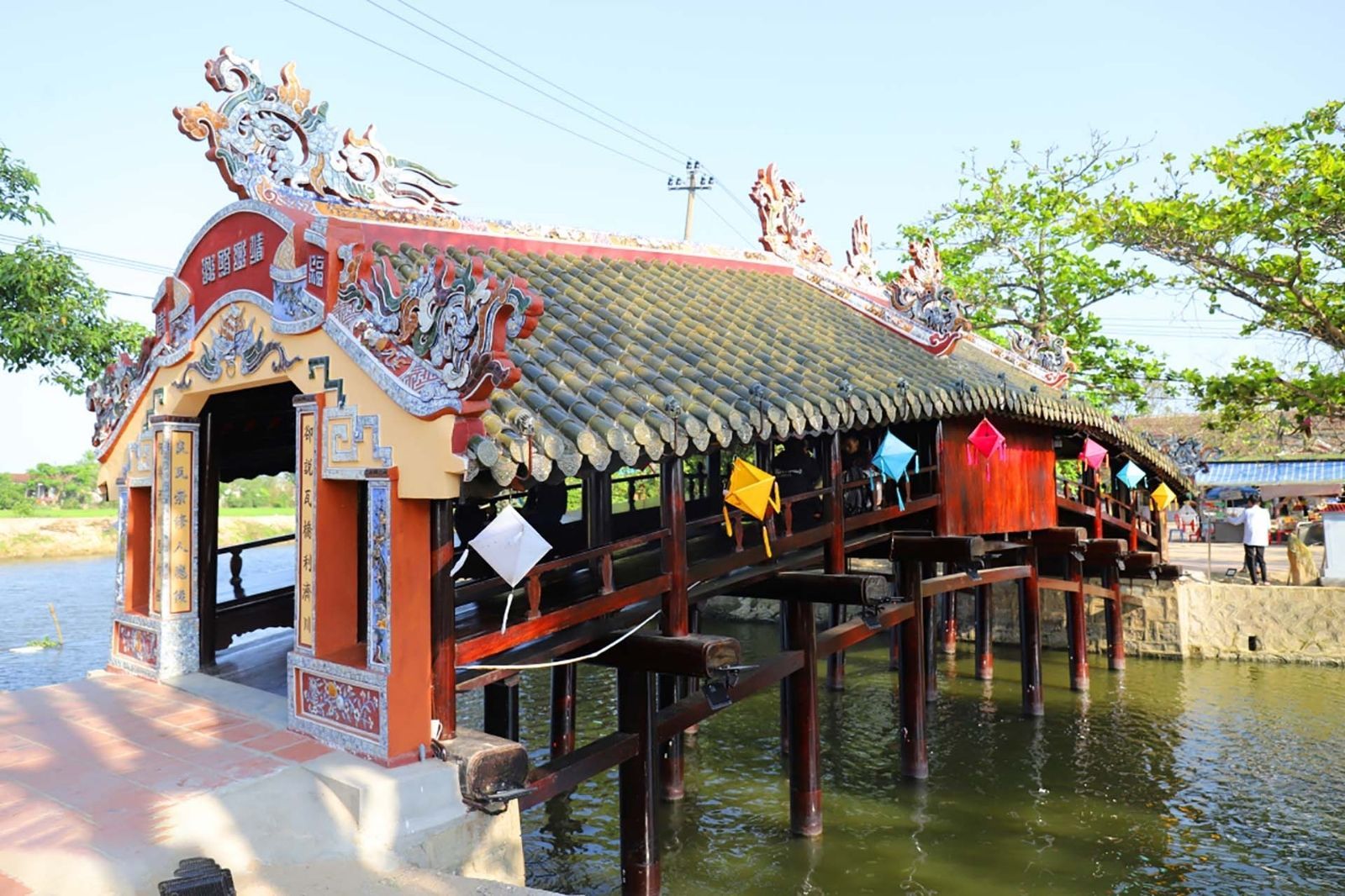
Photo: The bridge was built in the "house above, bridge below" architectural style
2. The exquisite architecture of Thanh Toan Tile-roofed Bridge
Besides historical and spiritual values, Thanh Toan tile-roofed bridge also captivates visitors with its exquisite architectural art. Every detail of the bridge exudes classic beauty and meticulous elaboration in every line.
Thanh Toan Tile-Roofed Bridge was built in the “house above, bridge below” architectural style (house on top, bridge below), a rare style in Vietnam, similar to Cau Pagoda in Hoi An or Phat Diem tile-roofed bridge in Ninh Binh. The bridge is about 17m long, 4.6m wide, divided into 7 compartments, with the widest middle compartment housing the altar of Mrs. Tran Thi Dao.
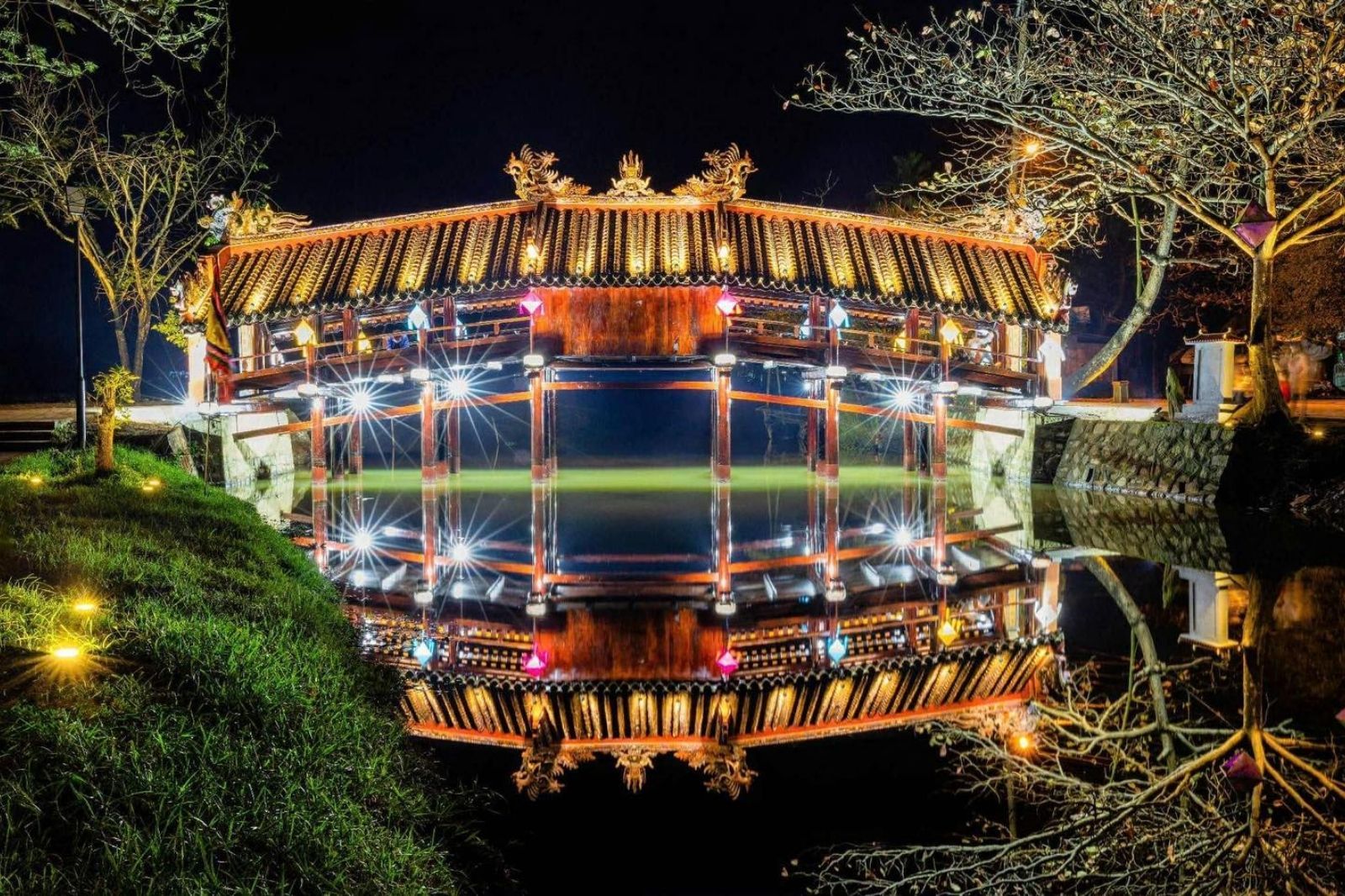
Photo: Thanh Toan tile-roofed bridge sparkling at night
Outstanding Architectural Features:
Materials: The entire bridge is made of sturdy ironwood, supported by a system of 6 rows of pillars with 3 columns per row, ensuring durability over more than two centuries. The roof is tiled with glazed lapis lazuli tube tiles, providing effective thermal insulation and creating a cool space.
Decorations: The roof is intricately carved with dragon and phoenix patterns, symbolizing the "dragon transformation" theme. Both ends of the bridge are inlaid with porcelain featuring bamboo, floral, and leaf motifs, shimmering in the light. The pillars and rafters use round and square cross-sections, simple yet harmonious.
Utility design: Both sides of the bridge feature wooden platforms and handrails for locals to sit, catch the breeze, and rest. The middle compartment is enclosed for the altar, while the remaining compartments are open and airy, giving the feel of a small house built across the river.
Despite undergoing 5 restorations (1847, 1906, 1956, 1971, and 2020), the bridge still retains its original ancient charm, with details such as glazed tiles and wooden frames meticulously restored.
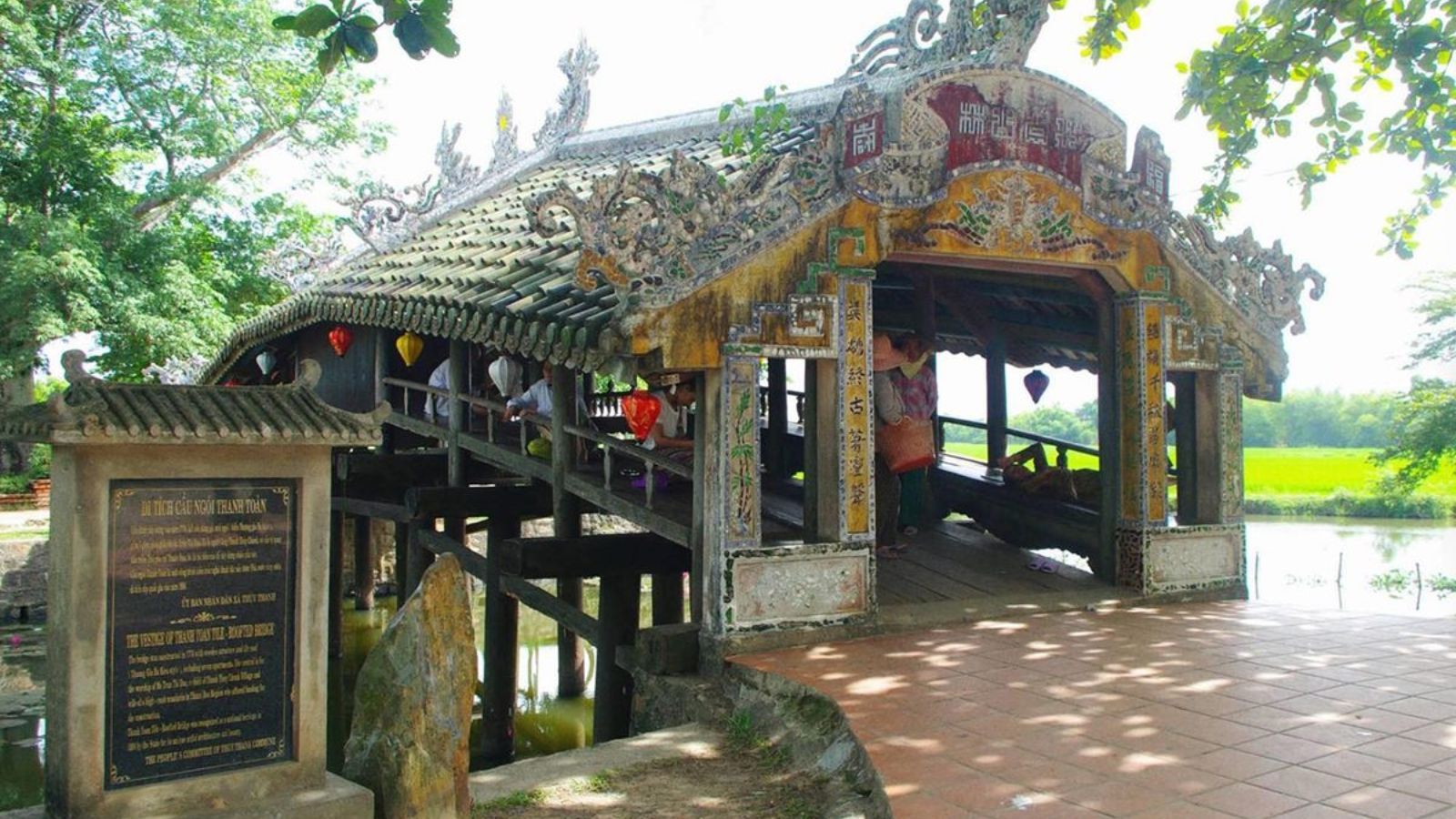
The tiled roof of Thanh Toan bridge is one of the special highlights that define this bridge's identity. Made of ancient tiles, over many years, the color of the tiles has gradually faded, but that very aged appearance creates a quiet, antique beauty. Overlapping layers of tiles form a gently curved roof line, like a protective coat shielding the bridge through countless suns and rains.
Photo: Close-up of the old tiled roof of Thanh Toan bridge
Thanh Toan tile-roofed bridge stands out with its intricately carved wooden structure, reflecting the craftsmanship of ancient carpenters. Every piece of wood, every pattern bears the mark of human hands, meticulous down to the smallest detail. Solid pillars and softly carved motifs resemble a painting portraying both nature and daily life of Hue people. These patterns not only beautify the bridge but also express the identity of the ancient capital land, where handicraft arts are always valued and preserved across generations.
3. Travel experiences at Thanh Toan Tile-roofed Bridge
Located about 8 km southeast of Hue city center, in Thuy Thanh commune, Huong Thuy town, Thanh Toan Tile-Roofed Bridge is an ideal check-in spot for tourists who love ancient architecture and peaceful countryside spaces.
Must-Try Activities:
Photo check-in: Thanh Toan Tile-Roofed Bridge with scenery of rivers, rice fields, and lush greenery is the perfect backdrop for photos full of Hue flavor.
Visit the agricultural tool display house: Near the bridge is an exhibition house reproducing traditional agricultural life, helping visitors learn more about the lives of Thanh Thuy residents.
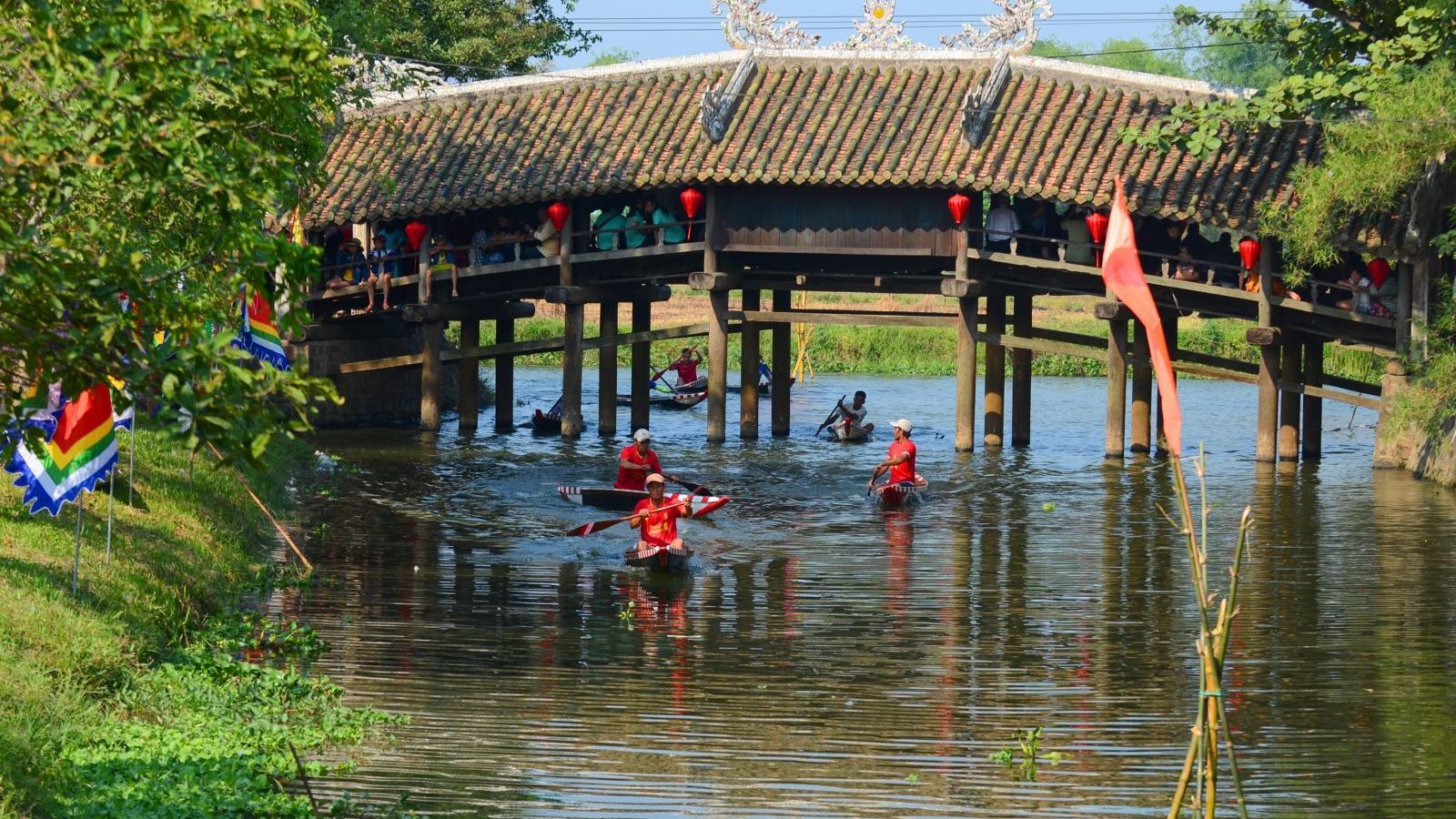
Join festivals: Annually, the bridge hosts events such as the procession of Mrs. Tran Thi Dao's spirit tablet (during Hue Festival), rural markets, and folk games like Bai Choi, tug of war, and boat racing. In particular, the monthly night market on the 16th brings a bustling atmosphere with local specialties like Hue beef noodle soup and pepper-braised local chicken.
Explore the landscape: The bridge spans a branch of the Nhu Y River, surrounded by fields and bamboo groves, creating a peaceful rural scene ideal for relaxation.
From the center of Hue, visitors follow To Huu Street, turn right at the Hoang Quoc Viet intersection, and drive straight to Cau Ngoi market. You can travel by motorbike, taxi, or bus for a convenient journey.
Photo: Admire the beauty of Thanh Toan Tile-Roofed Bridge.
4. Tips for visiting Thanh Toan Tile-roofed Bridge
To make your visit to Thanh Toan tile-roofed bridge more complete and comfortable, visitors should keep in mind a few important points below, from transportation and visiting times to etiquette in the peaceful countryside.
Ideal time: Visit in the early morning or late afternoon to enjoy cool air and beautiful light for photography.
Attire: Wear comfortable clothing suitable for an ancient cultural space.
Monuments preservation: The bridge is for pedestrians only; motorized vehicles are prohibited to protect the wooden structure.
Combine destinations: Combine visiting the bridge with nearby attractions such as Phu Cam Church (7 km away) or Nguyen Dinh Chieu night market for a complete experience.
Photo: A poetic photo spot by Thanh Toan tile-roofed bridge!
Thanh Toan Tile-Roofed Bridge does not stop at architectural value, but is also a vivid symbol of compassion and community solidarity of the people of Thanh Thuy village. The familiar folk verse: “Whoever returns to Thanh Toan tile-roofed bridge, let me go along in a crowd for fun” has deeply engraved the image of the bridge in spiritual life, like an integral part of the countryside. In 2012, the image of the bridge was printed on a Vietnam postal stamp, a clear proof of the cultural and historical stature of the structure. Existing for more than 240 years, the bridge remains sturdy as a witness, while becoming an attractive stopover for about 200–300 international tourists every day.
With its unique “house above, bridge below” design, peaceful rural space, and rich folk cultural activities, Thanh Toan Tile-Roofed Bridge today is not only an ancient architectural monument but also a cultural symbol of Hue. This is definitely an indispensable destination for anyone wanting to explore the historical depth and sophistication of traditional Vietnamese architecture.